A Baby Cries in the Next Room. Do You Go?
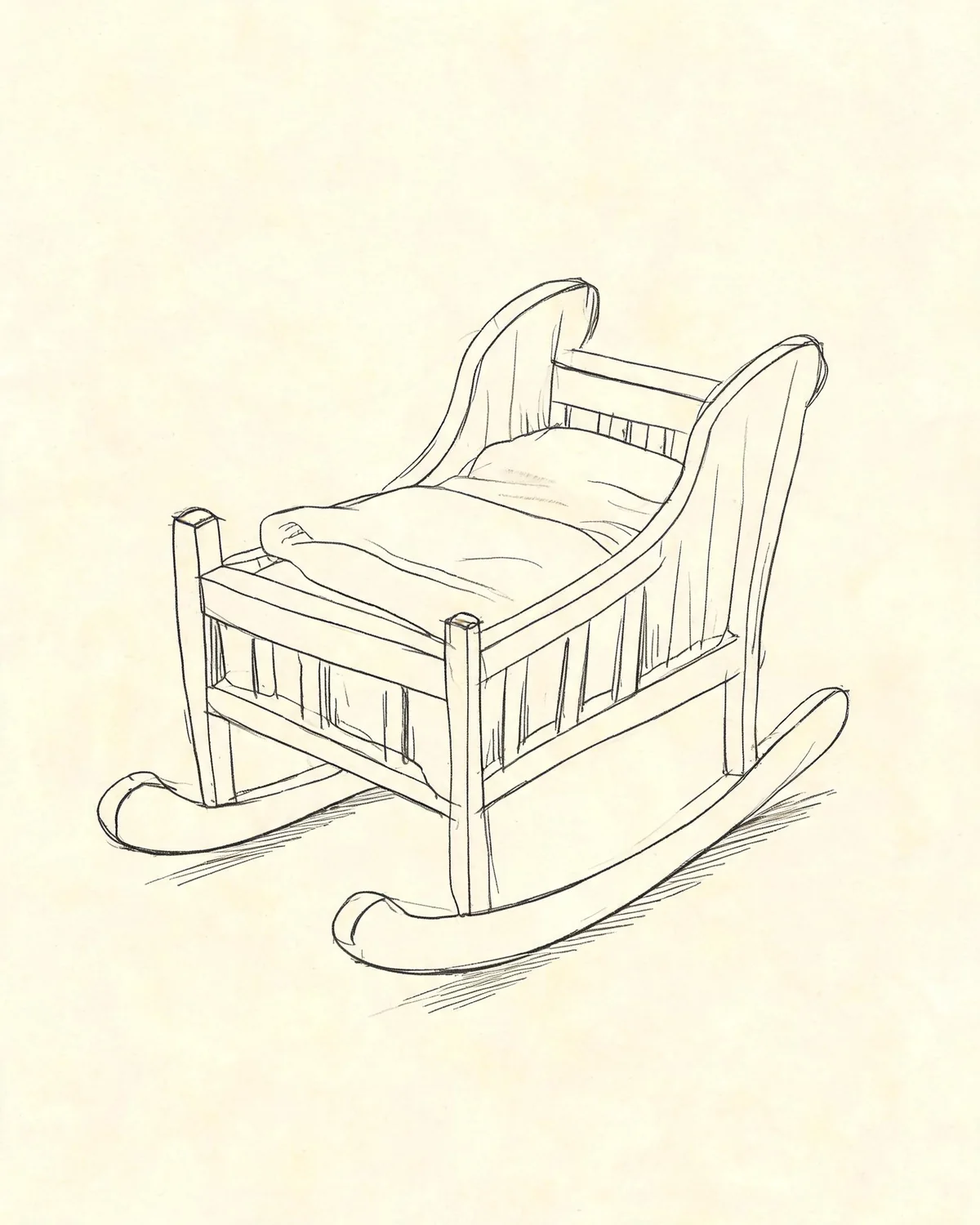
A thin cry comes from the next room, or you look down and a baby is already in your arm, warm and heavier than a folded blanket. An infant cannot explain or wait, so the scene gathers around care: who holds the child, whether the cry is answered, and how steady your hands feel. This page stays with the baby already here, beside a pregnancy still hidden or the work of labor.
On this page
- Key takeaways
- What it means
- Why it shows up now
- How the meaning changes
- How cultures read it
- Does Dreaming About a Baby Mean You Are Pregnant
- What Is the Spiritual Meaning of a Baby Dream
- Is a Baby Dream Good or Bad
- Forgetting or Dropping a Baby in the Dream
- What it is not
- Modern research
- Making sense of it
- Religious readings
- FAQ
- Related symbols
Key Takeaways
A few starting points, before the scenes diverge:
- A baby usually pictures something new that cannot manage alone, and the care that falls to you.
- Holding, hearing a cry, feeding, or finding the infant left aside each shift the scene.
- A boy, a girl, a newborn, or someone else's child changes the emphasis. Your feeling still leads.
- Forgetting or dropping the baby stages a fear of failing something small. It is not a judgment of real parenting.
- The dream cannot tell you whether you are pregnant. A test can. The story cannot.
What It Means When You Dream of a Baby
The plain reading is newness that now has a body. Many symbol traditions place the child with the future and with potential that has not chosen a direction yet: a project just begun, a role you have only started, a hope that cannot feed itself. The infant is the change after it has arrived, small enough to need both hands. That is why the dream includes the weight in your arms.
A second reading is the cost of care. Older dream lore reads one's own infant as the ordinary trouble of raising someone: worry, broken sleep, a duty that will not sit quietly until morning. That trouble is the plain fact that a helpless person takes your attention. If the holding felt natural, the duty may fit the life you are in. If you were afraid of the weight, the duty may feel larger than your confidence.
A third reading turns inward. The infant can be a part of you that is still young: a wish to be looked after, a skill you have not named, a tenderness you parked years ago. Inner readings often treat that child as something precious and easy to overlook, appearing as your own son or daughter, or as a child you cannot name. The figure is small. The claim it makes on your attention is not.
Why This Dream Shows Up Now
This dream often arrives when something in your days has become small and dependent. A new piece of work that still needs you every hour. A creative start you keep meaning to reopen. A parent, a friend, or a partner who has begun to need practical help. The baby gives that dependence a face, a weight, and a cry you can locate in a room. The room makes the need concrete.
It also arrives around real infants, without turning into a report on them. A visit, a friend's news, or a night of broken sleep can lend the dream its room. What matters is what you did once the child was there: you reached, you froze, or you went on with the errand.
It also arrives amid questions about having children or not having them. Hope, pressure from a family, sorrow after a loss, and a decision to remain child-free can share one picture. The week you just lived decides which of those is loudest. The dream shows how it feels to stand near something that cannot look after itself.
How the Meaning Changes
The same infant changes with your hands, with whose child it is, and with how new the baby looks.
Holding a baby
The weight against your body is the detail to keep. A child in the arms is a responsibility you have taken on, a trust or a load. A baby who settles can picture a duty that fits. A baby you are afraid to grip can picture a duty that still feels too large.
A crying baby
The cry will not wait. A cry you walk toward still has a path. A cry behind a shut door can picture a need treated as background noise. Whether you moved matters more than the volume. If the tears are the whole story, the crying page is the nearer reading.
A baby boy or a baby girl
In older dream lore the sexes were split along household lines. A boy in the arms was sometimes read as work and worry, a nursing girl as ease after a hard stretch. Treat that as history, not a rule. The sex matters when it already matters to you: a daughter you hope for, a son you love, news you were not ready to hear.
Someone else's baby
A child passed over in a shop, or left by a friend, pictures care from outside your plans. Other people's children were read more kindly when they looked well and came toward the dreamer. An imposed baby leans toward a duty you did not choose. A baby that feels like a gift leans toward trust.
A newborn
A newborn is almost all beginning: an unfinished face, an unsteady neck, a blanket too large. Nothing in the scene has a history yet, so the care is nearly pure potential.
Twins or several babies
Two babies, or a lap of them, multiply the care. This is not a census. Two projects, two people, or a hope and a fear may be drawing on you at once. The infant you reached for first is the sharper detail.
Breastfeeding a baby
Nursing puts no tool between you and the child. The one who feeds and the one who drinks share one source for a while. A peaceful feed can picture a working bond. A latch that fails, or milk that will not come, can picture care that has not found its way. Men dream this too.
A baby who has died in the dream
A baby still, or already gone, can hold grief for a beginning that stopped, or fear that something fragile will not last. It is not news that a living child will be harmed. After a pregnancy loss, start with the miscarriage page and let the feeling be grief. Stay with who was beside you.
How Cultures Have Read This Dream
Many symbol traditions place the child with the future, with potential, with innocence, and with a simplicity a person can recover after a complicated life. A woman nursing an infant has long been an image of charity, care offered from her own body.
In Greek dream interpretation, babies are people without power of their own. Your own infant meets you as the ordinary trouble of raising someone. Another person's child coming toward you was read as hope in a good that cannot act yet. To dream that you are the infant is to be nourished and governed, your hands not free for work.
In Islamic dream tradition the scene stays inside the house. A child in the arms means responsibility, sometimes a heavy load. Carrying that child through a street or a courtyard was read as a trust you cannot set down until the day is over. Nursing joins the one who feeds and the one who is fed. These readings describe what care cost in that world. They are not orders for yours.
Hebrew storytelling sets a longed-for infant beside surprise and joy, and it knows how little language there is when an infant is lost. Devotional teaching has also used the small child as a picture of simplicity before plans take over. The feeling you woke with, tender or frightened, shows which reading is near.
Does Dreaming About a Baby Mean You Are Pregnant?
People ask because the picture feels literal. A baby in your arms can seem like news about your body. It is not. Dreams cannot confirm or predict pregnancy; take a test or speak with a doctor if you have questions. The scene visits people who are pregnant, people who are hoping, and people with no reason to wonder.
The infant is already in the room. A pregnancy dream is the earlier picture, a change still hidden. If the dream lingered on carrying a pregnancy, use that page. If labor was the whole story, the birth page follows the effort of arrival. Having a baby when you are not pregnant usually means the symbol has arrived whole: a duty, a hope, or a fear of not being ready.
More often the scene is a result that now needs a person: work you cannot yet show, a task at home, a wish to be looked after. None of that requires a pregnancy, and none of it rules one out. A test answers the body. The dream cannot.
What Is the Spiritual Meaning of a Baby Dream?
A spiritual reading starts with dependence. The baby cannot stand, speak, or bargain, so you are put beside a life that exists only because someone stays. That can be the part of you that has not found words yet. Smallness here is not an insult. It is how something real looks before it can manage.
A return to that smallness can be a kind of wisdom: simplicity after a long complicated stretch, a self that can be held and does not have to run the room. People who have spent years being the competent one often meet this figure with surprise.
It can also be easy to miss, a beginning you would walk past if it did not cry. Call that a new life only in a modest sense, a quality that needs shelter, not a command to bear a child. Ask what in you is still too young to defend itself, and who was willing to stay.
Is a Baby Dream Good or Bad?
A baby dream is not fixed as good or bad. A sleeping infant in afternoon light can feel like welcome. A cry you cannot soothe, or a child who goes still in your arms, can feel like dread. Both use the same symbol. The emotion decides which face you met.
Joy usually means some part of you can receive what is new, even if waking life is unsure. Fear usually means the stakes feel high: something small depends on you, and you doubt your hands. That fear stays inside the story. It is not a bulletin about harm on its way, and it is not a verdict on the week.
What you did last matters more than any old grading of the scene. Still holding the baby when you wake usually leaves the care unfinished. A room gone quiet, the child settled, usually feels like welcome. A child you answered is a different reading from a child you could not reach.
Forgetting or Dropping a Baby in the Dream
The forgotten-baby dream often starts on an ordinary afternoon. You follow a cry, open a closet or a drawer, and find an infant still alive after a long time left aside. People wake in tears. Name the shock, and do not turn it into a horror story. The dream is staging a precious thing set down for later: a course of study, a piece of music, a book, an early hope. The baby is that postponed part, still waiting.
Dropping the baby is the same panic from the other side. Your arms fail, the infant slips, and the stakes feel high because something small depends on your steadiness. It is not a rehearsal of a real accident, and it is not evidence you would fail a child in your care. Parents dream this after ordinary nights of vigilance. People with no child dream it too.
Guilt after breakfast is not a grade on your parenting. If a real baby shares your house, set the day's fatigue aside before you scold yourself. A small promise may still be in the drawer, ready to be picked up.
What This Dream Is Not
A baby dream is not a test result, and it is not a message that a real infant is in danger. Helplessness in a dream is not evidence about anyone's safety. If you are already worried about a real child, take that worry to a clinician.
Nor does the dream grade you as a parent, or as a person who ought to become one. Forgetting the baby or failing to stop the cry can feel like an accusation. That accusation is the dream's drama, not a finding about your character. People who care steadily for children have these dreams. So do people who have chosen not to.
The scene is not an order. A tender dream does not require you to pursue a pregnancy or reopen a decision made in good faith. A frightening dream does not require you to avoid children. Let the image show where your care is aimed. When the body is the question, ask a doctor.
Modern Dream Research
When an infant appears across a long stretch of one person's dreams, the contact tends to be kindly, and the dreamer is the one who begins it. Dependence draws care toward the baby, and the plot is that offer.
The scene also practices the logistics. Where will you set the child down, can you answer the cry, are your hands free. A night of broken sleep, a friend's news, or a photograph can lend the room and the blanket. The room is not the meaning. Your attention is: toward the baby, away from it, or stuck in the doorway.
If the dream was harsh, the harshness is still about a need the story would not let you meet. It is not a measurement of how you look after people by day.
Making Sense of It for Yourself
Begin with the room and your hands. A kitchen after dark, a hallway, a shop, or a place you could not name. Was the baby quiet against your chest, or crying where you could not see a face. Write the first action you took. You reached, you froze, you fed, you searched a cupboard, or you woke before you could choose. That action is the spine of the reading.
Then name the waking thing that is small and unfinished. A piece of work, a person who needs a call, a hope you parked years ago. If a real infant shares your house, set the day's fatigue aside before the dream becomes a scolding. The dream is not a mark on your care.
Give that unfinished thing one modest step for this week, and write the step beside the dream. If a question about pregnancy is mixed into the morning, settle it with a test or a doctor. The dream's job is the other one: to show where your attention goes when something cannot yet look after itself.
Religious and cultural readings
Islamic and Christian dream interpretation each have their own reading of this image.
FAQ
What does it mean when you dream about a baby?
A baby usually stands for something new and dependent: a beginning, a duty, or a tender part of you. Sort first whether the infant needed an answer from you or was simply placed where you would see it.
What if I am the baby in the dream?
Being the baby turns the image toward dependence. Your hands may be wrapped, and someone else feeds or carries you. It can picture a wish to be looked after, or a self that has not yet found a name.
What does it mean if the baby talks?
A talking baby can picture a young part of you that has found words earlier than you expected. Speech belongs to people, so the surprise is often the message, not a sign that something is wrong with the child.
What if I recognize the baby as a child I know?
The baby you recognize as a child you know points at that bond first. A niece, a grandchild, or your own child can enter because they are already on your mind. The dream then leans on how you feel toward that person, more than on a general symbol of newness.
What if I do not want children and still dream of a baby?
A baby dream in someone who wants no children is not an instruction to become a parent. The infant can stand for a project, a friendship, or a quality in you that is still small and needs room. Wanting no child can sit beside that picture.
What does ordinary care, such as a diaper change, add?
A diaper, a bottle, or a bath pulls the dream toward maintenance. The task may feel manageable, endless, or oddly tender. Ordinary care often pictures the daily cost of keeping something small alive, without a crisis attached.
Does a scary baby dream mean a real baby is in danger?
A scary baby dream is not a report on a real baby's safety, and it does not announce harm ahead. Fear fits an image of someone helpless. A scream, a still face, or a child you cannot soothe can borrow worry you already carry.
Why does a baby dream return a few times a year?
A baby dream that returns now and then often marks something you have learned to live beside. The baby remains because the set-aside thing is still alive. The return is a reminder, not a rise in the stakes.