Shot in a Dream, Still on Your Feet
A hallway, a parking lot, or the kitchen you use every night: someone lifts an arm, there is a crack, and the dream stops you where you stand. A dream about being shot is an image of impact, force that arrives before you can answer. Some people take it as shock, some as a judgment that landed too hard, and some as a life cut off in the middle. What happened around the hit is the part worth keeping.
On this page
- Key takeaways
- What it means
- Why it shows up now
- How the meaning changes
- How cultures read it
- What Is the Spiritual Meaning of Being Shot in a Dream
- Is a Dream About Being Shot Good or Bad
- When the Shot Reads as Criticism or Rejection
- Getting Shot and Holding a Gun Are Different Dreams
- Why the Same Shooting Dream Keeps Returning
- What it is not
- Modern research
- Making sense of it
- Religious readings
- FAQ
- Related symbols

Key Takeaways
A few places to start:
- The image is usually sudden impact: shock, interruption, or a blow you could not step around.
- A miss, a hit you survive, and a scene that ends on the impact are different pictures.
- A stranger, someone you know, and a shooter you never see each change the reading.
- Often the strike is criticism, rejection, or talk aimed at a name.
- Repetition means the feeling is still active. It does not schedule a violent event.
What It Means When You Dream of Being Shot
Being shot is less about the weapon than about the moment something reaches you before you can move. The crack, the freeze, the sense that an ordinary minute has been broken: often that cluster is shock. A message, a breakup, or a public embarrassment can feel the same way. You were in the middle of a normal hour, and then you were not.
A second reading stays with directed force. Firearms in dreams are often tied to power and to the ability to intimidate. In this dream that force may belong to another person, or it may feel like a part of you that has turned on your own plans. A stranger's shot is sometimes the feeling that a familiar person has become unrecognizable. The harm came from a direction you had not braced for, and the face did not match the history.
A third reading is the interruption itself. The scene does not have to end in dying to carry an ending. A project, a role, or a relationship can stop without a clean last chapter, and the dream uses a strike to show the cut. Rage, numbness, grief, or a strange calm after you wake is what tells you which reading is closest. The weapon is the delivery. The life that stopped is the subject.
Why This Dream Shows Up Now
A shot dream tends to surface once several pressures have stacked and one of them finally lands. You may have been managing a conflict, a deadline, or a strain at home by staying in motion. The shot is the picture of the minute when motion is no longer available. Nothing gradual is left in the scene. That bluntness is the point.
It also follows a shock that was not itself violent. A role ended in one conversation. A loyalty failed in a single afternoon. A lethal blow in a dream often carries dismay and grief more strongly than terror: the deepest sting is that someone, or something, did this. If the week held a letdown you did not see coming, the dream may be giving that letdown a speed your daytime words have not matched.
Someone who has lived through an assault can meet the picture again while the shock is still being sorted. The scene may tighten and repeat, with less of the ordinary day mixed in. This page can stay with the image. It cannot replace a person who can sit with you.
How the Meaning Changes
The reading shifts with where the strike lands, who fires, and whether you are still in the scene afterward.
A shot in the back
A hit from behind is often read as something you did not see forming: talk in another room, a decision made without you, or support withdrawn from a side you had treated as safe. The back is the part that cannot watch. The dream is about being unprepared for the direction of the blow.
A shot in the chest
The chest is where the dream puts breath and the sense of being fully stopped. Some people take a chest hit as a blow to courage, affection, or the account they give of who they are. It can follow a rejection that felt personal rather than practical. The dream stopped you at the center. The useful question is what in the week has done something similar.
A shot to the head
A strike at the head gathers thought, speech, and the story you tell about yourself. It can follow a week of criticism aimed at your judgment, or a decision you keep replaying until thinking feels jammed.
The blow sits where planning lives. It does not describe an injury. Whether you could still speak afterward often shows whether the week stopped your thinking or only shook your composure.
A shot that misses you
Being fired at and not hit is a different dream from being hit. The danger stays in the air. Read the miss as a crisis that passed close, a criticism that did not stick, or a fear still rehearsing. Relief and leftover dread can share the same morning. The miss does not erase the alarm. It shows you the alarm without the landing.
You are hit and still alive
Survival inside the dream changes the emphasis. You may touch the place you were hit, walk, or keep speaking as if the room has not caught up. That continuation can be numbness, or a life already moving past an ending. You are still in the scene, so the dream is as interested in what comes next as in the strike.
Someone you know fires
When the shooter is a partner, a parent, a friend, or a boss, the dream tightens around trust. Often this is a quarrel that went too far, a loyalty that failed, or anger that has not been said aloud in either direction. The face matters more than the weapon. An unfinished conversation in waking life is often the trail worth following.
You never see the shooter
An unseen shooter leaves the force without a name. Often this is anxiety with no clear author: a workplace, a debt, a mood in the house that nobody owns. It can also keep the threat at the level of atmosphere rather than biography. If the dread has a person and the dream refuses to show a face, you may not be ready to name them, or the pressure may truly be impersonal.
You watch someone else get shot
Witnessing moves you out of the direct hit and into helplessness, care, or guilt. The fallen figure can be someone you love and fear for, or a part of you watched from a distance. Who you tried to reach, and whether your feet would move, usually matters more than the strike. The dream is about your position beside the impact.
How Cultures Have Read This Dream
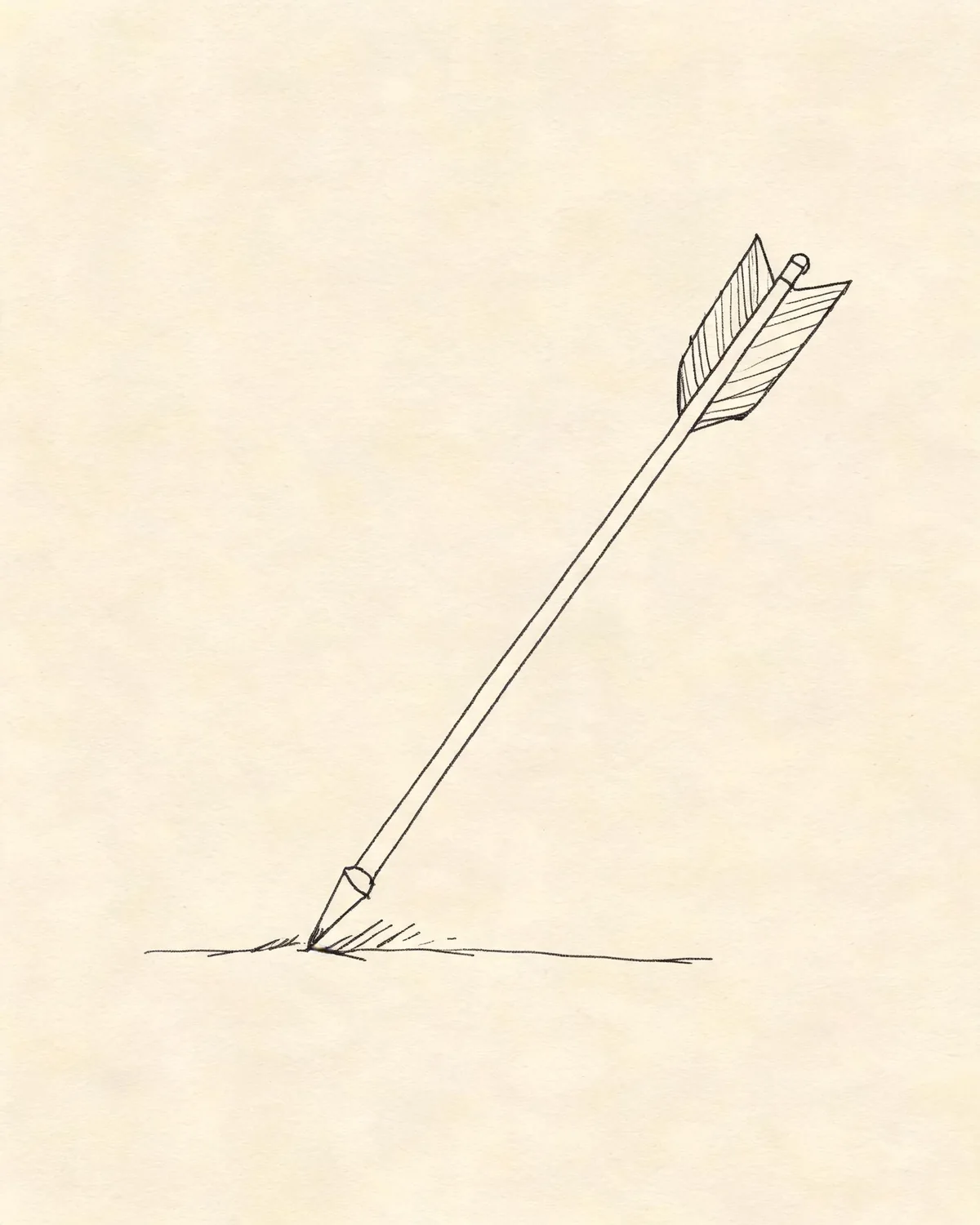
Symbol traditions have long treated a weapon that travels — an arrow, a dart, a shot — as force arriving from a distance. It has been tied to decision, to a thought that flies ahead of the body, and to penetration that opens what was closed. An arrow leaving a bow was read as an act that cannot be called back. That is a useful cousin to this dream: something has already been sent, and the scene is the arrival.
Greek imagery gave the sun's arrows both warmth and scorch, and myth used the same weapon for a death that comes from far off, before anyone can answer. On this page that remains a picture of suddenness. In older emblem traditions, a pierced heart sometimes sits beside union rather than ruin, a reminder that a strike can mean contact as well as harm. None of these pictures agrees with the others. They share the habit of treating the distant hit as meaning already in motion.
In Islamic dream lore, arrows were sorted by what they did. A shot that missed could be read as a message that failed to arrive. Arrows thrown more loosely were sometimes read as slander, talk aimed at a person's name from across a room. A shot from a woman could be folded into attraction rather than attack. The lore watches aim, speech, and relationship. It does not ask the dream to become a violent event in daylight.
What Is the Spiritual Meaning of Being Shot in a Dream?
Spiritual, here, means an inner reading. It is not an attack from an unseen power, and it is not a verdict on your soul. Some people take the shot as the moment a story they were living loses its thread. The body in the dream stops. A role, a belief, or a way of being needed is interrupted, and the interruption has the speed of a blow because slower words have not been found.
Survival inside that reading is neither a prize nor a punishment. Standing after the hit can mean continuation: the feeling was real, and you are still in the scene. If the dream ends on the impact, the cut may be an ending that has not been given a name. Both are readings of where a life is, not scores for how the life has been lived.
A spiritual reading stays modest about what it cannot know. It does not sort the dream into favor or harm. It looks for the place you already feel pierced by something you did not choose, and whether that place needs care, a boundary, or plainer words for what happened.
Is a Dream About Being Shot Good or Bad?
It is not a fixed piece of luck. The dream can carry terror, and it can also carry a strange clarity, as if something hidden has finally been named. Fear suggests the impact still feels hostile. Numbness suggests the feeling has not arrived yet. Anger suggests a boundary was crossed. Relief, when a shot misses, suggests a crisis that came close and did not land.
A hit you survive can feel like a second chance in one life and like humiliation in another. A miss can feel like mercy or like dread that has not finished.
Who fired, whether the shot landed, and what you were doing the minute before will tell you more than a lucky-or-unlucky label.
When the Shot Reads as Criticism or Rejection
A knife in a dream is often read as a cutting remark. A shot can do similar work at a longer distance. Often this is criticism delivered in public, a review that felt like an assault on the person rather than the work, or a sentence from someone you love that you cannot walk back into the room and undo. Older dream lore treated thrown arrows as slander: speech aimed at a name.
The reading fits when the morning feeling is shame, exposure, or the wish to explain yourself. It fits less well when the dream is mostly pursuit and terror, with no social scene around the strike. In that case the impact may be about safety rather than reputation. Let the feeling choose. Do not force a quarrel onto a dream that was only alarm.
If the shooter is a person whose opinion you carry, the dream may be showing how much room that opinion has inside you. Write the remark you are still answering, and see whether the dream's force matches the sentence or has grown in the retelling.
Getting Shot and Holding a Gun Are Different Dreams
A gun on its own is usually a picture of power, threat, or the wish to feel less exposed. This page is the other side of that picture: you are the one the force reaches. Holding a weapon and being struck by one can share a room, and they still pull apart. The hand on the grip is about agency. The impact is about what you could not steer.
If you fire and you are also hit, read it as a conflict about power that has turned costly. If you only receive the shot, the dream is less about domination and more about being on the receiving end of someone else's aim, or of a situation that aims itself. The difference is worth keeping, because the two dreams send you toward different conversations in the morning.
What belongs here is the strike, the miss, and the minute afterward. A dream of finding or carrying a gun can stay on the gun page.
Why the Same Shooting Dream Keeps Returning
Repetition usually means the material is still active. The same hallway, the same crack, the same face: often this is a pressure that has not changed shape in waking life. A postponed conflict, a grief with no rite, or a fear that returns when the house gets quiet can keep the scene on a loop.
The repeat does not establish that a violent event is on its way. It establishes that the feeling still wants a scene. Compare the copies, not just the fact of the return. A dream that comes back unchanged may be stuck on the shock itself. A dream that shifts — the shooter gains a face, you stay longer, you leave the room — often means the feeling is picking up detail.
What This Dream Is Not
Nothing on this page is a forecast that you or anyone else is about to be harmed. Dreams of death are not a prediction of anyone's death; they are usually read as images of change or endings. A scene in which you die, or in which you watch someone die, still belongs with that sentence: change, an ending, a story cut short. The death page stays with endings more broadly, if that was the part that lingered.
It is not an attack from an unseen power. It does not describe your character as violent, and it does not describe someone else's intentions. Dreaming the impact is not a wish to hurt, and it is not information about a future street or a future room. If the dream leaves you frightened, the fright is worth respecting. It is still not a schedule.
Modern Dream Research
Ordinary dreams often place the dreamer on the receiving end of aggression, and the threat often comes from an unfamiliar figure. That pattern helps explain why a shot so often comes from a stranger or from offstage. The mind seems willing to rehearse threat, including a threat that ends a scene quickly. A chase that never closes is one rehearsal. A shot is a rehearsal that arrives.
Waking material supplies the furniture. A loud evening, a tensed body, or a story you did not mean to keep can give the hit its weight. People who have lived through real violence sometimes find the picture returning in a tighter loop, with less of the ordinary day allowed in. When a dream keeps playing one shock and will not take in anything new, another pass through a dictionary is a poor substitute for someone who can sit with that loop.
Making Sense of It for Yourself
Start with the minute before the shot. Were you working, arguing, hiding, or walking through a place you know? The task you were in often names the life that got interrupted. Then name the shooter as specifically as the dream allows, even if the honest answer is that you never saw a face.
Write three lines only: where it happened, who was near, and what you did in the next breath. Keep the description plain. If the feeling is mostly shame, look for a sentence someone said this month that you are still carrying. If the feeling is mostly fear, look for a place in the week where you have no room to move.
If you have lived through real violence and the picture will not leave, take that repetition to a qualified professional. When the dream is not tied to something you lived, one step is enough: the conversation you have put off, or a boundary you can say aloud.
Religious and cultural readings
Islamic dream interpretation reads this image through a closely related one.
FAQ
What does a dream about being shot usually suggest?
A dream about being shot is often read as sudden impact: shock, a harsh judgment, or a story cut off in the middle. Who fired, and whether the shot landed, usually matters more than the weapon itself.
Why can a shot dream feel physically real?
Sleep can carry the body's alarm with it. A loud sound, a tensed muscle, or a day on edge may give the hit its weight. Feeling the strike does not make the dream a report of daytime harm.
What if the scene continues as though nothing struck you?
That odd continuation can be numbness, or a self already past the blow. The dream shows a gap between impact and reaction. It is a different picture from one that ends on the hit.
Can a movie or a news story feed this dream?
A recent scene can lend the sound and the room. The dream still chooses what to do with them. If the story you watched matches the night too closely, start there before you build a larger reading on top.
What if I wake certain that I died?
The certainty can feel absolute, and it is still not news about your life or anyone else's. Treat the morning as a question about what stopped inside the dream, not as a future you are required to fear.
Why would this return after real violence?
The picture can return while a real event is still being sorted. That return deserves company, not a heavier reading. Shaky days afterward are a reason to get help rather than to decode harder.
Can it be about a breakup or a job that ended at once?
A social shock can wear this picture when a relationship or a role ends at that speed. It fits best if you wake in loss or disbelief, not in fear of the street.
What if I mostly remember the sound?
Sound reaches you before any picture does. A dream organized around the crack may be about alarm itself: the moment you were startled, called out, or interrupted. A missing picture does not make the dream empty.
What if it happens at work or in my own kitchen?
A familiar room pulls the impact into ordinary life. Often this is conflict entering the place you expect to feel at ease. The room points to which part of the week the dream is using.