A Bike Ride Where Stopping Feels Like Falling
The block is one you know, and then the grade changes under the front wheel. Your legs are what make the machine go. Nobody else is steering, unless a second person on the back has just shifted your balance. A dream about riding a bike is motion you have to supply yourself. Whether the brakes answer, who shares the saddle, and whether you have learned the balance yet give the ride its reading. It is not a forecast about traffic.
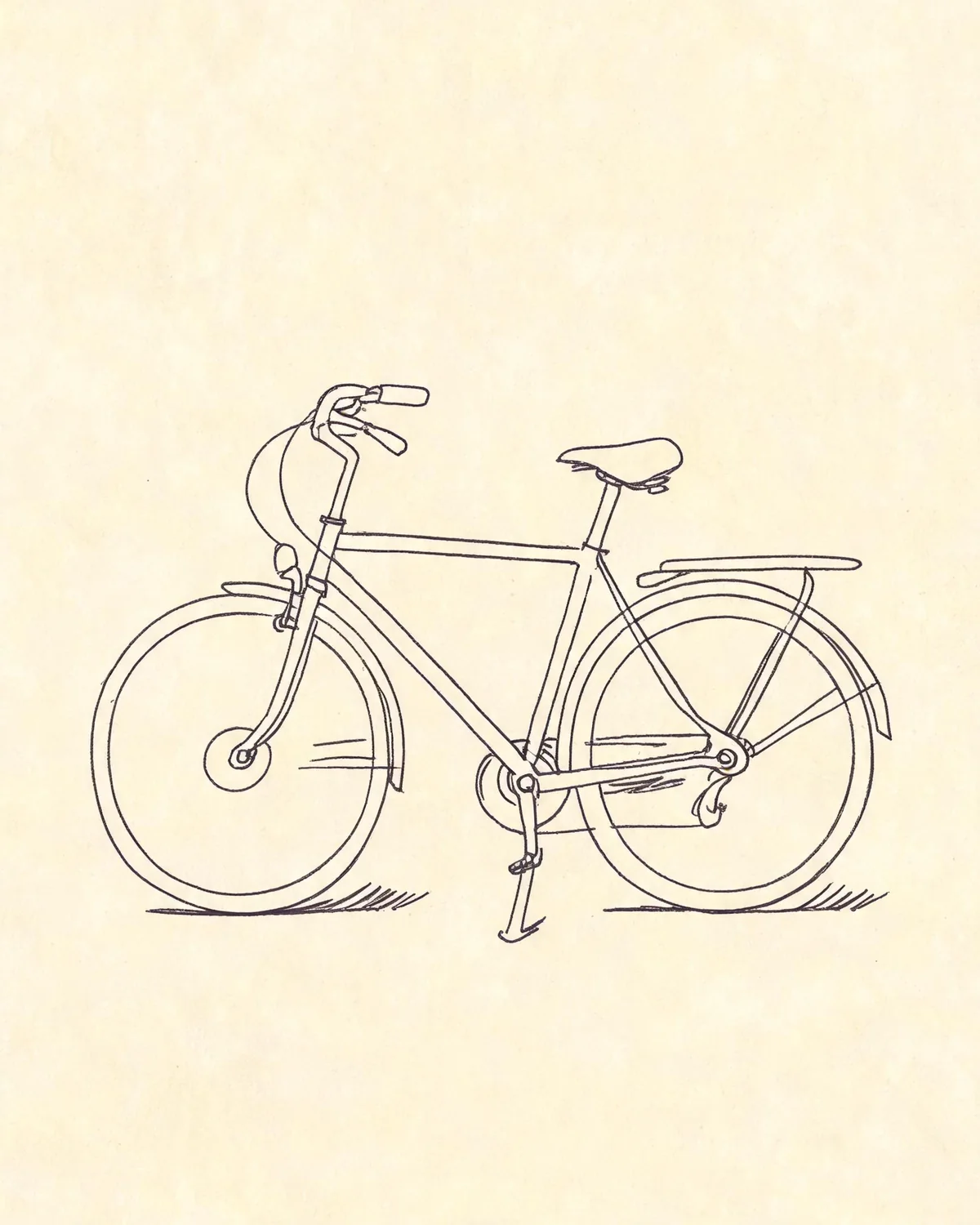
What It Means When You Dream of Riding a Bicycle
A bicycle moves because the rider pushes it. Other vehicles can be carried by an engine, a driver, or a crowd. This one requires your own effort, and the route stays personal: you choose the turn, and the machine does not easily run backward. That makes it an image of progress you are powering, a plan, a skill, or a freedom that exists only while you keep it going.
Balance is the second fact. It holds only while you move forward. Ease off on a slow machine and it falls. The delight of the ride and the bruise of the spill come from the same condition: momentum and attention have to agree.
Ordinarily one person rides. A second person changes the physics and the story. A tandem, or a child on the rack, means the effort is shared and the balance is no longer yours alone.
Why This Dream Shows Up Now
These rides often show up when a skill is crossing from effort into habit. At first you think about every correction. Later the balance runs by itself, and thinking about it is what makes you wobble. A new job, a new city, a responsibility just taken on: sleep puts you on the bike when the support is gone, or when you still need it.
A real ride can return as feeling. A near miss, a hill you walked, a fall that belonged to you or to someone you stopped from riding: the night reuses the speed and the moment you could not put a foot down. It is borrowing that memory, not arranging another crash.
Sometimes the week is simply moving faster than you can brake. A commitment, a relationship, or a deadline gains speed on its own. On this machine, stopping without balance is itself a fall, so interrupting the pace can feel as risky as letting it continue.
How the Meaning Changes
The grade of the road, the extra weight, and whether the bicycle is still yours change the ride.
The hill steepens and the brakes fail
The descent starts as fun and then the levers do nothing. Houses blur. You cannot put a foot down without losing the machine. This version sits with a situation that has its own gravity: a choice already made, a debt, a mood, or a relationship that accelerates when you try to slow it.
Someone rides on the back
A child, a partner, a friend, or a stranger holds the rack, and the steering gets heavier. You are still the one who has to pedal. Dreams like this often belong to care you cannot set down: someone else's weight is now part of your balance. If the passenger was steering while you pedaled, effort and direction have split. Resentment names the cost. Gladness names a machine you meant to share.
The bicycle is gone
You return to the rack, the porch, or the school gate, and the bike is not there. Sometimes you watch someone ride off on it. The loss is a freedom you used without thinking, a way of getting places that did not depend on asking. A lock you forgot, or a lock that was cut, shows whether the loss feels like your lapse or like a theft.
You are still learning the balance
The handlebars jerk. A parent's hand is on the seat, or it has just let go. Every correction makes the next one larger. This is the skill before it becomes automatic: a license, a language, a role in which watching yourself is what makes you tip. Staying on the grass means you still want a hand nearby.
How Cultures Have Read This Dream
A bicycle has been taken as a personal vehicle of energy and of forward movement, one that does not run in reverse, under the command of the person pedaling rather than of a shared route. Freedom to steer a daily course sits beside the requirement of balance. Without momentum, the rider spills.
A second seat changes that picture. An old two-person bicycle has been read as two people keeping time so a bond can move. Learning the machine has been set beside first steps: jerky, then suddenly easy. One dream account puts a bicycle on a mountain peak and treats the impossible circuit as real, fear and elation on the same ride. Finishing on an old bicycle, against better machines, can feel like a hard completion.
Making Sense of It for Yourself
Start with your legs and your hands. Were you powering the bike, coasting, or already falling? A coast that becomes a descent is a different week from a climb you chose. Then count the riders. Alone, you are looking at a freedom or a skill that depends on you. With a passenger, you are looking at a weight you agreed to carry, or one that climbed on without asking.
The next morning, one admission is enough. Name the thing you are propelling yourself through, a project, a relocation, a care, and ask whether stopping would be a rest or a fall. If the brakes failed, write down what speeds up when you try to slow it. If the bike was missing, name the freedom you noticed only once it was gone.
FAQ
What does it mean to dream about riding a bike?
It usually concerns effort you have to supply yourself: a plan, a skill, or a freedom that continues only while you keep it in motion. Balance, brakes, and whether anyone else is on the machine decide the emphasis. The ride is not a forecast about a real road.
How is a bicycle different from a car in a dream?
A car can move when you are only a passenger, and an engine can keep going after you stop trying. A bicycle stops being a ride the moment your effort or your balance quits. The difference is who supplies the power, and how exposed you are when it fails.
What if I cannot steer?
A bike you cannot steer heads in a direction you are powering but not choosing. You may be working hard on a route someone else set, or on one that started as yours and has since taken its own line. The wobble is the information.
What if I am walking the bike instead of riding it?
Walking the machine means the balance, the hill, or the traffic has made riding impossible, and you are still unwilling to leave it. The progress is slower and more honest. People meet this image when a plan has to be hauled rather than enjoyed.
Why does a childhood bicycle come back?
A childhood bicycle often returns when a present skill still feels new, whether the scene holds an old bike, a parent's steadying hand, or the street where you learned. The machine is smaller than your adult life, and the body remembers when balance was still being learned. That first wobble is the clue.