There Is Light Further in the Cave
A rock lip at shoulder height, cooler air moving out of it, and a decision you did not plan to make today. Cave dreams tend to arrive when something in waking life has narrowed to a choice between cover and exposure. The place is not a room. It is a fold in the land, and what it offers depends on whether you walk in, camp, or cannot get back out.
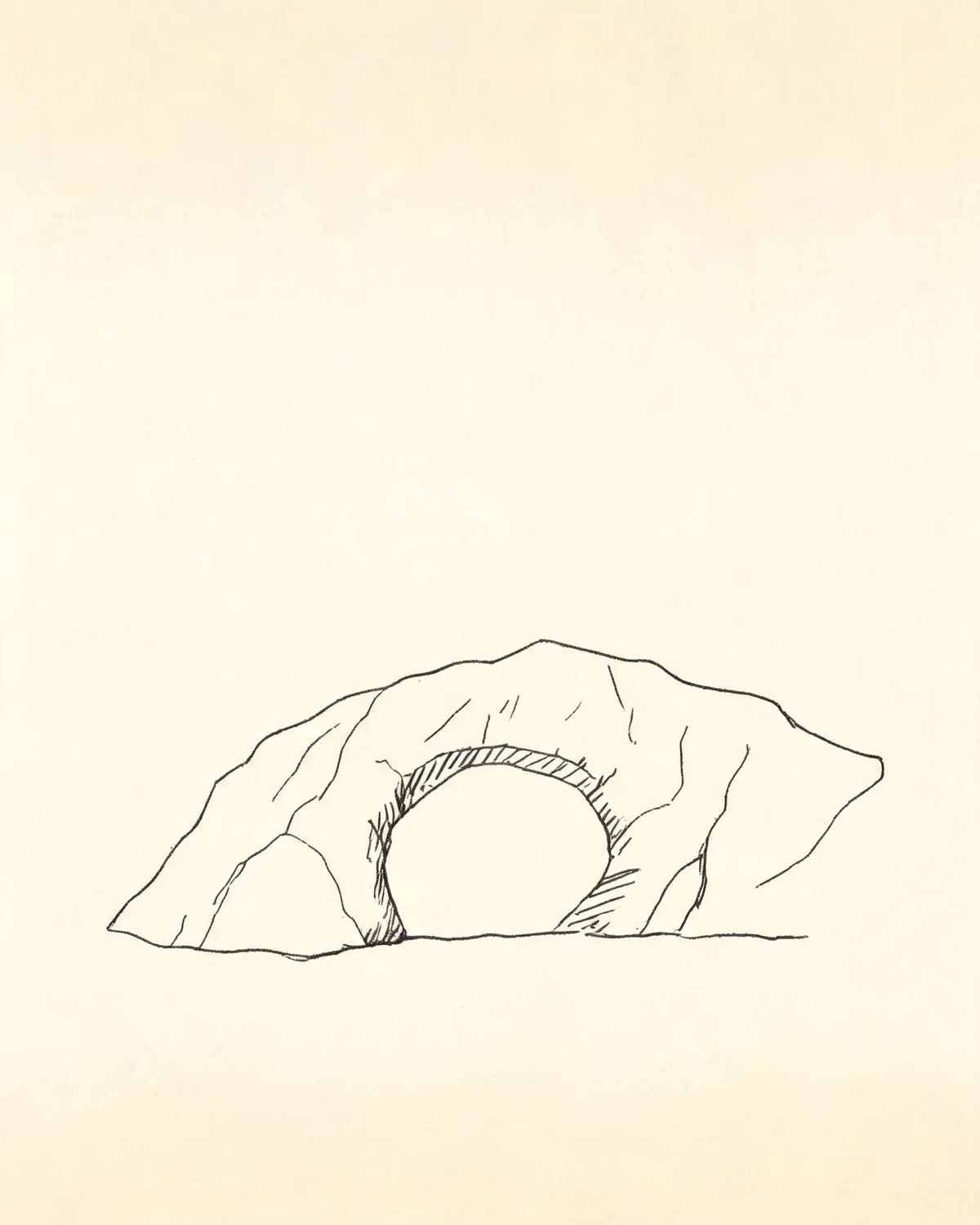
What It Means When You Dream of a Cave
The plainest reading is cover. A cave is where weather cannot reach and other people rarely follow, and an early Islamic reading treats entering one as reaching safety, sometimes from an enemy at your back. Older symbolism goes further and calls it the sheltering side of the earth, a mountain with a hollow in it. If you stepped in gladly, that relief is the part to keep.
A second reading is the change that happens out of sight. Caves were the oldest kind of sanctuary, marked with paint long before anyone raised a temple, and the way in was often a passage narrow enough to commit you. What went on in them was not storage but a turning: a person went in one condition and came out in another. A dream cave keeps that shape, a stretch of hours with no audience.
A third reading is what the cave keeps. Its dark has been read as concealment in the plain sense, a place for secrets and for the parts of a life not shown. That is not automatically shame. Some material needs a dark room before it can be looked at. What matters is whether the hidden thing is being protected or only avoided.
How the Meaning Changes
Hiding in a cave
You went in because the outside had become worse. Shelter is the whole content of this version, and the depth of the relief shows how much pressure was on the door. Rest that settles is rest. Rest that keeps you watching the entrance has not finished, and the scene may be showing you how long you have been holding your breath.
A cave you cannot leave
The way out has gone, the passage is too narrow, or the dark has no edge. Shelter has turned into a container. Older readings of the cave as a place of trial built the same difficulty in: the candidate was left inside and had to find the way toward light. Being unable to leave asks whether the retreat was ever meant to end.
Light or water inside
A pool, a crack of daylight, a spring running further in. Water in stone has been read as life where life should not be, and light entering turns a hiding place into a threshold. If you walked toward either, the dream has already begun moving you out.
Making Sense of It for Yourself
A basement sits under a house a family built; a cave sits in land nobody built. That difference is worth holding, because the first tends to keep family material and the second keeps your own terms with shelter.
Ask what you were doing before you went in: walking, fleeing, exploring, or already asleep. Then ask which way the entrance faced. One useful step is to name the single thing you have been keeping out of sight, and decide whether it needs a lock or a lamp.
FAQ
What does a cave mean in a dream?
It usually pictures shelter, retreat, or something kept out of view. Whether you entered freely, camped, or could not leave decides which of those is active. The feeling at the entrance is a better clue than the size of the cave.
Is a cave dream a bad sign?
No fixed answer. A warm, dry cave can read as rest after strain; a cold one with no exit can read as a retreat that outlasted its purpose. The temperature and the way out carry the tone.
What does it mean to be trapped in a cave?
It can suggest a withdrawal you cannot end, or a passage you entered without seeing the far side. Look at what blocks the way out rather than at the darkness. The obstacle usually names the thing still unresolved.
What does light inside a cave mean?
Light in stone has been read as a threshold rather than an ending. It can picture something alive in a place you assumed was empty, or the first sign that the retreat is finishing. Walking toward it is the part worth remembering.
How is a cave dream different from a basement dream?
A basement is a room under a house, and it tends to hold what a household stored and forgot. A cave is in open land, offers cover rather than storage, and is usually reached on foot. One asks about family history; the other asks about shelter.