Is the Church in Your Dream a Shelter or a Courtroom?
You slip into a pew at the back, late, and the wood still smells of dust and polish. Or the building is empty, and your footsteps are the only sound. A dream about church is usually about a marked-off place: belonging, conscience, ritual, shelter, or a Sunday you did not choose and have never quite left.
On this page
- Key takeaways
- What it means
- Why it shows up now
- How the meaning changes
- How cultures read it
- When the Church in the Dream Belongs to Childhood
- Church Dreams and the Weight of Conscience
- Is a Church Dream Good or Bad
- What a Spiritual Reading of a Church Dream Can Offer
- What it is not
- Modern research
- Making sense of it
- Religious readings
- FAQ
- Related symbols
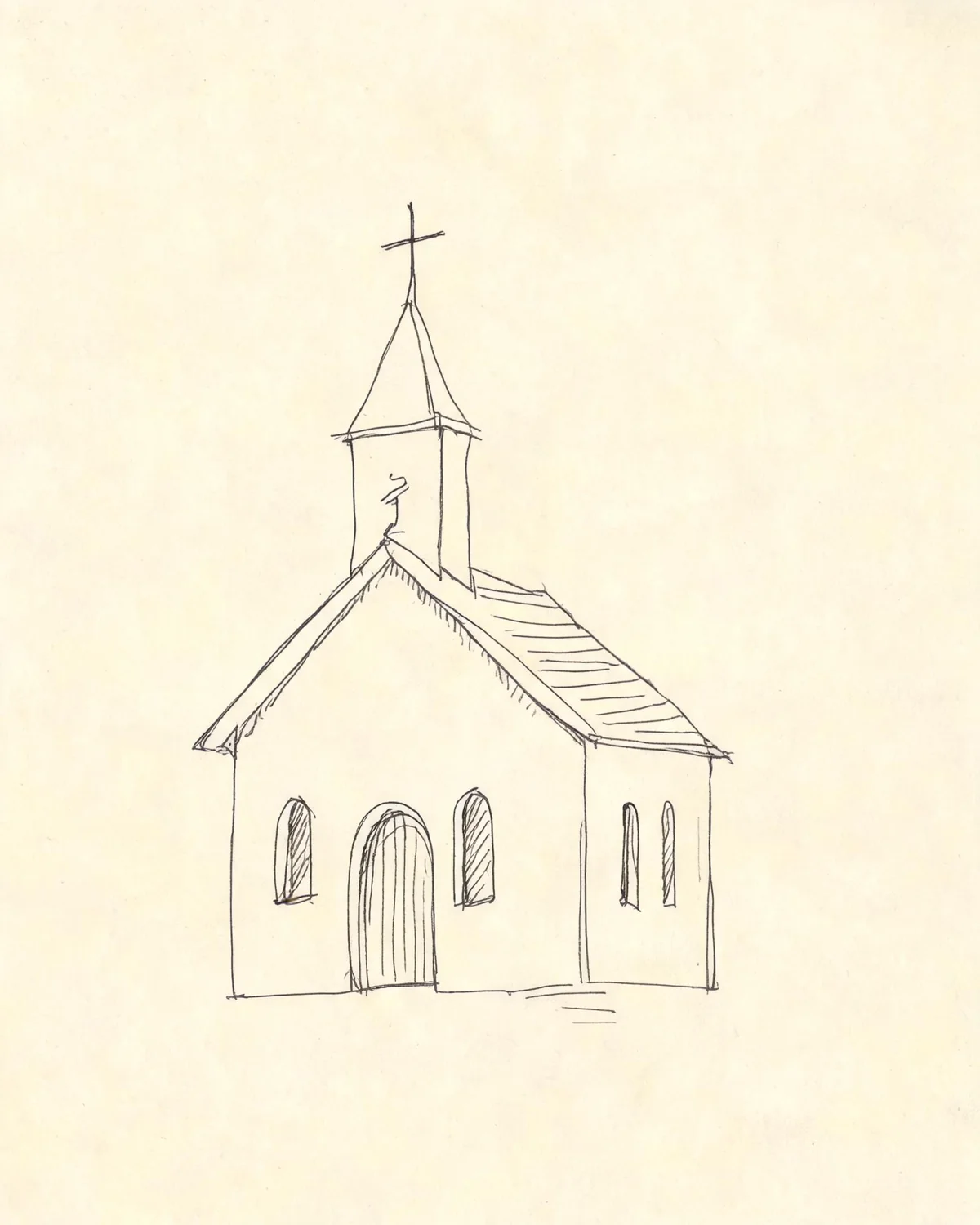
Key Takeaways
The page stays with the building and the feeling in it. It does not decide which tradition is right, and it does not tell you to return or to stay away.
A few places to begin:
- A church in a dream often stands for a community, a conscience, a rite, or a roof.
- Empty, crowded, burning, locked, or nighttime scenes change what the building is doing.
- The church of childhood is often memory, not an order to go back.
- Some traditions treat the building as sacred space. Others treat it as the people, or as the inner life. This page does not rank them.
- Feeling judged in a pew is a moral mood, not a verdict on your life.
- A fire or a collapse in the dream is not a forecast about a real building.
What It Means When You Dream of a Church
A church is ground set apart. Older image traditions heard, in the word for a temple, the act of cutting a line through ordinary space. A dream about church often draws that line around a promise, a value you do not joke about, or a grief you have not let become casual.
The building is also a crowd, or the lack of one. A full nave asks whether you have a seat. You may be inside the song, or watching a community you no longer know how to enter. Belonging here is not only religious. A crowd in any hall can ask a similar question. The church adds the sense that the gathering is meant to be more than social.
Conscience is the third current. People dream of churches when something they did will not sit down. High ceilings and a facing-forward do the work of a witness. That feeling can be honest moral attention, or an old habit of shame learned in a Sunday school. The dream shows the posture. It does not pass sentence.
A fourth current is shelter. A cave, a house, and a church have long been read as protection for what is not ready to be outside. If you reached the building in rain or out of breath, the hour may be about a roof more than about doctrine. The door tells you whether the roof was available.
Why This Dream Shows Up Now
Church dreams often follow a rite you attended, avoided, or were asked to plan. A wedding, a funeral, a baptism, a holiday service you sat through for someone else. Sleep reuses a place that already knows how to organize a strong feeling: kneeler, echo, flowers.
They also come when you have drifted from a community you grew up in. The distance can be peaceful or bitter. The dream restores the building because membership is awake again, even if you have no plan for Sunday. A hometown visit does the same work. The stone is still on that corner in sleep.
A moral knot is another door in. A lie you are maintaining, money that feels wrong, a person you have been judging in a pulpit voice. The church arrives as the room where that voice already has a chair. You do not need to be a believer for the chair to be familiar.
Sometimes the dream is rest. After a loud week, the mind builds a quiet interior with filtered light and calls it a church, because that is the quiet it remembers. Not every church dream is a crisis of faith. Some are a request for an hour with the phone face-down.
How the Meaning Changes
The building's condition, and your freedom to be inside it, move the reading more than the sign over the door.
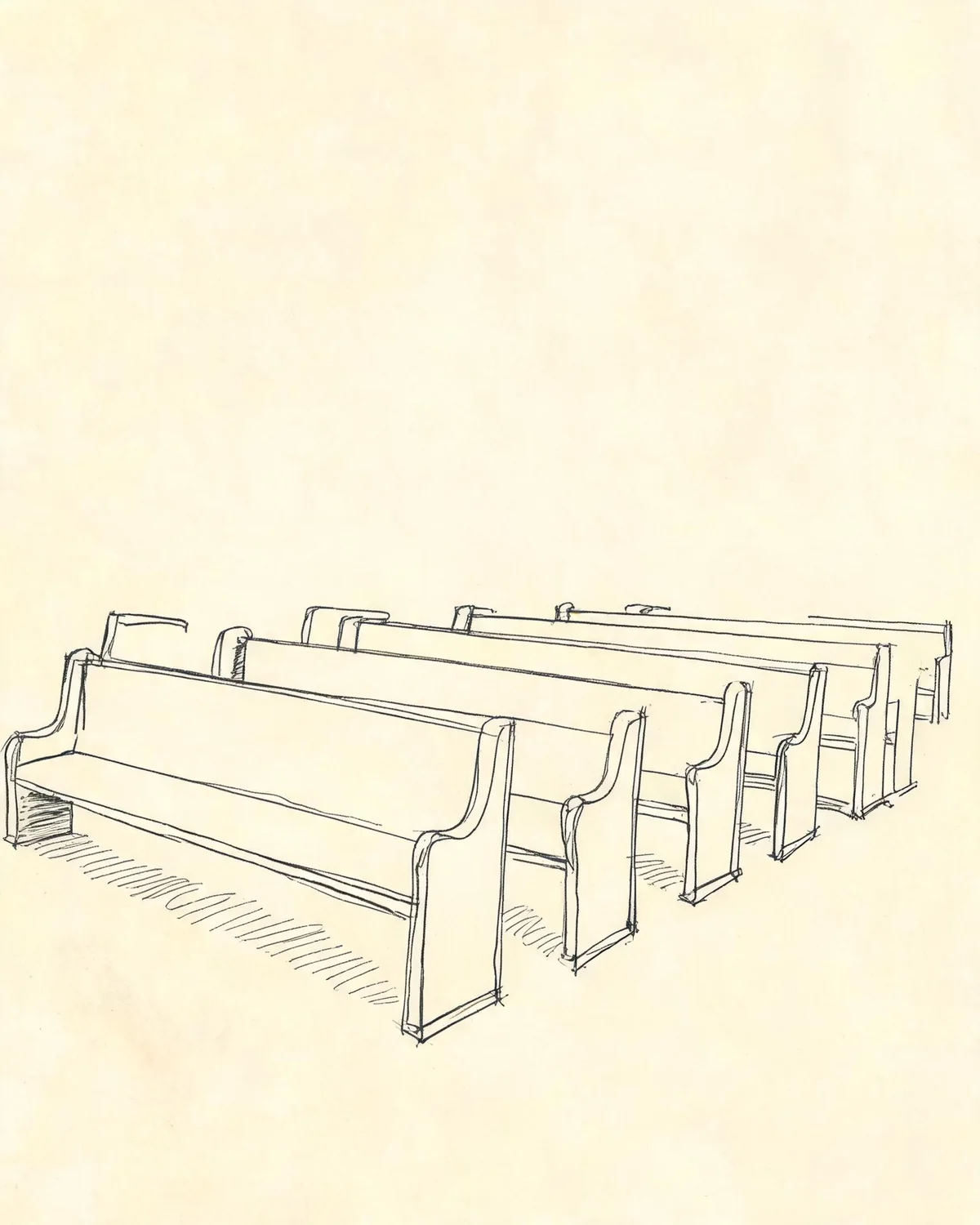
An empty church
Empty pews can feel peaceful or abandoned. Peace leans toward a private hour you are holding without an audience. Abandonment leans toward a community that thinned out, or a practice you stopped and still miss. Dust pushes the scene toward neglect. Clean light on the floor pushes it toward quiet. The dream is not a measurement of how real your beliefs are.
A church full of people
A full service puts you in relation to a group. You may know the faces, or they may be strangers who still know the responses. Singing in the middle is different from standing in the aisle, and both differ from hunting a seat that is not there. A packed room can also be the family in ceremonial clothes, even when the faces are not yours.
Sitting through a service
Prayer, a sermon, or simply waiting for it to end: the service is time you cannot speed up. People dream it when waking life has lost its rhythm, or when they are stuck inside a process with a timetable. If you knew the words, the dream may show fluency in a tradition. If you had forgotten them, it may show the awkwardness of a language you dropped.
A church on fire or falling
Fire in the roof, or walls coming down, can picture a belief, a community, or a moral framework that feels as if it is failing. It can also picture anger at the institution, or fear that a shelter has become unsafe. The image is not a forecast that a building will burn, and wreckage is not a lesson you deserved. If the feeling is close to panic, read it beside other dreams of fire.
Locked out or told to leave
The door will not open, or someone walks you out. The scene often carries shame, exclusion, or a rule you have not finished with. It can also carry relief, if some part of you wanted to be outside. Who stands in the doorway changes it: a parent, a stranger, or someone you know from the congregation. It is not evidence that every room will refuse you.
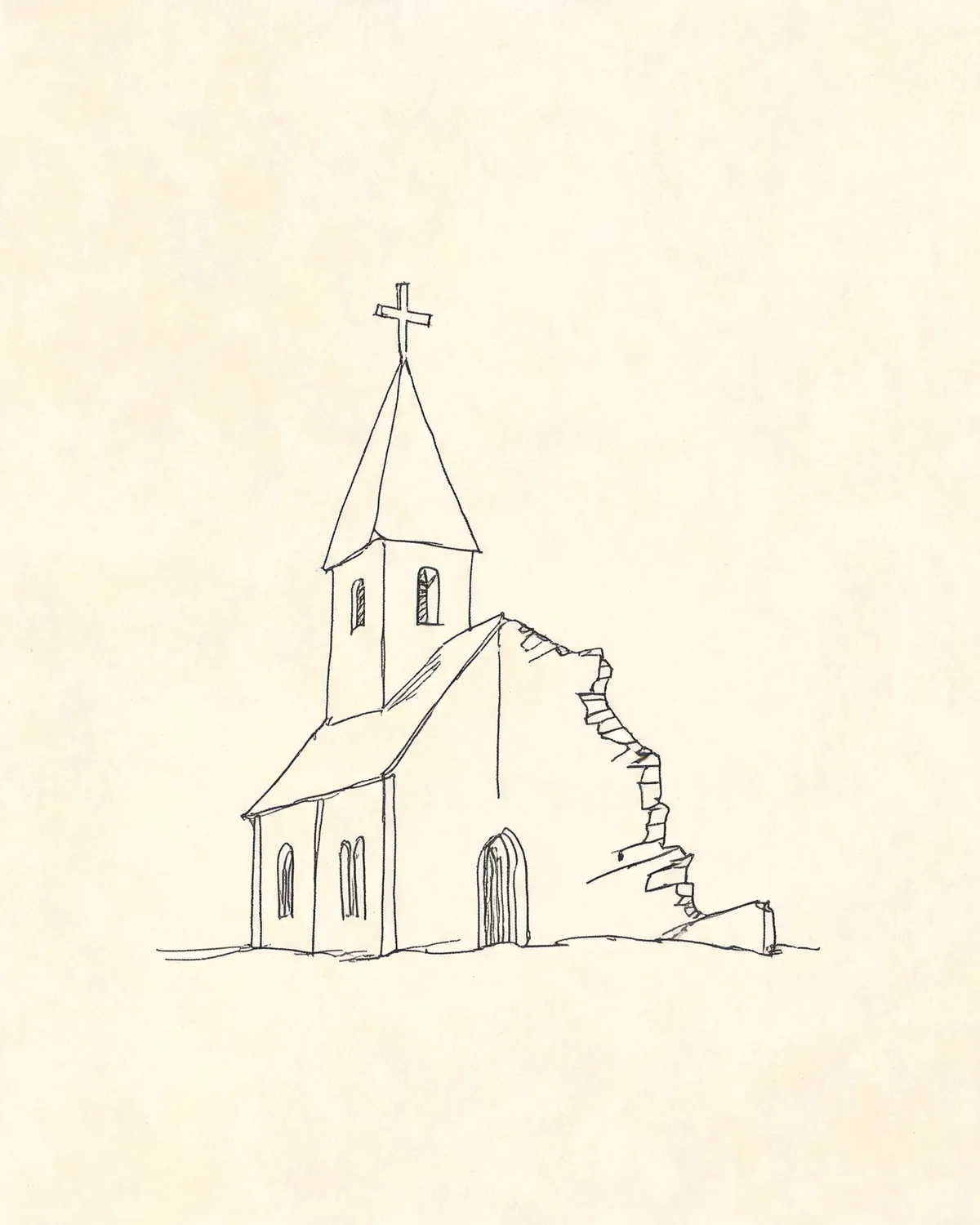
An old or ruined church
Stone, peeling paint, grass in the aisle. Ruin points to something that once organized you and has lost its upkeep: a congregation, a marriage, a standard, a town. Ruin is not the same as the church of your childhood, which can be vivid and intact. Here the building itself is tired. What remains standing is the part of the old order you could still use.
A church at night
Night removes the coffee hour and the watched behavior. A night church can be where you go when you do not want witnesses. It can also be where the lack of witnesses makes you afraid. Candles or complete dark tell you whether the hour felt guarded. The dream is often about privacy inside a public symbol.
How Cultures Have Read This Dream
Many building traditions treat a temple or a church as a small picture of a larger order. The plan was imagined as lined up with a pattern above it: an altar at the center, the way a hearth sits in a house, a place where what is above and what is ordinary were said to meet. Climbing toward that center was read as leaving the clutter of the street.
The buildings do not all make the same claim. One image tradition describes them as showing the temperament of the people who raised them: exuberance in some, measure in others, a stress on wisdom and love, a stress on the joining of heaven and earth. For a dream, the point is modest. The building is never only bricks. It is a claim about what deserves a center.
In Islamic dream lore, a church seen by a Christian dreamer was read as worship, knowledge, devotion, and the fear of doing wrong, and also as penance and tears. The same building could be a meeting house, a wedding, or a place of distress and confinement. A private house that turned into a church was read as an institution's business crossing into home life, or as friction with someone in authority.
In an old Hebrew and Christian image-world, the temple was a dwelling and a house of presence: song, fragrance, prayer, and ritual thick enough to mark the senses. It was also a risk. A building that reminds people of protection can trick them into thinking what is holy is owned by the walls.
Greek and Roman dream reading watched what people did inside. Sleep in a temple was read as rest for someone already weighed down, and as worry, or a turn toward help, for someone who had been well. Arrival alone settled little. Whether you slept, waited, or only looked changed the reading, and none of it is a forecast.
Different traditions read this symbol differently; this page does not claim one tradition is correct.
When the Church in the Dream Belongs to Childhood
The church of childhood is a particular room. You know the carpet, the hard seat, the hymn you resented, the hand that kept you from fidgeting. The dream often returns that room when adult life asks who formed you. The formation may have been kind or airless. Both can be accurate.
People sometimes treat the dream as a summons back to a congregation. It can be that, if you already wanted to go and the dream showed you the door. More often it is memory doing what memory does with places that organized time. A parent beside you in the pew may matter more than the altar. The dream is then partly a family dream that happens to wear stone.
If that Sunday felt like safety, you can keep the safety without a rule that you must recover the doctrine. If it felt like surveillance, you can name the surveillance without deciding that every religious building is a trap. Which part do you still live inside: the steadiness, the shame, the music, the wish to be good, the wish to reach the car?
Church Dreams and the Weight of Conscience
Conscience here is the feeling of being seen by a standard. You may know the standard as God's, as a parent's, or only as a tightness in the chest. For a Christian dreamer, a church has been read as fear of wrongdoing, as penance, and as tears. The building gathers the wish to be forgiven and the fear that forgiveness is a performance you could fail.
Older temple readings pushed the same nerve. Washing what was sacred could be read as an admission that something was off. Pulling a temple down could be read as distress so far along that respect had already broken. Cleaning, in your dream, may be the wish to repair a specific act. Wrecking the building may be anger at a standard that has become cruel, or grief that a standard you needed has failed.
Shame in a pew is not a verdict, and it is not proof of an outside attack. Ask which rule is speaking, and whether you still consent to it. Some rules are worth keeping. Some are only the echo of a room that scared you at eight. You can sort them slowly, and you do not have to do it alone if the shame is old and large.
Is a Church Dream Good or Bad?
Neither, as a fixed label. A church can be the safest room in a hard month, or the room where you feel most accused. People who want the dream to declare itself fortunate or ominous are often asking whether they are all right with the tradition they came from. The dream is a clumsy tool for telling what follows them out the door. It is a better tool for the first question.
Shelter, a seat among people who know your name, and a quiet hour tend to feel like relief. Fire, expulsion, and a voice from the front that sounds like contempt tend to feel harsh. A beautiful church is not automatically good news. Beauty can be awe, or a standard you cannot meet. An empty church is not automatically a loss. Emptiness can be peace.
If you woke grateful, the gratitude points at a hunger: quiet, company, forgiveness, a standard you respect. If you woke small, that is information too. The building did not issue a sentence.
What a Spiritual Reading of a Church Dream Can Offer
A spiritual reading treats the church as set-apart space. Inside the line, ordinary errands pause. People bring vows, grief, and the hope that they are more than their worst week. Some traditions say the divine dwells there in a special way. Some say the holy thing is the gathered people. Some say the inner life itself is the sanctuary, and the stone is a picture of that interior.
That reading can be useful. It gives language for awe, and for repentance that is not self-hatred. It can also be misused. It is not a summons with your name on it, and it is not evidence that you are under attack from outside yourself. It does not prove you must rejoin a congregation or confess to a particular authority. Those are waking decisions. The dream can sit in the conversation. It does not get the deciding vote.
If a spiritual account comforts you, you can keep it. If it frightens you, you can stay with the plainer reading: belonging, conscience, ritual, or shelter. No single tradition is set above the others here.
What This Dream Is Not
A church dream is not a ruling that one tradition is true and the others are mistakes. It is not a command to go back, and it is not a command to leave. It is not evidence of an attack from outside the dream. The page will not teach those claims, because a dream cannot show them.
It is also not a forecast. Fire in the nave does not mean a building will burn. A collapse does not mean an institution will fall on a timetable. A locked door does not mean you are shut out of every community you might still choose. If the dream frightened you, the fear is information about pressure, shame, or loss of shelter.
The dream is not a measure of how faithful you are. People with a steady practice dream of ruins. People who have stayed away for years dream of a peaceful nave. The scene follows feeling and memory.
Modern Dream Research
A church is a place the senses remember in high resolution: varnish, cold stone, wool coats, a note lagging in a high room. Dreams reuse places like that because they already know how to hold a feeling. Even a person who left early can dream the floor plan accurately.
The week chooses which feeling the floor plan will hold. A moral knot leans toward being seen. A family rite leans toward the crowd. A wish for quiet leans toward emptiness and light. Your direction of travel, toward the front, toward the door, or stuck in the aisle, often says more than the name on the board outside.
None of this cancels a spiritual reading, and none of it requires one. The building is a container either way. What you did in the aisle is the part you can use in the morning.
Making Sense of It for Yourself
Walk the dream once before you decide what it means. Could you enter? Where did you sit? Who else had a body in the room? Then ask whether the building behaved like shelter, like a courtroom, or like a museum of a childhood you have mixed feelings about. Shelter asks what you need rest from. A courtroom asks which rule is speaking. A museum asks what you want to keep from the Sunday you were given.
Write one sentence about what the building was protecting, and one about what it was judging. If both sentences are harsh, pause. You are allowed to talk with someone who will neither rush you back into a doctrine nor mock the fact that the room still matters. If the dream was simply quiet, you can protect an hour of that quiet this week without making it a conversion story.
Religious and cultural readings
Christian dream interpretation has its own reading of this image.
FAQ
What does a dream about church usually mean?
It usually touches belonging, conscience, ritual, or shelter, often with a real building attached. Where you sat, and whether you could enter, tells more than the sign over the door or the name of the tradition.
What if I heard bells?
Bells gather people. In a dream they can be a call you feel ready for, a summons you resent, or a sound from a town you left. The clue is whether you walked toward them or wanted them to stop.
What if the church was beautiful?
A beautiful church can be awe, comfort, or the pressure of a standard that leaves you outside it. Stay with your body in the dream. Ease and smallness are different readings of the same glass.
What if I was singing with a choir?
A choir is a group voice. Singing with it can picture belonging, or the strain of matching a tune that is not yours. A solo you did not want differs from a harmony you enjoyed.
What if the dream was a wedding in a church?
In a church wedding dream, the building is hosting a vow. The dream may show a real wedding, a commitment you are considering, or a rite your family treats as the right container for love. The partner matters as much as the aisle.
What if people from my real congregation were there?
Known faces pull the dream toward a living community, with its loyalties and its frictions. Ask whether you felt known, managed, or simply glad of company. The dream can be about those people.
What if I have not set foot in a church for years?
Years away from church do not disqualify the dream. The building can return because a rite, a hometown, or a moral question woke the old floor plan. It is not, by itself, an order to resume a practice you left.
What if my house turned into a church?
Home taking on a church's features can mean a public standard or a family rite has moved into private life. It can feel like reverence or like an invasion. The feeling decides which.
Does a church dream mean I should go back?
No. The dream is not an order to rejoin, and it is not an order to stay away. If you already wanted to go, it may show that want more clearly. The decision stays in waking life.
What if it was a huge cathedral rather than a small chapel?
The scale of a huge cathedral or a small chapel changes the pressure. A vast building can picture awe, or a tradition larger than your life. A chapel can picture intimacy, or a faith shrunk to a room you can bear. Neither size is the better one.