Why Some Dreams Keep Their Colors and Others Go Gray
A room that was plain at bedtime comes back in three hues, or the night returns as a gray reel with the pigment scraped off. Color is how a dream separates feeling from mere event. It shows which part stayed emotionally loud, and whether morning kept that loudness or let it thin.
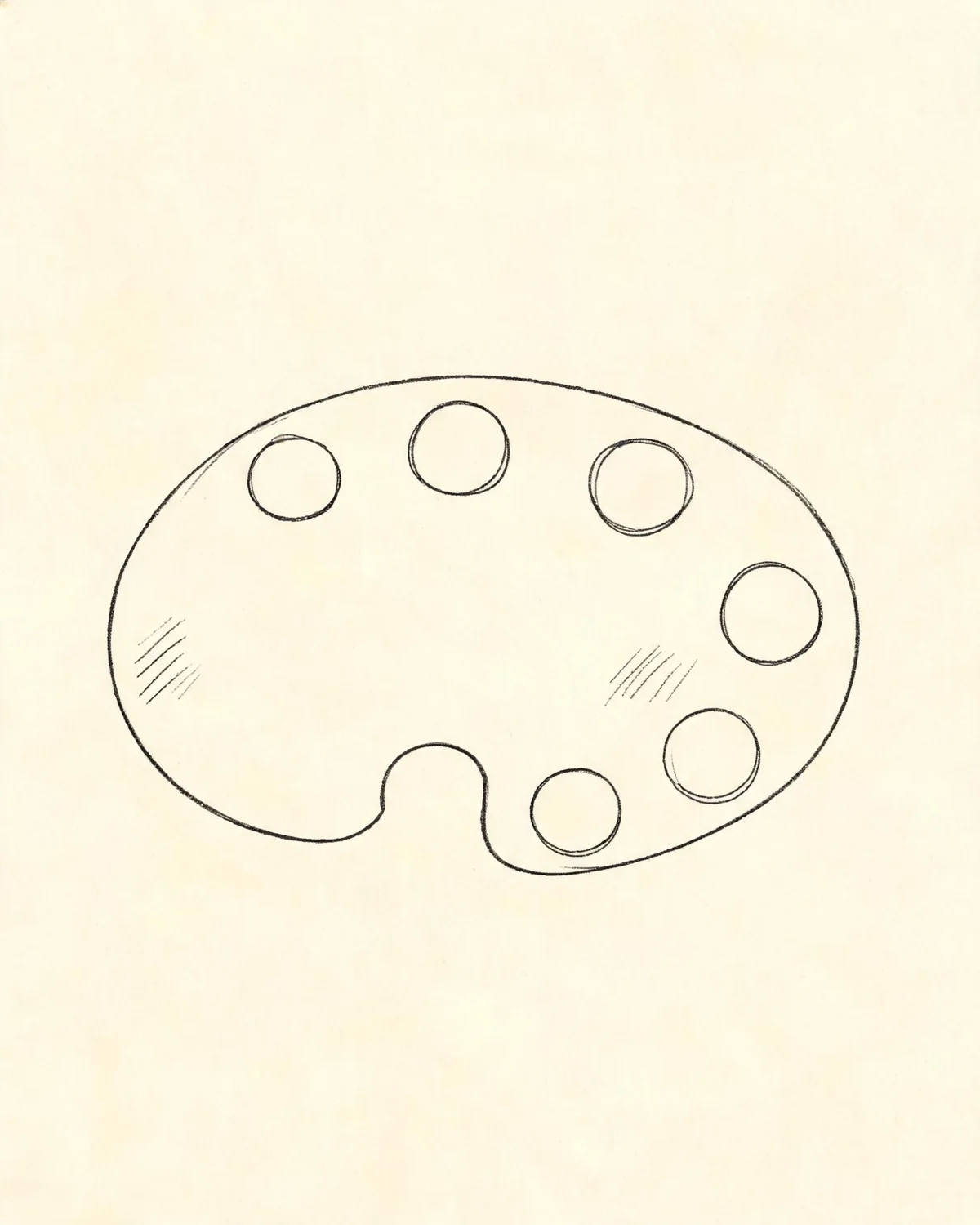
What It Means When You Dream of Colors
Color is the dream's sorting tool. A hue that steps forward, such as red, orange or yellow, usually belongs with heat, appetite or a push for attention. A hue that sits back, such as blue or violet, usually belongs with distance, quiet or a feeling that has cooled. Green often holds the middle: alive, and not yet decided. This page is that sorting. It is not a fortune attached to each pigment.
A night remembered in full color is often one whose feeling was strong enough to last past waking. A night that returns with no hue can be a scene staged in a narrow range, as if only two choices existed, or a scene whose ordinary tints were simply dropped. Familiar surfaces go first: skin, fruit, a plain wall. What remains is a gray field, or one detail that refused to fade.
Why This Dream Shows Up Now
Color gets louder when feeling is already high. A quarrel, a newly painted room, a garment you keep picturing, a season when the daylight itself changes: any of these can dye the dream. At this stage the pigment's name matters less than the fact that the night bothered to tint something.
A colorless dream tends to arrive when the week feels reduced to a pair of options, or when the days have gone flat. The image borrows the look of old film, with limited contrast and no middle shades. It can also be a failure of memory rather than a message. If the kitchen was clearly blue at the first waking and gray by breakfast, the night had color and the recall thinned.
Sometimes one object keeps a saturation that will not dim, while everything else is dust-colored. That split usually appears when a single concern has pulled ahead of the plot: a face, a door, a garment, a vehicle. The colored thing is the part that wants a second look. The gray remainder can wait.
How the Meaning Changes
What changes the reading is how widely the pigment is spread.
Dreaming in full color
When sky, cloth, food and faces are all saturated, the night is running at a high pitch. Several feelings may be active together, and they have not been sorted. The hue you can still name first usually carried the strongest charge. The others can wait for their own pages once that leader is clear.
A dream with no color
A scene without hue can look like a document, a newsreel or a house with the paint stripped. It often belongs to a stretch of life that feels historically distant, or to a decision that has collapsed into yes or no. If the flatness felt peaceful, the image is closer to relief from stimulation. If it felt poor, the week may have lost its distinctions.
One saturated detail
A single red shoe, a green door or a purple sky inside an otherwise plain dream is the night underlining one item. The object keeps its own meaning; the pigment adds a temperature. Read the thing first, then the page for that hue. A tinted animal and a tinted letter are not the same plot with a wash applied.
Colors that clash or keep changing
Orange against a cold blue wall, or a shirt that will not stay one shade, pictures feelings that refuse to settle. A pigment that changes while you watch can picture a mood in transit: anger cooling, interest warming, a role that no longer fits. Keep the first hue and the last one. The direction of the change is the content.
How Cultures Have Read This Dream
Many traditions treat color as light that has become visible difference. Hues that throw light back are called active and warm; hues that drink light are called quiet and retreating; a middle green often joins the two. Black and white stand as the pair of opposites, and black is also the stage before pigment returns, the way soil looks before shoots.
A working sequence used in alchemy moves from black through white toward red and gold, a picture of a process rather than a fortune. Elsewhere white, not black, marks a life completed. Maps that pin a hue to a direction change from one people to the next, which is why no chart of colors travels intact.
Making Sense of It for Yourself
Begin with the spread. Was the whole night saturated, was it gray, or did one object hold the pigment? That answer tells you whether you are facing a general pitch of feeling, a narrowed choice, or a single underlined thing.
Then name the temperature in the body on waking: heat, chill, glare, heaviness, or a plain relief. Write that word beside the color word before you open another page.
If one hue led, read it alone, on the page for red, orange, yellow, green, blue, purple, white or gold. If several hues shouted and none led, stay with the clash and the order of change. Match a feeling to a pigment. Do not collect a verdict for every surface in the room.
Religious and cultural readings
Christian dream interpretation has its own reading of this image.
FAQ
What do colors in dreams mean?
They sort the scene by temperature and emphasis. Forward hues usually travel with heat and appetite; receding hues usually travel with quiet or distance. The thing that wears the pigment, and whether you wanted to keep looking, tells you more than a list of fortunate shades.
Why do dream colors vanish by morning?
Dream colors vanish by morning because the tints you expected are easy to drop. Skin, ripe fruit and ordinary walls are so familiar that memory keeps the action and lets the tint go. A pigment you still know after breakfast was usually strange, loud or tied to the feeling that woke you.
Does a brilliantly colored dream matter more than a dim one?
Brightness is intensity, not rank. A dim night can be a low stretch, a distant memory, or a scene that simply did not need decoration. What matters is whether the dimness felt restful or starved, not whether the night looked decorated.
Should each color be read on its own page?
Yes, after you know which hue actually led. This page only decides the spread. A pigment's own history, its cloth and its light, lives on that hue's page. Opening several of those pages together usually washes the emphasis out.
What if many colors appeared and none of them led?
A dream of many colors and no clear leader is usually about mixture. Rival feelings are sharing the room, and no pigment has won. Stay with the combination and with the order in which the shades replaced one another. Five separate lookups will blur the emphasis the dream already made.