Is the Demon Out There, or a Part You Pushed Away?
A demon in a dream is a figure of fear that has taken a shape. It may appear as a shadow at the foot of the bed, a voice in an empty room, a known person with wrong eyes or a presence you feel before you see it.
Key Takeaways
A demon dream often carries more dread than detail. The image draws on old stories about temptation, harm and the unseen, but it can also be a picture of a fear, a habit or a conflict that feels larger than you. What the figure wants, and why it has come now, shapes how the scene is read.
- A demon usually stands for fear, temptation, a hidden conflict or a presence that feels threatening.
- A figure that watches can mean a worry that feels always present.
- A figure that chases can mean pressure or a conflict that is gaining on you.
- A demon that speaks can mean an inner voice, a temptation or a message you do not want to hear.
- The dream's emotion — dread, curiosity, anger or numbness — is the strongest clue.
What It Means When You Dream of a Demon
A demon is a cultural figure before it is a personal one. Many traditions use demons to picture temptation, harm or the pull of destructive desires, and that imagery can enter a dream even when you have no literal belief in such beings. A fear too vague to face directly may take that face.
The demon can also be a picture of an inner conflict. A habit, a jealousy, a secret or a pattern of anger can feel like something foreign that has taken up residence, and it may appear as a separate figure. That separation can be useful: it lets you look at the conflict without being completely inside it.
Power often shapes the scene too. A demon usually appears stronger than you, and that can mirror a situation in which you feel outmatched. Ask not whether the figure is real, but what it represents in your life and what it wants.
Why This Dream Shows Up Now
Demon dreams often arrive during a period of stress, guilt or inner conflict. A temptation, a secret, a broken promise or a repeated pattern can put a demon in the dream because the feeling needs a shape. However dramatic the figure, the material behind it is usually ordinary.
They can also surface around fear itself. A frightening story, a film, a religious conversation or a real experience of vulnerability can fill a dream with a demonic figure. Sorting the day's imagery is often all that is happening, with nothing being announced. An older memory of fear or shame can also wear the costume: a story heard in childhood, or a night when you felt unsafe, may be asking to be looked at with adult eyes.
Sometimes the scene is about powerlessness. A figure that cannot be fought, named or escaped can mirror a situation in which you feel trapped. Whatever authority you gave away is likely still yours to take back.
How the Meaning Changes
The figure's action and your response decide the reading.
A demon that watches
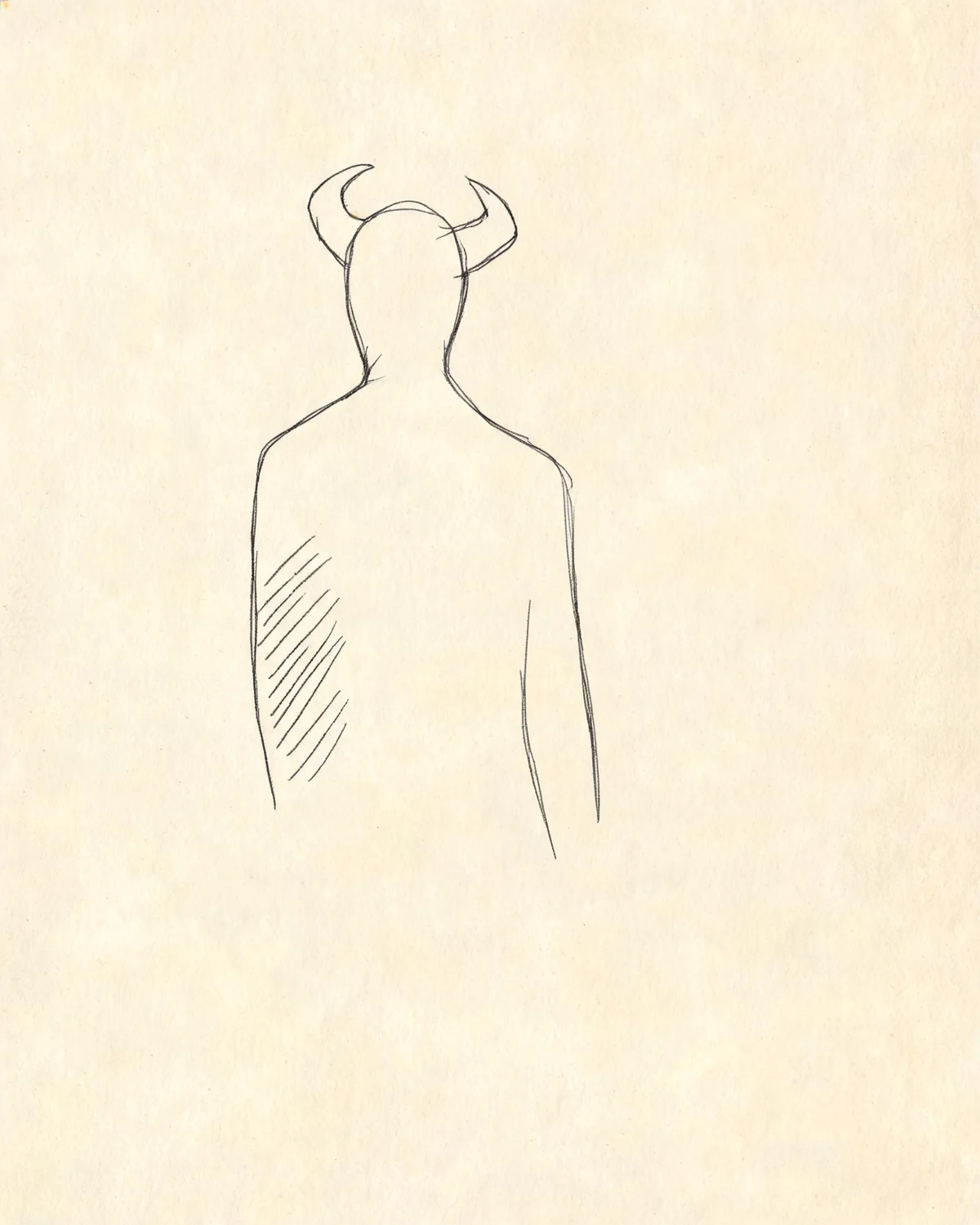
A watching figure can mean a worry that feels ever present. It may be a fear you have been avoiding, a person whose attention feels heavy, or a part of the self that will not look away. If the watcher has no face and makes no demand you could repeat, it is closer to an unnamed presence than to a figure you could describe. Notice whether it blinked, or only felt like eyes.
A demon that chases
A chase turns the dream into a confrontation with pressure. The figure may stand for a conflict, a deadline or a pressure that keeps closing in. Notice whether you ran, hid or turned around.
A demon that speaks
A speaking figure can mean an inner voice, a temptation or a message you do not want to hear. The words matter as much as the figure, and the tone can show whether the voice feels accusing, seductive or simply persistent. If the figure speaks in your own words, the dream may be showing how you talk to yourself when no one else is listening.
A familiar person as a demon
A known face with wrong eyes can mean that a relationship feels changed or threatening. It may be showing a person you no longer trust, or a part of the self that has taken on that person's voice.
Fighting the demon
A fight can mean resistance, courage or exhaustion. Winning may mean that a fear is being faced; losing may mean that you need help rather than more force.
Hiding from the demon
A hiding place can mean protection, avoidance or a need for shelter, and the same refuge can keep you safe or keep you small.
Waking but unable to move
A dream of a presence combined with paralysis can mirror a real sleep state. It is frightening, and sleep researchers describe it as sleep paralysis: the body is still partly in sleep while the mind is awake. The dream may still carry emotional material worth noticing.
An entity or unnamed presence
An entity is a demon that has not taken a clear shape. You may feel a pressure in the room, a figure at the edge of sight, or a presence that watches without a face you could describe. Some people read an entity as a fear that has not yet been named, which is why it feels larger than a person and harder to answer.
Notice where it stood and what it seemed to want: attention, silence, or a way in. If it never became a body, the dream may be showing the feeling before any story arrived. Write down the room, the hour, and the distance if you can, then give the presence an ordinary name such as worry, shame, or anger.
How Cultures Have Read This Dream
Demons appear in many religious and folk traditions as figures of temptation, harm or confusion. In some Christian and Islamic stories they are named beings with a will; in older folk tales they are closer to spirits of place, misfortune or bad fortune. The details vary, but the common thread is that a demon marks a boundary: something is being tested, threatened or invited in.
Modern dream writing tends to read the figure psychologically. The demon can be a shadow, a fear, a temptation or a conflict that you have pushed out of awareness, and the image gives that material a form. The old and new readings agree that the figure is not neutral; it is a presence that asks for attention.
Demon Possession Dreams: Why They Feel So Real
Possession dreams feel real because they borrow the body's own alarm system. A dreamer may feel held down, unable to speak or watched by a presence, and the dream supplies a figure that matches the fear. That experience can overlap with a sleep state in which the body is still caught between sleeping and waking, which is why the image feels physical rather than imagined.
Religious language can shape the dream too: if possession is part of your vocabulary, a dream may use it to picture a loss of control. A dream alone cannot answer a religious question about possession, and it is not a diagnosis. Ask what felt as if it had taken over, and what would help you feel in charge again. A calm conversation, rest and a safer routine often do more than fighting the image.
Dreams of being possessed often use that same picture: a will that does not feel like yours, a voice in your mouth, or a body that moves while you watch. Some people read it as a habit, a fear, or a relationship that has taken the driver's seat. A single figure who bargains, with terms and a name, is a different scene, and the devil has a page of its own. A crowd, a possession, or an unnamed pressure sits with the demon.
A Demon in the Shape of a Child, Baby or Animal
A demon in the shape of a child, baby or animal is unsettling because it puts the threat inside something that should be safe. A child-demon can mean a fear that has grown up with you, an old memory or a vulnerability that now feels hostile. A baby-demon can mean a new responsibility that feels monstrous rather than tender.
An animal-demon can move the fear into instinct: something you trust, whether a body, a habit or a familiar role, has turned strange. Notice what the figure did and whether you wanted to protect it or escape it. The shape is the disguise; the feeling tells you what is underneath, and whether you are afraid of the thing or of your own response to it.
The Demon as Shadow: Reading the Disowned Self
The shadow reading treats the demon as a part of the self that has been pushed out of sight. The dream may take a quality you dislike, such as anger, appetite, ambition or fear, and give it a hostile face, because a disowned part is easier to fear than to own.
A disowned quality is something that wants attention and has been denied a place. Notice what the demon accused you of, what it wanted and whether you recognized its voice. Integration does not mean obeying the figure; it means listening without letting it run the room. The dream asks what would change if that quality were named and given a bounded place.
The figure may be ugly, but its demand is often simple: it wants to be included rather than exiled.
What This Dream Is Not
A demon dream is not a punishment for anything you have done. It is not a prediction about the future. The figure carries fear and conflict, not a report from another world.
Nor does a demon dream mean that you are bad or broken. If the figure frightens you, that fear is real and deserves care.
Modern Dream Research
In sleep paralysis, a person wakes with the body still held and senses a presence in the room; the state can supply a dream with the sense of an intruder who cannot be escaped. The figure is not a report from another world, but a vivid way of giving shape to fear while the body is caught between states. A figure that accuses may stand for shame; one that tempts may stand for desire; one that chases may stand for a fear not yet faced.
Research on nightmares also finds that frightening dreams tend to cluster in periods of stress, poor sleep and change, and that recurring nightmares often ease once the waking worry behind them is named and addressed. That pattern fits the demon well: the figure tends to grow louder when life is crowded and quieter when the pressure has somewhere else to go.
Making Sense of It for Yourself
Name the feeling: dread, anger and temptation are different experiences behind the same figure. Ask what the figure wants, since attention, obedience, silence and recognition each point to a different conflict. Check the setting, because a familiar house, a place of worship and an unknown landscape carry different meanings.
A demon dream can leave you afraid to go back to sleep. Turning on a light, writing down what the figure looked like and reminding the body that the dream is over can help. The fear is real, but the room is still the room.
In the dream, what did the figure want, and what did you do: freeze, bargain, pray or speak? If the figure spoke, notice whose words it seemed to borrow. A name that is not supernatural often helps: anxiety, shame, anger, exhaustion. Once the feeling has a plain name, it becomes easier to carry and easier to discuss.
Old stories give demons names, ranks and rules, and a dream may borrow that detail because it makes fear easier to picture. Write down the one quality the figure carried and one safe way to meet that quality this week. If the same figure keeps returning, it may be asking for a conversation rather than a fight, and a trusted friend, a therapist or a journal can help you put words to what it represents.
Religious and cultural readings
The demon is read differently across traditions. Explore a reading:
FAQ
What does it mean to dream about a demon?
A demon dream is usually read from what the figure did, whether it watched, spoke or chased, and from what you did back. That pair names the conflict more precisely than the figure's shape.
Is a demon dream a bad sign?
It is not a fixed sign. A demon can feel frightening, but the figure carries fear and conflict rather than a forecast. The scene's emotion and the figure's behavior decide the tone.
Why do I keep dreaming about demons?
A recurring demon dream can mean that a fear or conflict is still asking to be faced. It may return because you are avoiding a conversation, or because a stressful situation keeps giving the figure new material.
What does it mean to fight a demon in a dream?
Fighting back is often a turning point in a frightening dream. Many people find the figure weakens or the dream changes once they stop running. Whether you won matters less than the fact that you faced it.
What does it mean to see a familiar person as a demon?
When someone you know appears as a demon, the figure is usually exaggerating a real unease, not revealing who they are. Ask what that person did recently that felt wrong, and whether the wrong eyes are theirs or a mood you have absorbed from them.
What does it mean to wake up unable to move after a demon dream?
That experience can mirror a real sleep state in which the body is caught between sleep and waking. It is frightening, and it is common enough to have a name: sleep paralysis. The emotional material of the dream is still worth noticing.
Can a demon dream be about guilt?
Often, yes. A figure that accuses or watches can carry the weight of something you regret or have not said. Naming the specific thing, such as an apology owed or a promise broken, usually makes the figure feel smaller.
How should a demon dream be used?
A demon dream is most useful when you ask what the figure represents, what it wants and what would help you feel safe enough to look at it.