The Hospital Desk Keeps Sending You to the Wrong Floor
You have a paper wristband, or a visitor badge, and the room numbers refuse to match the slip in your hand. A dream about a hospital gathers care, waiting, and the sense of being handled by a building that knows its own rules. It may follow a real visit. It may also mark a part of life that wants more attention than you have been giving it. The image is not a reading of your health.
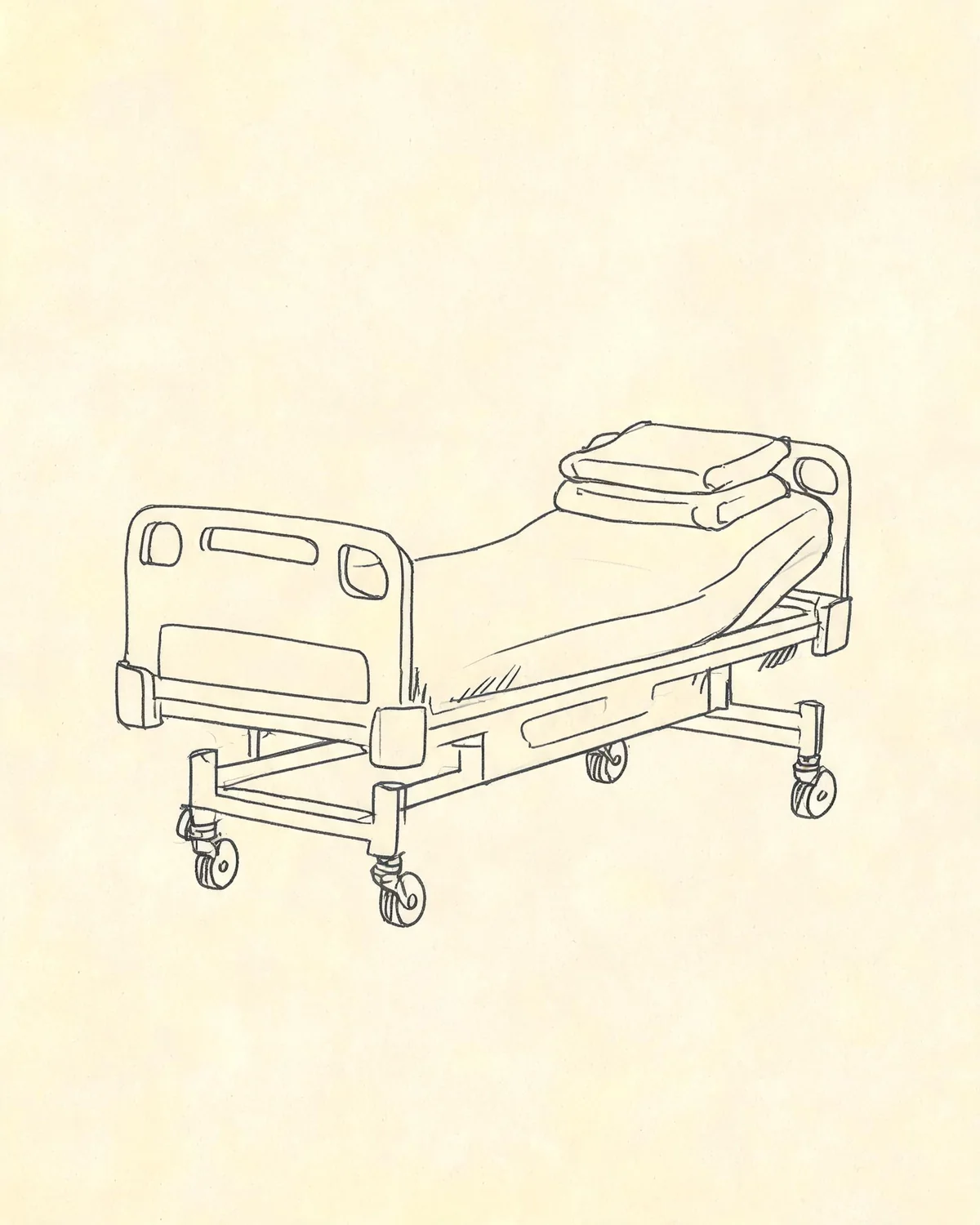
What It Means When You Dream of a Hospital
A hospital in sleep is a place built for repair: corridors, forms, and people who know the floor plan better than you do. One reading stays close to that job. Something in you, or in someone you love, wants rest, care, or a pause from ordinary duties. Another reading is about the institution. Staff who brush past your questions can mirror a private habit of ignoring what you need. A procedure that fails can mirror a quick fix you already doubt.
If you have lately been inside a real hospital, the night may simply go on with the day. Trays, unknown faces, and the route from bed to door are enough to furnish a whole dream. That continuation is not a coded verdict on your body.
Why This Dream Shows Up Now
It shows up after a visit, a scare, or a long sit in a real waiting room. It shows up when you have been the capable one and sleep puts you in the gown. It shows up when someone you love is unwell and nobody will give you a straight answer.
The common thread is uneven care. Too much of it, too little, or aimed at the wrong person. The building makes that imbalance architectural: a door you cannot open, a chair you are not offered, a bell nobody answers.
How the Meaning Changes
Your role in the building, and whether you can find the person you came for, changes the stress of the scene.
You are the patient
The wristband is yours. Other people decide when you may stand, eat, or leave. This version often concerns a week in which you have had to hand control to someone else, or a week in which you badly need to and will not. The gown is less important than the loss of the ordinary schedule.
You are visiting someone
You came with flowers, a bag, or nothing, and the person in the bed is the point of the trip. The dream is often about how you care, and about the limit of what you can do from a plastic chair. Distance from the bed — close enough to touch a hand, or stuck behind glass — shows how available you feel.
You cannot find the person
The desk sends you to the wrong floor. The name on the door is almost right. This is the dream of care that cannot make contact: love, duty, or worry with nowhere to land. It can also be the simple trace of a real visit that was confusing, with too many turns and too little information.
A long corridor
You walk and the lights stay on and the doors repeat. Corridors stretch a wait until it becomes the whole dream. They suit seasons of tests, referrals, and news that has not arrived. The length is the feeling. What you are walking toward, if the dream ever lets you arrive, is the question underneath the fluorescent hum.
How Cultures Have Read This Dream
A hospital pulls two ideas into one building: a place of repair, and a place where you are uncovered, overheard, and cut off from ordinary life. Care and confinement share the address.
Staff who will not hear you can stand for a habit of refusing your own needs. A procedure that fails can stand for a shortcut aimed at a trouble that needs more time. For someone already short of help, the building can flip toward relief: a bed, a meal, someone finally looking after you.
Waiting is the modern addition. Repeated real visits can leave a residue of smallness and fatigue, and sleep may return to the wards after the visits have stopped. That return records the visits. It does not announce what comes next. Jail, punishment, and grim endings have been hung on this image; they do not belong with it. What would have made the night kinder is often a small clue you can try while awake.
Making Sense of It for Yourself
Walk the building once before you interpret it. Which floor, whose name on the door, whether you were allowed to sit, who spoke and who would not. Then split two questions that do not belong in the same pile. The first is practical: is something in your body worrying you enough to ask a doctor. The second is about the week: where have you refused a rest, a question, or a hand.
If the dream was mostly a maze, write down the last real visit and what you still do not know. Missing information makes long corridors. If you were the visitor, consider one concrete kindness that is actually available, and one that is not. The dream is allowed to show the limit without scolding you for it.
FAQ
What does it mean to dream about a hospital?
Care, waiting, and a building with its own rules. It can continue a real visit, or it can show a part of life that wants rest and is not getting it. The feeling you wake with — helplessness, duty, or simple fatigue — is a better lead than the furniture.
What does it mean to dream of a loved one in hospital?
The dream is often about your place beside their vulnerability: how much you can do, and how afraid you are of losing them. Distance from the bed shows whether you feel useful or shut out. It is not a report that they are in danger.
What if I work in the hospital in the dream?
You are the one on shift, not the one in the gown. That can be competence, a role that has swallowed the rest of the week, or care you give to others and refuse yourself. The question is whether the shift ever ends.
Why dream of a hospital after someone has died?
The building may be where you last saw them, or grief looking for a room with rules and a chair. It can also be care that feels as if it arrived too late. The scene keeps company with mourning. It does not say that anyone else is about to die.
Does a hospital dream mean something is wrong with my body?
It does not measure your body. A dream is not a diagnosis. If you have real symptoms, speak with a qualified professional. The building can just as easily be about rest, worry for someone else, or the afterimage of a real visit.