Home Again in an Old House That No Longer Stands
The light switch sits where your hand expects it, beside a door you have not opened in years. A dream about an old house usually drops you into a former home: the childhood kitchen, a grandparent's front room, or a flat that once held your life. The reading follows the era of the furniture, what has changed, and whether you feel kept or cornered. This page stays with former homes.
On this page
- Key takeaways
- What it means
- Why it shows up now
- How the meaning changes
- How cultures read it
- What Is the Spiritual Meaning of an Old House Dream
- Is an Old House Dream Good or Bad
- Why Does the Same Old House Keep Returning
- Still Dreaming of a House You Left Years Ago
- What it is not
- Modern research
- Making sense of it
- Religious readings
- FAQ
- Related symbols
Key Takeaways
A few places to start:
- An old house usually stands for a former chapter of life, not for a forecast about property.
- The childhood home often stages a present question in the rooms where an early habit was learned.
- New rooms, a fire, a collapse, or a renovation change the reading more than the mere age of the building.
- A house you left years ago can remain the mind's working picture of shelter.
- Relief, grief, or unease on waking belongs in the reading, alongside the floor plan.
What It Means When You Dream of an Old House
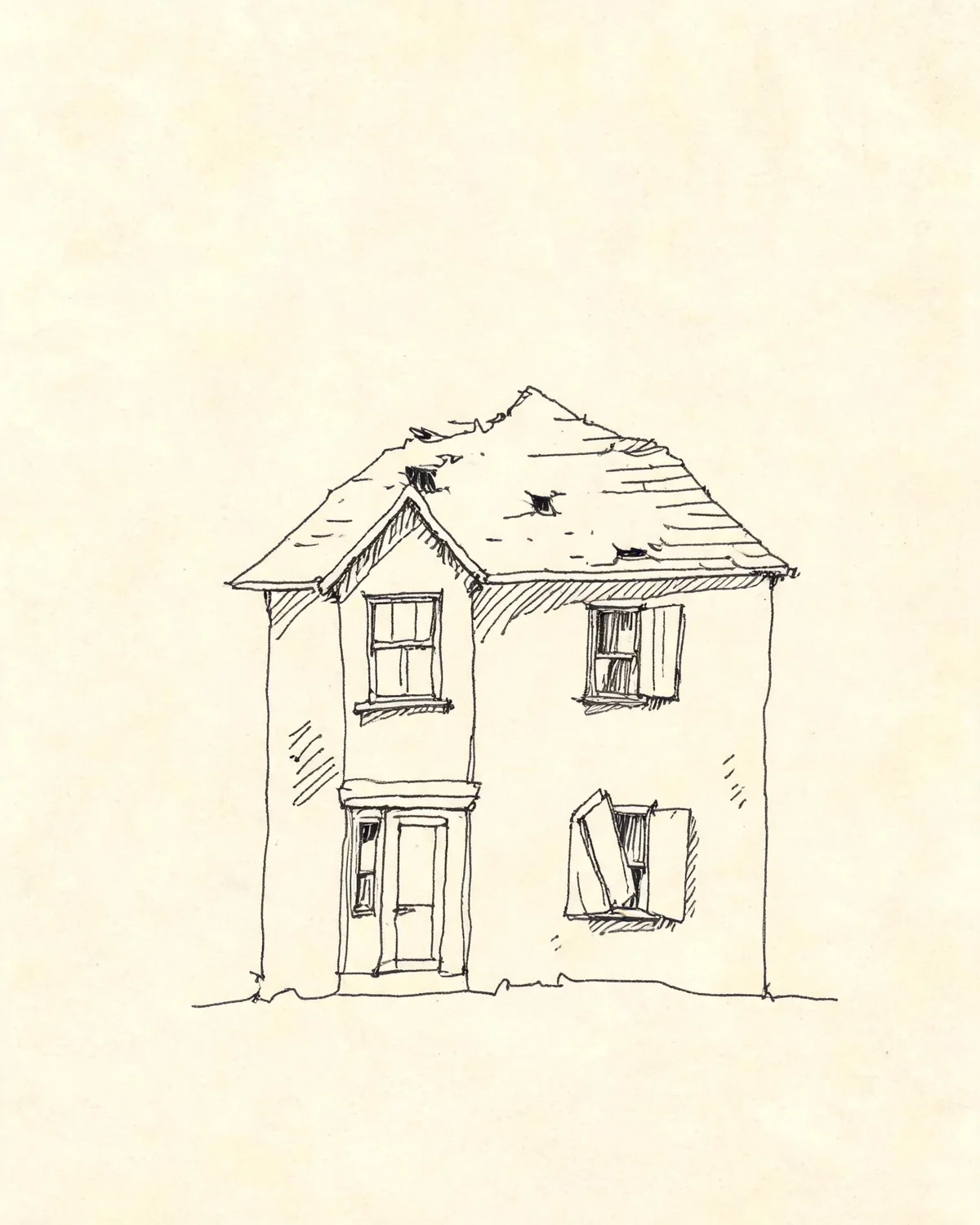
An old house in a dream is a place that already has a history with you. The floorboards, the smell of the stairwell, the cupboard that sticks: these are a stored map of how home once worked. Many people meet this dream when a current problem needs those older rooms. An argument in today's kitchen may be easier to see when it is staged where you first learned what an argument sounded like.
One reading treats the former home as a reference copy of family life. Warmth, crowding, rules, and the people who belonged there are built into the plan. When the dream puts you back in that house, it is often working a present bond through an early one. You may be using a parent's tone with a partner, or offering a sibling's old role to a colleague. The wallpaper makes the borrowing obvious.
A second reading treats the house as an earlier version of you. Familiar rooms are capacities you already recognize, and the condition of the place shows whether that earlier self is kept up or left. The house page takes any building as a picture of a life. Here the point is the house that came first, or the one you already left.
A third reading is about emotional labeling. A former address can become the name of a feeling. The tiny first apartment stands for being broke and competent at once. The childhood house stands for being known before you chose who you were. When a present week has that weather, the dream rebuilds the address instead of explaining the feeling in words.
Why This Dream Shows Up Now
Old-house dreams often follow a small collision with the past. A parent mentions selling. A sibling sends a photo of the back yard. You drive through the old neighborhood, or a soap in a shop matches the bathroom you grew up with. The day residue is slight, and the dream does the larger work of opening the whole house.
They also arrive when a present relationship starts using an old script. A friend who corrects your sentences, a boss who withholds praise, a partner who goes quiet at dinner: any of these can push the dream back to the rooms where that script was fluent. The house is not accusing the new person of being your parent. It is showing you which old response just switched on.
A move, a renovation, or a stretch of feeling helpless can do the same. If your current place is too small or not yet yours, the dream may return you to an earlier home that already knew how to hold you, or to one that never did. The contrast between the two addresses is the useful part.
How the Meaning Changes
The former home changes with its condition, its occupants, and the rooms that do not match memory.
The childhood home, still lived in
You are a child again, or you are your current age in a house that still runs on childhood rules. Breakfast is happening. Someone calls from another room.
This version often brings back the beliefs you absorbed before you could argue with them: who gets the last word, who is allowed to be tired, what counts as enough. You do not have to keep them. You can tell which ones are still running the week.
Rooms that were never there
A corridor continues past the real back wall. An upstairs appears in a bungalow. A library opens off the landing, full of books you did not own.
Added rooms usually mark a part of life that the original house had no place for: a talent, a love, a grief, or a standard you grew into later. The old structure is still the frame. Hiding or exploring in the new room shows whether that extra life feels permitted.
The old house falling apart
Plaster sags. A stair tread gives. The porch leans, and you are the one who sees it. Decay in a former home often pictures a story left unrepaired: a family silence, a promise, a way of coping that used to be load-bearing.
It can also picture grief for a household that no longer exists in that form. The useful detail is what still holds. A solid kitchen inside a failing house can mean the care remains, even if the old arrangement does not.
The old house on fire
Flames in the childhood kitchen, or smoke in a former bedroom, are easy to read as pure loss. Fire can be that. It can also be anger that finally has a temperature, or a chapter ending so completely that the old rooms cannot be lived in as they were.
Who you try to get out, and whether you go back for an object, often matters more than the flames. A fire here is not a forecast that a real building will burn.
The old house being renovated
Workers are in the hall. A wall is gone. The sink is new and the window is not. Renovation keeps the address and changes the use. People often dream this while updating a role that began in that house: the adult who cooks, the one who hosts, the one who refuses an old job. A renovation that never finishes can mean the update is real but slower than you want.
A grandparent's house
The dream may not look like the real rooms and still feel, with no argument, like your grandmother's house or your grandfather's. That certainty is part of the scene. A grandparent's house often carries a second layer of home: holidays, stricter or softer rules, a kindness that was easier than the daily house, or a grief the family routed through one kitchen.
The old house left empty
No furniture, or furniture under sheets. Your key works, and nobody answers. An emptied former home can picture a chapter that has been vacated cleanly, or a belonging you have not replaced. Walking through it without panic often reads as a visit, not a wish to move back. If you are hunting for someone who should be there, the empty rooms are naming that absence.
How Cultures Have Read This Dream
Older symbolic readings treat a house as a small world and as a picture of the person. The shell is the life shown outward. Upper rooms have been linked with thought and watchfulness, lower rooms with what is stored out of ordinary view, and the kitchen with whatever is being changed from raw to usable.
An old house adds history to that map. You are not touring a symbol in the abstract. You are walking a world you already inhabited, so the rooms come with dates.
In Islamic dream tradition, pulling an old house down is read as trouble, and a move from an old house into a new one can be read as a change of station rather than a simple change of address. Leaving, repairing, and pulling down stay different acts. What you do to the building is the part to keep.
Some traditions refuse a single code for a former home. If the house is one you lived in, the reading starts from the life that happened there: who had power, what you learned, what you could not say. The same front door can mean shelter for one person and surveillance for another. Places from the past can also act as labels stuck on a first strong feeling, and return when a present choice has that same emotional shape.
The old house is inheritance and memory, and it becomes a forecast only if a reader forces that. The sharper question is which part of the inheritance is awake.
What Is the Spiritual Meaning of an Old House Dream?
Spiritual, here, means the house as a carrier of meaning, not a dispatch from outside your life. The rooms can hold a loyalty, a grief, a standard of care, or a silence you learned before you had language for it.
A parent's chair still pulled out, or a Sunday smell that no longer exists in waking life, can feel like a visit. That feeling deserves a careful look. It is not evidence that a relative is trying to reach you, and it is not evidence that a family pattern owns you.
If the dream leaves you guilty, treat the guilt as information about a loyalty, not as a sentence. A warm kitchen can be care you are allowed to keep. A locked bedroom can be a rule you have not revised. You can honor a grandparent's table without living inside every rule that was posted on the fridge.
Is an Old House Dream Good or Bad?
Neither label survives contact with the actual night. A return that feels like exhaling, with the old light and someone glad to see you, often reads as resource: a kindness you can still use. A return that feels like dread, with the same argument already in progress, often reads as a pattern that has started up again. Both can be true of the same address on different nights.
Damage is not an automatic bad report, and improvement is not an automatic good one. A fire can mark an ending you needed. A fresh coat of paint can mark a performance of happiness that does not reach the back rooms.
A sale can be relief or dispossession, depending on whether you were ready to hand over the keys. Your scale is the feeling in the body when you woke. If you want one word, borrow the dream's own: safe, angry, ashamed, curious, homesick.
Why Does the Same Old House Keep Returning?
A house that repeats is usually a reference the mind has not retired. The setting stays because it is efficient. One hallway can carry a whole era, so the dream does not have to rebuild the explanation from scratch. Repetition is not proof that you are stuck in the past. It is proof that this address is still the clearest picture of a certain feeling.
Watch what changes between visits. A new lock, a missing person, a repaired stair, a room that has switched sides: those are the moving parts. What stays identical may be the question that has not been updated. If every version ends in the same bedroom with the same unfinished sentence, the sentence is the reason for the return, not the brickwork.
Refusing to think about the house rarely stops the visits. They tend to continue until the waking situation that borrows that feeling is named. A few lines on paper are enough to see whether the next dream alters the furniture.
Still Dreaming of a House You Left Years Ago
The deed can be long gone. Strangers may live there, or the lot may be a parking space, and the dream still gives you the old key. That gap is the point. The inner floor plan updates more slowly than the paperwork. You are not being summoned to move back. You are being shown which terms you still use for safety, status, or belonging, and those terms were written at the old address.
Distance in years changes the tone. A house left recently often carries boxes, the argument about the table, and the fear that the new place will not become home. A house left in childhood, and dreamed in midlife, more often works as a template: you decide something now with the courage or the caution you had when you lived there.
If the dream saddens you, the sadness may be ordinary grief for a household that cannot be reentered. Let that be grief, not a task. Then ask which present choice is still being made at the old counter's height.
What This Dream Is Not
An old house dream is not a forecast that the real building will burn, collapse, flood, or be sold. It is not evidence that you should move back, and it is not evidence that you have failed to grow up. Intensity after waking means the feeling was strong. It does not mean a family event is on the way.
The dream is also not a binding, and it is not a verdict on your relatives. A difficult childhood house can appear because that is where a pattern is easiest to see, not because the past is about to repeat in fact. If the house in the dream is tied to a real loss, the loss can be honored without turning the night into news. Nothing in the floor plan tells you what another person will do next.
Modern Dream Research
A feeling of familiarity can settle on a house that does not actually resemble the place named. A dreamer can be sure they are in a grandparent's house while the rooms are wrong. The emotion of recognition sometimes arrives before the floor plan does. If your dream was certain and the architecture was not, trust the certainty as a feeling, then check it against memory in the morning.
Waking life keeps editing these pictures. A present concern can open a door straight into a childhood house, because that house is an explicit image of an earlier emotional problem. The day starts the dream. The old rooms carry it somewhere the day could not.
Making Sense of It for Yourself
Walk the dream once without deciding what it means. Name the year the furniture belongs to, the person in the next room, and whether you tried to leave or to stay. Those three facts usually separate a memory-visit from a portrait of your current household.
Then finish one sentence on paper: in that house I learned to ______. Keep the verb ordinary. Wait, hide, host, compete, keep the peace, get out. Ask whether a relationship or a job this month is using that verb again. If it is, you have the link between the old address and the present week, which is the only link worth having.
Choose one small act that does not require you to relive the chapter. Look at a photograph and name what was actually good, or tell someone the rule you are retiring. The house has done its work when you can see the shape in daylight.
Religious and cultural readings
Islamic and Christian dream interpretation each read this image, or one closely related to it.
FAQ
What does it mean to dream about an old house?
It usually returns you to a former home so a present feeling can use an older set of rooms. Start with whose house it was, which year the furniture belongs to, and whether you felt kept or cornered.
Why dream of my old house if I like where I live?
Liking your current home does not retire the earlier map. The dream can borrow the old rooms to show a feeling your new address does not yet have a picture for, especially a family habit or a kind of safety.
Does this dream mean I want to move back?
Wanting the feeling is not the same as wanting the address. Many of these dreams use the old house as a reference, then end. Look at whether you were unpacking a life there or only walking through.
What if the old house belongs to someone I barely knew?
A former home that was never yours can still lend its mood: a friend's house where you felt free, a rental that was bleak, a place you only visited. The association is the meaning, not the deed.
What if I am searching the old house for a room?
Searching turns the dream toward something mislaid inside a known life: a feeling, a person, or a standard you cannot locate. The room you expected, and the room you found instead, are the two halves of the question.
What if my parents are still living there in the dream?
Their presence often restores the original power arrangement, even if your waking relationship has changed. Watch whether you become younger around them, and whether you can speak in your adult voice inside those walls.
What if the real house has already been torn down?
The dream can keep a building the city has removed. That usually means the inner plan is intact, not that you are ignoring reality. Ask which part of that household you still consult when you make a choice.
What if the old house feels smaller than I remember?
Scale often tracks the body you have now. Counters at the wrong height, or rooms you outgrew, can picture an old problem meeting an adult size. The smallness may be memory correcting itself.
What if I am glad to be back?
Gladness is a finding, not a problem to correct. The house may hold a kindness, a competence, or a sensory peace you have been living without. Name the specific gladness before you decide it is only nostalgia.