Beach in Christian Dream Interpretation
Wet sand under your feet, gulls overhead, and a long bright line where the water keeps arriving and drawing back. In the Christian imagination that line is never only scenery: it is where the restless sea meets its limit, where fishermen were called from their nets, and where friends who had failed were handed breakfast. Below are the main Christian readings of a beach dream, the details that shift them, and a few practical ways to work with what you saw.
On this page
- Key takeaways
- What a Beach Means in Christian Dream Interpretation
- How This Tradition Reads Dreams
- Core Principles
- How the meaning changes
- Common Symbols Paired with a Beach
- How This Tradition Differs from Others
- What Does a Beach House Mean in a Christian Dream
- What Does Walking on the Beach Mean in a Christian Dream
- What Do Waves on a Beach Mean in a Christian Dream
- What it is not
- FAQ
- How to Use These Readings Today
- Related symbols

Key Takeaways
- Christian imagery treats the shore as the place where restless water is held back, so a beach often pictures a safe edge beside something vast.
- Many Gospel turning points happen on a lakeshore, making the beach a setting for encounter and calling.
- Sand carries two meanings at once: promise too large to count, and ground too loose to build on.
- A beach can also picture rest, the withdrawal from crowds that Jesus urged on his tired followers.
- The water, the hour and who else is on the sand shift the reading more than the beach itself.
- Christian readers hold any interpretation lightly and test it against prayer, conversation and daily life.
What a Beach Means in Christian Dream Interpretation
In older Hebrew and Christian imagery the sea is restless and often threatening. It wears at the land, swallows ships and stands for the chaos that resists God's order. The shore is where that restlessness stops: breakers pound it, then fall back. A beach in your dream may therefore picture a protected edge, a place where you can stand near something huge, such as grief, change or an unknown future, without being swept into it.
The Gospels set a remarkable number of meetings by the water. Fishermen are called away from their boats along a lakeshore; crowds gather on the sand to listen; after the resurrection, disciples who have gone back to their old trade find someone waiting on the beach with a fire already lit. A Christian reading therefore asks whether your beach dream is about being found, perhaps right in the middle of ordinary work.
Sand holds a double meaning. As a measure, it is the image of promise too generous to count: descendants, wisdom and blessing compared to the grains along the sea. As a foundation, it is the opposite of rock, ground that shifts when the storm comes. The sand in your dream may lean either way, toward abundance or toward a structure you suspect is less secure than it looks.
Then there is rest. Jesus repeatedly withdrew from crowds and urged his worn-out followers to slip away somewhere quiet and recover. A beach dream made mostly of stillness, warmth and the sound of water may simply be asking for that kind of withdrawal, and Christian readers would take the request seriously rather than hunting past it for something more dramatic.
How This Tradition Reads Dreams
Christian reading does not start from a list that says a beach equals one thing. It starts by asking what kind of dream this was: an echo of last summer's holiday, a tired body craving rest, a mood the heart is carrying, or something that turned your attention toward God.
A beach dream after a seaside trip carries less weight than one that arrives, with no obvious trigger, in a season of decision. Early church teachers sorted dreams by origin, from a full or empty stomach to passing thoughts to something more, and weighed them accordingly.
Next the reader looks for the encounter. Because the shore is such a common meeting place in Christian story, the first detail worth noticing is who else is there. A stranger tending a fire, a crowd, a family member, someone calling from a boat: the figure on the sand often matters more than the scenery. If the beach was empty, that emptiness is information too.
Last, the reading is weighed by its fruit. Christian discernment asks whether an interpretation leads toward peace, honesty and love, or toward fear and self-importance. A reading of your beach dream that leaves you calmer and more truthful is worth keeping; one that inflates or frightens you can be set down.
Core Principles
Find the waterline. Where you stand relative to the water is the heart of the dream. Firm dry sand, the wet strip where waves reach your ankles, and water up to your chest are three very different places. They describe how close you are to whatever the sea stands for in your life right now.
The sea is bounded in this imagery. Christian readings rarely treat the sea as neutral, but they also picture it as limited and answerable. Even a rough sea in your dream need not mean that chaos is winning. The more useful question is whether the shore still held and whether you had somewhere to step back to.
Ask who meets you there. Shore scenes in Christian story are rarely solitary for long. A figure on the beach, kind or troubling, usually carries the dream's point more than the sand or the sky. Even an unseen presence, sensed rather than watched, deserves a line in your notes.
Notice the tide. A rising tide narrows the safe ground and can mirror pressure that is gradually closing in. A falling tide reveals what was hidden, such as rocks, wrecks and pools full of small life, and can point to something becoming visible as an intense period recedes.
What Changes the Reading of a Beach
A beach looks simple, but small changes in the scene move the Christian reading a long way.


A Crowded Beach
Crowds on the shore appear in the Gospel stories as people pressing to hear, so many that the teacher had to speak from a boat. In a dream, a packed beach can mirror heavy demands on your attention, or a hunger to be heard among many voices. Notice whether the crowd felt like company or competition, and whether you could still find a patch of sand to call your own.
A Fire Burning on the Sand at Daybreak
A small fire on the beach at dawn, perhaps with fish cooking over it, echoes one of the tenderest Christian shore scenes: a meal offered to friends who had failed and drifted back to their old work. In your dream it often points to restoration after a lapse, a welcome you did not expect, or an invitation to sit down and eat before explaining yourself.
Boats and Nets Drawn Up on the Shore
Fishing gear left on the sand recalls the first disciples, who walked away from their boats when they were called. Dreaming of beached boats or abandoned nets may concern vocation: work you are leaving, a role you are being drawn toward, or uncertainty about who you would be without your usual tools. Whether you were mending the nets or walking away from them matters.
Something Washed Up on the Sand
Strange objects and creatures cast up by the tide have long fed speculation about what lives in the deep. In a dream, whatever the sea delivers to the beach tends to stand for something surfacing from below: a memory, a feeling, an old matter returning. Your reaction to it, whether curiosity, disgust or tenderness, shows how ready you are to look at it closely.
Being Thrown onto the Shore Yourself
Being swept out and then flung onto dry land carries a strong Christian echo of the reluctant messenger released from the great fish. That story moves from confinement to release, from near-drowning to a second chance. A dream like this may reflect surviving something overwhelming and landing, shaken but intact, at the start of a task you had been avoiding.
Sand Running Through Your Fingers
Sand slipping away as you hold it gathers both of its old meanings. It is too much to count, an image of promise and plenty, and too loose to keep, an image of impermanence. The scene often appears when time feels short or something good cannot be held. It can point to grief over passing seasons, or to a need to receive good things without trying to secure them.
A Beach at Night
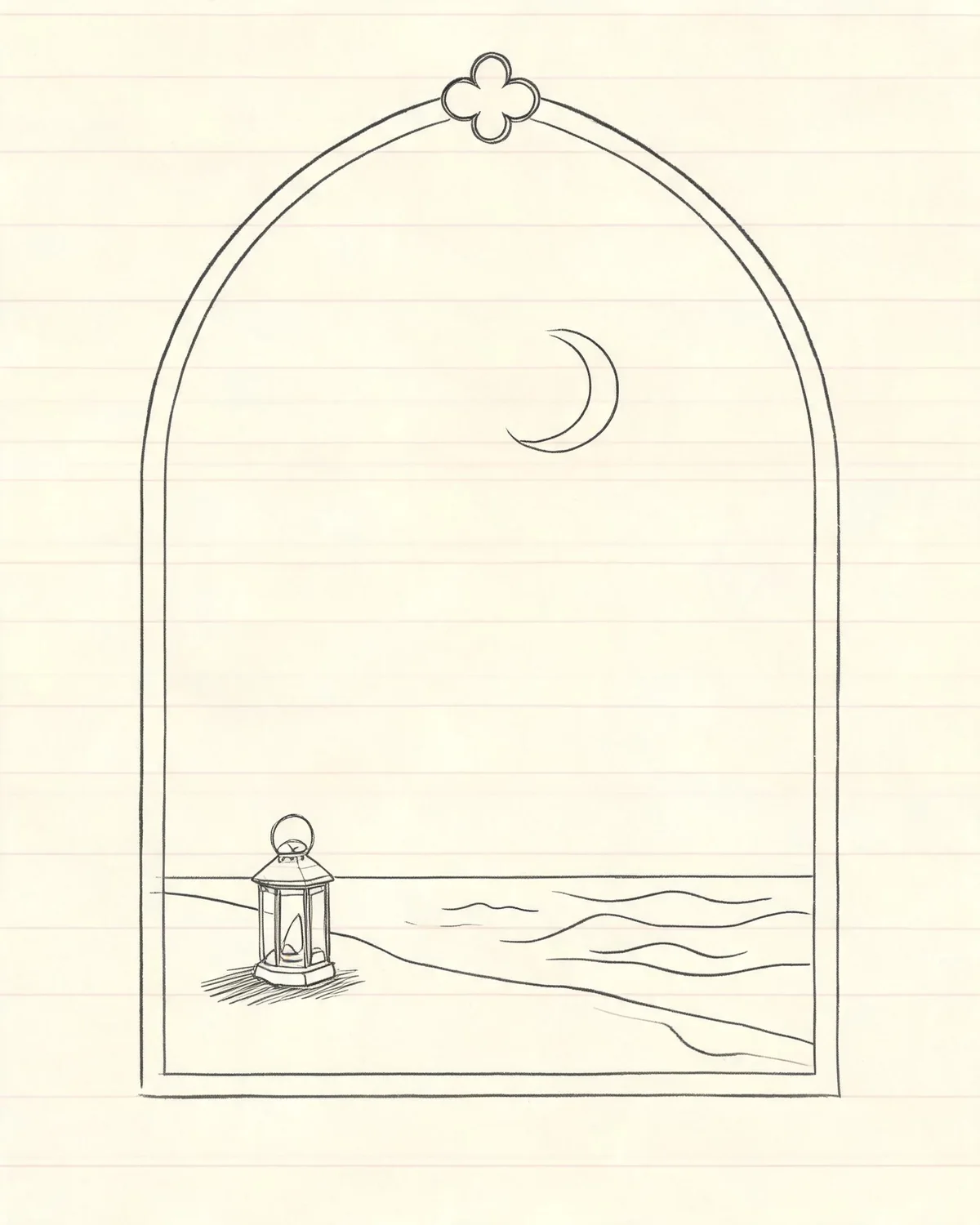
On a dark shore you hear the sea more than you see it, and the sound becomes the main presence. In Christian imagery night and sea both carry the unknown, so a beach at night often points to uncertainty, or to a vigil: waiting through a hard stretch for morning. A lantern, moonlight or a fire nearby turns the scene from exposure into watchfulness.
Common Symbols Paired with a Beach
The ocean is the beach's constant partner, and in Christian imagery it carries the weight of chaos and depth. When your dream lingers on open water rather than the sand, the question shifts from the safe edge to the vast unknown beyond it. A calm horizon suggests space and possibility; a dark, heaving sea suggests forces you are wary of.
Swimming moves you from the boundary into the element itself. Choosing to swim out from a beach reads very differently from being dragged in. The first points to willing risk or trust, the second to being pulled into something before you were ready. Note whether you could still see the shore while you swam.
A boat or an island adds departure. Christian art has long used the ship as an image of the church and of safe passage, so a boat leaving the beach can carry a sense of being sent onward with others. An island seen from the shore may picture a hoped-for refuge, or a place of isolation you feel drawn toward.
The sun on the sand brings warmth and exposure together. Bright light on a beach often belongs to dreams of rest and clarity, but harsh sun with no shade can point to feeling watched too closely, or worn down by a season with no relief.
How This Tradition Differs from Others
Across many traditions, the far side of a body of water carries great weight. Several older cultures pictured a river or sea dividing the living from the dead, with a ferry to the other shore. In Buddhist imagery the vessel of teaching carries people across the ocean of existence to a further shore of release. In readings like these, a beach is often a point of departure toward something beyond ordinary life.
Christian imagery tends to focus on this shore instead. The beach is where the call comes, where crowds gather and where a meal is cooked; the sea is something crossed with help, as in the escape through parted waters, or something calmed. That gives Christian beach dreams a relational, present-tense quality: who is here with you, what is being asked of you, and what is being restored.
Other traditions add their own accents. In Islamic symbolism, for example, sand is associated with purity, since it can serve for ritual washing where water is unavailable. Many contemporary dream guides read beaches almost entirely as holiday and relaxation. The Christian reading includes rest but adds encounter and foundation, asking both whether you need to stop and what you are standing on.
What Does a Beach House Mean in a Christian Dream?
A house on the beach joins two strong images: home and sand. In Christian teaching the best-known picture of building is the contrast between a house set on rock and one set on sand, the second collapsing when the storm arrives. A beach house in your dream may echo that question of foundations. What are your plans, security or sense of self built on, and would it hold under strain?
The reading is not automatically a warning. Many beach-house dreams are about longing: for rest, for a place where family can gather, for a life with more air in it. The condition of the house matters. A sturdy, bright house with the sea at a comfortable distance suggests a hope for peace that feels within reach. Water at the steps, sand drifting through the doors or cracks in the walls suggest that something you rely on feels exposed.
If the dream lingers, a practical Christian response is to look calmly at your foundations: relationships, habits, practices of faith, finances. The aim is to find what is solid, not to fear that everything is sinking.

What Does Walking on the Beach Mean in a Christian Dream?
Walking along the waterline is one of the most familiar beach dreams. In Christian story the shore is a place where Jesus walked and where people were met while going about their lives, so a walking dream often carries a sense of a journey in company, even when you could not see who was beside you.
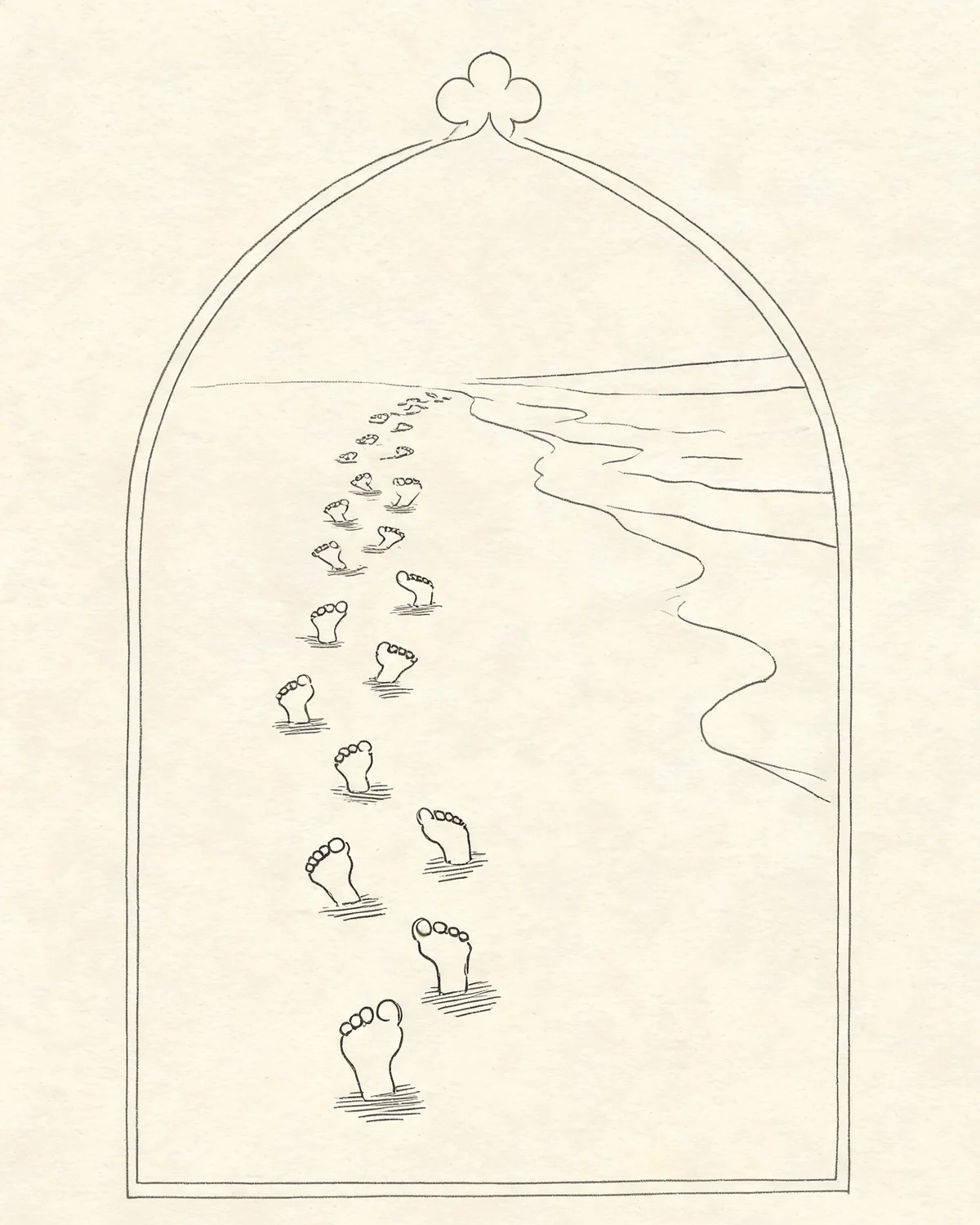
The texture of the walk matters. Firm, wet sand that holds your footprints suggests steadiness and a path you can trace back. Soft, dry sand that drags at every step suggests effort, a season where progress costs more than it should. Walking barefoot can point to vulnerability, or to a simpler and more honest way of moving through your days.
Company changes the reading most. Walking alone may reflect solitude that is either restful or lonely. Walking with a familiar person may highlight that relationship. Walking with someone you sense but cannot quite see is a scene many Christians associate with being accompanied through difficult times; it is worth receiving as comfort rather than treating as a riddle.
What Do Waves on a Beach Mean in a Christian Dream?
Waves are where the sea's restlessness touches the shore. In the older imagery the sea pushes against its boundaries yet is held in place, and its raging can be stilled. Dreaming of waves rolling onto a beach often reflects emotions or pressures arriving in rhythm, reaching you and then pulling back.
Gentle waves lapping at your feet tend to suggest manageable feeling, even a soothing repetition. Large waves breaking hard on the sand point to intensity, perhaps a conflict or a grief that keeps returning. A wave rising far beyond the beach, or a storm driving water inland, shifts the dream toward feeling overrun, and Christian readers would connect it with the stories of storms calmed rather than with defeat.
Watch what you did. Stepping back to higher ground, standing firm or running into the surf each say something about how you are meeting the pressure. In the dream, as in the old imagery, the waves still had an edge they could not cross.
What This Dream Is Not
A beach dream is not an instruction to travel, move to the coast or make a sudden change of course; Christian discernment works slowly and in daylight, through prayer, advice and circumstances. It is not a verdict that your foundations are rotten because the sand looked loose or a house looked fragile; at most it raises a question you can look into calmly.
And it is not a coded message in which every shell, gull and footprint needs its own fixed meaning. The scene is read as a whole, with your feelings in it, and the parts make sense in relation to one another and to what you are living through. If a dream of water keeps unsettling you, talking it over with a trusted friend, pastor or counselor is a good place to start.
FAQ
What does a beach represent in a Christian dream?
It usually represents a threshold: the edge where ordered land meets restless water. Christian readers connect it with safety beside something vast, with encounters and callings that happen by the water, and with stepping away from busy crowds to recover.
Is dreaming of a beach good or bad?
Most beach dreams lean positive, pointing to rest, perspective or a meeting that matters. The reading darkens when the water is rising, the sand will not hold or you feel trapped, and even then it highlights pressure to address rather than misfortune to expect.
What does a beach at sunset mean in a dream?
A sunset over the sea often pictures an ending that feels peaceful rather than abrupt: a chapter closing, a day's work finished, a relationship changing gently. Christian readers might also see an evening prayer in it, a moment of handing the day back.
What does it mean to dream of being at the beach with family?
A family beach scene usually centers on connection and shared rest. Notice whether the whole family was relaxed or someone was drifting toward the water, because the dream may be showing whose wellbeing is on your mind or which relationship needs time together.
What does sand mean in a Christian dream?
Sand holds two meanings in Christian imagery: an abundance too great to count, as in promises of countless descendants, and an unstable foundation that gives way under pressure. Which one applies depends on whether you were counting, resting on or building with it.
Is the sea in a dream a spiritual attack?
Some Christian circles read rough water as spiritual opposition, but the older imagery puts more weight on the sea's limits than on its threat. Treat a frightening sea as a picture of pressure, pray about it if that is your practice, and talk it through.
What does it mean to dream of a church on a beach?
A church on the shore joins worship and rest in one picture. It may reflect a longing for faith that feels spacious and unhurried, or for a community that meets you where ordinary life happens, much as the first disciples were met at the water.
What does an empty beach mean in a dream?
An empty beach can feel peaceful or lonely, and that feeling decides the reading. Peaceful emptiness often points to a need for solitude and quiet; lonely emptiness may reflect missing someone or feeling unseen. Either way, notice whether you were waiting for someone.
How to Use These Readings Today
Start by sketching the scene from memory: where you stood relative to the water, what the sea was doing, and who else was on the sand. Those three facts carry most of the reading, and writing them down takes only a minute.
Then pick the strand that fits your waking life. If the dream felt like rest, ask honestly whether you have been running without pause, and set aside one unhurried hour this week, perhaps a walk with no destination. If it felt like an encounter, consider who has been trying to reach you or what you sense you are being drawn toward. If it centered on foundations, list what you lean on most and mark which items feel solid.
Finally, if prayer is part of your life, bring the dream there plainly. Describe the shore, ask what it is showing you, and pay attention over the next few days rather than forcing an answer tonight.