Book in Christian Dream Interpretation
A heavy book lies open on a lectern, and a figure you cannot quite see turns its pages toward you. Christian imagery has given books many roles, from the record a judge holds to the little volume handed over in an early vision, and the tradition reads each one by testing what it stirs in you. Open and sealed books, names written down, deeds recorded and books placed in your hands each carry a different weight in that reading.
On this page
- Key takeaways
- What a Book Means in Christian Dream Interpretation
- How Christian Dream Interpretation Reads Dreams
- Core Principles
- How the meaning changes
- Common Symbols Paired with Book
- How This Tradition Differs from Others
- What Does It Mean to Be Given a Book in a Dream
- What Does Reading a Book Mean in a Christian Dream
- What Does It Mean to See Scripture in a Dream
- What it is not
- FAQ
- How to Use These Readings Today
- Related symbols
Key Takeaways
- In Christian imagery almost anything written can count as a book: a letter, a certificate, a family record or a volume.
- An open book leans toward learning, wisdom and disclosure; a closed one in a solemn figure's hands toward authority and what is not yet shown.
- Seals speak first of authenticity and preservation, and only then of mystery kept for the right time.
- Books of deeds and books of names belong together, so accountability in these dreams is read alongside belonging.
- Early Christians treated dreams as texts to be read slowly, much as they read the sacred page.
- A vivid book dream is weighed by what it produces, and one that flatters you with secret knowledge deserves the most caution.
What a Book Means in Christian Dream Interpretation
The older word behind "book" covered anything written: a letter, a certificate of divorce, a formal charge, a genealogy or a volume. A Christian reading of a dream book therefore starts by asking what kind of writing it was. A letter brings a message, a certificate settles a status, a family record places you among your people, and a bound volume holds teaching.
The open book is the image of learning and wisdom in Christian art. It stands for the wisdom of the sacred writings and for teaching carried outward, so that books could even represent the apostles instructing the nations. A dream that sets an open book before you leans toward something offered for study.
A book can also serve as the record of a life. Christian imagery speaks of a heavenly record of every person's deeds, and paintings of the final judgment often show the judge holding a book in which those deeds are written. In a dream this reading turns the volume toward conscience: what has been set down, and what would you want written next?
Beside that record stands a register of names. In the ancient world towns kept lists of their citizens, and a name could be removed if citizenship was lost. Christian imagery carried that register into its picture of belonging, so a book bearing names speaks about being known, counted and kept. That is why a dream of a list or a register can feel tender instead of bureaucratic, as if someone had made room for you.
How Christian Dream Interpretation Reads Dreams
The early church took dreams seriously as possible vehicles of revelation, yet it sorted their sources. One early writer named four: demons, God, the soul's own making and ecstasy. A later pope listed six: a full stomach, an empty one, illusion, thought mixed with illusion, revelation, and thought mixed with revelation.
A dream of textbooks during an exam fortnight sits comfortably among the ordinary kinds and needs no grander reading. The same goes for a novel you fell asleep holding, or a library you visited the day before.
Within the meaningful kinds, the gift of discerning spirits did the main work. The dream itself was treated as real, but whether it came from a good or a harmful influence had to be weighed. A book that appears in sleep is therefore asked where it leads: toward honesty, charity and steadier faith, or toward fear, pride and confusion.
Later centuries grew warier. Church officials tried to dampen enthusiasm for visionary dreams, and one notorious witch-hunting manual even listed dreams among the devil's chief tools, while ordinary believers kept a quieter fascination with their nights. Most Christian readers today take a middle path, and with a book dream that means asking about the reader before interpreting the volume.
Core Principles
Deeds and names are opened together. Christian imagery rarely shows a record of deeds without the register of belonging beside it, so a dream ledger is not read as a bill presented for payment. The question it raises is double: what needs to be put right, and where do you already belong? Holding both keeps a book dream from turning into dread.
Small marks can carry the meaning. An early Christian reader of the sacred text held that even its least letter could open a store of meaning, and he treated dream images in a similar way. Notice the single word you remember, a name in the margin, a mark on the cover or a page you kept returning to. Those details often hold more than the book's size or title.
Testing comes before trusting. The same vivid scene could come from a good influence or a misleading one, so a book dream is weighed by its effect. A volume that sends you back to ordinary duties, honest work and care for others is read differently from one that crowns you the sole keeper of hidden knowledge. The second kind asks for more patience, more counsel and a slower conclusion.
What Changes the Reading of the Book
The way a book behaves in the dream usually decides the reading more than what it is about.

An Open Book Turned Toward You
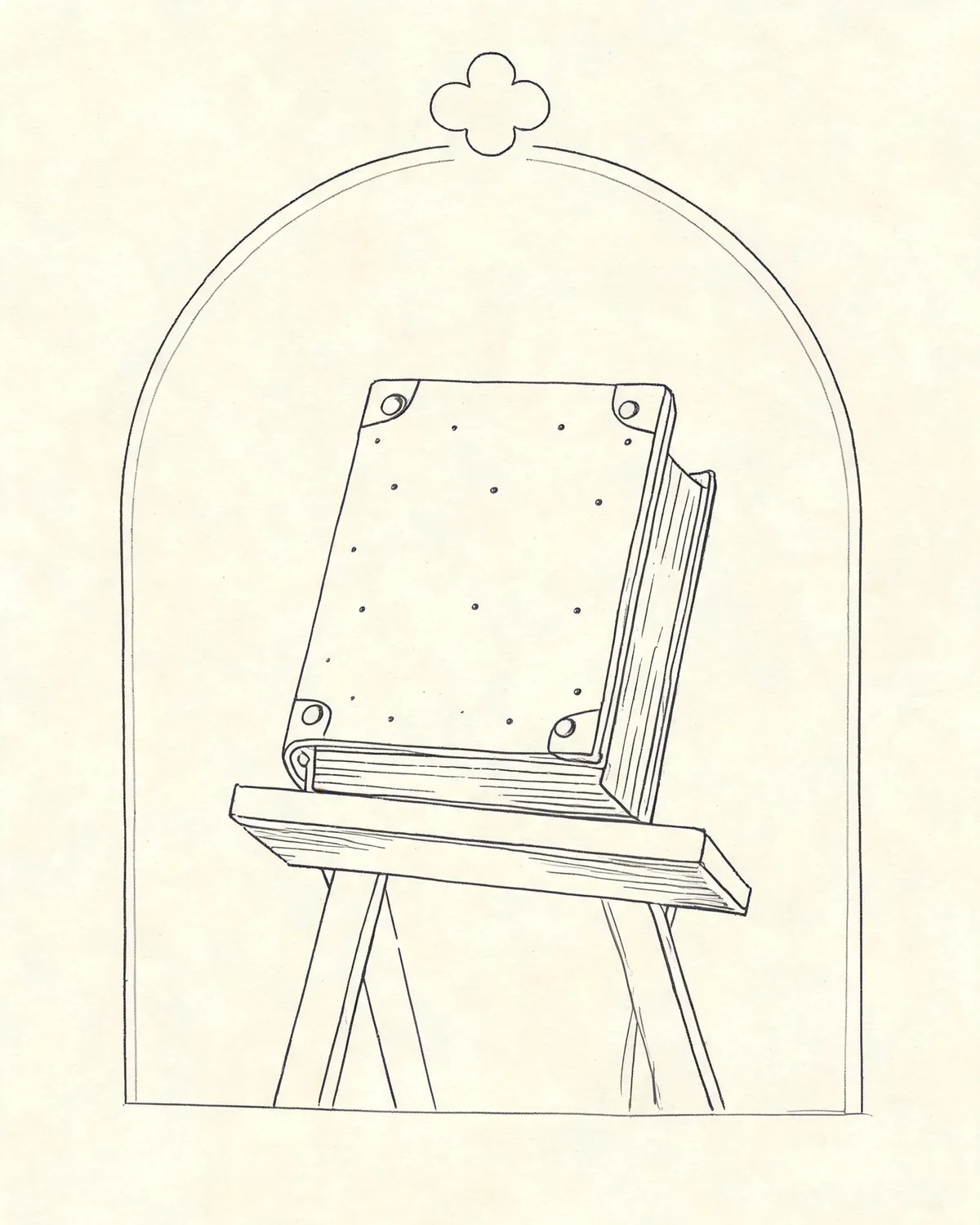
A book lying open and angled toward you suggests something made available: a lesson, a recollection or a choice that had been out of view. Notice whether the lines were legible and whether you wanted to read them. An open page you can follow leans toward invitation; one that blurs as you look leans toward a matter not yet ready.
A Closed Book in a Solemn Figure's Hands
Byzantine mosaics show the ruler of all things holding a closed book of life, and Christian art often gives the closed volume to a figure of authority. In a dream, a closed book held by someone grave or radiant points to what belongs to another's keeping. It speaks more of trust and timing than of a secret being kept from you.
A Book Sealed Shut
Seals in Christian imagery mean several things before they mean mystery: authenticity, ownership, authority and preservation. A sealed book in a dream may picture something guarded because it matters, a promise kept intact or counsel held until the right time. Only when the dream feels anxious does the seal lean toward a door you are not yet able to open.
Finding Your Name Written in a Book
Seeing your own name in a register, a family record or a long list of names draws on the image of citizenship recorded and kept. The dream may be about being known, included or remembered. If the name was hard to find or partly faded, the scene often tracks a fear of being overlooked. It is not a verdict about your standing.
Being Rebuked Over the Books You Love
One of the best-known early Christian dreams belongs to a scholar who loved the classical Latin authors. He dreamt he stood before a judge who said he followed those writers instead of Christ, and he woke vowing to change his reading. Afterward he read the sacred books with fresh zeal. A dream of being scolded over your reading often concerns where your attention, and your heart, have drifted.
A Scroll Rolling Itself Shut
In Christian pictures of the end of an age, the sky itself rolls up like a scroll. A scroll curling closed in a dream can echo that image on a small scale: a chapter of life finishing, a season of study ending or a familiar arrangement being put away. The feeling of the scene matters, since some endings arrive as relief.
A Page Written on Both Sides
Scrolls were rarely written on both sides, so when prophetic imagery describes one covered front and back, it stands for a message complete in itself, to which nothing can be added. A page full on both sides in your dream may picture something already finished, whether a decision, a story or a duty, that needs accepting more than revising.
Common Symbols Paired with Book
A book beside a tree joins two old Christian images. The book of life has been linked with the tree of life, and the leaves of the tree have been compared to the pages of the book, both standing for the whole of creation and everything decreed for it. When the two appear together, the dream tends to be about growth, continuity and a life that has room to keep being written.
A book with a lamb brings in one of the most solemn Christian scenes: a sealed scroll that only the slain and living Lamb is worthy to open. The lamb carries gentleness and innocence, and pairing it with a sealed book reads toward hard things being opened by someone gentle, never by force. A dream that sets the two side by side often concerns a difficult truth that can be met without harshness.
A book with an angel recalls scenes of the Annunciation, in which the messenger often finds the young woman reading. The pairing pictures attention already turned toward meaning before the message arrives. If an angelic figure appears while you are reading in a dream, the image points to receptiveness, with no command attached.
How This Tradition Differs from Others
Jewish tradition is deeply oriented toward the book. A well-known rabbinic saying compares an uninterpreted dream to a letter left unread, and Jewish mystical legend tells of an angel handing the first man a book of wisdom after he left paradise. The book there is above all a gift of teaching to be studied, and the act of interpretation itself is pictured as opening a letter that was always meant to be read.
Islamic dream interpreters read the book socially: holding one points to power or fame, a sealed letter to confidential news, and much depends on which hand carries it and who delivers it. Ancient Rome consulted prophetic books in times of crisis, and mystics in more than one tradition have described the universe itself as a single vast book.
Christian reading shares much of this but places its weight elsewhere. It keeps the record of deeds and the register of names side by side, and it treats the dream itself as a text that has to be discerned slowly. Where other traditions often ask what the book will bring, Christian reading more often asks what the book is asking of you. These are differences of emphasis, offered so the Christian frame is clearer, not as a ranking of traditions.
What Does It Mean to Be Given a Book in a Dream?
Christian art often shows scrolls passing from Christ into the hands of the apostles as signs of the teaching entrusted to them. Being handed a book in a dream draws on that picture of commission: something is being placed in your keeping, and receiving it implies a responsibility to carry it.
Prophetic imagery goes further. A scroll is handed to a prophet, who is told to eat it; it tastes sweet in the mouth and, in one version, turns bitter once swallowed. Eating a book stands for taking a message inward, and the double taste admits that good news can arrive with distress attached. If you were given a book that felt both welcome and heavy, that ancient double taste may be the closest match.
The giver matters most. A familiar teacher, a parent, a stranger and a shining figure each change the reading, and the tradition would weigh the scene by its fruit, with the giver's appearance counting for little. Ask what you were expected to do with the book once it was yours.
What Does Reading a Book Mean in a Christian Dream?
An early Christian vision tells of a man who meets an elderly woman reading aloud from a little book. She gives it to him to copy, and he copies it letter by letter because he cannot tell the syllables apart. Some two weeks later its meaning was opened to him, and the writing turned out to concern himself.
That story shapes a Christian reading of dream reading. Images in dreams were treated like parables, many-sided and meant to shed light on one another, never solved once and closed. Struggling to make out the words in a dream does not mean failure; it often means the meaning has not yet ripened.
When you read easily in a dream, the scene leans toward understanding arriving. When the script is foreign, blurred or shifting, the tradition would counsel patience, prayer and a second look a few days later, with no meaning forced on the first morning.
What Does It Mean to See Scripture in a Dream?
Seeing scripture in a dream usually draws on your own history with it: a family copy, a church lectern, a passage learned as a child. Christian communities have honored the sacred text as something copied and guarded with great care, and the open book in Christian art stands for its wisdom made available, and the dream borrows that weight.
Notice what the book was doing and what you did with it. Lying open, being read aloud, sitting closed on a shelf or slipping from your hands each suggest a different relationship with faith right now. Some people take such a dream as a nudge back toward reading; others find in it grief for a community they have left, or comfort during a hard season.
The tradition would ask that impression to be tested. A dream of scripture that leads toward honesty, charity and steadier practice is read differently from one that produces anxiety or a sudden certainty about other people.
What This Dream Is Not
Dreaming of a book does not reveal where your name stands or of how anyone will be judged, even when the images borrow from scenes of judgment. It is not a summons you must obey without question, whether toward ministry, study or giving up reading you love; the tradition itself insisted that such impressions be tested over time and in conversation.
It is also not a reason to open someone else's diary or letters because a dream seemed to point at them, and it is not a judgment on whether you read enough or believe correctly. At its most useful, the dream offers an honest picture of how you are holding teaching, memory and responsibility, and which part of that you may want to tend in the weeks ahead, gently and without hurry.
FAQ
Is a book dream a good sign in Christianity?
It is not fixed either way. Christian readers look at the state of the volume, the person holding it and the feeling it left, then weigh the dream by whether it leads toward honesty and charity.
Can a dream about a book be a message from God?
The Christian tradition has held that dreams can carry meaning from God, while insisting that any such sense be tested. A book dream can be read as an invitation to reflect, with conscience and trusted counsel helping you weigh it.
Why do saints hold books in Christian art?
Books mark learning and teaching. Scholarly saints were often painted with a volume in hand, and the evangelists usually appear writing. A figure carrying a book in your dream may draw on that association with instruction and faithful study.
What does writing in a book mean in a Christian dream?
Writing turns the scene toward commitment. In prophetic imagery, sealing the deed for a field becomes a pledge of hope in a future not yet visible, so writing in a dream can picture a promise you are prepared to stand behind.
Does a book dream mean you are called to study or ministry?
Some Christians read a vivid book dream as a nudge toward study or service. The tradition would test that sense over months rather than overnight, with people who know you well, before treating it as a direction.
Should you tell a pastor or spiritual director about a book dream?
A book dream is worth bringing to a pastor or spiritual director. Christian discernment has generally happened in conversation rather than in private certainty, and sharing a dream that stays with you, especially one that unsettles you, gives someone wise a chance to help you weigh it calmly.
What does a book with seven seals mean in a dream?
In the ancient world important legal documents carried several seals, and a testament might bear seven. Christian imagery made the seven-sealed book a picture of something opened only with divine help, so the image often marks a matter beyond your own unlocking.
Is a scroll different from a book in a Christian dream?
Early Christians distinguished the bound codex from the scroll, and art often places scrolls in the hands of apostles receiving teaching. A scroll in a dream can lean toward an ancient message or commission, and a codex toward study you can return to.
How to Use These Readings Today
An early desert monk urged his followers to write down their dreams, and that remains the simplest first step. As soon as you wake, note whether the book was open, sealed or closed, who held it, and any single word or name you remember from the page.
Next, set the image beside your life this week. Ask whether it matches a responsibility you have been handed, a piece of reading you have neglected, a record you are worried about, or a sense of belonging you are missing. Pick the one that fits best rather than all four.
Then take one small action that answers it: read a page you have been avoiding, return to a practice you dropped, or put right a matter you would not want written down unresolved. If the dream keeps returning or troubles you, bring it to a pastor, a spiritual director or a trusted friend and weigh it together.