Closet in Christian Dream Interpretation
You step into a closet in a dream and pull the door shut behind you, or you open one to find it bare, or stuffed with clothes you had forgotten. Christian imagery has a long history with such small rooms: the hidden place of prayer, the storehouse, the garment put on or laid aside. The readings that follow look at those images, at how Christian readers test a dream before reading it, and at the details that change what a closet scene may say.
On this page
- Key takeaways
- What a Closet Means in Christian Dream Interpretation
- How Christian Dream Interpretation Reads Dreams
- Core Principles
- How the meaning changes
- Common Symbols Paired with Closet
- How This Tradition Differs from Others
- What Does Cleaning or Organizing a Closet Mean in a Dream
- What Does an Empty Closet Mean in a Christian Dream
- What Does Hiding in a Closet Mean in a Christian Dream
- What it is not
- FAQ
- How to Use These Readings Today
- Related symbols
Key Takeaways
- In Christian imagery the closet is closest to the private room of prayer, where what is done in secret is seen by God.
- Hiding is two-sided: it can mean shelter and safekeeping, or the old instinct to cover a fault.
- Clothes inside the closet carry the tradition's rich garment language of provision, renewal and disguise.
- A full closet can picture blessing or misplaced trust, and an empty one need or a cleared space.
- Christian readers weigh a dream by where it leads, toward honesty and peace or toward fear.
- Few closet dreams need a dramatic reading; many simply echo the day.
What a Closet Means in Christian Dream Interpretation
A closet is a small room, and in Christian imagery small rooms carry weight. Privacy was scarce in the homes of the ancient world. A house might have only one interior door, and that door belonged to the storage closet. When early Christian teaching called believers to pray behind a shut door, seen by a Father who sees in secret, that humble storeroom became the picture of devotion without an audience.
That gives the closet its first meaning: a place to be alone with God, away from display. A dream that draws you into a small room with the door pulled to can be read as a longing for quiet, or for a faith less concerned with being seen.
The closet is also a place of keeping. Biblical imagery is fond of storehouses and of storing up, and it treats both as double-edged. Stored grain can mean prudence and provision; stored wealth can mean misplaced trust. What the closet keeps, and why, matters as much as the space.
Then there are the clothes. Garments in Christian imagery protect, conceal, display and represent a person's state, and they wear out. Putting clothing on and taking it off became a way of speaking about taking up a new life and laying aside an old one. A closet full of garments carries a quiet question about which self you are dressing for.
Finally, the closet hides. Hidden things in this tradition are not only threats. That nothing hidden stays hidden forever is offered as a promise as much as a warning.
How Christian Dream Interpretation Reads Dreams
Christian tradition has never treated every dream alike. Early writers sorted dreams by source, separating those stirred by the body and the day's concerns from those that might carry something from God, and from those attributed to a harmful influence. A dream of tidying your closet the night after a weekend of spring cleaning sits comfortably in the first group.
For dreams that seem to matter, the older practice of discerning spirits does the main work. The question is less what the closet means than where the dream leads: toward honesty, charity and peace, or toward fear and anxious self-reproach. Modern Christian writers on dreams add a firm guide here: an image that urges destruction does not come from God.
Pastoral dream work in the last century added a gentler insight. Dreams followed over time behave like a patient teacher, moving from one lesson to the next, and they tend to bring up whatever has been shut away, old guilt and painful memories included, until it is understood and loses its force. A closet dream that opens onto something you would rather not see can be read in that spirit, as an invitation rather than an accusation.
Some later centuries were warier, and church officials at times treated dreams with open suspicion. Most Christian readers today take a middle path of prayer, patience and trusted counsel.
Core Principles
Hidden is not the same as guilty. Biblical imagery hides people to protect them, hides treasure to keep it safe and hides words in the heart to remember them. Only some hiding is the cover-up of a fault, so a closet dream begins with the kinder possibility and moves to the harder one only if the dream itself points there.
What you treasure shows what you value. The tradition reads stored possessions as a window onto the heart: the kind of treasure a person keeps reveals what they esteem most, and what they esteem shapes how they live. The contents of a dream closet can be read the same way, as a picture of what you hold onto and why.
Clothing speaks about the state you are in. Garments can mean provision, festivity, mourning, consecration or disguise. The clothes you reach for in a dream closet, and how they fit, usually say more than the closet itself.
Closing can protect or confine. In biblical imagery shutting a door keeps danger out, but it can also make the people inside prisoners of their own refuge. A closed closet door is therefore read by its feeling: safe and quiet, or trapped and airless.
What Changes the Reading of the Closet
Small details carry most of a closet dream's meaning. The scenes below draw on long-standing Christian images of rooms, doors and garments.

Shutting Yourself In to Pray
Stepping into a closet and closing the door in order to pray is the most direct echo of Christian teaching in this family of dreams. It pictures devotion without display, seen only by God. If the dream felt peaceful, it may affirm a private faith you already keep; if it felt urgent, it may ask you to make room for a quiet that daily life keeps crowding out.
Shut In and Unable to Get Out
Biblical imagery treats shutting as ambivalent. A closed door keeps danger out, yet the same door can make those inside prisoners of their own refuge, which is why gates thrown open became a picture of liberation. A dream of being stuck inside a closet may point to a protection that has outlived its purpose: a habit of withdrawal, or a silence kept too long.
Moth-Eaten or Worn-Out Clothes
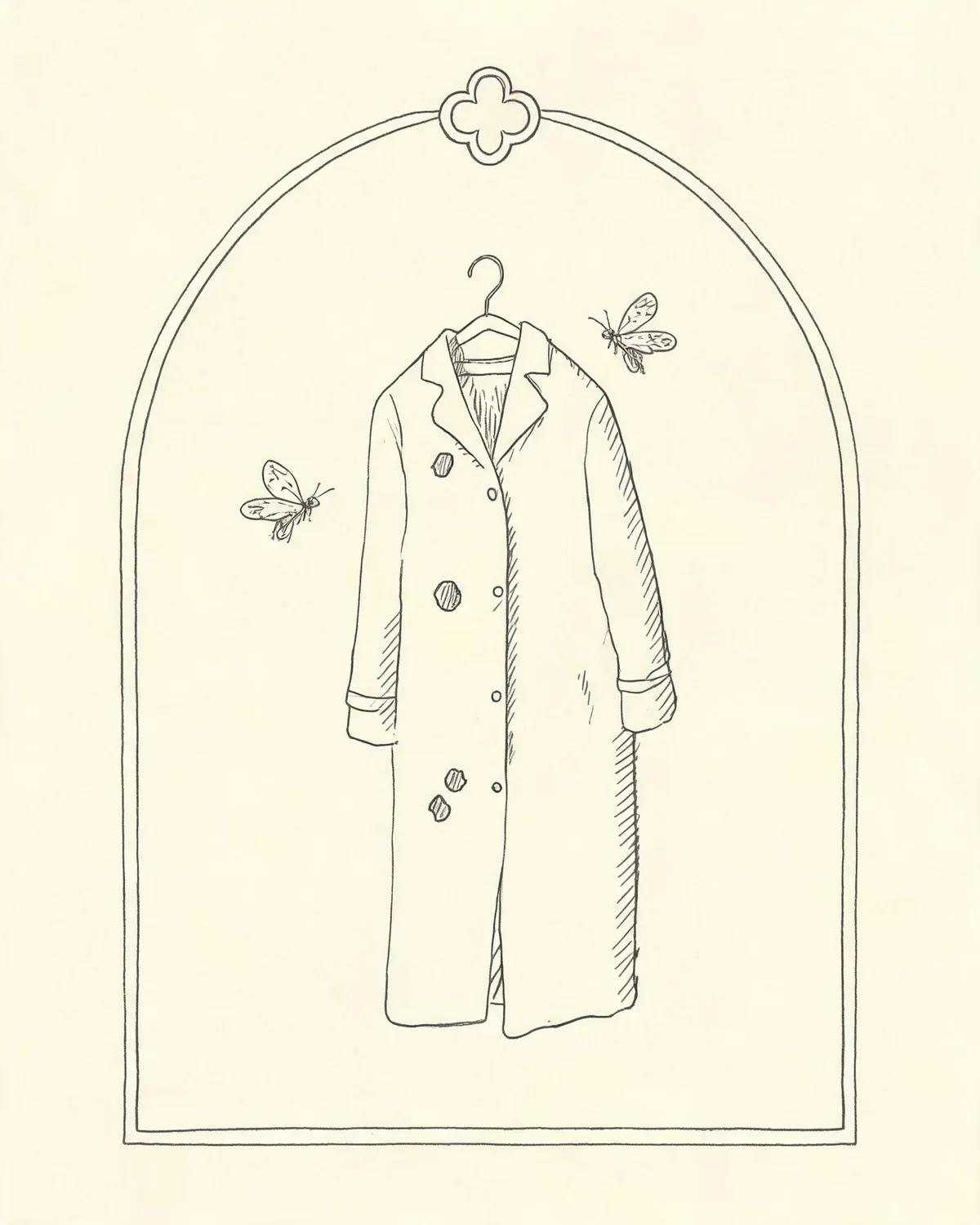
In a world where garments were scarce and costly, clothes worn thin or eaten by moths were an image of ruin and of how quickly earthly things pass. Against that stands the memory of a people whose clothes did not wear out during long years in the wilderness. Finding ruined clothes in a dream closet can ask what you have relied on that is quietly fraying.
Changing Into Different Clothes
Taking off one garment and putting on another became a picture of laying aside an old way of life and taking up a new one. A priest changing into linen garments marked his consecration for sacred duty. If you dreamed of choosing new clothes in a closet and leaving old ones behind, the image can read as readiness for change, or as a call you have begun to answer.
Wearing Clothes That Are Not Yours
The covering quality of garments can also turn deceitful. Christian imagery remembers the wolf disguised in sheep's clothing and the younger brother who wore his elder brother's clothes to win a blessing. Finding yourself dressed from someone else's closet may raise questions about borrowed roles, a part you play to please others, or a fear of being found out.
White Garments Hanging Inside
White and fine clothing in biblical imagery belongs to celebration, to weddings, and to the dazzling robes of heavenly figures and of the redeemed. A closet where white garments stand out may carry a note of joy, purity or a coming celebration, and for some readers a reminder of hope beyond the present. How the white clothes made you feel will guide the reading.
Torn Garments on the Shelf
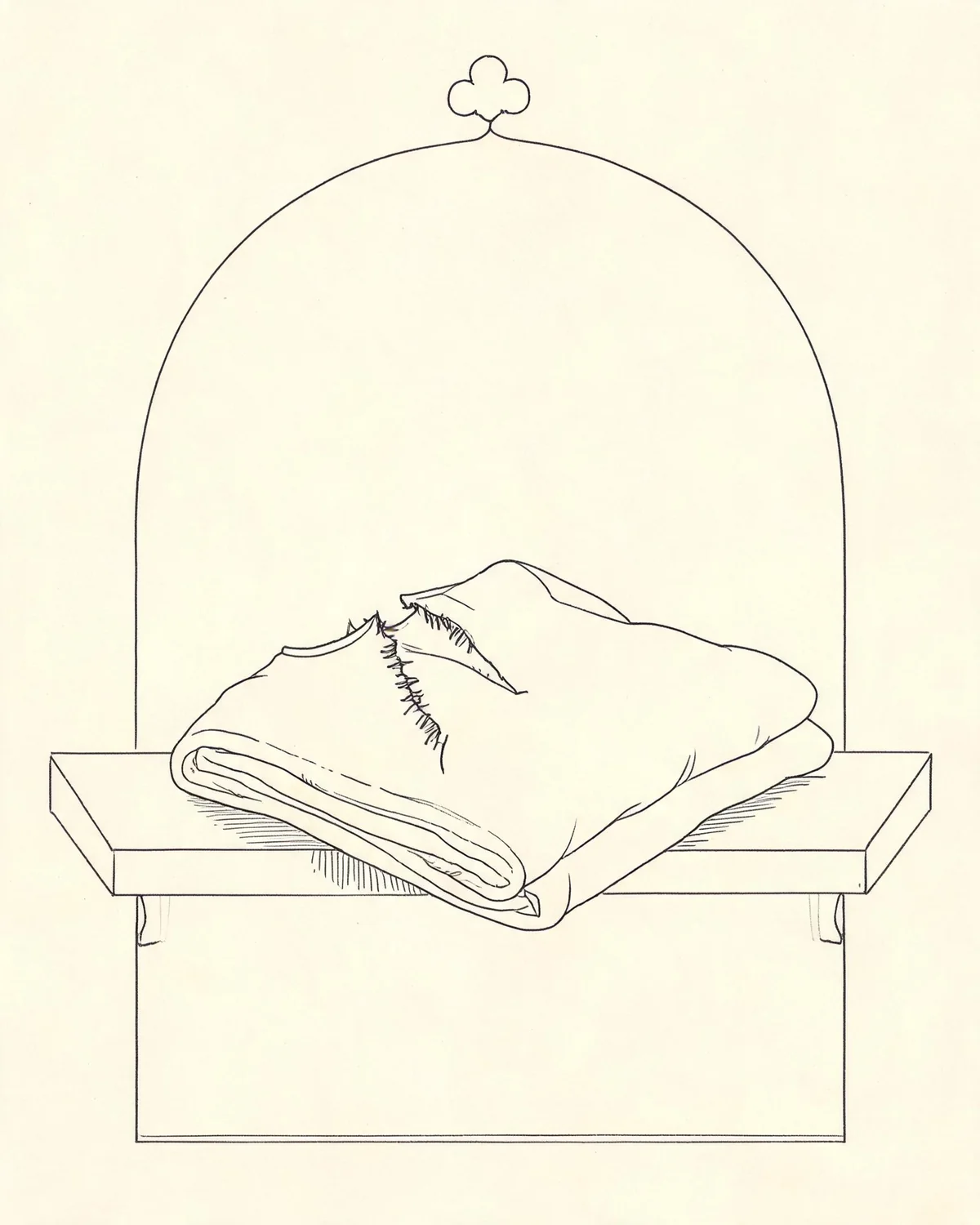
Tearing one's clothes was a common gesture of strong feeling in the biblical world, and its uses fall into four broad kinds: grief over a loss, sorrow for wrongdoing, fear or alarm, and anger or frustration. Torn garments in a dream closet may belong to one of these. Ask which feeling you have folded away instead of expressing it.
Common Symbols Paired with Closet
A closet sits behind a door, and Christian door imagery is rich. The door could stand for a whole house, and a godly home was pictured with words of truth written on its doorposts. One of the best-loved images shows Christ standing at a door and knocking, waiting for it to be opened. With a closet, the door asks who you are letting in, and who you are keeping out.
A key brings authority into the scene. Christian imagery speaks of one who holds a key that opens what no one can shut and shuts what no one can open, an image of ultimate authority and of protection. Holding the key to a dream closet can suggest that you have more say over what stays hidden than you feel.
Light changes a closet completely. Biblical imagery insists that some things are meant to be shown rather than hidden, like a lamp set where it can give light or a city on a hill. A light switched on inside a dark closet can picture something you are ready to bring into the open.
A closet inside a house recalls that in older homes it might be the only private space. Seen this way, the closet is the one room where a household's privacy and a person's prayer meet, and a dream of it may be about the balance between belonging and solitude.
How This Tradition Differs from Others
Islamic dream interpreters read the closet socially. For them it can stand for a spouse, a protective veil, the privacy of a marriage and a confidence kept, and a wardrobe can promise good news within days. The closet there is first a household image.
Modern Western traditional dream interpreters often begin with fear or with forgotten things. A monster in the closet is among the most common recurring childhood dreams, and one familiar adult dream finds a neglected baby on a closet shelf, read as an abandoned project or talent still waiting to be picked up. The closet in these readings is where personal history is stored.
Christian imagery takes the closet inward and upward. It is the room for prayer that no one else sees, the storehouse that reveals what the heart trusts, and the place where hidden things wait to come to light. Even the garments it holds point toward an inner state: righteousness put on, an old self put off.
None of these readings cancels the others. A Christian reader might well recognize the household concern of the Islamic manuals and the personal memory of the modern traditional dream interpreters, and then ask a further question: what does this hidden place have to do with God?
What Does Cleaning or Organizing a Closet Mean in a Dream?
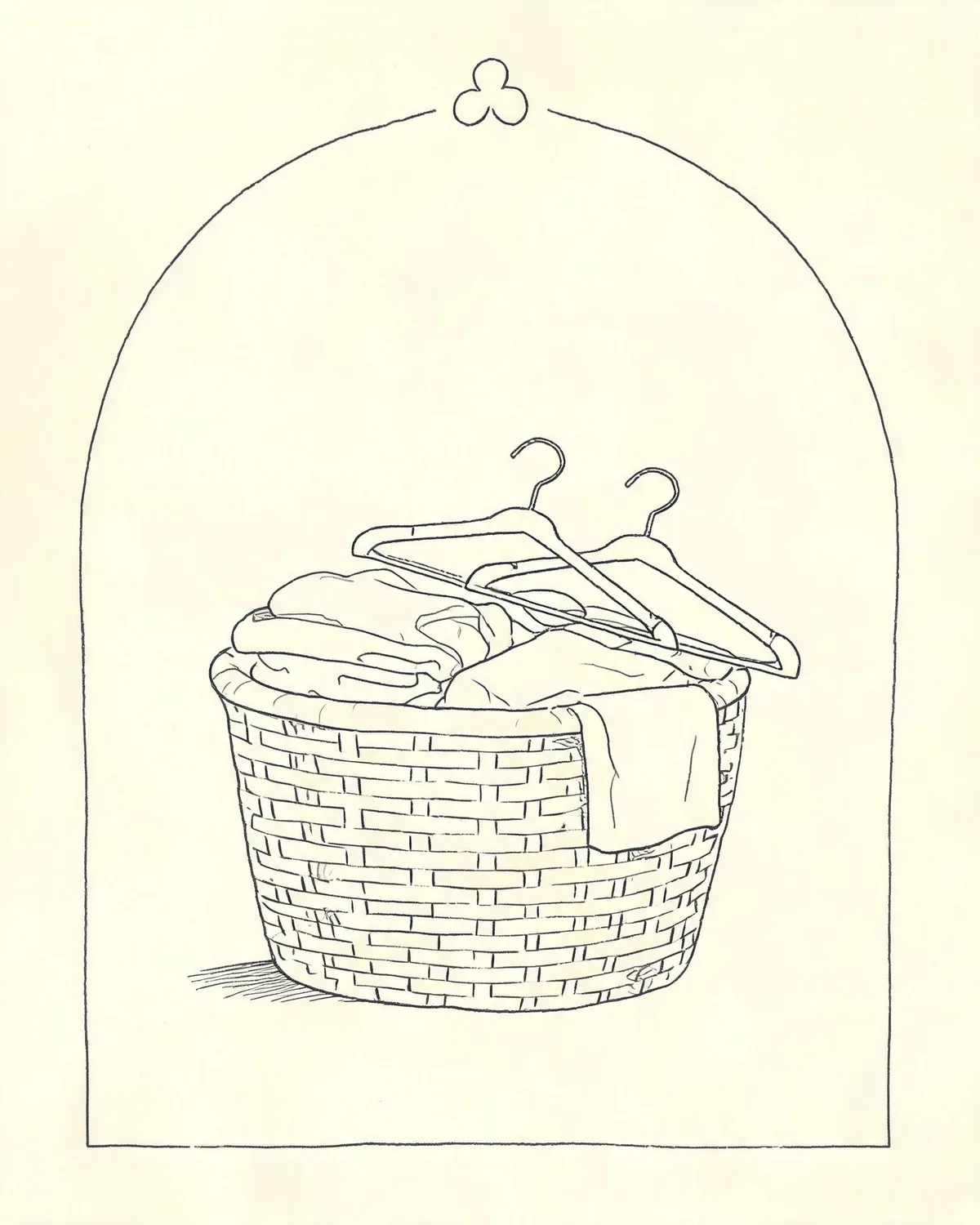
Cleaning out a closet is one of the most practical dream scenes, and Christian imagery gives it several layers. Washing clothes appears again and again in older ritual law as a sign of purification, and laying aside old garments became a way to speak of putting off an old nature. A dream of sorting and cleaning can read as a desire for a fresh start, or as repentance already under way.
The tradition's language of storing up adds a second question. Stored things can be prudent, saved for need or for one's children, or they can be a futile hoard of things that will not last. Deciding what stays and what goes in a dream closet mirrors that judgment about what deserves your keeping.
Some present-day readers also take a clean, organized wardrobe as a picture of a settled heart and a cluttered one as unresolved concerns, though that is a modern reading rather than an older rule. Treat it as a gentle nudge to notice what needs tidying in your life, not as a grade.
What Does an Empty Closet Mean in a Christian Dream?
An empty closet meets two strands of biblical imagery. The first concerns storehouses. In the ancient world an empty storehouse spoke of ruin and loss, while a full one spoke of security and blessing. Seen this way, a bare closet can voice a fear of running short, whether of money, energy or hope.
The second strand turns that fear around. Clothing, together with food, is one of the two areas of life about which Christian teaching tells believers not to worry, and God's care is often pictured as clothing given. A full storehouse can even become an image of misplaced trust, as in the parable of a rich man who built bigger barns, only to have his life required of him as soon as his plans were complete.
So an empty closet does not have to read as lack. It can also be a cleared space, ready for what comes next, or a call to trust provision you cannot yet see. The feeling the empty shelves gave you, panic or relief, usually shows which strand fits.
What Does Hiding in a Closet Mean in a Christian Dream?
Hiding runs through biblical imagery in both directions. Many figures hide to escape danger, and the faithful speak of God as their hiding place, sheltered in a secret place or under wings. Hiding can also be wise, a way of stepping aside until a threat has passed. A dream of hiding in a closet can belong to this protective side, especially when it felt like refuge.
The other direction begins in the garden story, where the first man and woman hid after doing wrong, and that hiding became proverbial for guilt. If the closet felt like a place to avoid being seen, the dream may be touching something you would rather not face.
Yet even here the tradition is gentle. The devout are described as wanting nothing hidden and as finding comfort in being fully known. A hiding dream can therefore end with a quiet question: who would you trust enough to step out and be seen by?
What This Dream Is Not
Dreaming of a closet does not show that you are hiding sin, nor that someone close to you are keeping secrets. Hiding in this tradition is as often shelter as it is guilt, and one dream cannot decide which of the two applies to you. Even a frightening closet scene is better treated as something to pray about than as a message to obey.
It is not a command to give away your belongings, end a relationship or confess something publicly because of one night's images; steps like those call for prayer, time and counsel. Nor is an empty or chaotic closet a judgment on your faith. At its best, the dream offers a clear picture of what you are keeping, protecting or avoiding, and a chance to decide what to do with it.
FAQ
Is a closet dream a message from God?
It can be weighed that way, but Christian practice is cautious. Most closet dreams echo ordinary life, and those that seem weightier are tested by their fruit: whether, over time, they lead toward honesty, love and peace.
Does dreaming of a closet mean I am hiding sin?
Not necessarily. Biblical imagery uses hiding for protection, safekeeping and storing words in the heart far more often than for guilt. If the dream did stir guilt, it is better taken to prayer than turned into self-accusation.
What does a monster in the closet mean for a Christian?
It is one of the most common childhood dreams and often reflects fear more than anything spiritual. Christian writers add that frightening images urging destruction do not come from God, so prayer and reassurance are fitting responses.
What does a wardrobe full of clothes mean in a Christian dream?
A wardrobe full of clothes can picture blessing and provision, since garments were precious in the biblical world. It can also raise the old caution against prizing outward appearance too highly, so notice whether the wardrobe felt generous or burdensome.
What does finding treasure in a closet mean?
In Christian imagery what you treasure reveals what you value most. Finding something precious tucked away may point to a gift or calling you had overlooked, or ask whether your heart is set on lasting or passing things.
What does it mean to find a loved one's clothes in a closet?
Garments in biblical imagery often carry care and continuity, from a mother sewing her son a new robe each year to a sacred role passed to the next generation along with its clothing. Such a dream may be about love and inheritance.
Is a closet the same as a storehouse in biblical imagery?
They are close relatives. A storehouse pictures abundance and security, true or false, and Christian imagery uses it for both provision and misplaced trust. A dream closet can borrow either meaning, depending on what it holds and how you feel.
Who should I talk to about a closet dream?
A closet dream is best talked over with a pastor, a spiritual director or a trusted friend who prays, especially if the dream touched guilt or fear. Christian tradition has long preferred discernment in company to private certainty reached alone at night.
How to Use These Readings Today
Start with three notes on waking: whether you were inside or outside the closet, what it held, and whether the door felt protective or confining. Those details carry most of the meaning in this tradition, and they fade quickly.
Then bring the strongest image into prayer or quiet reflection. A shut door may connect with a need for solitude, worn clothes with something fraying, and an empty shelf with a worry about provision. Choose the one thread that fits your life now rather than trying to read every detail.
Finally, take one small step that answers the image. Set aside ten minutes of private prayer, give away clothes you no longer wear, or have the honest conversation a hiding dream seems to point toward. If the dream left you anxious, share it with someone you trust and let it rest with them rather than turning it over alone in the dark.