Frog in Christian Dream Interpretation
Frogs are on the kitchen floor, in the bread bowl and under the bedcovers, and more keep climbing up from the river. For Christian readers that scene comes almost straight out of scripture, so the sections below trace how the plague story, a vision of frog-like spirits, medieval symbolism and an older hope of resurrection each shape what a frog dream might be asking you.
On this page
- Key takeaways
- What a Frog Means in Christian Dream Interpretation
- How Christian Dream Interpretation Reads Dreams
- Core Principles
- How the meaning changes
- Common Symbols Paired with a Frog
- How This Tradition Differs from Others
- What Do Dead Frogs Mean in a Dream Biblically
- What Does a Toad Mean in a Dream Biblically
- What it is not
- FAQ
- How to Use These Readings Today
- Related symbols
Key Takeaways
- In scripture, frogs are first an image of the ordinary overrun: a creature that belongs in the river spreading into bedrooms, ovens and kneading bowls.
- A vision at the close of the New Testament compares unclean spirits to frogs coming out of mouths, which links the frog with deceptive speech.
- Church writers read the frog's mud and constant croaking as images of the devil or of false teaching.
- Early Christians in Egypt also used the frog as a sign of resurrection, so the tradition is not wholly negative.
- The plague story turns on a hardened heart, which makes stubbornness a recurring question in Christian frog readings.
- Discernment, not fear, is the tradition's response to dark dream images.
What a Frog Means in Christian Dream Interpretation
Intrusion is the oldest layer. When frogs appear in scripture they rise from the Nile and invade everything: houses, bedchambers, beds, ovens and kneading troughs, then the people themselves. Nothing violent happens; ordinary life is simply overrun. A Christian reading of a frog dream often begins there, asking what has slipped out of its proper place and into rooms where it was never meant to be, such as work into the bedroom, worry into meals or a quarrel into every conversation.
Speech is the second layer. In the visions near the end of the New Testament, three unclean spirits like frogs come out of the mouths of the dragon, the beast and the false prophet and go out to gather the rulers of the world for battle. The frog becomes a picture of persuasive, corrupting words, the kind that travel fast and stir people toward conflict.
Moral symbolism is the third. Early church writers looked at the frog's life in the mud and its loud, unceasing croak and saw the devil, or heretics spreading false doctrine. Later Christian symbolism attached the frog to the repulsive side of sin, to grasping at worldly pleasure, and to envy and avarice.
Hope is the fourth, and it is easy to forget. Christians in Coptic Egypt kept an older, kindlier image of the frog alive and placed it on oil lamps as a symbol of the resurrection. A creature that rises out of the water and the mud each season could stand for new life as easily as for decay.
How Christian Dream Interpretation Reads Dreams
Medieval Christian writers sorted visions by the way they arrive: through the bodily senses, through the imagination, or through direct understanding. A frog dream almost always belongs to the middle kind, a picture offered to the imagination. That classification matters, because it means the frog is treated as an image to be understood rather than as a literal creature or a spirit standing in the room.
Discernment then does the work. The New Testament treats evil spirits as realities people could meet in dreams and visions, and discerning of spirits exists so that such influences can be recognized, confronted and refused. Because one vision likens unclean spirits to frogs, a frog dream can leave a believer uneasy. The tradition's answer is to test the dream calmly: does it push you toward fear, suspicion and hatred, or toward honesty, repentance and peace?
The plague story gives a third lens: it is less about frogs than about Pharaoh, who begged for relief, received it and then went back on his word. Christian readers often put the same question to a frog dream: what am I refusing to let go of, even after the pressure has eased?
Core Principles
Ask whether the frog is in its place. In the plague story the relief Moses asks for is that the frogs should remain in the river only. A frog by a pond is part of creation; a frog in your bed is a plague. The reading turns on displacement more than on the animal itself.
Listen to where the noise comes from. Frogs coming from mouths point to words, and constant croaking was heard by church writers as the noise of false teaching. Yet one nineteenth-century Christian visionary heard the same croak as a hymn of thanks for being alive. Whether the sound in your dream felt like chatter, propaganda or praise matters.
Do not confuse relief with change. Pharaoh's story warns that a problem can lift while the heart behind it stays the same. A frog dream that returns after a difficult season may be asking whether something was truly resolved or only paused.
Hold the mud and the resurrection together. The same creature carried sin and new life in Christian symbolism. A faithful reading lets the dream's mood show which is in view, rather than assuming the darker meaning.
What the Frog's Behavior Changes
Where the frogs are, and what they are doing there, carries most of the meaning in a Christian reading.
Frogs rising out of a river
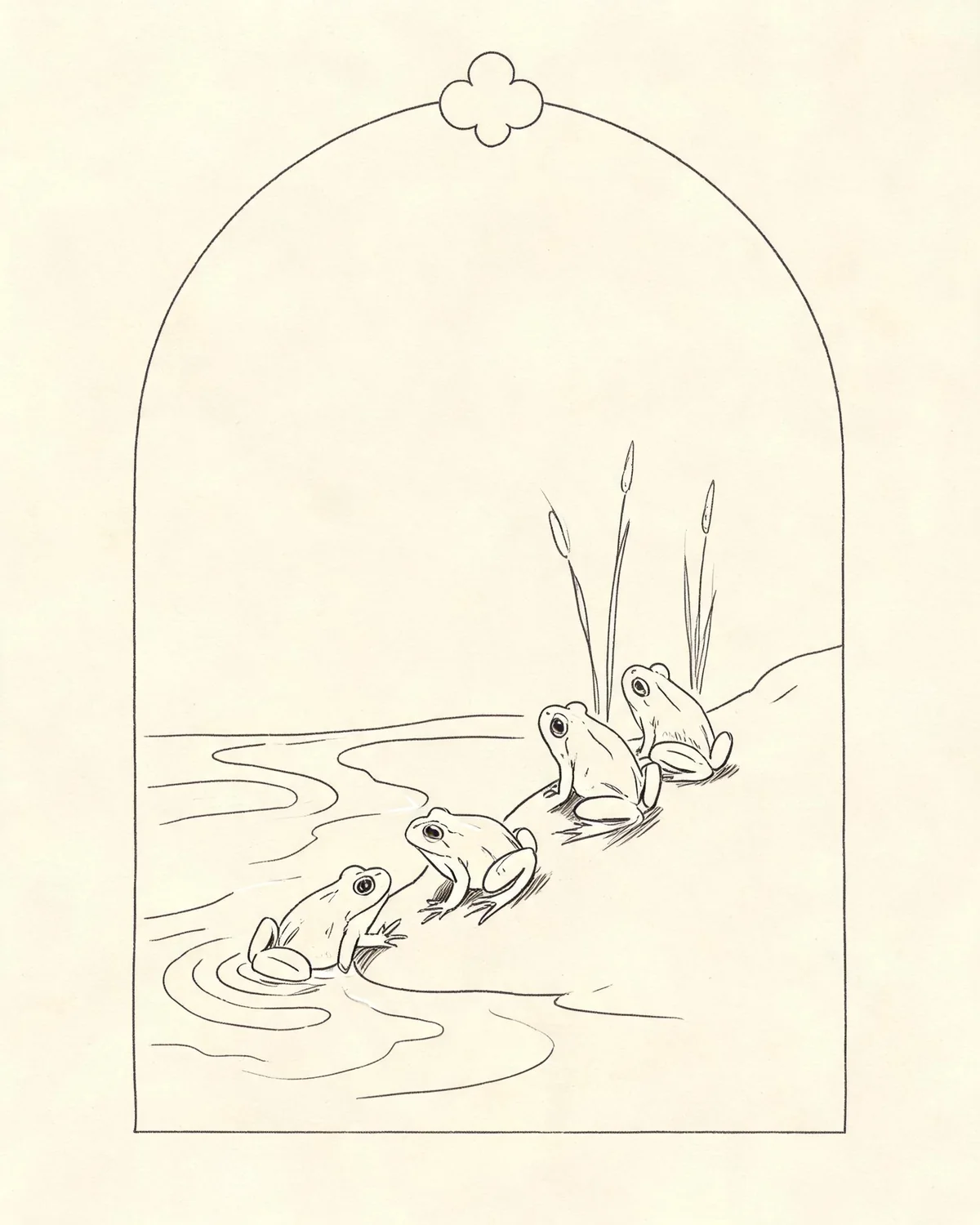
Watching frogs pour up out of a river echoes the moment the plague begins, when the waters bring forth frogs in abundance. A river usually stands for a source of life, so the scene can picture something that once nourished you, perhaps work, a friendship or a habit of entertainment, now producing more than you can manage. Notice whether the water itself looked clean or troubled.
Frogs in your bed or bedroom
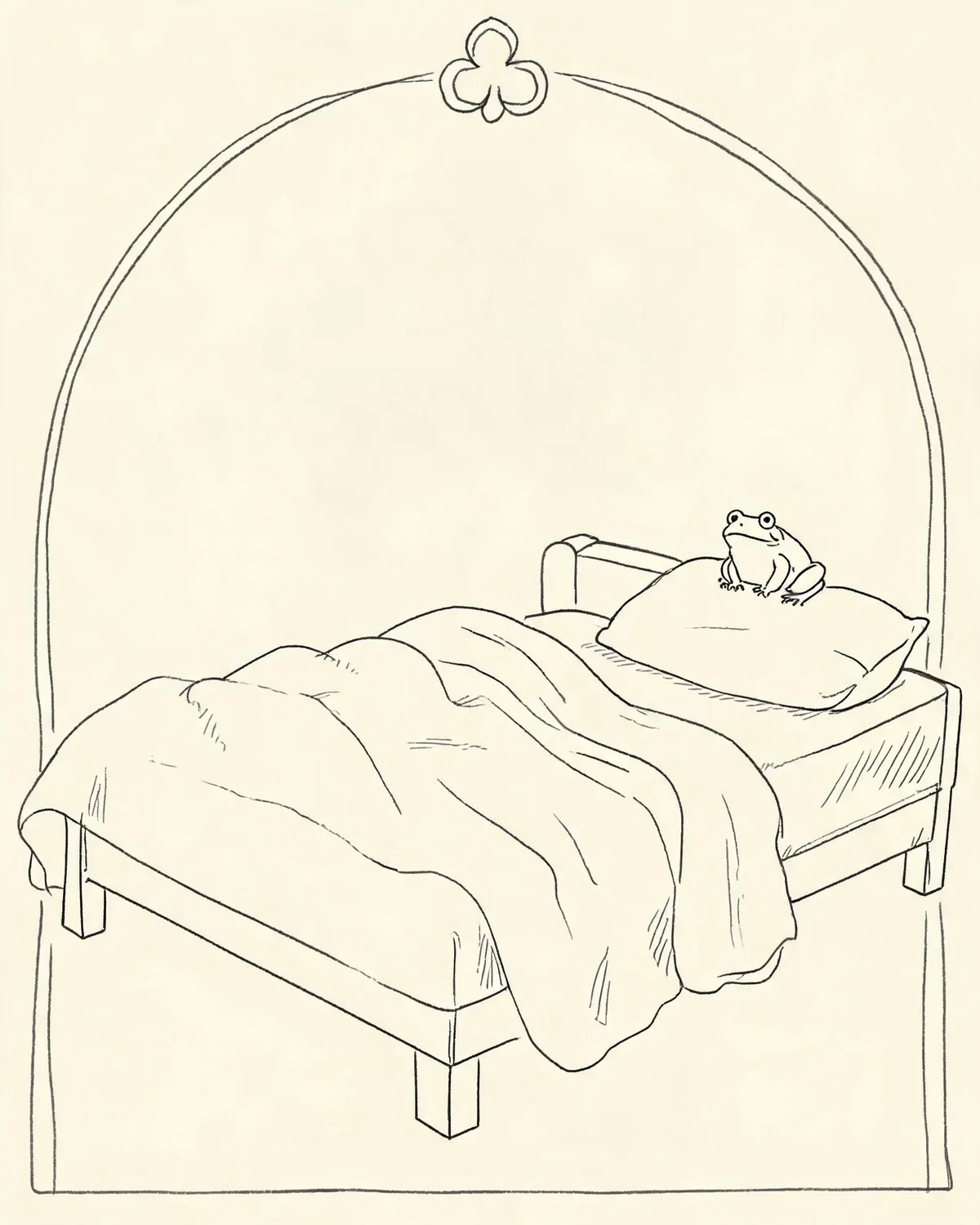
In the plague story frogs climb into the bedchamber and onto the bed itself, and a psalm remembers them even in the chambers of kings. A dream of frogs under the covers often concerns rest and intimacy being invaded: anxieties, screens or conflicts crossing the last private threshold. A Christian reading would ask what you have allowed to follow you into the place meant for rest.
Frogs in the oven or the bread bowl
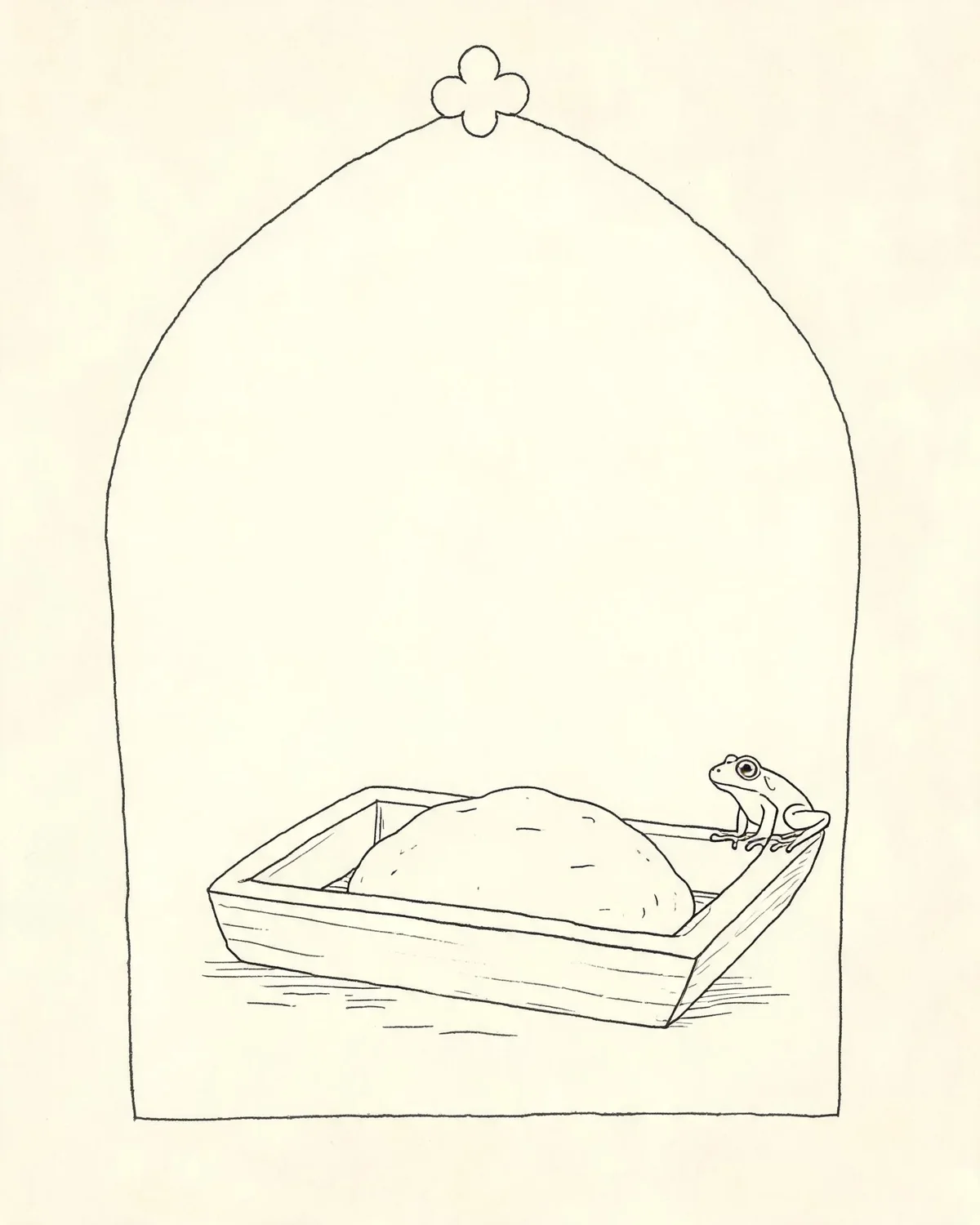
The plague also reaches ovens and kneading troughs, the places where daily bread is made. Frogs in the kitchen, in flour or among food can picture daily provision being spoiled: money worries at the table, resentment over shared work, or something unwholesome in what you take in each day. The scene invites you to look at what is feeding you.
A frog coming out of a mouth
This image comes closest to the vision of frog-like spirits leaving the mouths of false powers. In a dream, a frog emerging from someone's mouth, or your own, usually points to speech: flattery, gossip, propaganda or words that stir others toward conflict. A present-day reading treats it as a question about words and influence rather than proof of anything spiritual.
Croaking that will not stop
A chorus that keeps you awake recalls both the church writers who heard false teaching in the frog's croak and the saints of legend who ordered frogs into silence. The dream may reflect too many competing voices: news, opinions, demands. If one voice rose above the rest, ask whose it was and whether it deserves the attention it gets.
A frog sitting in mud
A frog half-buried in mud draws on the medieval habit of seeing the frog as a creature of the mire, linked with sin, worldly pleasure, envy and greed. In a dream, the mud matters as much as the frog. It may point to a comfortable rut, a habit you have grown used to wallowing in, and to the question of whether you want to stay there.
A frog climbing out into clear water
A frog leaving murky water for a clean, sunlit pool leans toward the oldest hopeful image, the frog on early Christian lamps as a sign of resurrection. Rising from mud to light can picture recovery after a hard season, a return to prayer or a fresh start. The movement upward and outward is the key detail here.
Common Symbols Paired with a Frog
A frog and a river. Scripture binds them together from the start: the river brings forth the frogs, and relief comes when the frogs return to it. Seen together, they usually ask whether something in your life is still contained by its proper channel or has begun to spill over into everything else.
A frog and bread. Bread is daily provision and, for many Christians, the table of communion. Frogs near bread bring the plague's intrusion into the most basic and most sacred of spaces, and may point to something souring your daily life or your worship.
A frog and a staff. In the plague story a staff is stretched over the rivers and ponds before the frogs come up. A staff in the same dream as frogs can stand for authority, responsibility or a decision you hold in your hand, and for the knowledge that some choices bring consequences that spread far beyond their first moment.
A frog and a lamp. Because early Christians in Egypt set the frog on oil lamps as a resurrection sign, a frog beside a lamp or candle pulls the dream firmly toward hope, light and renewal.
How This Tradition Differs from Others
Islamic dream interpretation remembers the same story of Moses and Pharaoh but draws a gentler meaning from frogs overall. It reads the frog mainly as a pious, devout person or a good neighbor, and treats frogs leaving a town as hardship lifted through prayer. Christianity's frog is more often a warning than a friend.
The Greek dream tradition of antiquity read frogs as cheats and beggars, though it allowed that they could be favorable for people who earn their living from crowds. That is a social reading rather than a moral one.
Ancient Egypt, where the plague story is set, honored the frog as a sign of birth, fertility and new life, and pictured a kindly midwife goddess with a frog's form. In China, a frog stuck down a well became a proverb for small horizons, and European fairy tales turned a despised frog into a prince.
Christian symbolism contains echoes of almost all of these, from the warning to the transformation, but it frames them morally: the frog is read for what it shows about trust, speech, stubbornness and the hope of rising again.
What Do Dead Frogs Mean in a Dream Biblically?
Scripture gives an unusually concrete picture. When the plague ends, the frogs die out of the houses, villages and fields, and people pile them in heaps until the land stinks. The trouble is over, yet its remains are everywhere, and they are unpleasant to deal with.
A dream of dead frogs often carries that double sense. Something that crowded your life has stopped, perhaps a conflict, a demanding project or a season of noise, but the aftermath still needs clearing: apologies, tidying, rest, grief for time lost. The smell in the story is a reminder that ending a problem and cleaning up after it are two different tasks.
The story also contains a warning: as soon as Pharaoh saw relief, he hardened his heart and went back on his promise. If dead frogs appear after a difficult period has eased, the dream may ask whether you have kept the resolutions you made while it was hard. A single dead frog, on the other hand, can simply mark a small worry that has run its course.
What Does a Toad Mean in a Dream Biblically?
Toads never appear in scripture, so any biblical reading comes through later Christian symbolism. There the toad was treated more harshly than the frog. Medieval imagery made it an emblem of the devil and of avarice, and some stories claimed that toads entered people possessed by evil. Medieval sculpture sometimes showed the devil as an unthreatening figure, the prince of this world, whose back is being eaten by toads, snakes and worms, a picture of corruption hidden behind a respectable face.
That background makes a toad dream a natural place to look at hidden decay: greed, resentment or a polished surface over something you would rather not examine. The emphasis is self-examination, not fear.
The toad also had a gentler side in wider symbolism. Because it disappears into the earth and reappears, it could stand for resurrection, much like the frog on early Christian lamps. A toad emerging from the ground after rain leans toward that reading, especially if the dream felt calm.
What This Dream Is Not
A frog dream is not a forecast of plague, disaster or punishment for you or your household, even though the image comes from a story of judgment. It is not evidence of a demonic presence or a spiritual attack, and it does not require special rituals or deliverance. Nor does it say anything certain about the people around you, so it should never become a reason to suspect someone of deceit because a frog came from their mouth in your sleep.
Christian teaching weighs dreams with prayer, scripture and ordinary good sense, and gives them far less authority than conscience and community. Nor is the frog a verdict on your character; the old link with mud and sin describes a symbol, not a person. A frog dream at most offers a question worth carrying for a while, and if it keeps returning with fear, a pastor or counselor is a better companion than any symbol list.
FAQ
What do frogs symbolize in Christian tradition?
Frogs appear mainly as one of the plagues of Egypt, an image of something spreading out of its place and into homes. A later vision likens unclean spirits to frogs, linking them with deceptive words.
Are frogs a symbol of demons in Christianity?
Not in themselves. One vision compares unclean spirits to frogs, and medieval writers used frogs for the devil and false teaching, but the comparison is a picture. Early Christians in Egypt also used the frog for resurrection.
What does a green frog mean in a dream biblically?
Green in scripture is the color of living things, pasture and God's provision. A healthy green frog in clean surroundings tends to lean toward the hopeful side of the symbol, renewal and new life, rather than intrusion.
What does it mean to dream of many frogs?
Many frogs recall the plague's sense of being overwhelmed by something small multiplied many times. Ask what minor pressures have been accumulating: messages, obligations or worries that are harmless alone but exhausting together.
What does killing a frog in a dream mean biblically?
In the plague story the frogs are removed through prayer rather than by force. Killing frogs in a dream can picture clearing out an intrusion, but it may also ask whether you are relying on effort where patience and prayer are needed.
What does it mean when a frog jumps on you in a dream?
The plague narrative says the frogs came up on the people themselves. A frog landing on you can picture a pressure that has moved from your surroundings to your own body or mood, something you can no longer keep at arm's length.
Is a frog dream a spiritual attack?
A frog dream is not a spiritual attack by itself. Christian tradition answers dark images with discernment rather than alarm. Weigh the dream with prayer and common sense; if it leaves you fearful for a long time, talking with a pastor or trusted friend is wise.
What does a frog in water mean in a dream biblically?
A frog at home in a pond or river is simply in its place, which is exactly what the plague story longs for when it asks that frogs remain in the river only. The scene usually suggests order restored.
Does a frog dream mean something in your life is unclean?
Not necessarily. The vision's language of unclean spirits can make a frog dream feel accusing, but most readings ask a gentler question: whether something has crept into places of rest, food or speech where it does not belong.
How to Use These Readings Today
Start with the location. Write down where the frogs were: in water, in the house, in the bed, in the kitchen, in someone's mouth. In Christian imagery the location is the clearest sign of what the dream is touching, and it will usually point to one area of your life straight away.
Next, ask the plague story's two questions. What has spilled out of its proper place? And is there anything I keep asking to be relieved of while not quite intending to change? Answer each in a sentence, honestly, without arguing with yourself.
Finally, choose one small restoring action. If frogs were in the bedroom, protect one evening of real rest this week. If they were in the kitchen, sit down to one unhurried meal. If they came from a mouth, notice one conversation you could make kinder. Many Christians would also bring the question to prayer before going to sleep.