Funeral in Christian Dream Interpretation
Dark clothes, a hush in the pews, the low sound of a hymn, and a coffin at the front that you cannot quite bring yourself to look at. Christian reading holds a dream like this between two things the tradition never separates, honest grief and the hope of resurrection, and the details you remember usually show which of the two is asking for your attention.
On this page
- Key takeaways
- What a Funeral Means in Christian Dream Interpretation
- How Christian Dream Interpretation Reads Dreams
- Core Principles
- How the meaning changes
- Common Symbols Paired with Funeral
- How This Tradition Differs from Others
- What Does Attending a Funeral Mean in a Dream Biblically
- What Does It Mean to Dream of Planning a Funeral
- Are Funerals Biblical
- What it is not
- FAQ
- How to Use These Readings Today
- Related symbols
Key Takeaways
- Biblical funerals center on burial and on being gathered to one's people, so the dream often concerns belonging and memory.
- Grief in the biblical world is loud, shared and public; a funeral dream may be asking for your sorrow to be witnessed.
- Mourning turned to joy is a recurring biblical pattern, and comfort is promised to those who grieve.
- Christian imagery of dying and rising lets a funeral stand for an old self being laid down.
- Early Christians valued dreams of departed loved ones as consolation, and sometimes as a call to prayer.
- An empty coffin or tomb is the tradition's strongest image of hope.
What a Funeral Means in Christian Dream Interpretation
Funerals in biblical narrative consist mainly of burial. Generation after generation is laid in the family tomb, and the dead are said to rest with their ancestors. A funeral dream read through that lens often concerns lineage and belonging: where you come from, who you will be remembered with, and whether you feel gathered in or left outside the family story.
The biblical world also mourned openly. Weeping was audible and communal; people tore their garments, wore sackcloth, scattered dust and kept days of lament together. Read against that background, a dream funeral can be a place where grief you have kept private finally finds company. The crowd in the dream may stand for the witness your sorrow still needs.
Alongside the lament runs a counter-current. The older writings return again and again to mourning turned to joy, ashes exchanged for a crown of beauty, and comfort promised to those who mourn. A funeral dream that ends in light, music or unexpected peace often belongs to that pattern: grief is not denied, but it is no longer the last word.
Finally, Christian imagery speaks of dying to an old life and rising to a new one. Pastoral counselors have read dreams of dying and rising, especially in seasons of loss, as an inner striving for renewal. Your dream may be marking the burial of a role, a habit or a version of yourself that has run its course, and making room for what comes next.
How Christian Dream Interpretation Reads Dreams
The tradition approaches dreams with both openness and discernment. Christians have long believed that God can speak in the night, yet they test what a dream seems to say by its fruit: whether it leads toward faith, hope and love, or toward fear and fixation. A funeral dream is read in that spirit, as something to pray with rather than something to decode for news.
Grief has a special place in the story. A fourth-century bishop, mourning his brother, wrote that the nights he once found lonely had become sweet because sleep restored his brother's presence to him. An early martyr dreamed of her young brother who had died, prayed for him, and later dreamed of him whole and refreshed. In both accounts the dream of the dead led to consolation and prayer, not to fear or speculation about the future.
So the questions are pastoral. Who was being buried, and what were they to you? How did you mourn: openly, numbly, or not at all? Did any sign of hope appear, such as light, singing, a familiar face at peace? The answers point toward what needs grieving, what needs releasing and where comfort may already be on its way.
Core Principles
Grief deserves witnesses. In biblical mourning no one weeps alone; the community gathers, tears its clothes and laments together. A funeral dream frequently points to sorrow that has not yet been shared. The reading asks who could stand beside you in it, and whether you have let anyone.
Hope stands beside the coffin. Christian faith does not skip the grave, but it refuses to stop there. Morning, light and an open tomb are its signature images. Any trace of them in a funeral dream, however small, tilts the reading toward a loss that is being carried toward healing rather than away from it.
Comfort moves both ways. In the older writings comfort is something given and received, usually within a family, and sometimes from an unexpected stranger. A funeral dream may cast you as the one who needs consoling or the one called to console. Notice which side of the coffin you stood on.
An ending can be holy. Dying to an old way of life is central Christian language. A funeral in a dream can bless an ending you have been treating as failure: a ministry closed, a relationship ended with integrity, a younger self you have outgrown with gratitude.
What Changes the Reading of a Funeral
Seven scenes shift the reading more than others.


Watching your own funeral
Seeing yourself in the coffin while the service goes on is unsettling, yet Christian imagery gives it a hopeful frame. Dying to an old self and rising to a new one is the heart of the faith's language for change. The dream may be marking a conversion, a vocation ending, or a part of you laid down so that something more alive can grow.
A funeral where no one comes
An empty chapel or a burial with no mourners can be one of the loneliest dreams. In the biblical world, being buried without honor was counted a great misfortune, and the dream may carry a fear of being forgotten or unappreciated. It can also reflect a loss that no one around you have acknowledged. Ask who you wish had been there.
Weeping that you cannot stop
Sobbing in a dream, loudly and without restraint, echoes the biblical way of grieving, which was audible and unashamed; even Jesus wept at a friend's tomb. Such a dream often releases grief you have held back in daylight. Many people wake from it tired but lighter, as if something long dammed has finally moved.
Wrapping the body in linen and spices
Tending the dead appears in the gospels as an act of devoted love: bodies bound in linen with fragrant spices, women setting out at dawn to anoint a beloved teacher. A dream of preparing someone for burial usually speaks of care, of wanting to honor a person or a season properly, and of the tenderness grief can hold.
Standing at the open grave
Burial imagery in the older writings goes down: into the pit, the dust, a realm of silence. Standing at the edge of a grave in a dream can mirror a moment of facing something final: hard news in the family, a divorce, a retirement. Whether you step back, kneel or turn toward the people beside you shows how you are meeting that edge.
An empty coffin
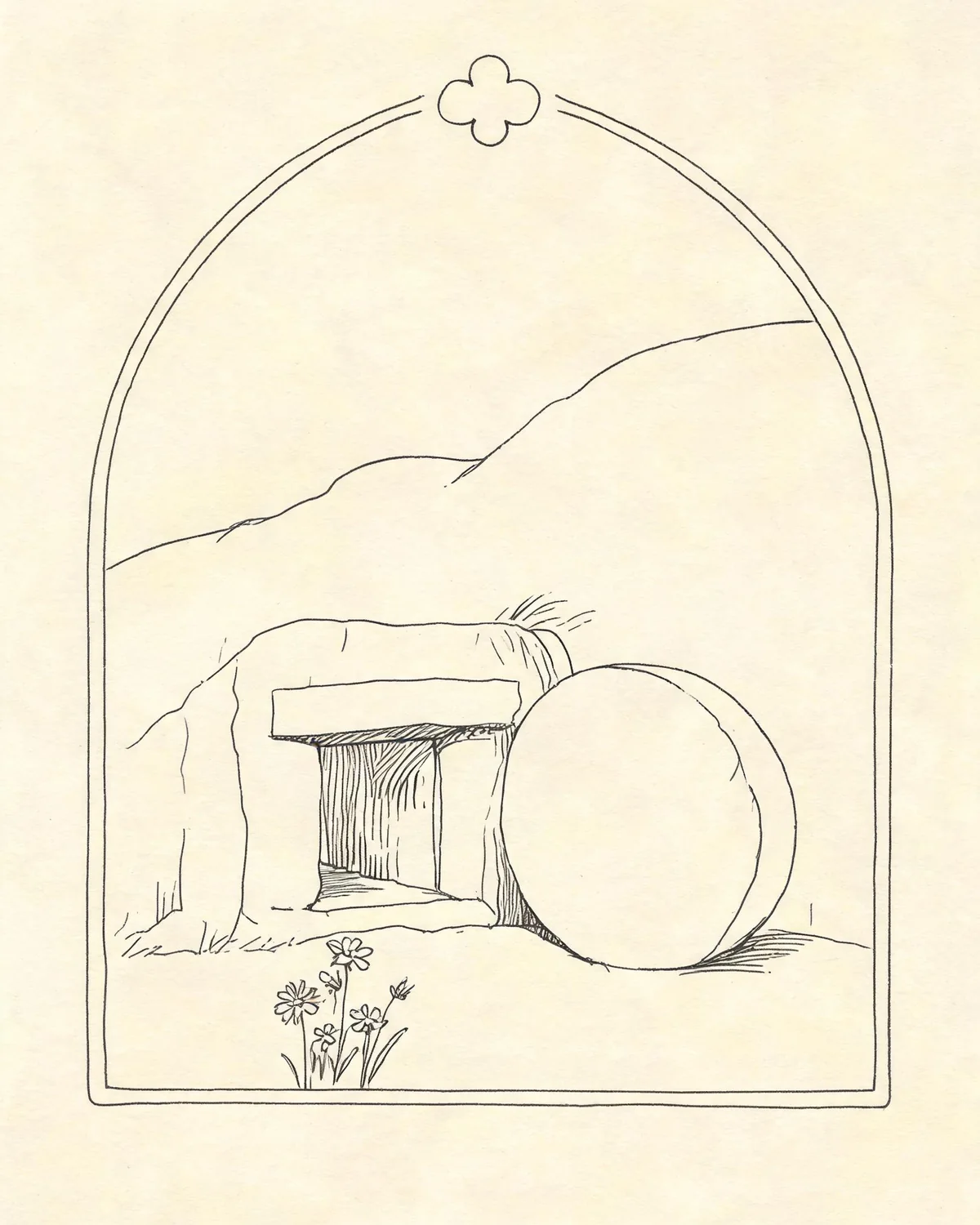
Opening a coffin to find no one inside can be startling, but in Christian imagery it is the strongest picture of hope, the tomb found empty on the first morning with its stone rolled away. The dream may point to an ending that turns out to be a passage, or to a loss that is less final than it first felt.
The funeral of someone you lost long ago
Dreaming of a service for a person who died years ago often reopens grief at an anniversary, a birthday or a new milestone they will not see. Early Christians took such dreams seriously as moments of closeness and prayer. The dream may be inviting you to remember them aloud, light a candle, or pray for them in your own way.
Common Symbols Paired with Funeral
A cross at a funeral brings the central Christian story into the room: death faced fully and passed through. A plain cross on a coffin or above an altar usually strengthens the reading of hope within grief. A broken or fallen cross may show faith itself feeling bruised by the loss, which the tradition treats as part of honest mourning rather than as failure.
Clothes carry the visible signs of mourning. In biblical scenes grievers tore their garments and put on sackcloth, while the prophets urged people to tear their hearts rather than only their clothes. Dark or torn clothing in a funeral dream points to how outwardly you are grieving, and whether the outward signs match what you feel inside.
Bread shared after the burial echoes the meal that broke the mourners' fast in biblical times. A dream that moves from the graveside to a table suggests grief turning back toward community, the moment when people start telling stories again. It can also point to the Lord's table, where loss and hope meet.
A stone sealing a tomb marks finality, since rock-cut tombs were closed with a stone fitted to the entrance. Seeing that stone moved or rolled aside reverses the image entirely and draws on the resurrection morning. A heavy stone you cannot shift may show grief that still feels immovable.
How This Tradition Differs from Others
Islamic dream interpreters read a funeral step by step, washing, praying, carrying and burying, and assign each act a meaning about duty, community or reputation. Christian reading attends less to the mechanics of the rite and more to the mourner's heart and to the hope set against death. Where the Islamic manuals ask what you did at the funeral, Christian readers tend to ask what you felt and whether any light broke through.
Within Christianity itself there is variety. Some Christian communities keep the old practice of praying for the dead and may read a funeral dream as a call to do so; others focus instead on comfort for the living and the assurance of resurrection.
Folk traditions in many cultures read funeral dreams as warnings about someone's real death. Mainstream Christian teaching has generally been cautious about using dreams to read the future, and pastoral counselors steer people instead toward what the dream shows about their grief, their fears and their relationships.
Psychological approaches often read a funeral as the end of a phase of life. Christian readers can welcome much of that, adding a conviction of their own: endings are not empty, and what is buried can be raised. Each approach offers something; the tradition's distinctive contribution is to keep sorrow and hope in the same frame.
What Does Attending a Funeral Mean in a Dream Biblically?
Attending a funeral as a mourner is the most common version of this dream, and the biblical reading starts with presence. In the older writings comfort is given in person, usually by family, sometimes by a stranger who stops on the road. Being at a funeral in a dream can show that you are called to stand with someone who is grieving, or that you need someone to stand with you.
The details refine it. A service for someone you know may mirror a real change in that relationship: distance, a move, a falling-out, a role that has ended. A service for a stranger can point to a broader sense of loss, such as the end of a church community, a neighborhood or a way of life.
Pay attention to your posture. Sitting at the back may suggest you feel on the edge of someone's grief; standing near the coffin, that you carry part of it. Many Christians find it helpful to pray for whoever was being mourned, and for themselves, before moving on with the day.

What Does It Mean to Dream of Planning a Funeral?
Arranging a service, choosing readings or hymns, or picking out a coffin in a dream often points to a transition you are preparing for. Planning implies foresight and responsibility: something is ending, and you want it done with dignity. The ending may be a job, a home, a long caregiving season or a relationship you are closing carefully.
The dream can also carry anticipatory grief, the sorrow that begins before a loss, when someone you love is aging or unwell. Biblical mourners often prepared spices and linen in advance; tending to an ending before it arrives is part of loving well, not a sign of giving up.
If you were planning your own funeral, the dream may be about legacy: what you hope people will say, which relationships you want to mend, what you want your life to stand for. That is a question the Christian tradition welcomes, and it can be taken up gently, in prayer, conversation or a quiet look at your priorities.
Are Funerals Biblical?
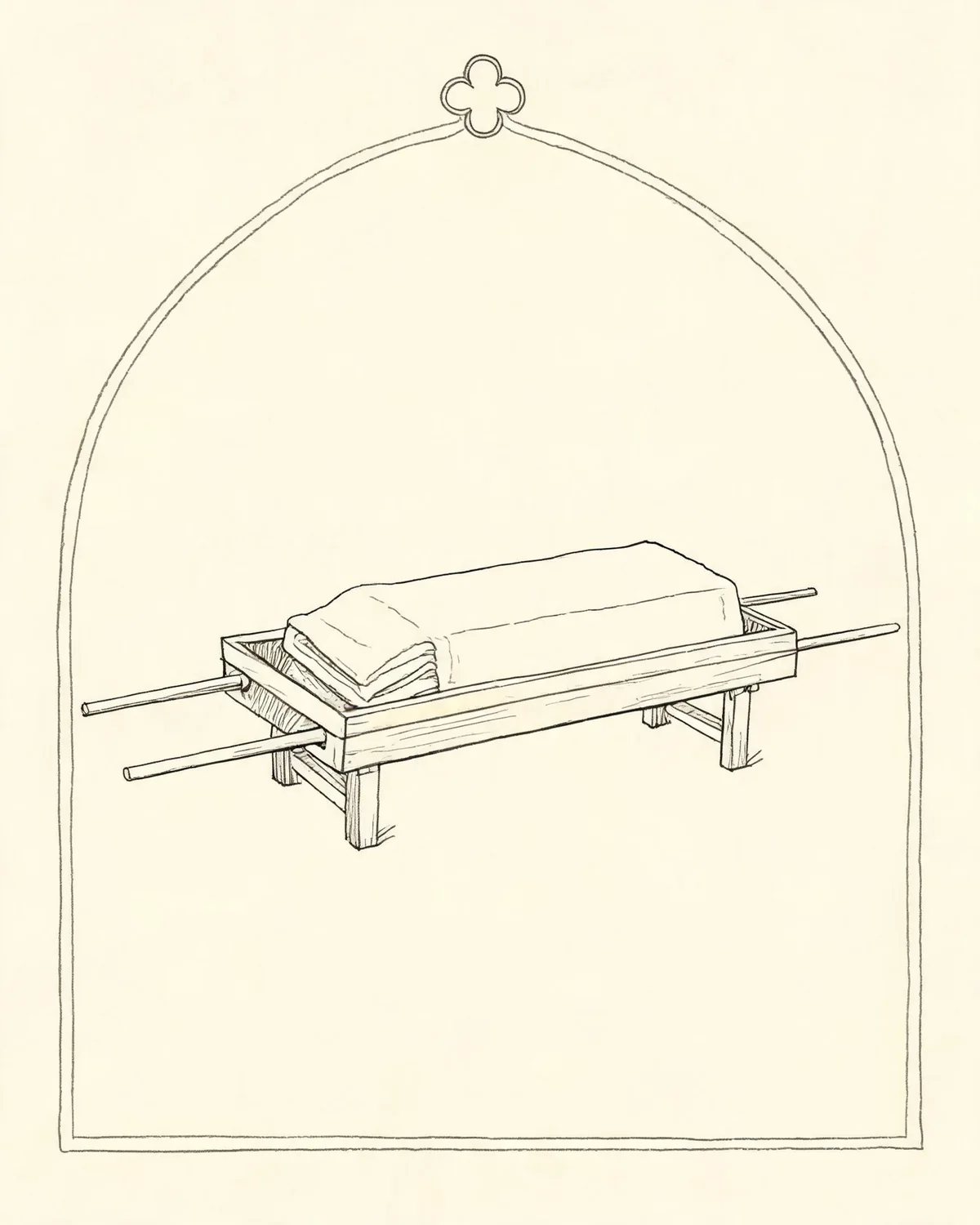
Many people ask this when a funeral dream sends them back to their faith. The older writings describe burial and mourning in detail: families laid together in tombs, bodies carried on a bier, garments torn, seven days of lament, professional mourners, and a meal to end the fast. Funerals as we know them grew from those practices, adapted by centuries of Christian worship.
The gospels add the most important scenes. Jesus weeps at the tomb of a friend, his own body is wrapped in linen and spices and laid in a rock tomb, and early one morning that tomb is found open. Every Christian funeral since has been shaped by that sequence of grief, burial and hope.
For dream reading, this history matters. A funeral in your sleep draws on images that carry long biblical weight: the bier, the gathering, the grave and the open tomb. Knowing that background helps you see the dream as part of a much older conversation about how people of faith hold their dead.
What This Dream Is Not
Dreams of death are not a prediction of anyone's death; they are usually read as images of change or endings. A funeral dream is also not a sign that God is displeased with you, nor a judgment on how you grieved or cared for someone who has died. And it is not an instruction to make any decision in haste, whether about a relationship, a job or a move.
What it often is, instead, is an invitation to let an ending be named and honored. That might mean grieving a loss you skipped over, forgiving yourself for what you could not do, or noticing a hope that has quietly been growing alongside the sorrow. None of these needs to happen quickly; grief keeps its own pace.
FAQ
What is the spiritual meaning of dreaming of a funeral?
Spiritually, a funeral dream often concerns release and renewal: something being laid to rest so that new life can begin. Christian imagery of dying and rising frames many such dreams as transitions held within God's care.
Is a funeral dream a warning from God?
Christians differ on how God speaks in dreams, but pastoral teaching tests any dream by its fruit. A dream that leads to prayer, reconciliation or honest grief is doing good work. One that only produces dread deserves calm, not alarm.
What does it mean to dream of a funeral home?
A funeral home is a place of preparation and waiting rather than of the burial itself. Dreaming of one often reflects a season in between, when something has ended but the next step has not yet begun.
Why do I dream about the funeral of someone who is still alive?
Dreams of a funeral for someone who is still alive usually reflect worry, love or a change in the relationship, such as distance or a move. They tell you nothing about how long the person will live. Reaching out to them is often the best response.
What does it mean to dream of a funeral in a church?
A church setting places the ending within faith and community. It can suggest a loss you want to bring before God, or a change in your church life itself, such as leaving a congregation or a ministry ending.
Should I pray after a funeral dream?
Many Christians find that prayer is the most natural response: for the person who appeared, for anyone grieving, and for themselves. A short prayer of thanks for the person, or for peace, can settle the dream's emotional weight.
What does it mean to dream of a funeral and a wedding together?
Dreams of a funeral and a wedding together often point to an ending and a beginning arriving at once, such as leaving home to marry or closing one chapter as another opens. The dream holds both the loss and the joy of a single change.
Why do funeral dreams come during big life changes?
Funeral dreams come up during big life changes because major transitions involve real losses, even when they are good: a former routine, a place, an identity. The mind often uses funeral imagery to mark those endings, giving you a chance to grieve what you are leaving.
Is it wrong to feel relief in a funeral dream?
No. Relief is common, especially after years of caregiving, a painful relationship or a heavy responsibility. Feeling lighter does not cancel love; it often means a long burden has finally been set down.
How to Use These Readings Today
Begin by naming what was buried. Write a single line: "In this dream, what ended was…" and finish it honestly, whether it is a person, a role, a hope or a season. Seeing it written down often makes the dream's meaning plain.
Then ask what hope appeared, if any. Light, music, a familiar face at peace, an open door or an empty coffin are all worth noting. If none appeared, that matters too; it may mean the grief simply needs more time and company before hope can be felt.
Finally, take one step toward comfort, given or received. Call someone who is mourning, visit a grave, light a candle in church, or tell a friend what you have been carrying. If you are grieving, support is available; this reading is not a substitute for care. A pastor, a grief group or a trusted friend can walk with you.