Spider in Christian Dream Interpretation
You reach for a railing in the dark and your hand closes on silk instead, a web that gives way the moment you lean on it. Christian readers have long heard a moral question in that kind of scene, so what follows traces the spider through scripture's images of fragile trust and plotting, through the snares of Christian art, and through the quieter tradition that praises a small creature for its grip.
On this page
- Key takeaways
- What a Spider Means in Christian Dream Interpretation
- How Christian Dream Interpretation Reads Dreams
- Core Principles
- How the meaning changes
- Common Symbols Paired with a Spider
- How This Tradition Differs from Others
- What Does Killing a Spider in a Dream Mean Biblically
- What Do Black Spiders Mean in a Dream Biblically
- What it is not
- FAQ
- How to Use These Readings Today
- Related symbols
Key Takeaways
- Scripture uses the spider's web mainly as an image of confidence placed in something that cannot bear weight.
- The same texts count the spider among small, wise creatures that hold on and reach royal halls.
- Christian art turned the spider into an emblem of the devil's snare and of greed that feeds on the poor.
- Biblical trap imagery separates the one who sets the net from the one caught, and a spider dream often turns on which you are.
- Folk piety in parts of Europe spared the garden spider because of the cross on its back.
- Christian practice weighs a dream with prayer and reason instead of treating it as an order.
What a Spider Means in Christian Dream Interpretation
The most persistent reading concerns misplaced trust. In one of the oldest wisdom poems, people who forget God are said to lean on a house that will not stand, their confidence no stronger than a spider's web. A Christian reading of a web dream therefore starts by asking what you are resting your weight on: savings, a reputation, a relationship or a plan that looks woven and finished but would tear if tested.
A second reading concerns schemes. The prophets describe the unjust as people who weave spiders' webs, and then add a pointed detail: such webs never become clothing, and their works cannot cover them. Here the web stands for effort spent on plotting, cleverness that produces nothing anyone can actually wear.
The third reading runs the other way. A collection of proverbs lists four things that are small on the earth yet exceedingly wise, and the spider is among them, gripping with its hands and turning up even in kings' palaces. In this light the spider is persistence and quiet competence, a creature too slight to be noticed that still reaches places closed to the strong.
Christian art then gave the spider a moral costume. It became an image of the devil ensnaring sinners and of the miser who bleeds the poor dry, and it was often paired against the bee: one gathers and gives, the other traps and drains. A dream that dresses the spider this way is usually inviting moral reflection rather than describing an outside enemy.
How Christian Dream Interpretation Reads Dreams
Scripture itself shows two kinds of dreams. Some are plain enough that nobody needs help with them; others are so veiled that only a skilled interpreter, a Joseph or a Daniel, can make sense of them. Most spider dreams sit in between, which is why the tradition has always cared about how a dream is weighed as much as what it shows.
Early medieval church teaching counted six sources of dreams, running from the body's hunger or fullness, through deceptive illusions and the mind's own preoccupations, up to revelation, whether pure or blended with ordinary thinking. A spider dream after an evening spent sweeping cobwebs from the cellar belongs to ordinary thought. A spider dream that tempts you toward cruelty or despair would, in that scheme, be treated with suspicion.
Present-day Christian guidance on dreams keeps the same caution in gentler language. Discernment means asking whether the dream draws you toward love or away from it, since images that urge destruction are not taken to come from God. They also remind readers that dreams are not good or bad in themselves. A frightening web may simply show what needs avoiding, and fear can be useful when it moves you to change something before it tangles further.
Core Principles
Test the web by leaning on it. The scriptural image is not about how intricate the web looks but about what happens under weight. In a dream, notice whether anything was resting on the web, or whether you tried to hold onto it, and what happened next.
Find out who set the trap. Biblical trap imagery shows the power of the one who spreads the net and the helplessness of the one caught in it. A spider dream changes completely depending on whether you watched the spider, were tangled in its silk or were spinning it yourself.
Do not mistake small for weak. The proverb that praises the spider's grip keeps the tradition from reading every spider as menace. A tiny spider that holds its place in a grand room may point to patience, endurance or a quiet foothold you have earned.
Hold the emblem and the blessing together. Christian art cast the spider as greed and temptation, while village piety protected the cross-marked spider as a lucky guest. A faithful reading keeps both in view and lets the dream's mood, and your own conscience, decide which applies. A spider that frightened you in a dim cellar and one that sat calmly by a sunny window are unlikely to be saying the same thing.
What the Spider's Behavior Changes
What the spider is doing, and where, shifts a Christian reading more than its size or species does.

A spider climbing the walls of a palace
A spider moving freely through grand rooms recalls the proverb in which it takes hold with its hands and lives in kings' palaces. The scene is less about threat than about reach: a modest person gaining access to important places by patience and grip. It may reflect your own steady progress somewhere you once felt too small to belong.
A web that collapses under your hand
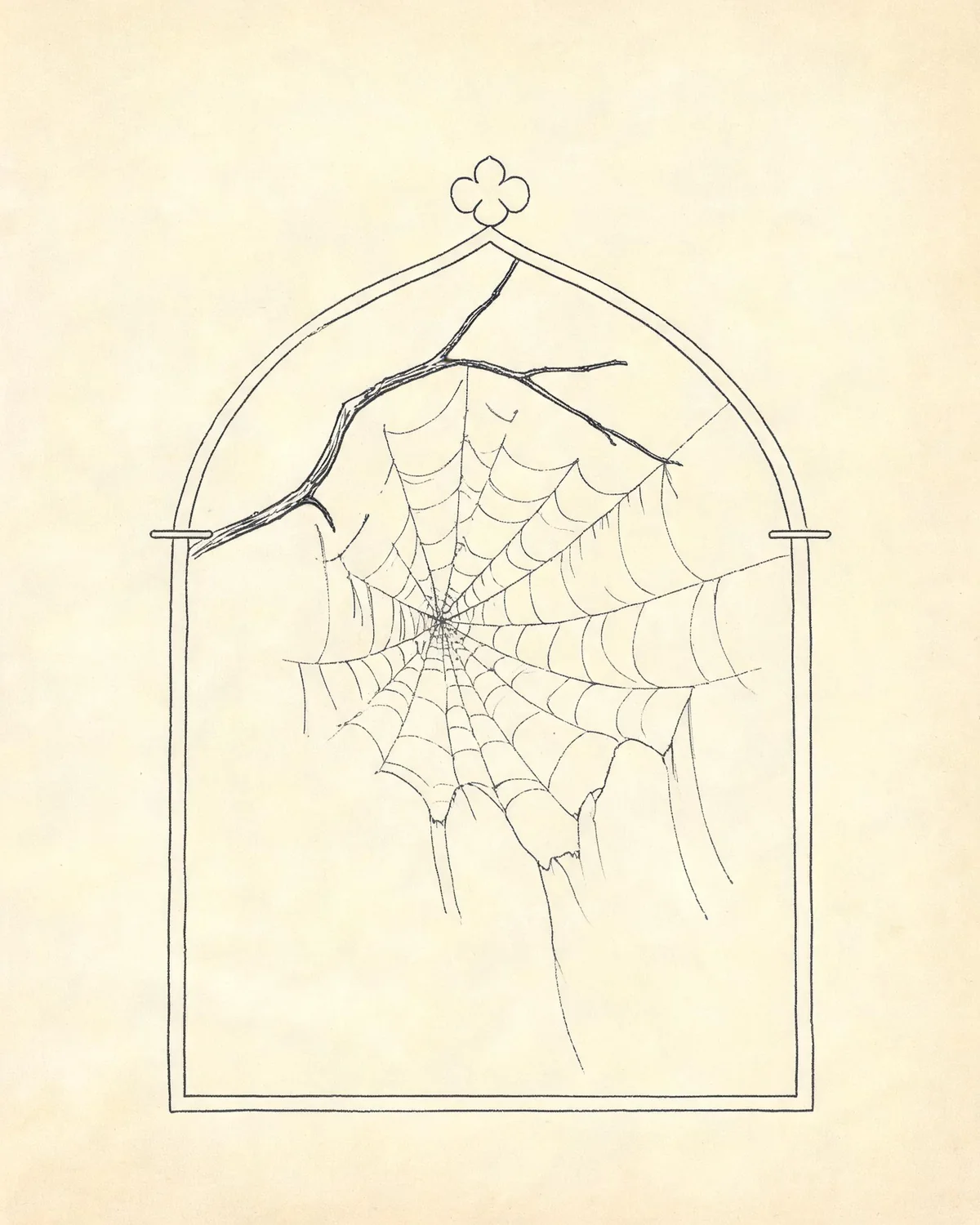
When you reach for support and find only silk, the dream echoes the image of trust that turns out to be a spider's web. The question is what in waking life you have been leaning on. A Christian reading would ask whether that support is something passing, money, approval or a single person, carrying a weight it was never made to hold.
Spinning a web yourself
If you are the one weaving, the scene borrows the prophets' picture of people who spin webs that never become garments. It can point to plans built on manipulation, or simply to hours poured into an elaborate scheme that will not cover any real need. Scripture adds that those who set nets often fall into them, a reason to look closely at what you are building.
Tangled in a web
Being caught in silk draws on the older Christian image of the devil ensnaring sinners. Scripture lists many such entanglements: flattery, rash vows, wealth gained by deception, a hot temper and the fear of other people. Waking up tangled may invite you to name one habit or commitment that has quietly begun to hold you rather than serve you.
A spider draining its prey
A spider feeding on a trapped insect recalls the medieval emblem of the miser who bleeds the poor, and of sinful urges that drain the life out of people. The dream can point outward, at someone taking more than they give, or inward, at an appetite of your own, whether for money, attention or control, that feeds on others.
A spider over a cup
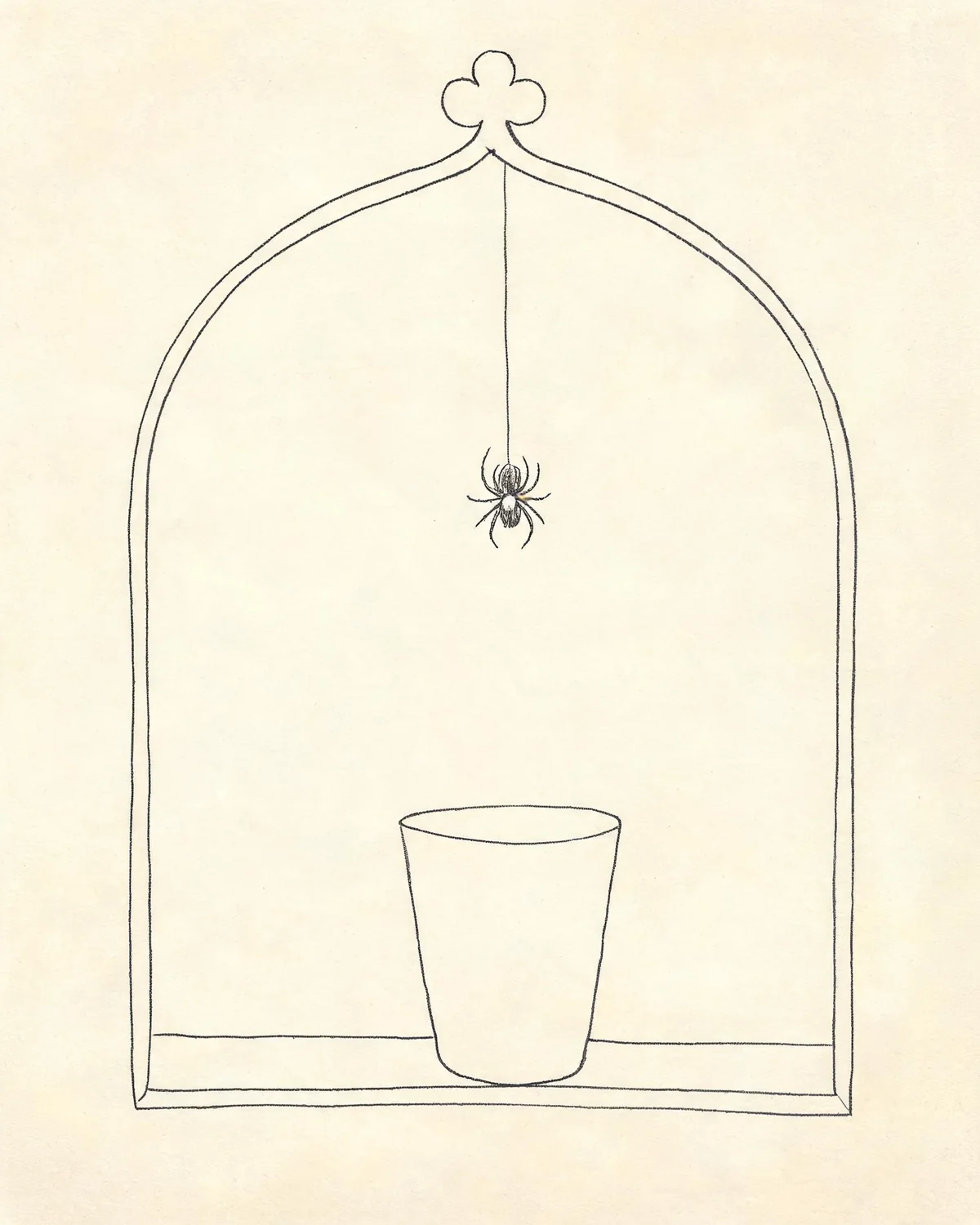
Christian art made a spider hanging over a cup the emblem of a medieval saint. In a dream, a spider dropping toward your cup or drink can picture something unwelcome reaching what you take in each day. Some readers relate it to worship or routine, asking whether you set aside what has been spoiled or carry on in trust.
A garden spider with a cross on its back
In some Alpine regions the common garden spider, marked with a pale cross, was treated as a bearer of good luck that should never be killed. Seeing it in a dream, especially in a sunny garden, leans toward the protective side of folk piety: a small blessing living alongside you rather than a snare set for you.
Common Symbols Paired with a Spider
A spider and a bee. Christian moral imagery set these two side by side as opposites. The bee works, gathers and gives sweetness away; the spider waits, traps and keeps. When both appear, the dream may be weighing two ways of spending your energy, one generous and outward, the other guarded and acquisitive, and asking which has been winning lately.
A spider and flies. A fly struggling in a web is the plainest picture of the powerless one caught in a trap. If you identified with the fly, the dream may concern a situation in which someone else holds the cords. If you watched without sympathy, it may ask whether you have grown comfortable with someone else's entanglement.
A spider in a palace. Grand halls make the proverb about the spider's grip unusually literal. The pairing often comes up when you are new to a demanding workplace, a congregation or a family that feels larger than you, and it tends to reassure rather than warn: small and persistent creatures can still belong.
A spider and a cross. Whether the cross appears on the spider's back or nearby, the pairing pulls the reading toward protection and blessing, and away from the snare.
How This Tradition Differs from Others
Islamic dream interpretation reads the spider more often as a particular kind of person, such as a recluse, a weak and distant man or a schemer, and many Muslims remember a web that hid the Prophet from his pursuers. Christian readings speak instead in the vocabulary of trust, sin and snare, so the question tends to be moral rather than social: less "who is this spider?" than "what am I trusting, and what is holding me?"
Greek dream readers of late antiquity were blunter still: venomous spiders meant wicked men, minor figures with a dangerous reach, and a web spun inside a temple meant its gods were leaving. Christian readings share that suspicion but temper it with the proverb's praise of the spider's wisdom.
Ancient Chinese custom pointed the opposite way. A spider letting itself down on its thread was welcomed as joy descending from heaven, even as news that a prodigal son was coming home. Many cultures, finally, made the spider a creator or a weaver of the world itself. Christianity never grants it that scale; the spider stays a creature among creatures, made rather than making, and useful mainly as a mirror for human trust and choice.

What Does Killing a Spider in a Dream Mean Biblically?
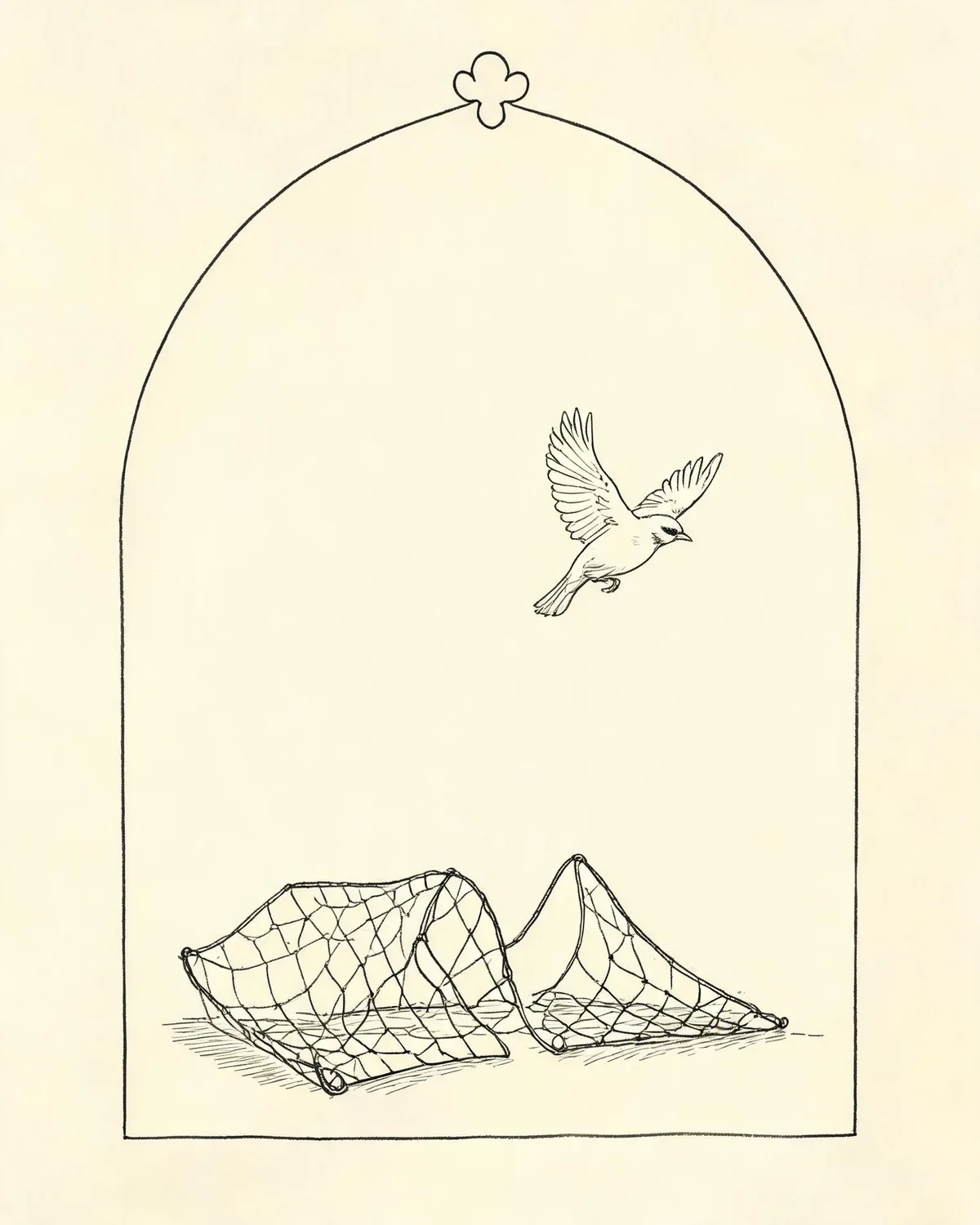
Christian imagery gives this scene two possible directions. The first draws on the psalms of escape, in which the soul gets away like a bird from the fowler's snare because the snare itself is broken. Read this way, crushing a spider or tearing its web pictures release from a temptation, a manipulative relationship or a habit that had you wrapped up.
The second direction asks you to pause. The same scriptures count the spider among the small wise creatures, and folk piety spared the cross-marked garden spider. If the spider you killed was harmless, sitting quietly in a corner, the dream may be less about victory than about impatience, a quickness to destroy something small that was doing no damage.
How you felt afterwards helps decide between them. Relief and lightness lean toward deliverance. Unease or guilt suggest the dream is asking you to look again at something you dismissed. Christian teaching on dreams would add that whichever way it falls, the dream is material for prayer and honest reflection.
What Do Black Spiders Mean in a Dream Biblically?
Black is a surprisingly rare color in scripture. When it appears it is mostly descriptive, used for birds, hair or horses in a prophet's vision, sometimes with a shade of foreboding. Treating black as the color of sin is a later habit rather than a biblical one; scripture reserves its weight for darkness, the absence of light, which it links with judgment.
That matters for a black spider dream. The color does not by itself make the spider evil or the dream a warning. It mostly deepens the mood the spider already carries: the web of misplaced trust feels heavier, the snare feels harder to see. A black spider in shadow may picture something you are struggling to look at directly.
Light changes the scene. A black spider seen clearly on a white wall or in daylight is a fear brought into view, and Christian imagery treats exposure to light as the first step toward dealing with what hides. Ask whether the dream showed the spider plainly or kept it half hidden.
What This Dream Is Not
A spider dream is not a forecast of betrayal, nor evidence that someone is scheming against you. It does not reveal hidden sin, and it gives no reason to treat a colleague or relative differently because a web appeared in your sleep. It is also not a spiritual attack you are obliged to fight with special rituals, or a verdict on your standing with God.
The tradition's own guidance points the other way. Dreams are weighed with prayer, scripture and common sense, and church teaching has long warned against building decisions on them alone. The most useful thing a spider dream usually offers is a sharper question about where your trust rests, and perhaps a nudge to look at one entanglement more honestly than you have so far.
FAQ
What do spiders mean in a dream biblically?
Scripture links the spider's web with fragile confidence and with plots that come to nothing, yet also praises the spider as small and wise. A biblical reading asks which of those fits the scene and your present situation.
Are spiders a symbol of evil in Christianity?
Not inherently. Medieval art used the spider for the devil's snare and for greed, but scripture also admires its persistence, and folk piety protected the cross spider. The creature carries the meaning a scene gives it.
What does a spider web mean in a dream biblically?
A web usually raises the question of trust. Scripture pictures confidence in passing things as a spider's web that cannot hold, so a web dream invites you to notice what you are relying on and how sturdy it is.
What does a white spider mean in a dream biblically?
Scripture uses white for ordinary colors and for heavenly radiance and redemption. A pale spider, especially one seen in light, often reads gentler than a dark one, nearer to the spider's patient side than to the snare.
What does a spider bite mean in a dream biblically?
Scripture warns that whoever breaks through a wall may be bitten by what lives inside it. A bite can picture the cost of crossing a boundary, or a painful consequence arriving from a situation you entered carelessly.
What does a giant spider mean in a dream biblically?
Size magnifies the gap between the one who sets the trap and the one who is caught. A giant spider often reflects feeling overpowered by a person, institution or temptation that seems far bigger than you.
What does it mean to dream of spiders in your house?
The house brings in the image of a dwelling leaned on that does not stand. Spiders at home can point to household security, finances or family trust, and to whether the foundations feel as solid as they look.
Should you pray about a spider dream?
Many Christians do. Bringing the dream to prayer, weighing it with scripture and common sense, and perhaps talking it through with a pastor or trusted friend reflects the tradition's habit of discernment rather than quick conclusions.
Do spiders in dreams mean someone is plotting against you?
Not necessarily. The prophets used webs as images of schemes, but a dream gives no evidence about anyone's intentions. It is more useful to ask whether you feel tangled somewhere and what would loosen it.
How to Use These Readings Today
Begin with the web itself. Write a single line about what happened to it in the dream: did it hold, tear, trap something or catch you? That one detail usually tells you whether the dream sits closer to trust, to scheming or to entanglement.
Then put one honest question to yourself in the tradition's own terms. What am I leaning on that might not hold? Where have I been spinning something I would rather not wear? What small, steady grip have I been overlooking? Choose the question that stings a little, because that is usually the one worth sitting with.
Finally, take it somewhere quiet. Many Christians would read a short psalm, pray over the question or mention the dream to someone they trust. If the spider keeps returning, note what was happening in your days each time, such as a deadline, a hard conversation or a new commitment. Over a few weeks those notes tend to show what a single dream cannot.