War in Christian Dream Interpretation
Armies on a ridge, a trumpet at dawn, a city with its gates barred: war dreams arrive loudly and tend to leave you shaken. Christian imagery knows war closely, from its old battle stories to the armor it asks believers to wear, yet it keeps pointing past the fighting toward peace. What follows sets out how the tradition reads a war dream, which details shift that reading, and where its limits lie.
On this page
- Key takeaways
- What War Means in Christian Dream Interpretation
- How Christian Dream Interpretation Reads Dreams
- Core Principles
- How the meaning changes
- Common Symbols Paired with War
- How This Tradition Differs from Others
- What Does Being in a War Zone Mean in a Dream Biblically
- Is a War Dream a Sign of Spiritual Warfare
- What Does Hiding During a War Mean in a Dream
- What it is not
- FAQ
- How to Use These Readings Today
- Related symbols

Key Takeaways
- Christian imagery reads most war dreams as struggle: an inner conflict, a strained relationship or a contest over what you value.
- Your place in the scene matters, whether you are armed, sent home, besieged, hiding or watching from far off.
- Armor in this tradition stands for faith, hope and truth, so protection in a dream often points inward.
- Victory is pictured as given rather than seized, and weakness is never treated as disqualifying.
- Many war images end in peace: weapons reworked into farm tools, bows broken, songs once the danger has passed.
- Dreams are discerned by their fruit, and nothing here describes, or takes sides in, any real war.
What War Means in Christian Dream Interpretation
The biblical world was a warrior culture in which fighting was close to constant, and its stories are crowded with musters, sieges, ambushes and victory songs. That familiarity gives Christian readers a rich vocabulary for war dreams, but the tradition rarely reads them as being about soldiers. Most of the time the battlefield stands for a struggle you are already living through: friction at work or at home, a decision with two sides pulling at you, or a habit you keep resisting.
A second reading is spiritual struggle. Christian writing pictures believers as soldiers in a contest fought with unseen weapons, wearing faith, hope and righteousness as their armor. Some readers take every war dream as a sign of that contest.
Other readers move more slowly, because the same imagery insists that the decisive battle has already been won and that the fight is not to be waged in fear. Held carefully, this reading asks what you are standing against and, just as much, what you are standing for.
A third reading turns the enemy inward. Christian writers on dreams have suggested that the hostile figure who chases or threatens you are often a neglected part of yourself rather than an outside foe. In one account, a man's recurring war dreams eased after he made peace with people he had wronged; when the attacker returned and he stopped running, the figure smiled and walked away.
Finally, war in this tradition always faces its own ending. Its visions picture swords hammered into plough blades and bows snapped, so even a frightening battle dream sits inside a story that leans toward peace.
How Christian Dream Interpretation Reads Dreams
War and dreams meet early in the tradition's stories. A commander on the eve of battle crept down to an enemy camp and overheard a soldier describing a dream in which a barley loaf tumbled into the tents and flattened them; a comrade read it as defeat for their own side, and the listener went back with fresh courage. Dreams are treated as meaningful there, but they are read within trust in God rather than as battle plans.
Early church teachers also knew the risk. The histories they inherited were full of commanders who misread battle dreams, such as the king who saw thunderbolts strike a city he meant to take, ignored the warning offered him and fell in the attack. So Christian dream reading pairs openness with caution.
The working method is discernment. A dream is tested by its direction: toward love, courage, honesty and peace, or toward fear, hatred and pride. A war dream that leaves you resolved to mend a quarrel bears different fruit from one that hardens you against a whole group of people, and the second kind is set aside however vivid it felt.
Readings are also held loosely. A war dream after an evening of news footage most likely reflects the day itself, and the tradition has always allowed that many dreams rise from ordinary worry rather than from heaven.
Core Principles
Struggle is read before violence. The tradition's war imagery is overwhelmingly about conflict in a broad sense, moral, relational and spiritual. Start with the struggle you recognize from waking life before assigning any heavier meaning to the battle. Often the dream is simply showing you how large that struggle has started to feel.
Strength appears in weakness. The tradition's central picture of victory is an unarmed figure on a cross, and its battle stories favor small, outnumbered bands. Being weak, unarmed or outnumbered in a dream is not a mark of failure; it may be exactly where the reading begins.
Fear is not the posture. "Do not fear" is the word repeated before battle throughout the tradition's stories, and courage counts as a virtue of faith while panic belongs to the defeated side. Notice whether the dream drove you to dread or to steadiness, because that tells you which way it leans.
Every war points toward peace. The tradition's battle imagery bends toward weapons beaten into tools and wars made to cease. A reading that ends in hostility toward real people has misread the shape of the whole, while one that ends in a step toward repair is moving with the grain of the tradition.
What Changes the Reading of War
Christian imagery follows a battle from muster to aftermath, and where your dream falls in that sequence changes what it is likely to mean.
Putting On Armour
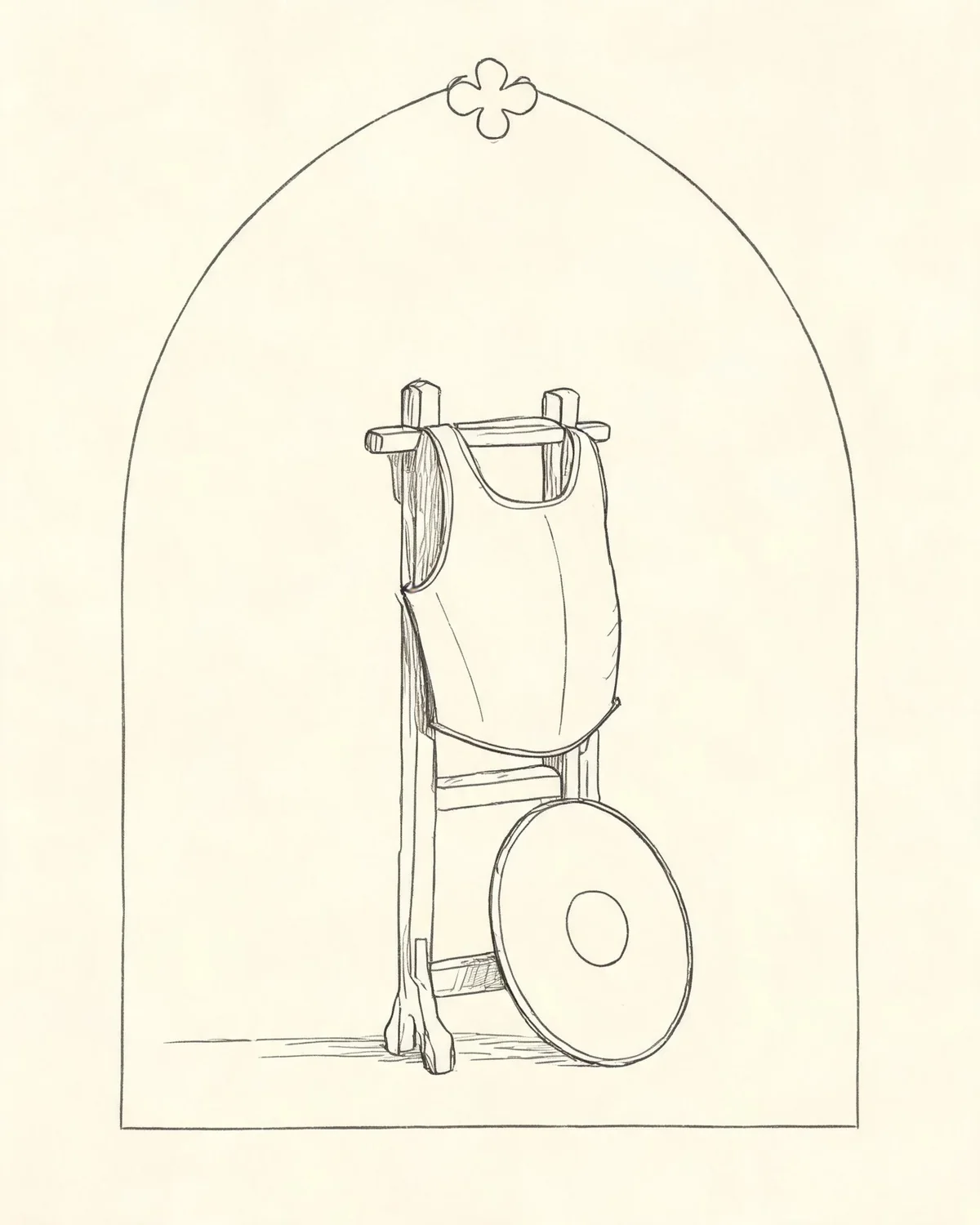
Arming for battle was a solemn ritual in the ancient world, and Christian writing turned it inward: a helmet of hope, a breastplate of righteousness, a shield of faith. Dreaming of fastening armor on yourself can be read as preparing to face something with your values in place. If the armor is ill-fitting or borrowed, ask whose protection you have been relying on.
Being Sent Home from the Battle Line
Ancient laws of war sent certain men home before the fighting: anyone with a new house, a new vineyard or a coming marriage, and anyone too afraid to stand. A dream of being dismissed from the ranks need not mean failure. It may point to a commitment that rightly claims you, or to fear that is better admitted than hidden.
Fighting Without a Weapon
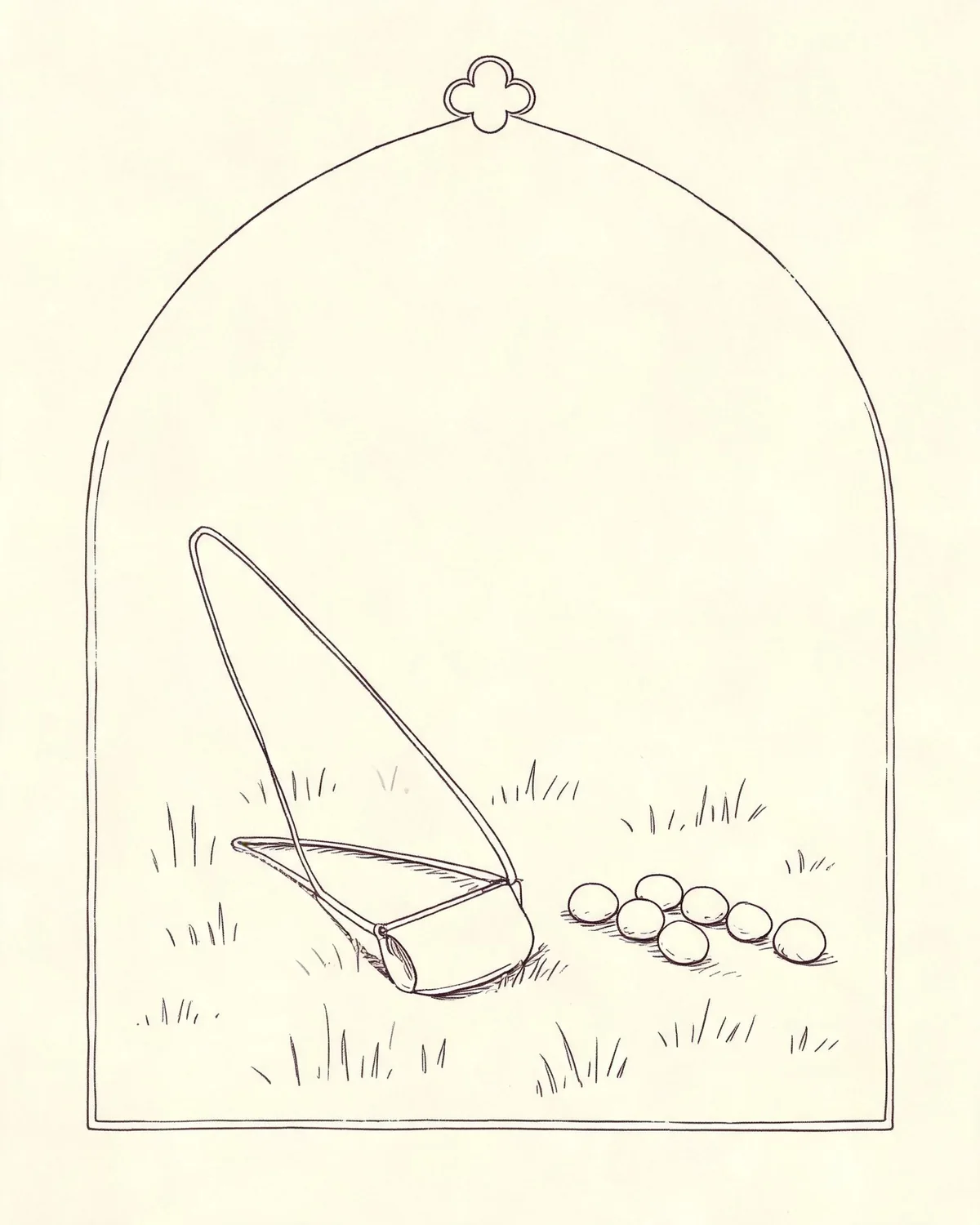
Standing unarmed while others carry swords is unsettling, yet the tradition's decisive victory belongs to an unarmed figure who seemed to lose. A young shepherd also faced a giant with a sling after setting aside borrowed armor. In a dream, empty hands can point to a struggle you meet with integrity and trust rather than force.
A Small Band Facing a Vast Army
Biblical battle stories delight in the underdog: three hundred men with trumpets and clay jars, or two small flocks of goats facing an army that covered the countryside. A dream of being badly outnumbered can mirror how you feel at work or in a cause you care about. The tradition's instinct is that numbers do not settle the outcome.
Facing an Enemy You Recognise
When the enemy in a dream wears a familiar face, or even your own, Christian writers on dreams suggest looking inward first. The hostile figure is often a rejected part of yourself, or someone with whom peace still needs to be made. Turning to face the attacker, rather than running, may be the quiet invitation the dream is holding out.
A Town Under Siege
Sieges in the tradition's stories cut off trade and food until a city yielded or held. One besieged king blocked the water outside the walls, repaired the defenses, stored weapons and told his people they were not alone, and the siege failed. A siege dream may point to slow, surrounding pressure, and to the patient work of shoring up what protects you.
Winning and Singing Afterward
After victory, the battle stories turn to shouts, feasting and songs that retell the danger in detail. Dreaming of celebration after a fight can be read as gratitude at the close of a hard season. Notice whether the song gives thanks or simply gloats, since the tradition honored those who refused to grab the spoils.
Swords Beaten into Ploughs
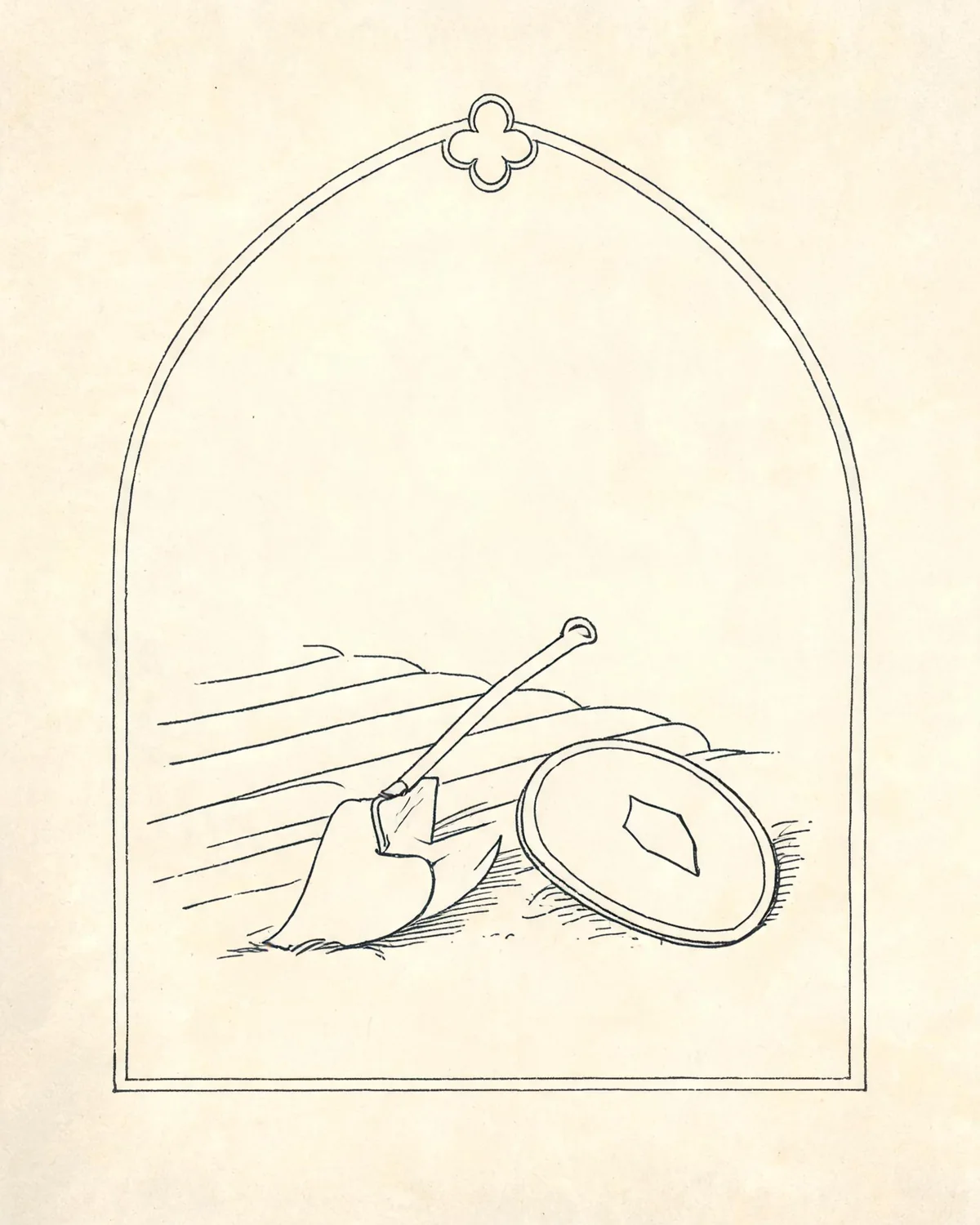
The best-known war image in the tradition is not a battle at all but its end: weapons hammered into farm tools, bows broken, nations no longer training for war. A dream in which fighting turns into building or planting can be read as reconciliation within reach, or as energy once spent on conflict being freed for something that grows.
Common Symbols Paired with War
Horse. In the biblical world the war horse meant military might, and a king coming in peace rode a humbler animal because a war horse would have sent the wrong message. Visionary writing does picture a rider on a war horse leading heavenly armies, but as the final defeat of evil. A war dream crowded with horses and cavalry tends to raise the question of what kind of strength you are trusting.
Grasshopper. Locusts are individually tiny and easily crushed, yet in swarms they move like armies on the march, and invading armies were compared to them. Prophetic writing describes a locust army scaling walls and keeping its ranks. When soldiers in your dream move like a swarm, the reading leans toward many small pressures adding up until they strip the field.
Castle. The psalms set fortress, stronghold and shield side by side as names for God's protection. A war dream that ends with you inside strong walls can be read as refuge in a hard season. Walls that crack ask what your sense of safety has been resting on.
Sword. The sword is the plainest emblem of war, and Christian writing also calls God's word a two-edged sword that sorts out the thoughts and intentions of the heart. A sword in a war dream can therefore point to truth that cuts, a hard conversation or a needed decision, as much as to violence.
How This Tradition Differs from Others
Christian readings of war grow out of a long story that runs from ancient battles through a cross to a promised peace. That gives the image a moral and relational frame: the questions are who you are struggling with, what you are trusting, and whether the conflict can end in reconciliation. Readings are tested through prayer, conscience and the counsel of others rather than looked up as fixed meanings.
Islamic dream interpreters take a more catalogued approach. They list war alongside strains of ordinary life such as mistrust and rising prices, and they distinguish carefully by your role and circumstances, which can make their readings feel more practical and specific.
Jewish tradition shares many of the same battle stories and the prophetic hope of weapons turned into tools. Psychological approaches usually read war as inner conflict, aggression or threat, and often set the religious frame aside. Folk traditions in several cultures have treated battle dreams as signs about luck or quarrels.
The approaches overlap more than they clash. Nearly all of them read a war dream first as conflict close to home, and nearly all resist treating it as news about nations. Where Christianity differs most is its insistence that the story ends in peace and that weakness can be the place where strength appears. Each lens offers something, and a reader can hold more than one.
What Does Being in a War Zone Mean in a Dream Biblically?
Finding yourself in the middle of a war zone, with shelling, smoke and nowhere quite safe, is among the most intense forms of this dream. Christian imagery would first place you in the scene: are you a soldier with a task, a civilian caught between lines, or someone searching for a way out? Each role carries a different reading.
A soldier with a clear task tends to point toward a struggle you have chosen or accepted, where courage and steadiness are being asked of you. A civilian caught in the crossfire leans toward feeling exposed to conflicts you did not start, perhaps between family members, colleagues or communities. Searching for a way out suggests you are already looking for an exit from a draining situation.
The tradition's battle stories are rarely about chaos for its own sake. They keep asking where help comes from and whether fear or trust is steering. A practical reading looks at what in waking life currently feels like a war zone, and at one small step toward safety or calm that you could take there.
Is a War Dream a Sign of Spiritual Warfare?
Many Christian readers online treat war dreams as direct glimpses of spiritual warfare, and the tradition does give them language for it: believers armed with faith, truth and hope, standing against evil in a contest fought with unseen weapons. A war dream can be read within that frame, especially if it came during a season of temptation or intense prayer.
The same tradition adds two cautions. First, it pictures the decisive battle as already won, so spiritual warfare is meant to be faced with confidence rather than dread. A dream that leaves you terrified, suspicious of the people around you or convinced of attack at every turn is not bearing the fruit the tradition looks for. Second, it treats the human heart as contested ground too, so the battle in a dream may concern your own habits, resentments or choices rather than outside forces.
A balanced response is to pray about the dream, talk it over with someone wise, and look at its fruit over the following weeks before deciding what it was.
What Does Hiding During a War Mean in a Dream?
Hiding while a battle passes overhead, in a cellar, a forest or a stranger's house, is a common and frightening version of the dream. In Christian imagery hiding has two faces. There is the hiding of fear and shame, as when the first people hid among the trees, and there is the hiding of refuge, as when the psalms call God a refuge, a stronghold and a shield.
The feel of the dream usually tells you which is closer. If you were hiding from something you ought to face, such as an apology, a confrontation or a decision, the dream may be naming avoidance. If you were sheltered and protected while danger passed, it leans toward refuge and the sense of being kept through a hard time.
It is also worth noticing whether you hid alone or with others. Sheltering people who were vulnerable can be read as care and responsibility, while hiding from people you love may point to a distance that wants closing. Either way, the dream asks what you are taking cover from, and whether cover is still what you need.
What This Dream Is Not
A war dream can feel urgent, especially when the news is full of real conflict, so it helps to say plainly what it does not do:
- It does not announce a coming war, attack or disaster, and it gives no information about real armies, nations or conflicts.
- It does not take sides. Christian imagery uses battle to talk about the human heart, and no reading here favors one people, faith or cause over another. An enemy army in a dream is not a portrait of any real group.
- It does not make you violent or condemned. Dreaming of fighting, even of winning, reflects inner struggle rather than intent, and the tradition reads guilt as a reason to seek grace, never as a verdict.
FAQ
Is dreaming of war a bad sign in Christianity?
Not necessarily. Christian imagery usually reads war as struggle rather than as doom, and many of its battle images end in rescue, courage or peace. How you felt and how the dream ended matter more than the fighting itself.
What does fighting demons in a dream mean for a Christian?
Many Christian readers take fighting demons in a dream as resistance to temptation or evil, framed by the tradition's picture of faith as a shield. Its fruit matters most: whether you wake steadier and more trusting, or more frightened and suspicious.
What does a nuclear war dream mean for a Christian?
Nothing in the tradition reads a nuclear war dream as a message about weapons or nations. Such dreams often absorb fear from the news, and Christian visionary writing points instead toward hope that evil does not have the last word.
What do soldiers mean in a Christian dream?
Soldiers can stand for discipline, duty and readiness, and Christian writing calls believers soldiers who wear spiritual armor. Whether they protect or threaten you tells you whether the dream concerns support you have or pressure you face.
What does praying during a war mean in a dream?
Praying during a war in a dream recalls the leaders in the tradition's battle stories, who asked God for guidance before any fighting began. Dreaming of prayer amid battle can show you turning to faith under pressure, and it often encourages bringing a waking conflict into prayer.
What does war in heaven mean in a dream?
War in heaven is the heavenly battle visionary writing pictures, in which evil is not strong enough and is cast down. A dream echoing that scene can be read as reassurance that good prevails, more than as a picture of personal danger.
What does a war at church mean in a dream?
It often reflects real tension in a congregation, a ministry or your own faith. The tradition values peacemakers, so the dream may invite you to ask where you could ease division rather than deepen it.
What does a ceasefire or peace treaty mean in a Christian dream?
Peace is where the tradition's war imagery is always heading. A ceasefire in a dream can be read as reconciliation that is possible, or as a pause offering room to rebuild trust that fighting had worn down.
What does a war between family members mean in a Christian dream?
Battles inside a family often mirror real tension at home rather than anything larger. The tradition's call to make peace with an adversary early suggests looking for one conversation that could cool the conflict.
How to Use These Readings Today
Start by naming your role in the dream: soldier, commander, civilian, captive, hiding or watching. Then write a sentence about how it ended, whether in defeat, escape, victory or peace. Those two notes narrow the reading more than any single image, and they keep you close to what you actually saw.
Next, ask the question Christian discernment always returns to: what did this dream leave behind? If you woke with resolve, compassion or a desire to repair something, follow that thread. If you woke with dread, suspicion or anger toward a group of people, set the reading aside, pray about the fear itself, and wait before drawing conclusions.
Finally, take one peacemaking step that fits the image. An enemy you recognized might call for an honest conversation. A siege might call for rest, help or firmer boundaries. Armor might be a cue to strengthen a habit of prayer or truthfulness that steadies you when conflict comes.