Book in Islamic Dream Interpretation
A book rests in your right hand, its cover warm, and someone is waiting for you to open it. Islamic dream interpreters read a scene like that closely, asking which hand holds the volume, who carried it to you, whether it is sealed and whether its words made sense. Those questions decide whether the book reads as standing, as news, as a bond between people or as a record of conduct.
On this page
- Key takeaways
- What a Book Means in Islamic Dream Interpretation
- How Islamic Dream Interpretation Reads Dreams
- Core Principles
- How the meaning changes
- Common Symbols Paired with Book
- How This Tradition Differs from Others
- What Does It Mean to Receive a Book in a Dream in Islam
- What Does Buying Books Mean in an Islamic Dream
- What Does Seeing a Sacred Book Mean in an Islamic Dream
- What it is not
- FAQ
- How to Use These Readings Today
- Related symbols
Key Takeaways
- Older Islamic readings tie a book or letter held in the hand to power, standing and public knowledge.
- The carrier shapes the message: a child or a servant brings glad news, and a woman brings quick relief.
- The right hand leans toward clarity and a good year; the left hand toward something you may come to regret.
- Sealed and unknown differ: a sealed book can mean honor kept, while a cover hiding unknown pages leans toward deceit.
- Reading is graded by page and by skill, from the opening page to a script you cannot decipher.
- A sacred book turns the reading toward conduct, since carrying, kissing or buying it each describes a way of living with its teaching.
What a Book Means in Islamic Dream Interpretation
In the classical manuals the book belongs to a family of written things: decree, letter, scroll, record and public notice. The first thing it carries is authority. To hold a book or a letter in your hand reads as power, and the same object can stand for fame or for a matter becoming public knowledge. A notice posted by the authorities, seen in sleep, was taken as leadership, contentment and income arriving.
The book is also a messenger. A sealed letter in your hands points to confidential news or a report on its way. When a child, a servant or a housekeeper carries the book, older readings expected glad tidings; when a woman carries the letter, relief from a trouble comes quickly. An open letter brought by a veiled woman asked for care with the news, while a perfumed carrier promised praise for your work.
Less obvious is the book as a person. Older manuals let a book stand for a companion or an intimate friend, and they read the binding of a book as guarding a friendship or keeping a confidence. A volume held close to you in a dream may be a relationship as much as a text.
Finally, the book is a ledger of conduct and a store of learning. Reading your own book of records was taken as a turn toward repentance. Reading works of religious learning or of the sciences pointed to knowledge you will put to use, and reading reference works and commentaries to correcting your actions and thoughts.
How Islamic Dream Interpretation Reads Dreams
Islamic tradition sorts night images into three kinds: the true dream that carries meaning, the disturbing dream attributed to the devil, and the ordinary dream stirred by the self's own appetites and worries. A book dream is placed in one of these before anything else. If you spent the evening revising for an exam, a desk heaped with books may belong to the third kind and need no deeper reading.
Next comes the person. Interpreters were expected to weigh someone's character, rank and state, because the same image changes with them. One classical example makes the point with a book: an angel telling a devout person to read the book of God signals happiness, while an angel telling a careless person to read their own records signals a straying path. The words are almost identical; the reader is not.
Then come the details. Right and left carry their old weight, the carrier matters, and the manuals also read some images by contraposition, where the meaning runs against the surface, so that a torn book can mean relief rather than loss. The book is read as a whole scene, with the hand, the seal and the page each adding a line to the interpretation.
Core Principles
The carrier is part of the message. A book never simply appears in these readings. A child, a servant, a woman, a stranger or a volume coming down from the sky each changes what the book brings, so the first note to make is who handed it over, or who took it away.
Understanding outweighs possession. A book whose contents you grasp in the dream carries its news into waking life, good or bad. A thick cover hiding pages you never learn leans toward deceit or a sealed bargain. Reading well raises your rank, while failing to decipher the script keeps you at a distance from the matter.
The same page answers to the reader's station. The manuals give a ruler, a judge and a religious scholar different readings for copying out the same sacred book, because each holds a different responsibility toward it. Your own work, duties and conscience are part of the text an interpreter reads.
Writing is a bond. A sheet of paper stands for an oath, a vow or a pledge, and signing a deed was read as an agreement at risk of going unfulfilled. When you write in a dream, older readings ask what you have promised, to whom, and whether you intend to finish it.
What Changes the Reading of the Book
Small details carry most of the weight in a book dream, and the manuals read each of the scenes below quite differently.

A Book in Your Right Hand
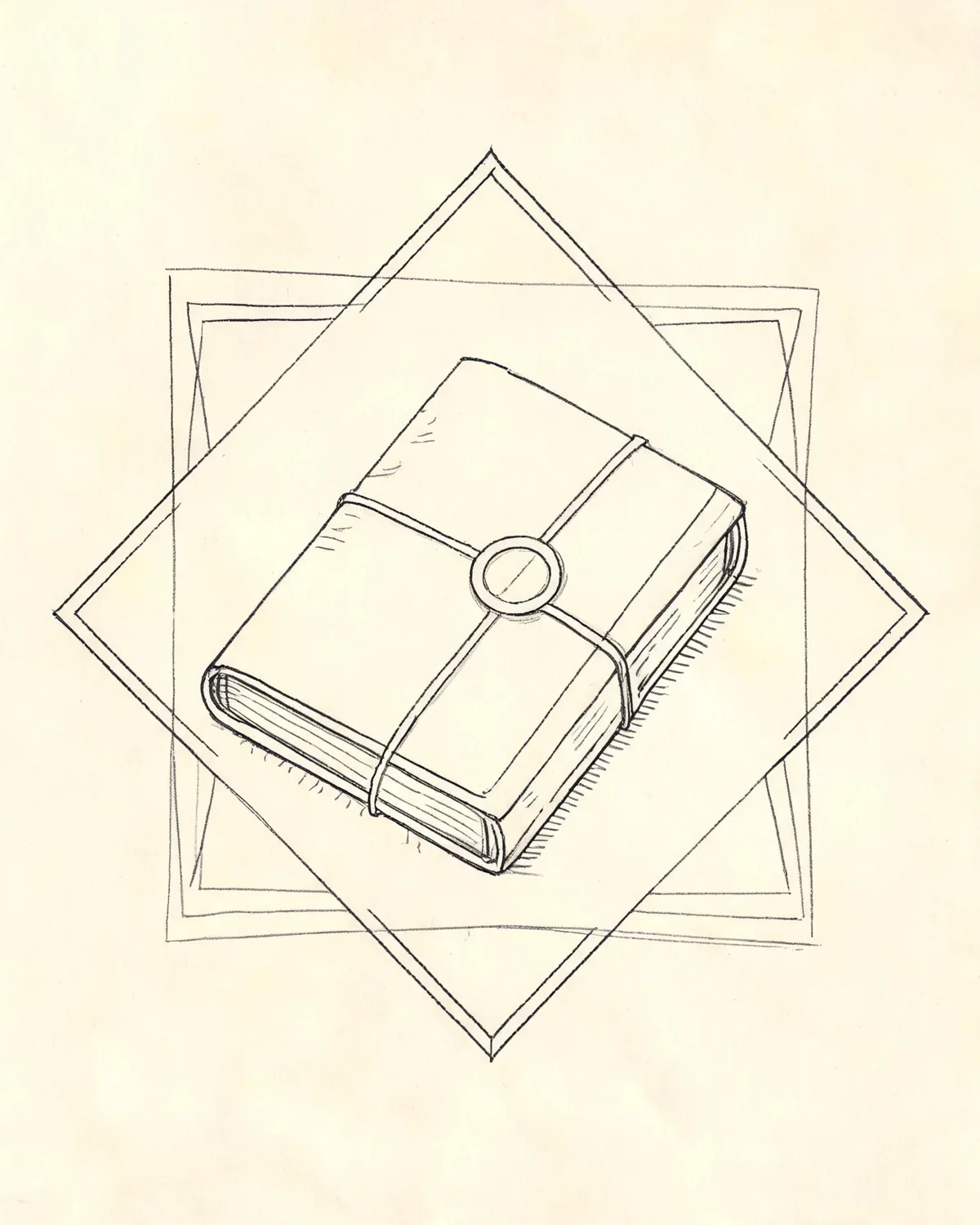
Carrying a book, a record or a letter in the right hand was among the most hopeful book images. If you were caught in an argument, a confusing deal or a doubt, older readings expected clarity; if you felt persecuted, evidence of your innocence; if you were far from home, a way back. The right-hand book also marked a prosperous year.
A Book in Your Left Hand
The left hand turns the same object toward conscience: a book or letter held on that side was read as something done badly, or a step you will come to regret. A present-day reading can take it less as an accusation than as an invitation to name the matter you keep carrying on the wrong side.
A Sealed Book
A sealed volume is not a locked door in this tradition. Holding one was linked with success, leadership and honor, with abiding by the rules of someone above you, and, for someone hoping to marry, with an engagement that reaches its wedding. The seal reads as a trust kept intact rather than a secret withheld from you.
A Hardcover Whose Pages You Never See
Older manuals were wary of a heavy cover with nothing known about what lies inside. It could stand for dishonesty, a cheap product dressed up as something better, or a package sold without its contents being shown. If the book in your dream looked impressive but stayed unopened, ask where you are being asked to buy without seeing.
Reading the First Page or the Last
Where you read matters. The front page of a book or letter was read as an inheritance arriving, and the last page or back cover as a debt. Reading fluently pointed to a high-ranking post. Put simply, the opening page pictures what comes to you, and the closing page what you still owe to someone else.
Writing a Book to the Last Line
Finishing a book or a letter you are writing in the dream was taken as completing a project and reaching a goal. Leaving it unfinished pointed to something standing in the way. The quality of the hand counted too: an illegible or clumsy script was read as a call to put right an old dishonesty.
Tearing a Book to Pieces
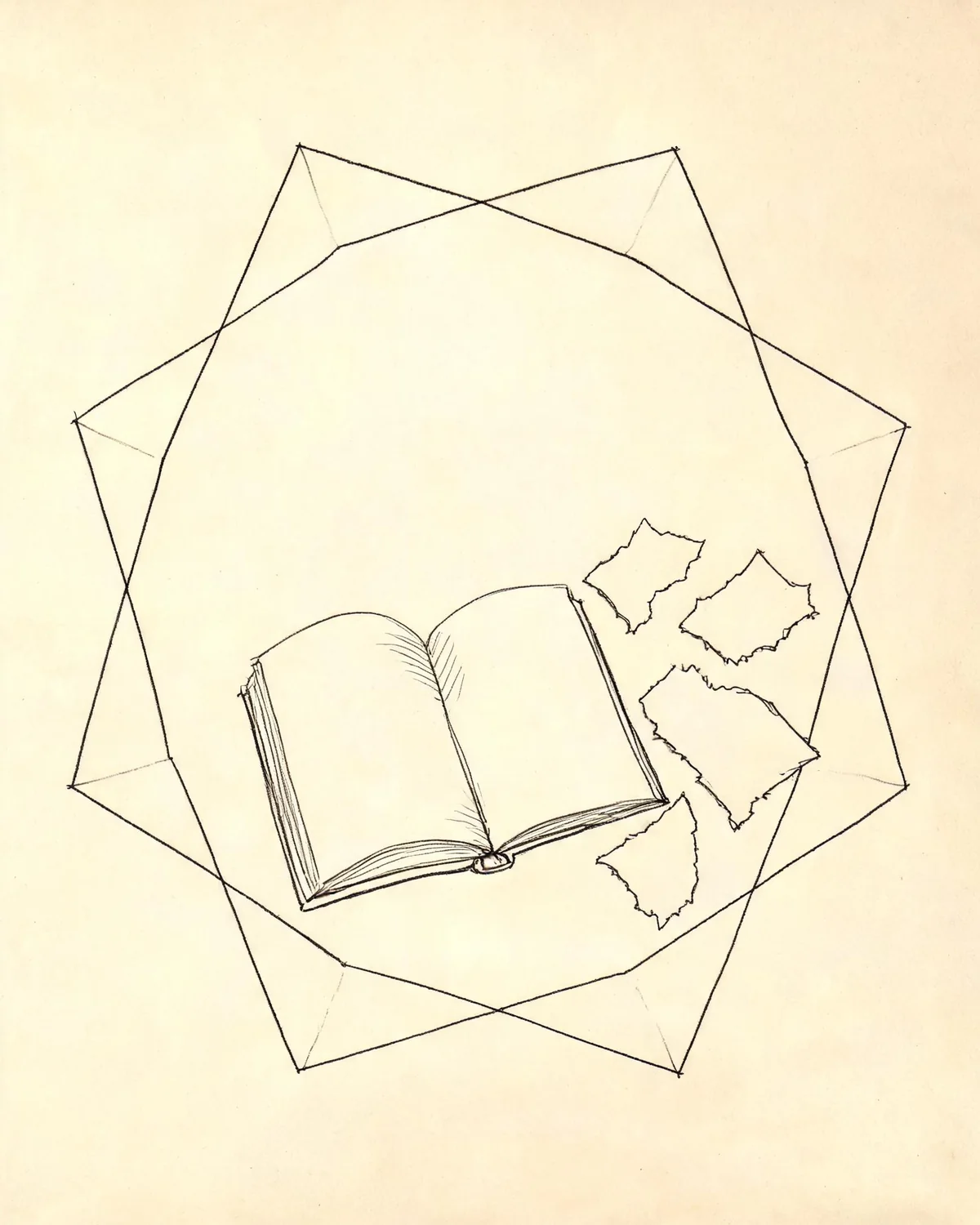
Here the manuals read against the surface. Ripping a book apart was taken as getting rid of a trouble, coming free of a trial or an unpleasant encounter, and receiving some benefit afterward. If the tearing felt like relief in the dream, that feeling and the older reading point the same way.
A Stranger Taking the Book Away
When someone you do not know takes your book from you, older readings saw the loss of the thing you hold most dear. A present-day reading would ask what you fear losing to someone who does not know its worth, and whether that fear rests on something you can act on.
Common Symbols Paired with Book
A book beside a letter or an envelope brings the message itself into focus. A letter delivered by hand stood for a respectable person, a rank or a word of authority, and a letter of glad tidings for fears calming. A sealed letter you send that comes back unopened was a heavier picture: a request refused or a contest lost. With both images together, the reading usually turns on whether the message got through.
A book carried into a house was read as news of an honest, devout person, happy stories from someone who brings reports, or a first acquaintance with religious thought. A home filling with books pictures what you are letting into your private life.
A sacred book could stand for a person one is bound to heed, such as a father, a mother or a teacher. If a parent or teacher hands you a book in the dream, the two images reinforce each other: guidance offered, and the weight of an expectation that comes with it.
One tender older image pairs the book with chicks: a chick pecking the words from a sacred book resting in your lap was read as a child who will memorise and recite it. It pictures learning passed down rather than owned.
How This Tradition Differs from Others
Christian art often gives the book a cosmic and judicial role, showing an open book of life and wisdom, or a closed book held by a figure of final judgment. Chinese tradition links the book with scholarship and imagines its leaves as the leaves of a cosmic tree, while Buddhist imagery uses it for perfected wisdom resting on a lotus.
Islamic mystical writing shares the large view. The universe itself has been described as one vast book, with the pen as the creative principle and the page as what receives it. Yet the traditional dream interpreters bring the book down to daily life and ask about rank, debts, inheritance, marriage, friendship and conduct.
Those manuals also inherited a great deal from older Near Eastern traditional dream interpreters, including the habit of varying a reading with a person's status and of treating the right side as fortunate and the left as unfortunate. With the book, that inheritance shows in how much weight falls on the hand that holds it.
The result is a reading that is social and ethical before it is cosmic. A book in an Islamic dream manual is most often a matter between you and the people around you: a message delivered, an obligation recorded, a companion kept. These are differences of emphasis, and each tradition notices something the others leave in the margin.
What Does It Mean to Receive a Book in a Dream in Islam?
Receiving is where the book's role as news is strongest. A book or letter placed in your hands by a child or a servant was read as glad tidings, and by a woman as quick relief from a worry. A letter arriving with good news was taken as your condition easing and your fears calming, whether the news concerned a birth or a marriage.
Two receiving scenes are less cheerful. A blank letter or an empty book handed to you by someone pointed to an absence of news about that person, even to not knowing where they live. A book that comes down to you from the sky, whose contents you feel you understand in the dream, was read as news that carries over into waking life, whether it is good or bad.
In practice, ask who gave you the book and how it felt to take it. The identity of the giver and the pleasure or reluctance of receiving usually tell you more than the title on the cover.

What Does Buying Books Mean in an Islamic Dream?
Buying books gathers three older images: the bookseller, the bookshop and the purchase itself. A bookseller was read as someone of wide knowledge or a collector of remarkable stories, and meeting one could mean a problem solved, a marriage or someone turning back from wrongdoing. The bookshop was read broadly, from spiritual guidance and repentance to dealings with government or quarrels, so the mood of the shop matters.
Buying a copy of a sacred book was read as benefit, prosperity and growing into a recognized person of learning. Buying ordinary books shares part of that tone, since you are choosing which knowledge to take home. A present-day reading would add a practical question: is there something you have been meaning to study and keep postponing?
Notice what you paid and whether the purchase felt like a bargain or a strain. These older readings put weight on what is exchanged, not only on what is acquired.
What Does Seeing a Sacred Book Mean in an Islamic Dream?
A sacred book in a dream is handled with particular care in the older readings. Seeing it was read as growing in wisdom. Carrying it was read as gaining strength and knowledge, or as living by its measure, and kissing it as revering what it teaches and holding to it.
Its pages can also speak about sincerity. Opening a sacred book to find the pages blank was read as presenting yourself as more learned or devout than you are. Finding its lines crooked was read, perhaps surprisingly, as contentment with what you have and a steady keeping of your duties.
Some scenes are harder, such as damaging the book or doing something to it you would never do awake. Older interpreters read these as a call to examine devotion, and a present-day reading would keep them there: a question to take to someone whose learning you trust, rather than a conclusion about your faith drawn from one night.
What This Dream Is Not
A book dream is not a forecast of an inheritance, a debt or a death, even where older manuals linked certain pages to such events. It is not a judgment on your faith either: a sacred book seen torn, blank or out of reach describes a feeling about devotion, not a verdict anyone can pronounce for you from a dream.
And it is not permission to open letters, diaries or papers that belong to someone else because a dream seemed to point at them. Nor does a frightening book scene mean something has already been settled against you; these images were recorded as possibilities set side by side. What it can be is a vivid picture of how you hold knowledge, news and obligations right now, and which of them you want to handle differently.
FAQ
Is seeing a book in a dream good or bad in Islam?
Neither label fits on its own. Older readings range from power and glad news to regret and loss, and the hand that holds the book, its carrier and whether you understood it decide which way the scene leans.
Can a book in a dream stand for a person?
In several older readings, yes. A book can represent a companion or close friend, and a heavy cover with unknown contents was sometimes read as an older woman, so think about who in your life the volume resembles.
What does sending a letter mean in an Islamic dream?
Writing to someone you know and urging them toward good was read as your own needs being met and your purpose fulfilled. Turning a messenger away at the door leaned the other way, toward abandoning a profession or a commitment.
What does a sheet of paper or a notebook mean in a dream?
A single sheet was read as a solemn promise made or asked of you, and holding several papers as good news and celebration. A notebook could mean managing your expenses or remembering the past, and for someone out of work, finding a job.
What does reading a book in a foreign language mean in a dream?
Older readings connected it with travel to that country, or with unfamiliar work that brings recognition. Struggling to decipher the words shifted the reading toward a difficulty met abroad and then escaped before returning home.
What does binding a book mean in a dream?
Bookbinding was read as keeping secrets and guarding a friendship, or as affection held in reserve for someone dear. If you were repairing a worn spine in the dream, ask which bond you are trying to hold together.
What does it mean if you cannot write in a dream?
For a learned person, finding yourself unable to write was read as low spirits. For someone unlettered, it pointed to a hard stretch with a way out shown in time. Either way, the image sits close to frustration with expressing yourself.
Who should you tell about a book dream?
The tradition advises sharing a meaningful dream only with people who wish you well or with someone learned, because the first interpretation was thought to shape how a dream is carried. A trusted friend is a better listener than an anxious crowd.
Can a dream dictionary alone explain a book dream?
The classical manuals did not claim to. Their own compilers warned that no single book could hold every meaning and that relying on books alone would fall short, so your circumstances and a thoughtful listener remain part of the reading.
How to Use These Readings Today
Start with three facts before any meaning: which hand held the book, who gave it to you or took it, and whether you could read it. Write them as three short lines as soon as you wake. They are the details these older readings lean on most, and they fade fastest.
Then match the strongest detail to one live situation. A sealed book may line up with a trust you are keeping, a last page with a debt or promise you have not settled, and a torn book with a worry you are ready to drop. Choose one, not all of them.
Finally, take one small action within the week that answers the image: send the message you have been holding back, return the thing you borrowed, or open the course or text you keep meaning to begin. If the dream involved a sacred book and left you uneasy, a conversation with someone whose learning you trust will serve you better than searching for a verdict online.