Frog in Islamic Dream Interpretation
A frog sits on a wet stone at the edge of a pond, throat pulsing, while the evening fills with the sound of others like it. Classical Islamic interpretation is unusually kind to this small creature, so the sections below follow how it can stand for a devout person or good neighbors, how its movement into or out of a town changes everything, and how its voice, its color and the way you meet it shift the reading.
On this page
- Key takeaways
- What a Frog Means in Islamic Dream Interpretation
- How Islamic Dream Interpretation Reads Dreams
- Core Principles
- How the meaning changes
- Common Symbols Paired with a Frog
- How This Tradition Differs from Others
- What Does Killing a Frog Mean in an Islamic Dream
- What Does a Green Frog Mean in an Islamic Dream
- What it is not
- FAQ
- How to Use These Readings Today
- Related symbols
Key Takeaways
- The frog's default meaning in classical Islamic interpretation is a pious, religious person, which makes it one of the gentler animals in the tradition.
- Sitting with frogs or eating one points to family harmony and benefit through relatives or neighbors.
- Frogs streaming into a town were read as a trial for its people; frogs leaving it, as hardship lifted through prayer and atonement.
- Older readings were harsh about the croak, so the sound needs careful, present-day framing.
- Your trade and even what you believed the creature was in the dream can change the reading.
- Green, the color of growth and devotion in older readings, tends to soften a frog dream further.
What a Frog Means in Islamic Dream Interpretation
Devotion comes first. A frog in a dream represents a pious, religious person, and classical readers extend the image to reciters, dervishes and ascetics, people whose lives revolve around remembrance and prayer. The frog's endless voice, rising from the water morning and night, may be part of why it was matched with those who repeat words of praise. Older readings add that frogs can stand for a chaste and religious woman who harms nobody, which keeps the image firmly on the side of innocence.
Closeness comes next. Sitting among frogs means good relations with your family and friendliness with your neighbors, and eating a frog means receiving benefit through a relative or someone living nearby. The same act of eating is also read as gaining authority or building up considerable wealth, so the frog becomes a quiet image of what a decent community gives back.
Then there is restlessness. Frogs can represent noisy people or someone who never stays long in one place, and the same list includes people who press their causes in public. The creature that sings for the pious can also be the neighbor who talks too much.
Finally, the frog carries a communal and scriptural weight. In the story of Moses and Pharaoh, frogs are among the clear signs sent upon a proud people, and the hardship lifts when they ask for prayer. Dream readings follow the same arc: frogs entering a town signal trouble for its people, frogs leaving it mean that trouble is lifted through prayer and atonement.
How Islamic Dream Interpretation Reads Dreams
The frog has a special place in the tradition's method. When classical interpreters explain that a dream must be read as a person understood it, the example they reach for is this one: if you see a snake but take it for a frog, the frog's meaning applies, and if you see a frog but take it for a snake, the snake's does. Your perception inside the dream is treated as part of the evidence.
Circumstances count just as much. For someone who makes a living from the sea or sells spring water, frogs mean profit, a reading that only works because the interpreter asks what you do all day. The same frog would say something different to a shopkeeper or a student.
Behind both rules sits a threefold view of dreams that runs through Muslim commentary: dreams drawn from waking life, dreams stirred by the devil that may please or terrify, and inspired dreams that warn or bring glad tidings. Sufi writers explained the last kind by saying that qualities and meanings have forms of their own in a hidden world. Read that way, a devout neighbor's steadiness might appear to you as a frog keeping its song by the water.
Core Principles
Begin from goodwill. Many small creatures in classical readings stand for enemies or petty people. The frog does not. Its first meaning is devotion, so a reading should only move toward something darker when the dream's details clearly push it there.
Watch the direction of travel. Frogs entering a town and frogs leaving it carry opposite meanings, one a trial and the other relief. In a dream, notice whether the frogs were arriving, settling, departing or simply present, because the movement often matters more than the number.
Notice how you dealt with them. Sitting with frogs, eating one and hunting them are three different relationships: companionship, benefit and rivalry. The way you engage with the creature tells the interpreter which part of your social world the dream is touching: the people you rest with, the people you gain through, or the people you compete against.
Trust what you thought you saw. Because the tradition reads a dream by a person's understanding, a frog that you were sure was a frog counts as one even if its shape was odd. Write down what you believed in the dream before you reason about what it looked like.
What the Frog's Behavior Changes
A frog does only a few things, sitting, leaping, calling and swimming, and older readings attach a distinct meaning to almost each of them.
Sitting among frogs at the water's edge
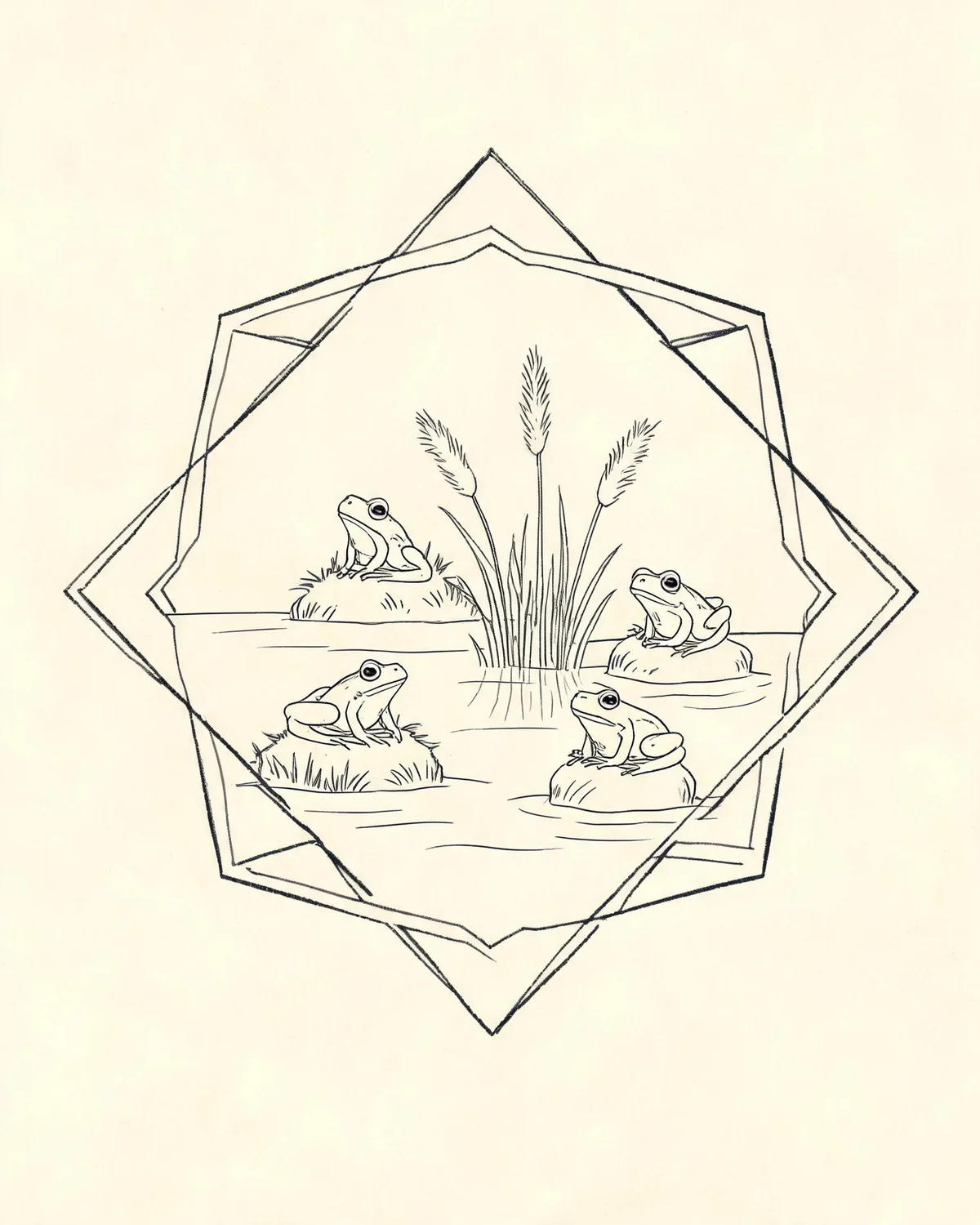
Resting at a pond or riverbank with frogs all around you, unbothered by them, belongs to the warmest part of the classical reading, the one about kin and the people next door. The scene often appears when home life feels settled or when you are being welcomed into a new circle. If the mood was peaceful, the dream leans toward gratitude for people who are easy to live beside.
Eating a frog
Eating a frog is read in two connected ways: benefit arriving through a relative or a neighbor, and a rise in authority or wealth. The scene can feel unpleasant on waking, yet the classical reading is favorable. The question is whose help you are about to receive, or have received without quite noticing.
Frogs pouring into a town or house
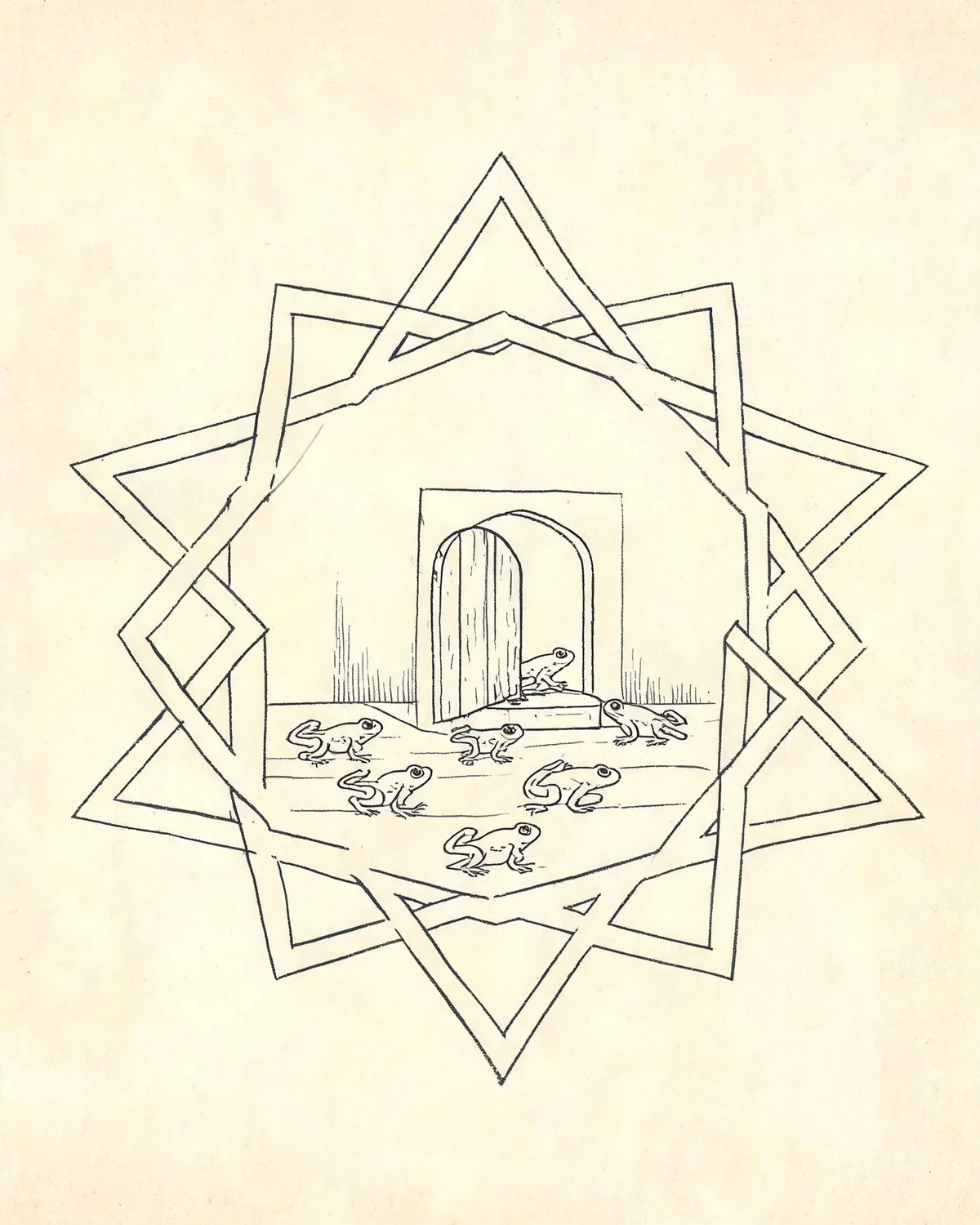
A flood of frogs entering a town was read as a calamity for the people living there, an image that recalls the frogs sent upon Pharaoh's people. In a dream, frogs filling streets, rooms or a courtyard can point to a shared strain on a household or community, the kind of pressure that lands on a whole household together rather than on one person alone.
Frogs leaving a town
The reverse scene is one of the most hopeful in the tradition: frogs departing a town mean that a hardship is lifted through prayers and atonement. Watching them hop away from your street or home can mark the end of a difficult season and invite you to notice what, in practice, has helped: patience, repair, apology or prayer.
Hearing frogs croak
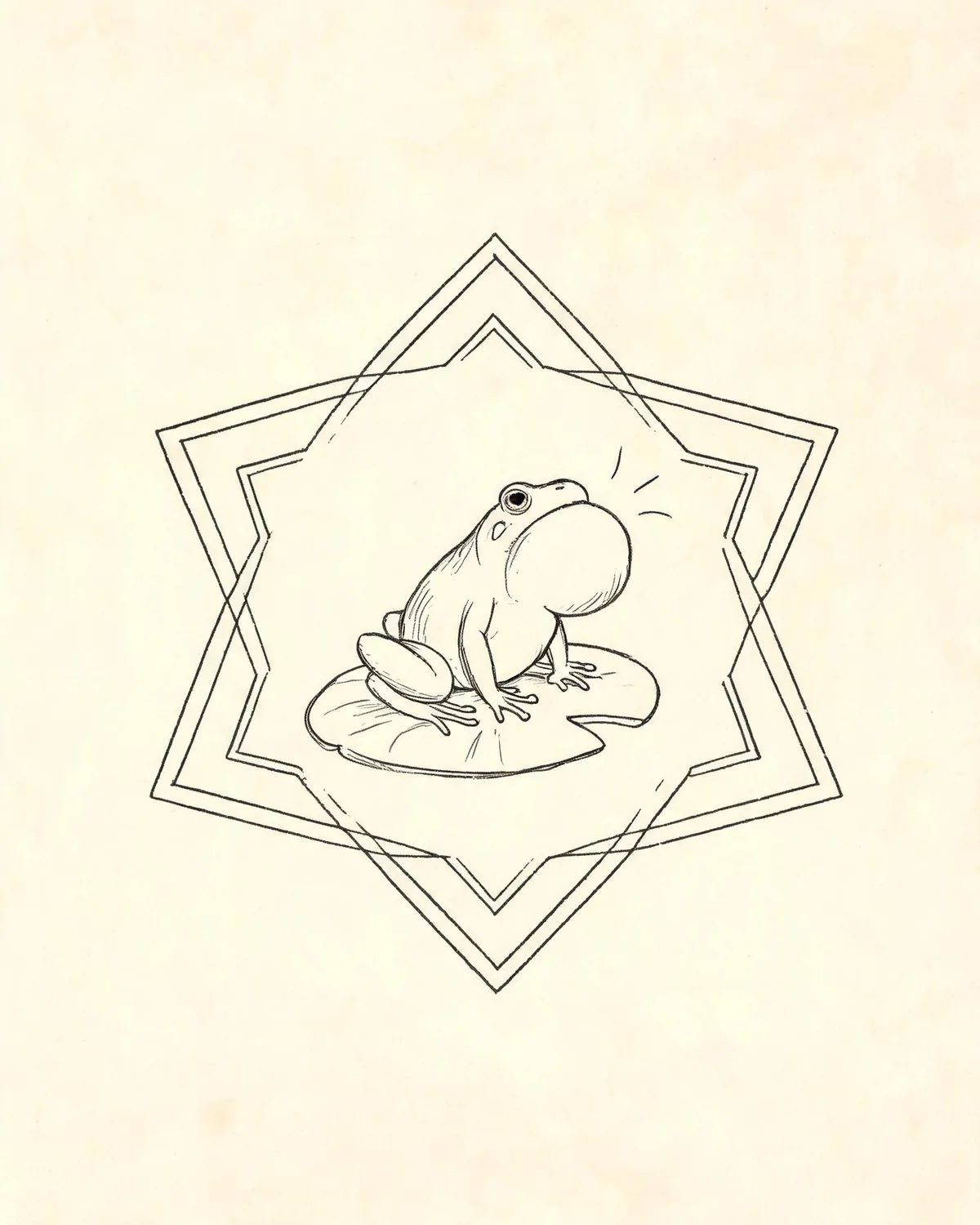
Older readings were severe about the sound. One tied the croaking of frogs to beatings and another to a death, and a present-day reading does not carry either over as news about real people. It asks instead whose voice keeps sounding in your days, a critic, a gossip or a nagging worry, since frogs also stand for noisy people.
A frog that keeps leaping from place to place
Frogs can represent someone always on the move, never settling for long. A frog that jumps from stone to stone, or follows you from room to room, may picture a restless person in your life or your own unsettled routine. The reading usually becomes clearer when you ask whether the movement felt playful or anxious.
A frog at a spring or along the shore
For anyone whose livelihood depends on water, such as fishing, sea trade or selling spring water, frogs were read as profit. In a present-day setting the same logic can stretch to work tied to the scene's surroundings. A frog thriving by clean water usually leans toward provision and an honest income.
Common Symbols Paired with a Frog
A frog and a snake. These two are linked by the tradition's own teaching example, in which a snake mistaken for a frog is read as a frog. When both appear, notice which one you feared and which one you trusted. The dream may be sorting a threatening person from a harmless one, or showing that you have confused them.
A frog and a lizard. Frogs and lizards often share a dream's damp corners, yet their readings contrast sharply. Older readings make the lizard a swindler, a greedy person or someone despised, while the frog leans toward devotion and neighborliness. Seeing them together can set an honest presence beside a dishonest one and ask you to tell them apart.
A frog in a pool. A pond or pool is read as a noble, generous and beneficial person, and taking ablution from it as escape from danger. A frog living in clear water combines two generous images: a devout person in a setting of generosity, perhaps a community or mosque that has looked after you.
A frog with fish. Frogs and fish share the water, and for people who earn their living from it, both point toward provision. Together they keep a frog dream close to work, income and the daily business of making a living.
How This Tradition Differs from Others
Greek dream readers of antiquity thought less of frogs, reading them as cheats and beggars, though they made an exception for people who earn their living from crowds. One story tells of a household slave who dreamt of striking frogs with his fist and became overseer of the other servants, the pond standing for the house.
Christian symbolism leans darker still. The plague of frogs in Egypt, the unclean spirits likened to frogs in the visions of the end, and a long habit of seeing the frog's mud and noise as images of the devil or of false teachers all pull the creature toward sin, even though some early Christians in Egypt used the frog as a sign of resurrection.
Ancient Egypt itself treated the frog as new life and fertility, the form of a kindly goddess of birth, while Chinese lore used a frog at the bottom of a well for someone with narrow vision.
Islamic interpretation shares the scriptural memory of the plague but resolves it differently. The frogs that come as a trial can also leave through prayer, and outside that story the frog is mostly a figure of piety, closer to a neighbor at prayer than to a nuisance in the mud.
What Does Killing a Frog Mean in an Islamic Dream?
The closest classical reading concerns hunting. Hunting frogs means winning over your rivals or competitors, so catching or striking frogs in a dream can point to gaining the upper hand in a contest at work, in trade or in some public dispute.
Killing is harder to read in this tradition because of who the frog usually stands for. If the frog in your dream felt like the devout, harmless figure of the classical readings, harming it may picture wronging someone who has done you no harm, or silencing a voice that was only praying. Interpreters reason from the creature's identity, and here that identity is mostly good.
So the details decide. Frogs that were invading your home and had to be driven out lean toward overcoming a nuisance or a rival. A single quiet frog killed without reason leans toward regret and a relationship that may need mending. Notice how you felt once it was done.
What Does a Green Frog Mean in an Islamic Dream?
Green is one of the most favorable colors in older Islamic readings. It stands for a good harvest, prosperity and youth, and wearing green garments is read as piety, regular worship and devotion, since green silk is described as the clothing of paradise. The same color can also mean a healthy fear of doing wrong.
A green frog therefore doubles the creature's positive side. A frog already leans toward a religious, devout person; color it green and the reading moves toward growth, sincerity and blessing, perhaps a young person in your circle whose faith is fresh, or a season of renewal in your own practice.
The setting can still shift the tone of the whole reading. A bright green frog in clean water or on a leaf in sunlight keeps the reading close to provision and freshness. A green frog in murky water or one that frightened you asks a different question: whether something good has ended up in the wrong surroundings and needs a cleaner place to grow.
What This Dream Is Not
A frog dream is not a forecast of calamity for your town or your family, even though older readings attached that meaning to frogs entering a city. It is not evidence that anyone around you practices magic, a link some old material makes and one that should never become grounds for suspicion or accusation. And it is not a judgment on your piety, good or bad.
Islamic interpretation treats most ordinary dreams as reflections of daily life and saves its confidence for a narrow class of true dreams. A frog by the water is far more likely to be inviting you to notice your neighbors than to be announcing anything. If a frog dream unsettles you, the older counsel is simply to set it aside and not repeat it to people who might read it harshly.
FAQ
Is a frog in a dream good or bad in Islam?
It usually leans good. The classical reading treats the frog as a pious, religious person and links sitting with frogs to family harmony. Only scenes such as frogs flooding into a town move the reading toward hardship.
What does seeing a frog in a dream mean in Islam?
Seeing a frog most often points to a devout person, a good neighbor or a peaceful family circle. The details, such as where the frog was and how you met it, refine which of those the dream is drawing on.
What does a big frog mean in a dream in Islam?
Classical readings do not grade frogs by size, so interpreters reason from the usual meaning. A large frog can enlarge the devout figure, perhaps a respected religious person, or make a noisy presence feel harder to ignore.
What does a dead frog mean in a dream in Islam?
There is no specific classical reading for a dead frog. Many readers take it as a lost connection with a devout friend or neighbor, or a voice in your community that has gone quiet, and ask whether contact needs renewing.
What does a black frog mean in an Islamic dream?
Black in older readings can mean prosperity and authority as well as sorrow, depending on a person. A black frog may therefore point to a devout person of standing, or carry a heavier mood if the scene was dark.
Can a frog in a dream represent a person?
Yes. Classical interpretation reads frogs mainly as people: the pious, reciters and ascetics, good neighbors, or restless and noisy individuals. Ask who in your life fits the frog's behavior in the dream, and how you felt toward them.
What does it mean when a frog jumps on you in a dream?
No older reading addresses this directly. Present-day interpreters often treat it as sudden contact with someone the frog represents, a devout acquaintance or an insistent talker, and look at whether the moment felt welcome or intrusive.
What does a frog in the house mean in Islamic dreams?
A single calm frog indoors often reads as a devout or kindly presence in the household. Many frogs crowding the rooms shift the reading toward a shared strain on the family, echoing the classical image of frogs invading a town.
Why are frogs connected with prayer in Islamic dream readings?
The classical list matches frogs with reciters, dervishes and ascetics, and the scriptural story of the frogs ends when people ask for prayer. Both links keep the frog close to devotion in dream interpretation.
How to Use These Readings Today
First, write down how you met the frogs. Were you sitting among them, eating, chasing them, hearing them, or watching them arrive or leave? That single verb is the strongest clue the tradition offers, and it often settles whether the dream is about companionship, benefit, rivalry or relief.
Second, think of one person the frog might stand for. Because its default meaning is a devout or kindly figure, start with the gentle possibilities: a neighbor, an older relative, someone at the mosque, a friend who keeps you steady. Only then consider the restless or noisy ones.
Third, do one small thing in response. If the dream felt like goodwill, send a message or a small kindness to that person this week. If it felt like strain, as with frogs crowding in, name the pressure your household is under and choose one practical step, or a moment of prayer, toward easing it.