Magic in Islamic Dream Interpretation
A stranger sits in the half-dark, working a thread into knot after knot and breathing softly on each one, and you wake with the feeling that something has been done to you. Here we follow how classical Islamic dream reading handles magic and sihr: as illusion rather than power, as falsehood that pulls people apart, and as a kind of dream the tradition was willing to set aside.
On this page
- Key takeaways
- What Magic Means in Islamic Dream Interpretation
- How Islamic Dream Interpretation Reads Dreams
- Core Principles
- How the meaning changes
- Common Symbols Paired with Magic
- How This Tradition Differs from Others
- What Does It Mean to See Someone Doing Black Magic on You in a Dream
- Are There Signs of Sihr in Dreams
- What it is not
- FAQ
- How to Use These Readings Today
- Related symbols

Key Takeaways
- Classical Islamic dream reading treats magic mainly as an image of deceit, pride and artifice, not as a display of real power.
- Dreams driven by the sorcery or illusions of jinn are listed among the false types and judged empty of meaning.
- Sorcery imagery is tied to falsehood that separates people, so turning a dream into an accusation repeats the harm it pictures.
- Props carry their own readings: knots, padlocks, amulets and fortune-tellers each point somewhere different.
- Intention divides protection from manipulation: prayer offered for help reads well, a personal spell reads as hypocrisy.
- A present-day reading looks for where lies, flattery or hidden pressure are at work in your waking life.
What Magic Means in Islamic Dream Interpretation
The older manuals give magic a short and remarkably consistent set of meanings. The magic arts, from conjuring to jugglery and tricks, stand for deceit, pride, artificiality and temptation. A magician is read as a seducer, someone who draws you toward what you would not choose with clear eyes. An illusionist or juggler adds amusement and distraction, sleight of hand, mockery and lies.
Across all of these, the emphasis falls on appearance outrunning reality: something looks powerful, and underneath it is a trick. Sorcery itself carries a heavier charge. Practicing it, or being bewitched in a dream, is read as separation between husband and wife through falsehood, and sorcery more widely connotes disbelief, a ruse, shrewdness or ingratitude.
Learning sorcery or similar arts points to innovation and heedlessness, a drift away from the ground you normally stand on. The warning is less about forbidden knowledge as such than about losing your footing while chasing it.
A present-day reading can keep that frame without the dread. Some people read a magic dream as a picture of feeling acted upon: a relationship bent by gossip, a decision made under pressure, a charm that works on you more than you would like. Others find in it their own temptation to get results by shortcut rather than honest effort.
Either way, the image asks where falsehood is doing quiet work. That is a question about your own life, not a report about what someone else has done.
How Islamic Dream Interpretation Reads Dreams
The tradition sorts dreams before it reads them. Some come as glad tidings, some are the soul's own chatter, some are frightening scenes laid at Satan's door, and one recognized type is driven by the sorcery of jinn or their illusions. That last type is judged vain and left uninterpreted. For this symbol the point matters: a night full of spells is not automatically a message, and the method gives you permission to put some of these dreams down.
When a magic dream is read, the interpreter weighs the person as well as the picture: their faith, their work, what is pressing on them, and whether the scene left calm or agitation behind. The same knot can mean a firm intention for one person and a spell for another.
The tradition also drew a line around inspiration itself. Early accounts distinguish a true dream from the speech of a soothsayer, whose source was imagined as a demon at his side and whose craft shaded into sorcery and conjuring. Yet the traditional dream interpreters also count soothsayers and Magian interpreters among those who once read dreams, and they read a fortune-teller in a dream as someone who explains the meaning of things. The method is wary of magic without pretending it is absent.
Core Principles
Magic reads as illusion before it reads as power. The manuals consistently translate spells, conjuring and tricks into deceit, pride and artificiality. Even the magician is first of all a seducer, someone selling an impression. What the dream shows as supernatural force is usually read as something staged.
Some magic dreams are simply set aside. Dreams driven by sorcery or the illusions of jinn are classed as vain. Not every frightening spell scene needs decoding, and choosing not to dwell on one is part of the method rather than a lapse in it.
Intention separates protection from manipulation. An amulet carrying prayer in the prophetic manner reads as protection and the lifting of distress; one carrying a personal spell or wish reads as lies and hypocrisy. The question is whether you are asking for help or trying to bend an outcome.
Accusation is not part of the reading. Sorcery in a dream is tied to separation through falsehood. Using the dream to name a culprit among relatives or neighbors risks becoming that falsehood, so the reading stays with your own situation. Where a real fear of harm exists, it belongs in a conversation with people you trust, not in a verdict drawn from one night.
What Changes the Reading of Magic
Magic in a dream is rarely abstract. It arrives through a performer, a prop or an act, and each one moves the reading in its own direction.
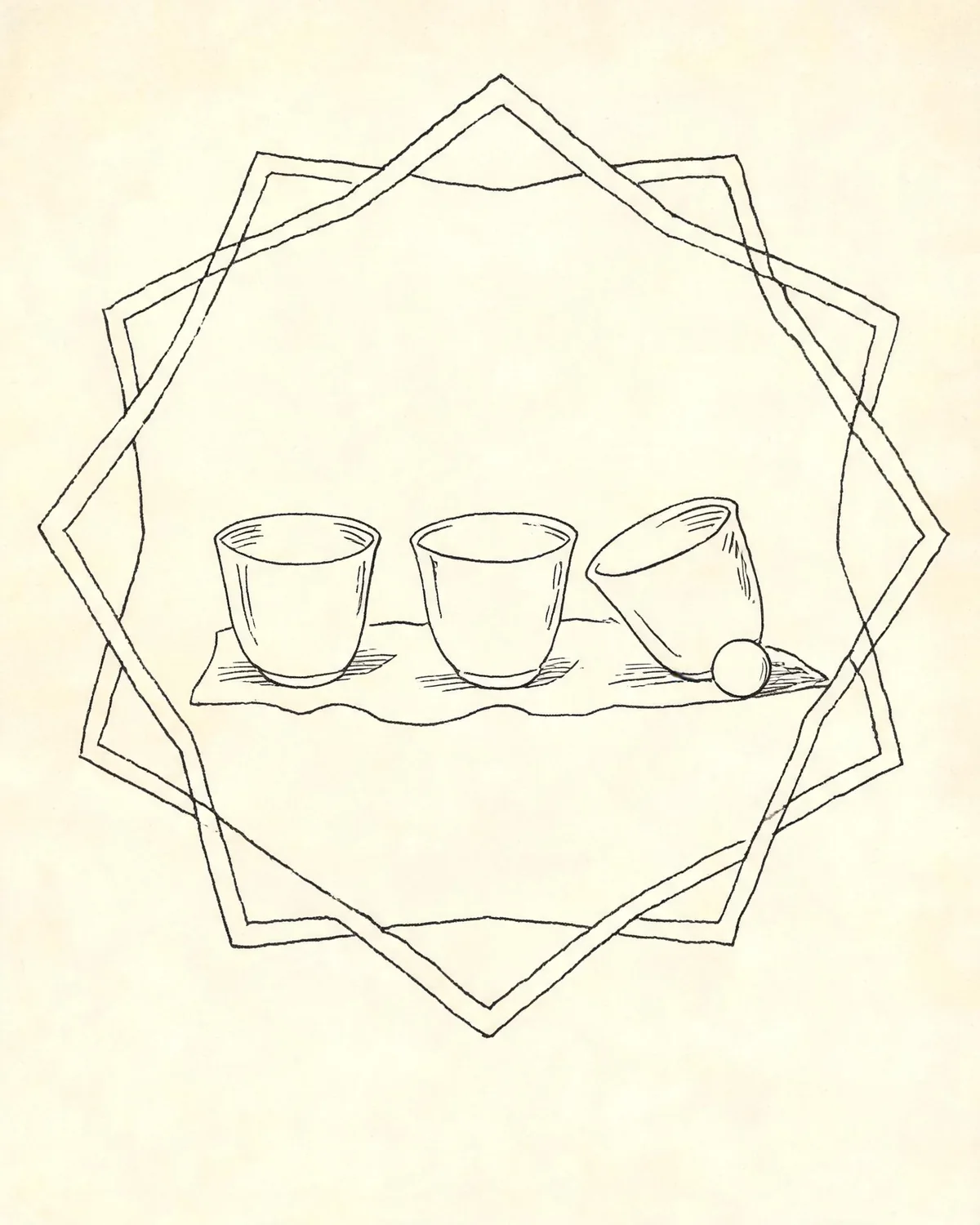
Watching a magician perform
A stage magician or illusionist points first to seduction and sleight of hand: someone, or something, is holding your attention while the real move happens elsewhere. If you sat there entertained, the image may concern flattery or a distraction you quite enjoy. If you saw through the trick, some people read it as clarity arriving about a person or an offer that looked better than it was.
Practising magic yourself
Seeing yourself cast spells or study sorcery is read as heedlessness and innovation, and in older readings as falsehood that separates spouses. A gentler present-day reading asks where you are tempted to get a result by manipulation: a white lie, a managed impression, pressure on someone who trusts you. The dream does not say you have done wrong; it shows a shortcut you might be eyeing.
A knot tied with thread and blown upon
Tying a knot with thread can mean asserting an intention or fixing a plan, and it can also mean sorcery and an evil spell. Blowing or spitting on a knot with an imprecation is read as witchcraft. Look at whose hands are doing the tying. If they are yours and the mood is calm, a firm resolve fits; if a stranger is muttering over the cord, the image leans toward ill will.
A stranger untying a knot you could not open
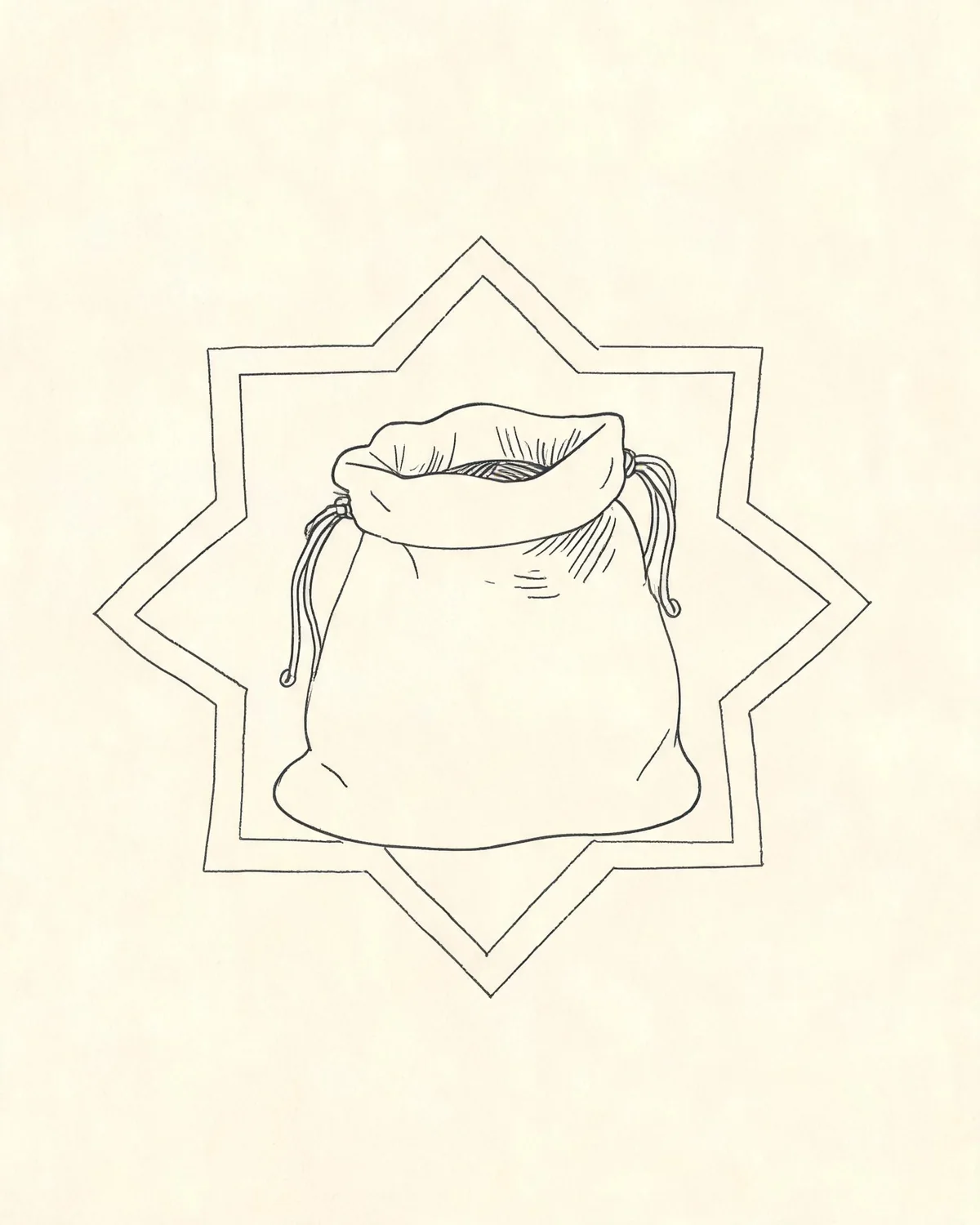
This is one of the more hopeful images in the territory. You tie a cord around a bag, cannot loosen it again, and an unknown person comes by and undoes the knot. The manuals read this as distress, tightness or hardship lifted unexpectedly by God's leave. Help arrives from a direction you did not arrange, which is worth remembering if the dream came during a stuck season.
A padlock on a door
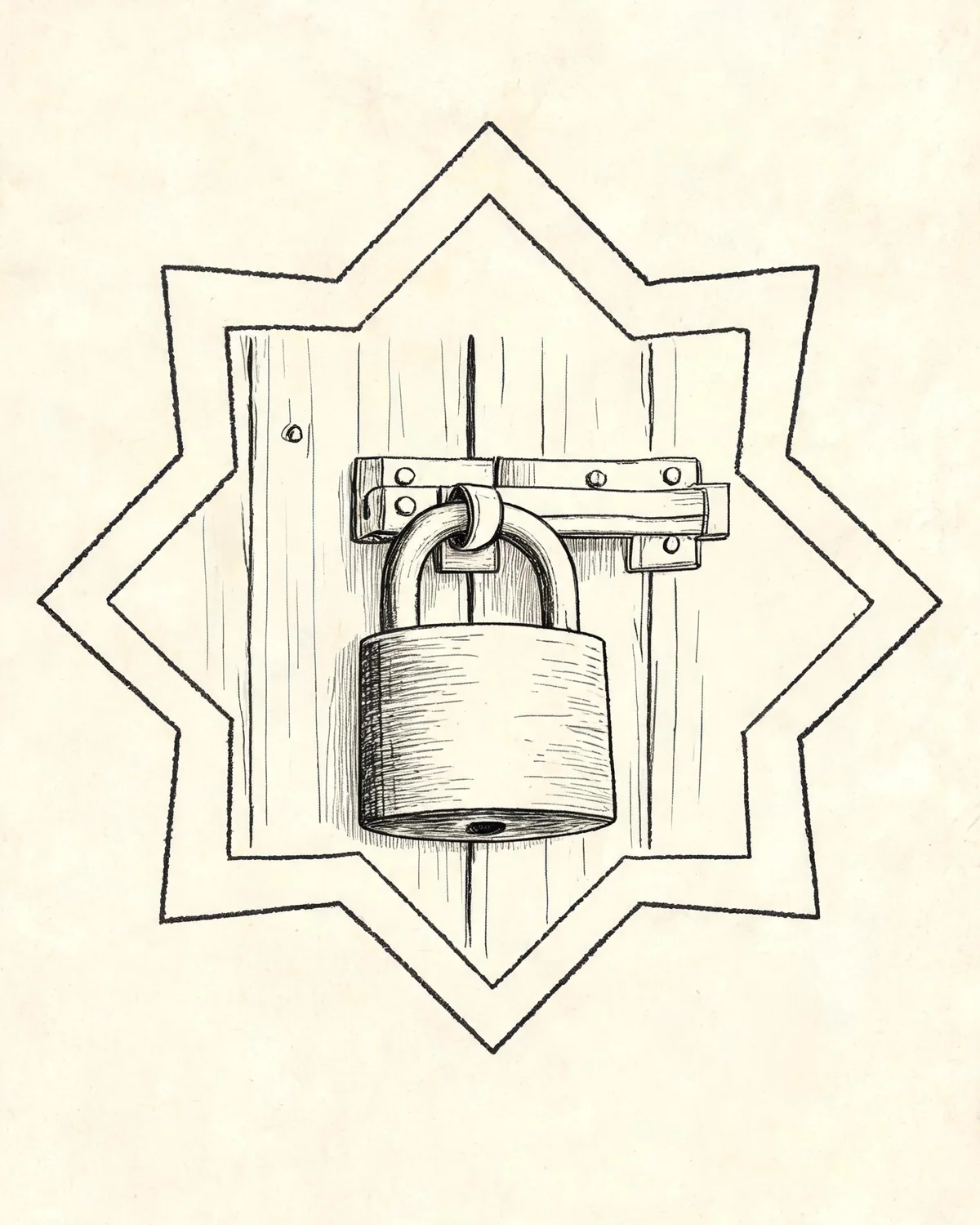
A padlock carries several readings, among them sorcery, concealed secrets and obstacles in the way of a journey. A wooden padlock leans toward deceit and hypocrisy. Locking your own door securely, by contrast, reads as managing your affairs within what is lawful. The difference is whether the lock was placed on you or by you, and whether it keeps harm out or keeps you in.
Wearing or reciting a protective prayer
When a prayer is recited in the prophetic manner over someone unwell, the reading is protection, the dispersal of sorrow and the easing of hardship. If the amulet carries a personal spell or wish instead, the reading turns to lies, affectation and hypocrisy. The image tests your motive: seeking refuge with God reads well, while trying to engineer outcomes through an object does not.
Asking a fortune-teller a question
A fortune-teller in a dream can stand for someone who explains the meaning of things, even a dream interpreter, while going to ask one a question points to distress or a burden. If the answer given is truthful, the manuals say to accept it; if the fortune-teller stays silent, an intention may come to nothing. Some people read the scene as the mind consulting itself about a worry.
Common Symbols Paired with Magic
Magic and incense. Perfuming yourself with incense reads as good friendship, and in another strand as using a charm to repel jealousy or to break through the stratagem of sorcery. When fragrant smoke clears a room of spells in a dream, some people read it as warmth and good company outlasting someone's envy.
Magic and jinn. Jinn in a dream can stand for sleight of hand, illusion, sorcery and magic, and sorcery carried out by jinn is read as having stronger effects. This is also the pairing the tradition files among vain dreams, so it calls for seeking refuge more than for decoding.
Magic and a lizard. The lizard is cross-listed with bewitching and with witches, and read as greed, a swindler, suspicious money or a clash of tastes. Alongside spell imagery it often points to money or dealings that are not as clean as they look, and to terms worth reading twice before you agree.
Magic and the evil eye. Envy and sorcery sit close together in popular practice, and in some communities prayers and folk remedies have been turned against the evil eye. In a dream the pair usually concerns being watched, compared or resented, rather than a spell cast in fact.
How This Tradition Differs from Others
Where some ancient cultures treated dreams as a channel that magic could use, Islamic dream reading tends to treat magic as a distortion of the channel. Spells for entering another person's dream are recorded from ancient Egypt, and a Greek magical papyrus from the fourth century still describes one. Whether such beliefs passed into Muslim practice is unclear, and the traditional dream interpreters do not build a method around them.
Christian readings often frame magic through stories of contests between God's servants and court magicians. Islamic readings stay closer to concrete props such as knots, padlocks, amulets and incense, and to the social damage that falsehood does between people. The props keep the reading practical: you can ask what was tied, locked or worn, and by whose hand.
Lived practice adds another layer. Ethnographic work in Bosnia after the 1992–1995 war describes women who received guidance in dreams and used the istikhara prayer partly to counter feared sorcery, and clients who came to them believing they were its victims. In one recorded case a dream led to a doorway being dug up in search of hidden objects. Such accounts show how real the fear can feel, and why the textual tradition's call for discernment still matters.
What Does It Mean to See Someone Doing Black Magic on You in a Dream?
This is the dream people most often bring to forums and to scholars, usually with a name attached. The older readings give little support for treating it as an identification. Being bewitched in a dream is read as separation through falsehood, and sorcery as deception and a ruse. The image describes a dynamic, lies driving a wedge, rather than naming the person who stands behind it.
If the figure is someone you know, notice what you already feel about them. Mistrust, an unresolved argument or envy you sense in them can easily take the shape of a spell at night. Scholars answering these questions in public have cautioned against acting on such dreams, and some point out that accusing a sibling or in-law on this basis damages the very ties the dream seems worried about.
A steadier response is to seek refuge, keep the dream private, and look at the waking relationship on its own terms. If there is a real conflict, it can be addressed directly. If there is no evidence, the dream does not supply it.
Are There Signs of Sihr in Dreams?
Lists of "signs of sihr in dreams" circulate widely online, often naming particular animals or recurring nightmares as markers. The classical manuals offer no such checklist. They do read certain images in connection with sorcery: a knot blown upon with an imprecation, a padlock in some readings, women throwing stones with a slingshot. But each sits beside other meanings, and none is presented as a test.
The same sorting also cuts against the checklist approach: a dream that seems to be about magic is not treated as reliable information when it belongs to that vain class. Repeated frightening dreams are better read as a measure of how much the worry occupies you than as evidence of what has been done to you.
If you are worried, the practical steps are ordinary ones: prayer and refuge-seeking, steady sleep and routine, conversation with someone you trust. Whether sihr is present in a person's life is not a question a dream can settle.
What This Dream Is Not
A dream about magic is not evidence that sihr has been done to you, and it is not a way to discover who did it. It gives no grounds to accuse a spouse, relative or neighbor, and it does not mean your faith has failed because something frightening reached you in sleep. Fear at night is not the same as weakness in belief.
Nor is it an instruction to buy amulets, pay for a reading or undergo a ritual someone offers to sell you on the strength of the dream. The tradition's own caution supports holding it lightly: some magic dreams are judged vain, and the rest are read as pictures rather than reports. What it may be is a vivid image of deceit, pressure or fear, and of the hope that what has been knotted can be loosened.
FAQ
Is dreaming about magic bad in Islam?
Not in itself. The manuals read magic imagery mostly as deceit, pride or temptation, which can serve as a useful warning rather than a bad sign. Some magic dreams are classed as vain and simply set aside.
Can magic ever be a good sign in an Islamic dream?
Some magic images do read well. Prayer recited in the prophetic manner points to protection and relief, incense to good friendship, and a knot loosened by a stranger to hardship lifting. The props of protection carry the hopeful readings.
Can someone send you a dream through magic?
Egyptian and late-antique material describes spells for entering another person's dream, yet there is no clear sign that Muslim practice took them up. Because such dreams are classed as vain, they offer no reliable instruction.
Does a magic dream mean my marriage is under attack?
A magic dream about marriage is linked in older readings to separation between spouses through falsehood. Today that is better read as concern about lies, outside interference or growing distance in the marriage. Talk with your spouse, and do not use the dream to blame relatives.
What does a black magic doll in a dream mean?
The classical manuals do not describe such dolls. Some people read an effigy as the feeling that others hold an image of you, through gossip or assumptions you cannot control. The reading turns on who held the doll and how you felt.
Why do I keep dreaming about black magic?
Recurring black magic dreams usually follow a recurring worry. If sihr has been discussed around you, or a relationship feels tense, the mind can return to that picture night after night. Repetition shows how much space the fear takes up, not that it is true.
Can films or stories about magic shape these dreams?
Yes. The tradition already recognizes dreams drawn from the soul's own preoccupations. A dream after a fantasy series or a frightening story about sorcery may simply replay what you watched, and it can be let go without further study.
Does Islamic dream reading treat magic as real?
Magic in Islamic dream reading stays mostly an image, though the wider tradition does acknowledge sihr as a practice and condemns it. Traditional dream interpreters, however, mostly read magic images as pictures of deceit and pride. Questions about what sihr can or cannot do belong to theology rather than to a single dream.
What should I do after a dream about sihr?
Seek refuge with God, avoid spreading the dream around, and keep to your morning routine. If one relationship comes to mind, look at it calmly in daylight. If the fear stays with you, the steps in the next section may help.
How to Use These Readings Today
Start by writing down what the magic did, not who you suspect. Did it tie, lock, perform, protect or tempt? The act carries most of the reading, and naming it keeps the dream from hardening into an accusation. Note too how you felt on waking, since calm and dread lead to different readings.
Next, look for the waking falsehood. Where is flattery, pressure or a convenient lie working on you, or between you and someone close? Choose one small action this week: an honest conversation, a decision you take back into your own hands, or a habit of prayer and refuge-seeking before sleep.
If the dreams keep returning, or fear of sihr is affecting your sleep, work or family, talk with a trusted person or a qualified professional. For questions of religious ruling, including ruqyah, a qualified scholar is the right person to ask. Be cautious of anyone who charges money to read sihr into your dreams.