Owl in Islamic Dream Interpretation
An owl drops silently onto a ruined wall at dusk and turns its flat, pale face toward you. Older Islamic readings see that bird mainly as a person you may know, such as a harsh authority, a solitary thief or someone who cannot hold to what is right, and only rarely as news. Below are the main readings, the scenes that change them, what a white owl adds and how the tradition handles the owl's old reputation as a bad omen.
On this page
- Key takeaways
- What an Owl Means in Islamic Dream Interpretation
- How Islamic Dream Interpretation Reads Dreams
- Core Principles
- How the meaning changes
- Common Symbols Paired with Owl
- How This Tradition Differs from Others
- Is an Owl a Bad Omen in Islam
- What Does a White Owl Mean in an Islamic Dream
- What it is not
- FAQ
- How to Use These Readings Today
- Related symbols
Key Takeaways
- Classical Islamic manuals read the owl chiefly as a person: a haughty ruler, a lone thief, a traitor or someone without steadfastness.
- Where the owl appears matters; ruins and darkness point to hidden wrongdoing, while a house points to news reaching the family.
- An idle owl can picture a stretch without work or weariness with the effort of earning a living.
- One passage gives owls a gentler face: a respected, devout person of modest means.
- Islam generally sets omen-reading aside, so the owl is weighed as an image of conduct rather than as bad luck.
- Your own work, household and worries decide which reading fits.
What an Owl Means in Islamic Dream Interpretation
The first reading concerns power used badly. Older interpreters saw in the owl a tyrant or a haughty ruler, someone who watches from above, keeps their distance and is feared rather than loved. In a present-day life that might be a manager, an official or a relative whose authority feels cold. The owl's fixed stare and its standing as a bird of prey suit that picture.
The second reading concerns stealth. The owl is a dangerous thief who works alone, without helpers, and it stands for thieves hiding in darkness and in the shade of ruins. It can also represent a traitor. These readings share one idea: harm that moves quietly, at the edges, where few people are looking. In a household or workplace, the owl of this reading is the person rarely seen doing harm yet often nearby when something goes missing.
A third reading turns from others to the self. The owl can picture someone without steadfastness, who lacks the determination to do what is right, and it is linked with unemployment and with resentment at the effort of earning a living. A drowsy owl may reflect a season in which work has dried up or motivation has thinned.
The tradition also keeps a kinder possibility. In a passage about pine trees, owls and crows share a reading that includes a person of noble character, a godly figure who is respected though poor, and someone who shelters wrongdoers out of compassion. An owl, then, is not a single verdict but a set of human types.
How Islamic Dream Interpretation Reads Dreams
Interpreters in this tradition begin by sorting dreams: a true dream that may carry meaning, a troubling dream to be set aside, and an ordinary dream built from the day. An owl glimpsed in a nature film before bed may simply be the third kind, and nothing more needs to be made of it. The tradition also weighs the person, so the same owl may concern a merchant's partner, an employee's supervisor or a parent's worries, depending on whose life it enters.
For dreams that seem to matter, classical manuals teach a vocabulary of correspondences. Grains and honey stand for money; birds and beasts commonly stand for people. That is why the owl is read as a ruler, a thief or a weary worker rather than as a supernatural messenger. The interpreter's task is to recognize which person the bird is wearing.
The tradition is careful about speech as well. Dreams are to be shared only with a trustworthy, knowledgeable listener, and frightening night visions have long been kept quiet in the region; a story far older than Islam already shows a sister refusing to hear more of her brother's ominous dream. Owl dreams, which many people find unnerving, sit squarely within that discretion.
Core Principles
Person before portent. Because birds stand for people in this vocabulary, the first question is who the owl resembles. A boss who rules by fear, a colleague who works alone and keeps things hidden, a friend whose loyalty wavers: each fits a different strand of the owl material. Ask also whether the resemblance is to you.
Place sets the tone. Ruins, darkness and empty buildings draw out the hidden-wrongdoing readings. A home draws out family matters, and a tree can soften the picture. An owl indoors is closer to you than one glimpsed far off over fields, and the reading draws nearer accordingly. Note the setting before deciding what the owl means.
Solitude is part of the message. The owl of the manuals acts alone: the lone thief, the distant ruler, the person who will not stand firm alongside others. A dream that stresses the owl's isolation may point to someone acting without accountability, or to your own sense of working without support.
Omens are not the method. Because the tradition discourages divination, it does not treat an owl's appearance as a sign of what is coming. The reading rests on what the owl does and on your circumstances, and those can be examined calmly in daylight.
What the Owl's Behavior Changes
Each scene below draws out a different strand of the owl material, so the bird's location and action are worth recalling as precisely as you can.
An owl perched in ruins or an empty building
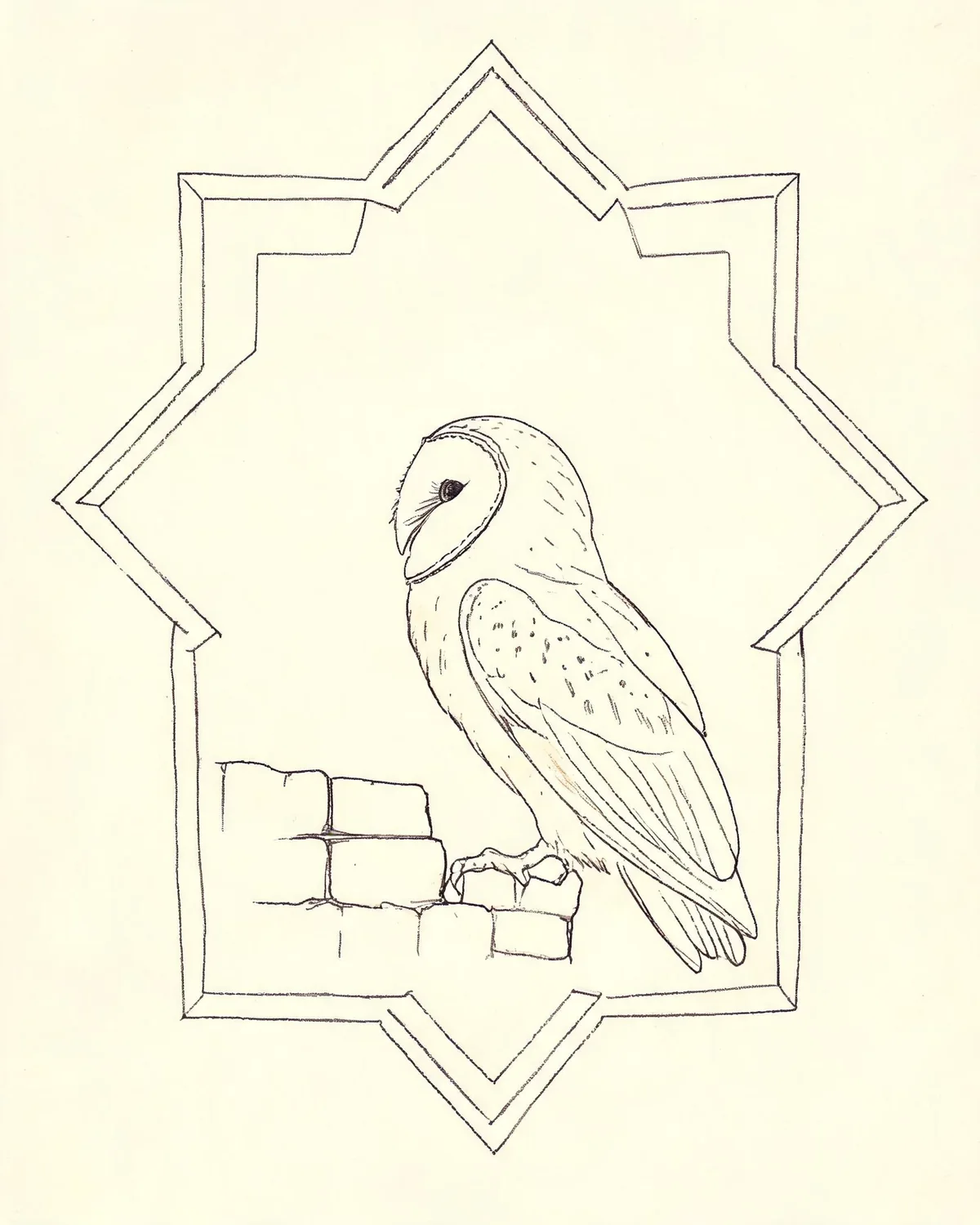
An owl settled among broken walls or in a deserted house recalls the old picture of wrongdoers who wait out of sight among broken stones. The scene can point to something concealed in a neglected corner of your life: an unpaid debt, an unfinished dispute, a project left to decay. Ask what you have stopped visiting, and what might be sheltering there.
An owl falling into your house
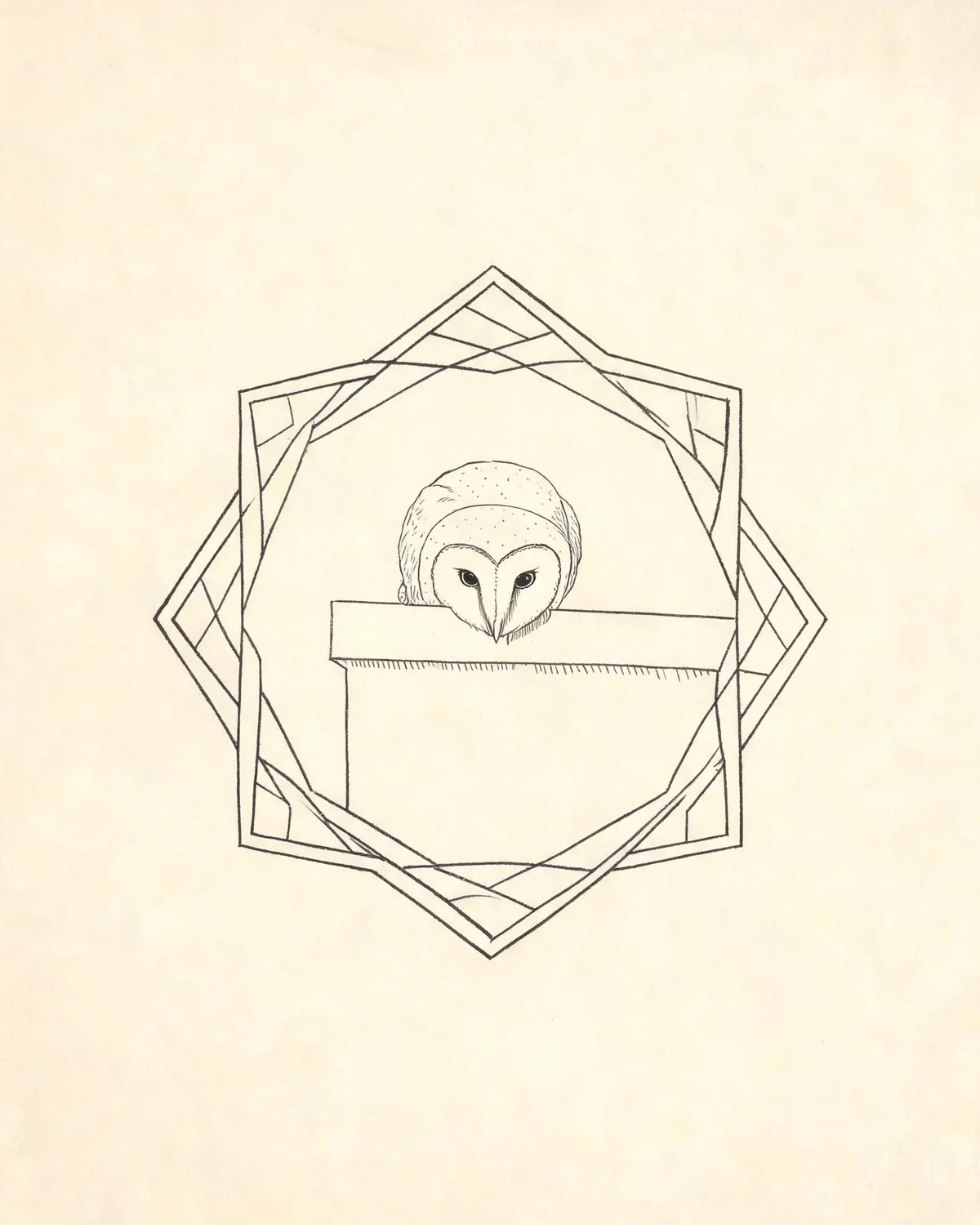
Older readings tied an owl falling inside a house to grave news reaching the family, including word of a death. The tradition records that reading without treating it as certain, and a present-day reading would take the scene as heavy news or worry entering the household. Notice who was home in the dream and how they responded, since that usually shows where the concern lies.
Fighting with an owl
Struggling with an owl was read as facing a fight with someone. The bird's claws and beak make the conflict close and personal. If you held your ground, the dream may reflect readiness for a confrontation you have been avoiding; if the owl overpowered you, it may show how outmatched you feel by a harsh or slippery opponent.
An owl watching you from above
An owl staring down from a high branch or a rooftop suits the reading of a haughty ruler, an authority that observes and judges from a distance. The feeling in the dream matters. Being watched coldly points to pressure from someone above you, while a calm exchange of looks may reflect respect you have not yet put into words.
An owl calling through the night
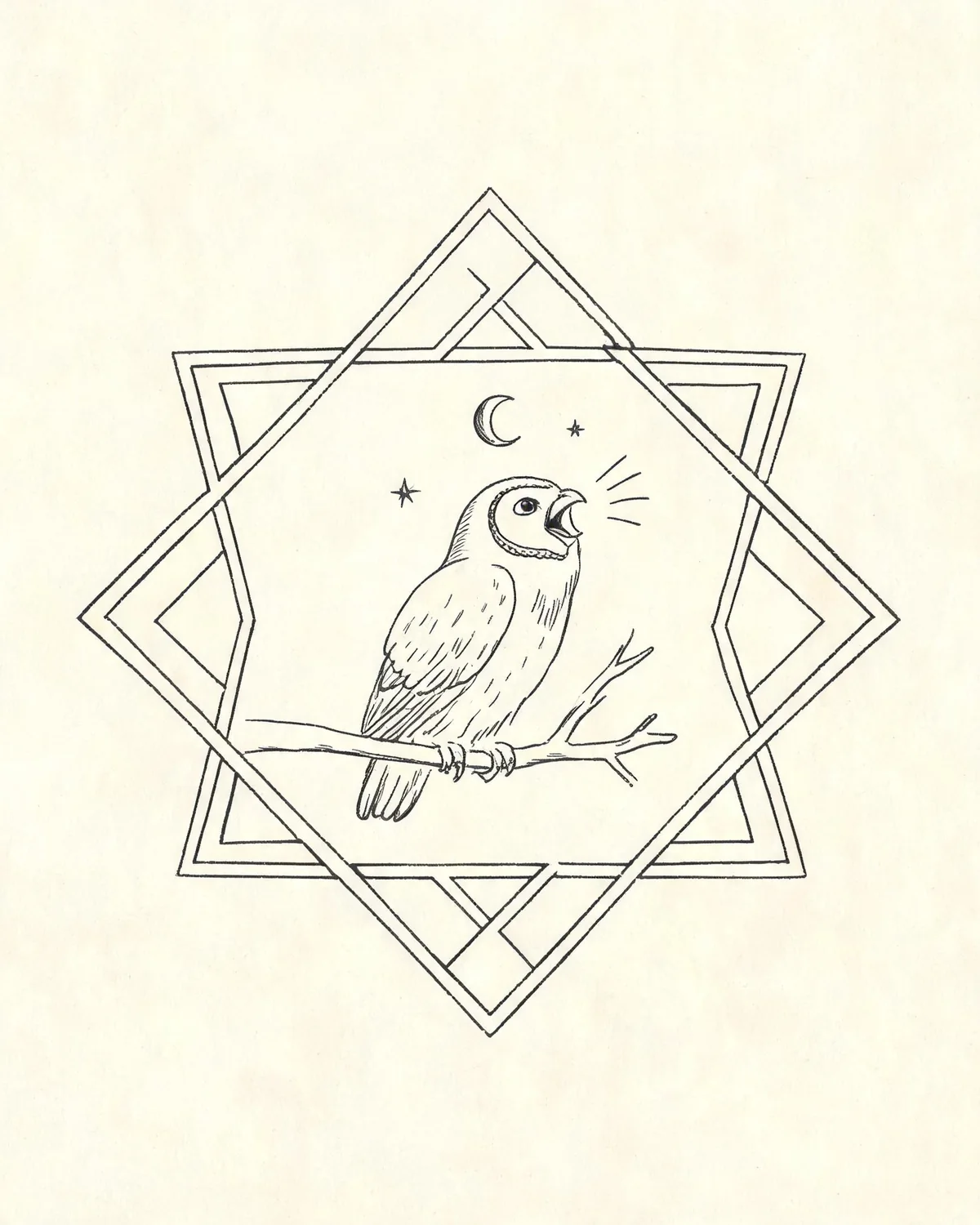
A hoot or screech in the dark draws on the owl's association with fear and bewilderment. Older readings heard the night cry as unsettling rather than informative. The sound can mirror anxieties that grow louder once the house is quiet, which is one reason the tradition advises seeking refuge and setting a disturbing dream aside.
An owl dozing in daylight
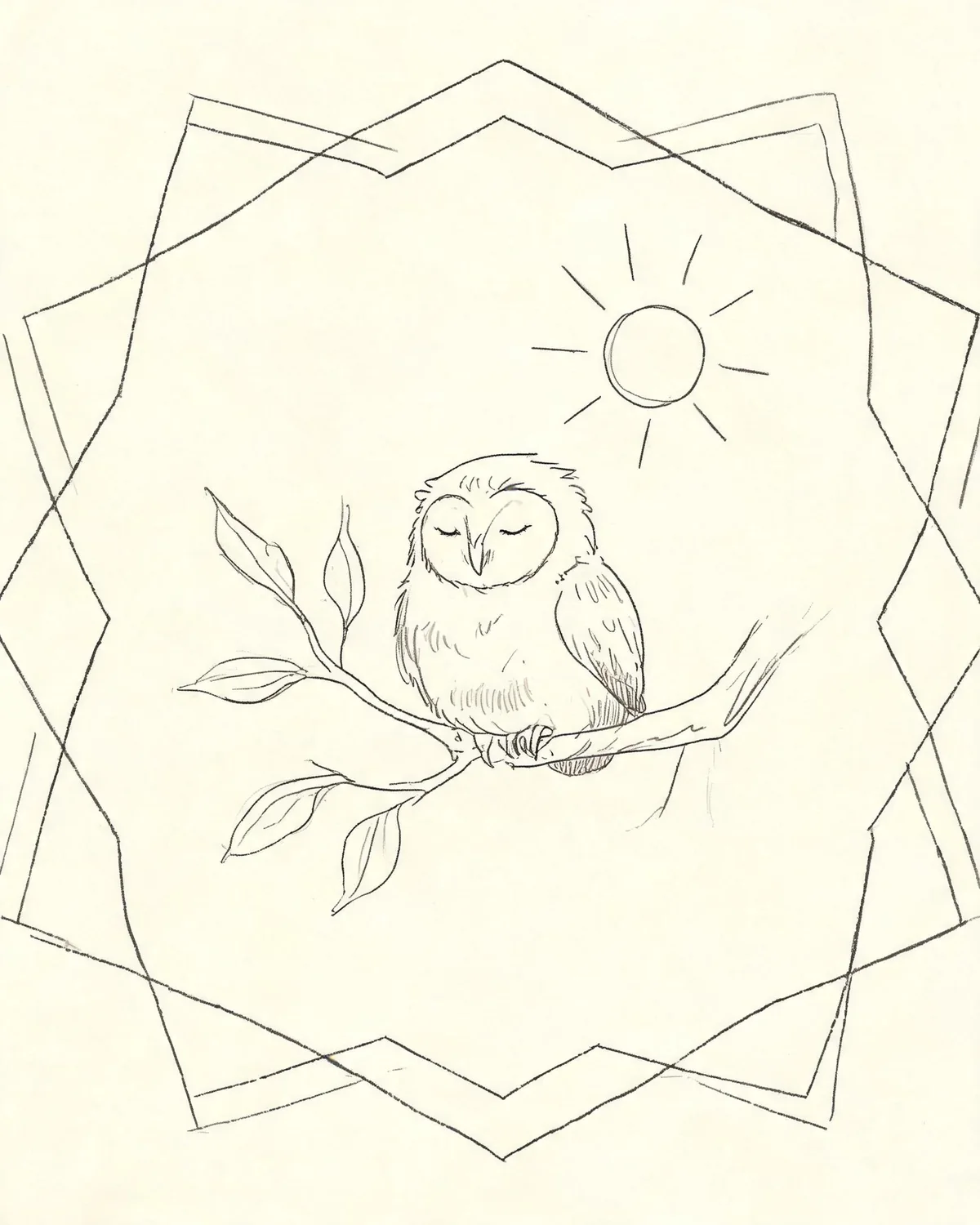
An owl asleep on a branch at midday, blinking at the light, fits the owl's link with idle hands and with weariness at the daily work of making a living. It can reflect a stretch without work, a job that no longer engages you, or plain exhaustion. The scene is less a rebuke than an honest look at your energy.
An owl carrying off prey
An owl rising with a mouse or a small bird in its talons sharpens the image of the dangerous thief who works alone. Something has been taken quickly and quietly. Ask what you have lost recently without quite noticing, whether time, savings or trust, and whether one person in particular was close by when it went.
Common Symbols Paired with Owl
Owl and crow. Classical readings give owls and crows the same interpretation in at least one passage, and both are dark birds of ruins and dusk. Seen together, they can strengthen the theme of people at the margins, some disreputable and some simply poor and overlooked. Which bird seemed in charge often tells you which side of that reading applies.
Owl and pine tree. The pine is the tree whose reading the owl shares: a person of noble character, someone respected yet poor, or someone who shelters wrongdoers out of misplaced compassion. An owl nesting in a pine can therefore point to a decent person in modest circumstances, or to kindness that is being taken advantage of.
Owl and lamb. One of the oldest recorded dreams from the region, long before Islam, has an owl snatching a lamb from the sheepfold among a string of ill-boding images. The pairing sets a predator against something innocent and entrusted to your care. In a personal dream it can point to a vulnerable part of your household or work that needs closer protection.
Owl and night. Night is the owl's element and the setting for the manuals' thieves who hide in darkness. A night scene with an owl emphasizes concealment. The same owl at dawn, as darkness lifts, can suggest something hidden coming to light.
How This Tradition Differs from Others
Few birds have been read so differently from one culture to the next. Ancient Greece made the owl the companion of Athena and a byword for wisdom, a link that survives in owls on library signs and graduation cards. Ancient Egypt associated it with cold, darkness and death; early China saw it as savage and unlucky; Celtic lore called it the corpse bird; and medieval Christian symbolism tied it to desolation, mourning and bad news.
Islamic dream reading largely steps around both the wisdom tradition and the omen tradition. Its manuals read the owl through social types (rulers, thieves, traitors, the idle, the devout poor) and weigh it like any other dream bird. That reflects a broader stance: the future is not to be read from the flight or call of birds, while dreams may be weighed carefully as possible guidance.
Even the owl's wakefulness at night, which other cultures heard as eerie or uncanny, is translated into human terms: the thief who works while others sleep. Each tradition is answering its own question about a strange, night-loving bird. The Islamic answer puts conduct and circumstance where others put fortune or learning, and none of these readings needs to cancel the others.
Is an Owl a Bad Omen in Islam?
Many people arrive at this question carrying folklore from home or from the wider world, where the owl's night call has long been heard as bad news. Islamic teaching takes a distinctive line on that habit. Divination in its various forms, from reading birds to drawing lines in sand, is generally treated as unlawful, because knowledge of the future belongs to God alone. Dream interpretation is the notable exception, and even it is handled with restraint.
That is why interpreters in this tradition read the owl as a person or a condition rather than as a portent: a harsh ruler, a lone thief, someone who lacks resolve, a stretch without work. The single scene that carries heavy news, an owl falling into a house, is preserved as an older reading and weighed with the same caution as everything else.
So the plain answer is that the owl is not treated as bad luck in itself. It can carry warnings about conduct and circumstances, and those warnings are meant to be considered and acted on rather than feared. If an owl dream left you anxious, the steadier response is to look at what it showed about people and situations around you.
What Does a White Owl Mean in an Islamic Dream?
The classical owl material does not single out a white owl, so this is one of the places where interpreters reason from the wider symbolism. White across Islamic dream imagery tends toward goodness and purity, and white garments, snow and light are read favorably. A pale owl therefore softens the bird's usual associations without erasing them.
In practice, a white owl perched calmly, especially in daylight, can lean toward the gentler owl readings, such as the respected but modest person older readings linked with owls sheltering in pine trees. A white owl behaving like a hunter, swooping on prey or crying through the night, still carries the reading of that behavior, and its brightness may simply make the scene more memorable.
A barn owl, with its pale heart-shaped face and silent flight, is the white owl most people actually picture. Notice whether the bird felt like a visitor, a watcher or a threat, because that impression usually tells you more than the color does.
What This Dream Is Not
An owl dream is not a notice of anyone's death, even where older readings attached grave news to an owl in the house; the tradition itself discourages reading the future from birds. It is not bad luck that needs warding off with charms or rituals. And it is not proof that a particular colleague or relative is a thief or a traitor: the owl can show where you feel watched, cheated or unsupported, but it cannot name the person.
If the dream lingers, the tradition's response is simple and quiet: seek refuge in God, ask for good, and share the dream only with someone you trust. Any practical concern it raises, about money, work or a person's conduct, is better settled by what you can check and discuss in daylight.
FAQ
What do black or brown owls mean in an Islamic dream?
The manuals do not assign a separate meaning to black or brown owls, so read the scene first. A darker bird can deepen the hidden-wrongdoing readings tied to night and ruins, while a brown owl in a tree may simply be a familiar bird. Your feeling decides the weight.
What does a baby owl mean in an Islamic dream?
A baby owl does not appear in the classical material. Some readers take a young owl as the small beginning of an owl's qualities, such as a habit of withdrawing, or as a modest person just starting out. How you treated it matters most.
Does an owl mean wisdom in Islam?
Not in older Islamic readings. The owl-as-wisdom idea comes from ancient Greece and modern Western culture. Islamic readings see social types instead, though one passage links owls with respected, devout people of modest means.
What does killing an owl in a dream mean?
The manuals treat fighting an owl as facing a quarrel. Overcoming the bird can therefore suggest getting the better of a harsh or deceptive opponent, or ending a habit of withdrawal. It is a symbol, never encouragement to harm wildlife.
What does an owl flying over you mean in an Islamic dream?
An owl passing overhead without stopping can suggest a harsh figure or an unsettling worry that touches your life briefly and moves on. If it circled back or landed nearby, the reading shifts toward whatever it did next.
Can an owl in a dream represent a specific person?
Yes. Classical readings name several: a haughty ruler, a lone thief, a traitor, someone who will not stand firm for what is right, or a respected but poor person. Ask which of these resembles someone in your life now.
What does it mean to see many owls in a dream?
A gathering of owls multiplies the owl's types: several distant authorities, a group operating out of sight, or many small worries arriving at night. If the owls were calm and quiet, the scene may simply reflect a crowded, wakeful mind.
Should I tell someone about a frightening owl dream?
The tradition advises keeping troubling dreams to yourself and sharing any dream only with a trustworthy, knowledgeable listener. If an owl dream unsettled you, avoid retelling it widely and see whether it still feels important after a few days.
How to Use These Readings Today
Begin by noting where the owl was and what it did, in two short lines. Ruins, a house, a branch or the open night each lead to a different strand, and the owl's action narrows it further.
Next, match the owl to a person or a condition rather than to an event. Is there someone whose authority feels cold, someone who works alone and keeps things hidden, someone whose resolve keeps slipping? Or is the owl closer to home, a tiredness with work or a habit of withdrawing at the first difficulty? Choose the single match that feels most accurate.
Then take one modest step that answers it. Recheck a shared account, ask a direct question you have been avoiding, or put an hour toward the job search or task you have been resenting. If the dream frightened you, follow the tradition's own counsel: seek refuge in God, keep the dream private, and let the morning settle it.