Halfway Up the Stairs, and the Top Out of Sight
You stop where the step should have been familiar, and the next landing is dark. The rail is cold, or it is not there, and you cannot tell how many turns remain. A dream of stairs is a route between levels of a life, one tread at a time, and the direction of travel does most of the reading.
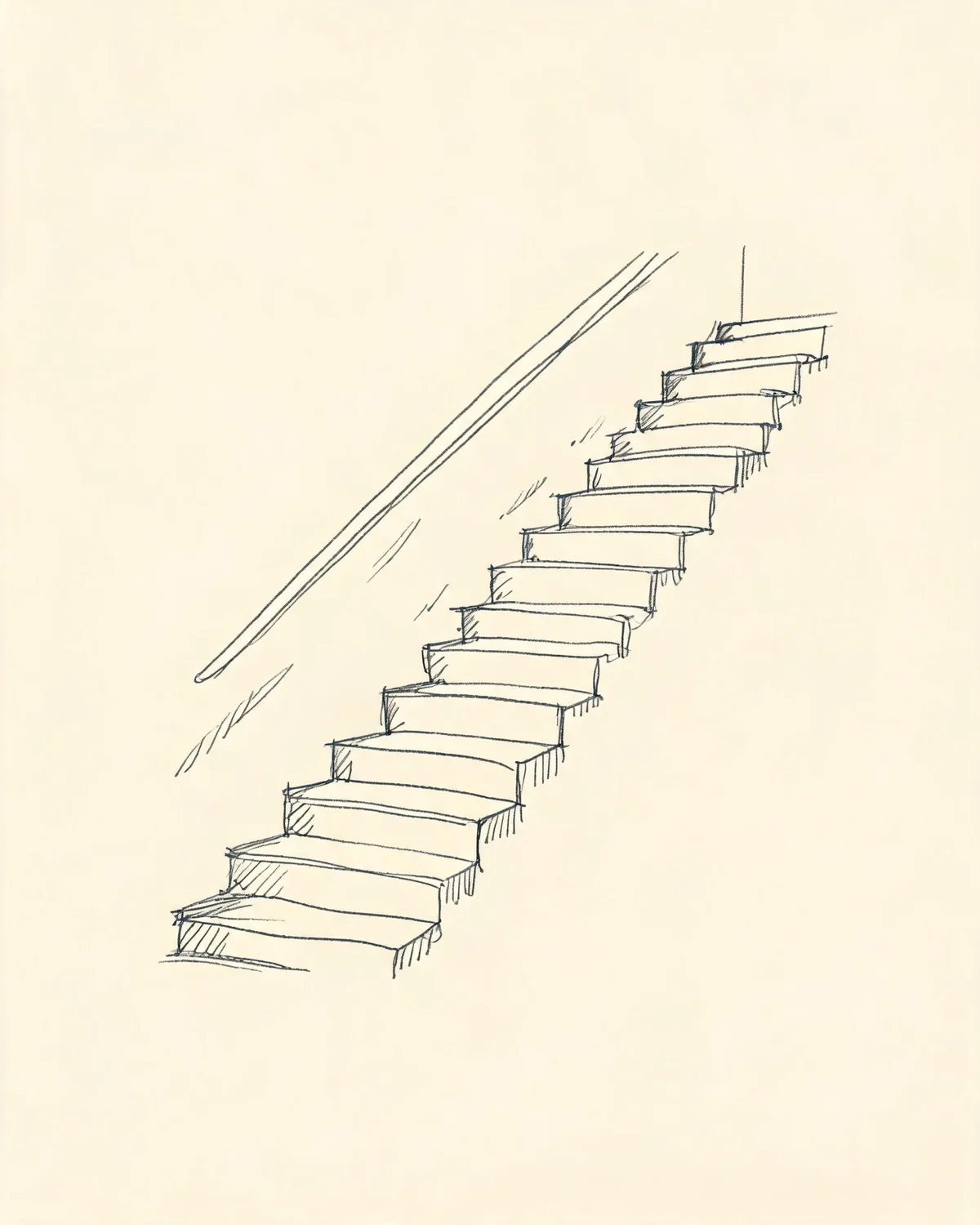
What It Means When You Dream of Stairs
A stair joins one storey of a life to another. Older readings treat the climb as a move toward something above ordinary ground: a skill, a rank, a clearer mind. The pace is the useful part. Each tread is a small demand, and the dream often stalls where the next one feels too high.
Going down is its own errand. A descent can be a homecoming, a resignation from a post, or a move into a quieter, lower room of the self. The reading leans on whether you were going up or coming down.
A third thread is exposure. A narrow flight, a missing rail, or a turn so tight you cannot see who is ahead keeps the body aware of height. The scene shows how supported the change feels. A foot that actually slides belongs with slipping. Here the question is the route.
Why This Dream Shows Up Now
These dreams tend to arrive when a change has stages and you are caught between them. A job learned in pieces, a move only half packed, a recovery that allows a little more each week, a talk you are climbing toward and not ready to have. The night borrows a flight because the effort is real and the landing is still out of sight.
They also come when rank is shifting at work or at home. Someone else is on the flight, blocking it, or waiting above. Alone, following, or being followed, your place on the stair often shows whether the change is yours.
How the Meaning Changes
Direction, the shape of the flight, and whether anything steadies you move the reading.
Climbing and never arriving
The steps continue past any landing you can name. This scene often belongs to work with no agreed finish, or to a hope that keeps adding one more condition. Identical treads are closer to a loop than to a summit.
Going down instead of up
A descent can be relief, a return, or a loss of rank. One old reading took downward stairs as coming home from a journey, or as leaving a post. A warm lower floor suggests a homecoming. A dim floor you did not want suggests a role left too soon.
A spiral staircase
A spiral keeps you circling one center: a person, a principle, or a problem you cannot set down. Winding stairs have long been read as the path that hides the next turn. Height matters less than how much of the way you can see.
A flight with no rail
No rail means the height is unbuffered. You can still climb, and nothing catches a lean. This is thin support: a plan without a backup, or a bond that does not hold the side of you that wobbles. If the foot slid, keep that loss of grip on the slipping page.
How Cultures Have Read This Dream
Many older accounts treat stairs as a change of level rather than as furniture. Terraced temples made the climb a way of approaching what was held to be above ordinary life. A stair so narrow that only one person could use it, threats along it and under it, made the way up single file and exposed.
Other readings split the direction. Upward stairs have been tied to learning and to a rise in station. An early Islamic reading weighed the climb as advancement and the descent as a return or a resignation, and it gave clay, stone, and wood different weight.
Making Sense of It for Yourself
Start with where you stood and which way you faced. Halfway, at the top, or still on the ground floor are different jobs. Then name the building if you knew it: a childhood house and a workplace put the climb in different decades.
Ask what the next waking task actually is, and whether you have been staring at the whole height instead of the tread in front of you. If the rail was gone, ask who usually steadies this kind of change. The night shows the pace, the direction, and how much the steps were held.
Religious and cultural readings
Islamic and Christian dream interpretation each read this image, or one closely related to it.
FAQ
What does a dream of stairs usually come down to?
Stairs in a dream usually carry a change that has to happen in stages. Direction, the shape of the flight, and how supported you felt matter more than the number of steps.
What if I fall down the stairs?
Falling down the stairs means the route has stopped holding you. A missed tread sits near slipping; a long drop, near falling. Keep the floor you were aimed at, and whether anyone could catch you.
What if I know the building?
A known building dates the climb. A childhood house pulls it toward family rules. A workplace pulls it toward rank and skill. An unknown stair is less tied to one address.
How are stairs different from a ladder?
They share the idea of going up by degrees, and they part on shelter. A ladder is a bare route in open air. Stairs usually sit inside a building, with landings, turns, and other people on the flight.
Is an escalator the same as stairs?
An escalator carries you, and the machine sets the pace. A stair asks you for every tread. A moving stair asks whether the change is happening to you. A stopped one has quit helping.