Full reading: why now, and what to do.A full reading every day.membership from $9.9/month →

What a fever dream is, what it looks like, and when to call a doctor

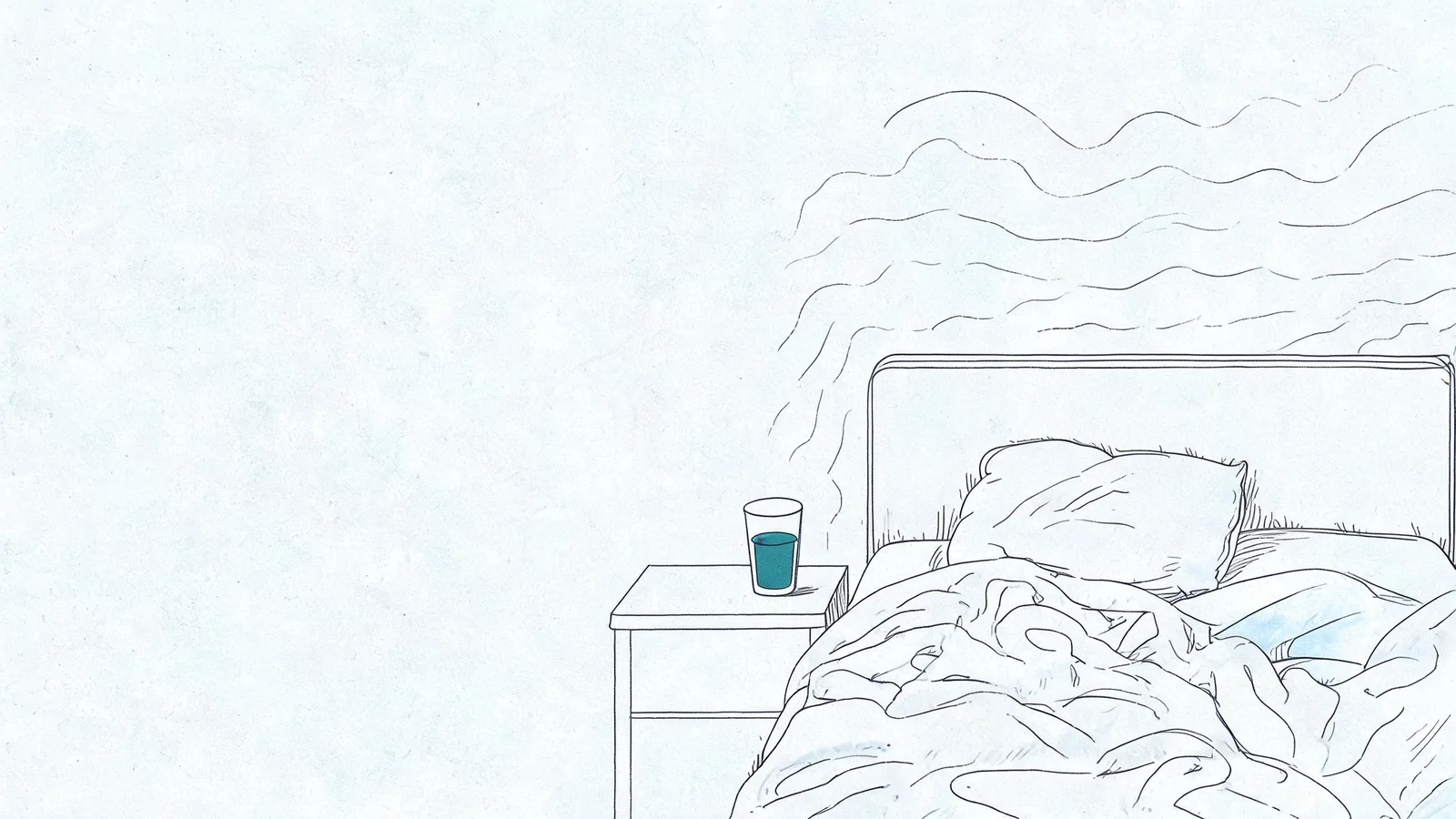
Pen drawing of an unmade bed with a glass of water on the nightstand, the wall above rippling like heat haze

A fever dream is a vivid, strange, and often unpleasant dream during a fever. In the two studies that compared their content with ordinary dreams, they were stranger and more negative; the 2020 one also found more heat and more health in them. The same words also name a waking experience so strange, and usually so unpleasant, that it feels like a dream.

On this page

What Counts as a Fever Dream

A fever dream is the dream you remember from a night with a fever: unusually vivid, strange, and often unpleasant, sometimes with the heat and the weakness still in it.

A 2020 online survey in Frontiers in Psychology collected 100 fever dream reports from 164 people and set them beside ordinary recent dreams. The fever dreams were more bizarre and more negatively toned, and they mentioned health and temperature more often.

A 2016 questionnaire of 62 people, in the International Journal of Dream Research, found fever dreams more bizarre and more emotionally intense than diary dreams from an age- and gender-matched group. It was a paper survey given to psychology students and to patients in general-practitioner waiting rooms; 45 of the 62 had fever dreams. The 2020 study was online. Both were recalled from memory.

The NHS usually treats 38C or above as a fever, and feeling hot, cold, or shivery can still mean a high temperature when a thermometer reads lower. None of the studies tied the dreams to one mark on the thermometer. Of the three studies that compared dreams with and without fever, only a 1968 sleep-laboratory study of 11 male medical students measured the fever, and the highest reading was 38.9 C.

Why Are Fever Dreams So Weird?

They are stranger and more unpleasant than ordinary dreams. A 2024 review searched PubMed, PsycINFO, and Embase, screened 654 results, and found only three studies that compared dreams with and without fever, moderate-to-low in quality.

Fever is known to dull thinking while you are awake. The 2020 authors wanted to test whether that same over-heated brain, not functioning properly, also makes the dream more bizarre, and whether people who are more muddled by day have the more bizarre dreams.

Heat in the dream may carry over the feeling of being hot during the day, or come from the body's heat during sleep. As of 2020, the authors noted, no one had tested what heat on a sleeper's skin does to dreams.

A 2009 review found that bacterial cell-wall components which mimic infection, given to animals or humans, increase and fragment non-REM sleep and suppress REM sleep.

In 1968 an injected fever-inducing agent left sleep more disrupted, with less REM, and dreams recalled on 17% of fever nights against about 80% of ordinary and recovery nights. Deirdre Barrett told the Harvard Gazette in 2020 that waking often is likely to mean you remember more, because you leave more REM periods, not that you dream more. She was not describing fever, and on those measured nights memory went the other way.

In many mammals, REM sleep suppresses or weakens the body's response to heat and cold, but in adult humans it is not as altered, as Parmeggiani reported in 2003. J. Allan Hobson, in Dreaming: An Introduction to the Science of Sleep, writes that mammals cannot regulate temperature during REM sleep, and he calls any link with dreaming speculation.

People recalled the dreams from past fevers, sometimes from quite a while earlier, so the 2020 survey cannot say which stage of sleep they came from. None of these studies asked why a fever dream can feel so long.

What Fever Dreams Tend to Look Like

The 2020 paper, looking back at the 2016 study, names moving walls, creatures with oversized arms and legs, and threats such as dogs, big spheres, insects, and terrorists; in its own 2020 comparison, though, aggression was no more common in fever dreams than in ordinary ones. TIME in 2019 adds giant insects, blackness slowly spreading, burning clouds, and melting statues. Michael Schredl told TIME that images like these could reflect the brain's awareness of the fever's heat.

In the 2020 comparison, 10% of fever dreams included a perception of temperature, against about 2% of matched ordinary dreams. One person dreamed of waking in their own room because their body felt as if it were blazing with heat; they were too weak to uncover themselves or drink, could not pull off the bedspread, and their mother came in but could not help. Weakness and helplessness were the strongest feelings.

Another was walking at dusk through a city in a valley when a hot wind rose, the houses grew enormous, thunder came from the mountain, and a red glow turned out to be an enormous lava ball that seemed tasked with getting them; they woke as it caught up. Those insects belong with bugs, creatures with oversized limbs with monster, and health in the dream with being unwell.

In 2013, at the NIH Clinical Center, 28 patients already in hospital, most of them with cancer and all with a recorded fever, were interviewed about their fever symptoms. Three of the 28, 11%, said they dream or hallucinate during fevers. One dream moved back and forth between a very difficult circumstance and a very comfortable one.

Can a Fever Dream Be a Good Dream?

Pleasant feeling is reduced, not gone. In 2020 there were fewer positive emotions and more negative ones, and fewer characters and conversations, which the authors tie to the social withdrawal that comes with fever.

Writing to William Godwin from a sickbed at Greta Hall, Keswick, Coleridge said that even the forms that terrified him in his fever-dreams were still forms of beauty, in Biographia Epistolaris.

Fever Dream, Nightmare, Night Terror, or Delirium?

A fever dream is a dream you wake from and remember, so it sits closer to a nightmare than to a night terror. The NHS says a night terror can mean screaming, thrashing, talking, or moving while still asleep, usually early in the night; it is rarely remembered and mainly affects children. A nightmare is a bad dream, usually later in the night, that you can wake from and remember. Being very tired or unwell is a common cause of both. No study we found compared fever dreams with nightmares directly. Against ordinary dreams, though, fever dreams were more bizarre on average, and in the 2020 study they brought in heat and health more often.

NI Direct says those hallucinations are common, like dreams, and nothing to worry about by themselves. We found no study of fever-dream-like dreams in people who did not have a fever. The 2020 paper cites a wider link: poor health with more negatively toned dreams, and health-related dreams with how often people are ill and how much they worry about their health.

Delirium is confusion while you are awake, not a dream told in the morning. MedlinePlus calls it sudden and often temporary, with infections such as the flu among common causes. Hobson, in Dreaming: An Introduction to the Science of Sleep, argues that the shape of dreaming most resembles delirium from drugs or a high fever. It does not say your dream is delirium.

When a Child Has a Fever

Health services describe a child's strange night with a fever in terms of confusion or hallucination, and no study we found has looked at fever dreams in children on their own. Seattle Children's Hospital says about five minutes of confusion can come with a high fever and can be normal, but sudden confusion that is not brief is serious: strange speech, seeing what is not there, or not recognizing a parent. For signs like these it says to call your child's doctor now, or go to the nearest ER if you cannot reach them.

NI Direct says hallucinations can sometimes occur in children who are ill with a fever. It advises calling a GP if a child with a temperature of 38C or above seems to be hallucinating, and says the hallucinations should pass after a few minutes. The American Academy of Child and Adolescent Psychiatry describes delirium as a serious condition of severe confusion and changed behavior that fever or infection can cause, and says a delirious child needs medical attention immediately. It is usually temporary once the underlying condition is treated, more likely in hospital, and possible at home as well.

When it is urgent but not an emergency, the NHS in the UK says to call 111, its urgent advice line, if the child is under 3 months old and has a temperature of 38C or higher, or you think they have a high temperature; is 3 to 6 months old and has a temperature of 39C or higher, or you think they have a high temperature; has other signs of illness, such as a rash, as well as a high temperature; has had a high temperature for 5 days or more; does not want to eat, or is not their usual self and you are worried; or is dehydrated, such as diapers that are not very wet, sunken eyes, and no tears when crying.

The NHS says to call 999 if a child with a fever has any of the first ten signs below. MedlinePlus, which says to call 911 or the local emergency number, lists many of the same signs and adds the last five: blue nails, being unable to walk, a very bad headache, refusing to move an arm or leg, and any seizure, not only the first.

  • A stiff neck
  • A rash that does not fade when a glass is pressed against it
  • Bothered by light
  • A first febrile seizure
  • Unusually cold hands and feet
  • Skin that is blue, gray, paler than usual, or blotchy, which can be harder to see on brown or black skin, or lips or a tongue that look blue, gray, or paler than usual
  • Drowsy and hard to wake
  • Extremely agitated, crying that does not stop, or confused
  • Difficulty breathing, breathlessness, or breathing very fast
  • Not responding as they usually do, or not interested in feeding or normal activities
  • Blue nails
  • Unable to walk
  • A very bad headache
  • Refuses to move an arm or leg
  • Any seizure

When to Call a Doctor

The dream itself is not a reason to seek care. What matters is the fever, and how the person is managing, and we found no study of a way to make the dreams stop. Mayo Clinic says an adult should call a health care provider if a temperature reaches 103 F (39.4 C) or higher, and should seek immediate medical attention if the fever comes with any of these signs.

  • A severe headache
  • A rash
  • Unusual sensitivity to bright light
  • A stiff neck, with pain when bending the head forward
  • Mental confusion, strange behavior, or altered speech
  • Persistent vomiting
  • Difficulty breathing or chest pain
  • Abdominal pain
  • Pain when urinating
  • Convulsions or seizures

What "It Felt Like a Fever Dream" Means

If a day felt like a fever dream, it seemed strange, unpleasant, or hallucinatory, more like a dream than like something that would really happen. Merriam-Webster starts with an unusually vivid, strange, or unpleasant dream during a fever, extends that to anything with the same quality, and also lists delusion or fantasy. Cambridge calls the figurative phrase a very strange experience, usually a bad one, that seems like a dream.

Do Fever Dreams Mean Anything?

We found no evidence that a fever dream tells you how sick you are, or what comes next. In the studies, it tended to stay close to what the fever already felt like. Researching Dreams: The Fundamentals quotes Hall and Nordby, writing in 1972: dreams continue waking life rather than reverse it, and everyday wishes and fears shape the dream.

The 2020 authors read the extra health themes and the fewer people and conversations as continuity with being ill and pulling back from others; the extra heat could be continuity with feeling hot by day, or the body's heat reaching the dream during sleep.

Frequently asked questions

Are fever dreams dangerous?

The studies describe dreams that are more bizarre, more negative, and often more emotionally intense than ordinary dreams, and they did not measure harm from the dream itself. In intensive care, a 2024 letter notes that dreams which are intense, bizarre, and negative can lead to delusional memories, which are linked with a poorer quality of life and a higher likelihood of anxiety, depression, and PTSD. That is about intensive care, not an ordinary fever at home. The signs above concern the fever and how someone is functioning.

How often do people dream during a fever?

In the 2020 survey, about one in five people said they never dreamed during a fever, and most said they did, some of them often. The authors note the figure may be an overestimate, because the people who answered recall dreams far more often than most, and say a representative sample is needed.

Where does the phrase fever dream come from?

Merriam-Webster dates the first known use of the literal sense, a dream during a fever, to 1801. Coleridge used fever-dreams in a letter to William Godwin, written from a sickbed at Greta Hall. The word was tied to a fever he was living through. Nothing we found identifies this letter as that 1801 use, or traces how the looser, everyday sense spread later.

Related dream symbols

What does your dream mean, and why now?

Interpret your dream

membership

Month, year, or lifetime

Best value

Save 34% a year

Yearly

$79/ year

The same membership, paid once a year.

  • Full reading every day, in place of the daily quick reading
  • Why the dream came now, and the knot it may point at
  • Concrete things to try in the days after
  • Read alongside your earlier dreams
  • New features are included automatically
  • Cancel anytime

Compare plans →