A Dead Body on the Spare Bed, Under a Sheet
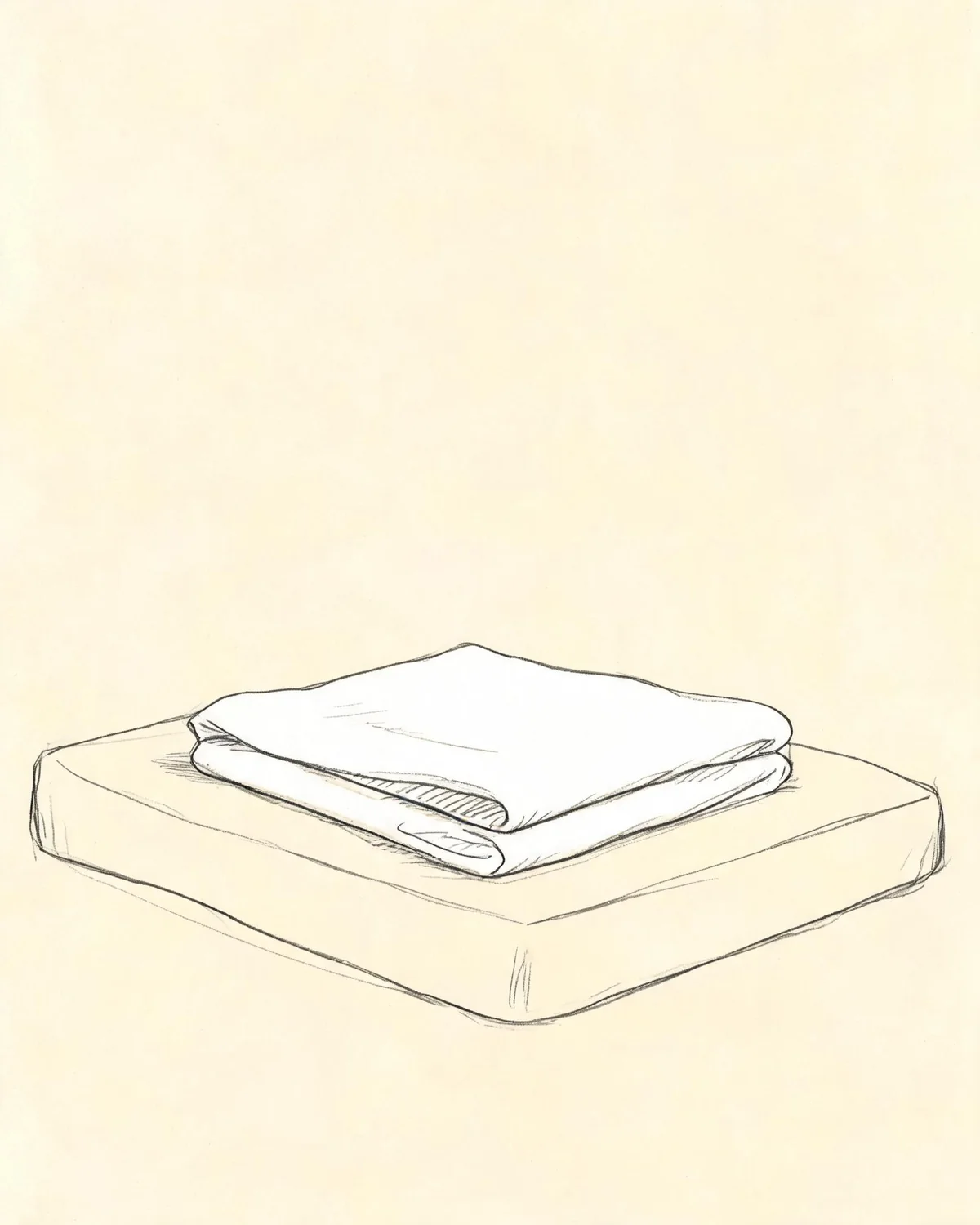
You open a door you use every day and the spare bed is wrong. A sheet, a coat, a stillness that is not sleep. You did not cause it. You are not sure you are allowed to look. Sometimes the face is a stranger's. Sometimes it is your sister's, and you spoke to her yesterday. A dream about a dead body is usually about an ending that has taken up a physical space: unfinished, heavy, and asking to be acknowledged without being solved.
What It Means When You Dream of a Dead Body
A body is an ending you can see. Unlike a rumor of death, it occupies a room. Dreams of death are not a prediction of anyone's death; they are usually read as images of change or endings. The body will not stay abstract. Something has finished, or you fear it has, and the finish is no longer only a mood.
Older readings of contact with the dead treat them as having become earth. To be close to a body was to be held to the ground. For someone far from home, that closeness could be a return. For someone desperate to leave, it could be a detention. The body pins the dream to place.
Another line treats the dead as no longer sharing a house with the living. Coming upon a body makes that separation into furniture: a person, or a chapter, does not live here, and the room has not been cleared. Carrying a body was once read as care for those left behind. The weight is duty, not guilt.
Why This Dream Shows Up Now
Bodies show up when an ending has no ceremony. A job that stopped by email, a friendship that thinned without a fight, a version of your health or your youth you have not said goodbye to: nothing was buried, so the dream supplies a form on a bed and makes you the one who finds it.
They also come when you are responsible for something that can no longer speak. Parents aging, a project whose champion has left, a promise made to a person who changed their mind. The body is the silent charge. You did not make it. You still have to decide what a decent response looks like.
News can do it too. A week of other people's losses, watched at arm's length, sometimes condenses into one still figure in a familiar room. The dream is processing secondhand gravity. It is not appointing you the next name on a list.
How the Meaning Changes
Whose body it is, and whether you can bear to see the face, shifts the work.
The body is a stranger
An unknown body keeps the ending impersonal: a public loss, or a part of life you have never named. Several still figures on a journey have been read as earlier relationships already closed, traveling with you as cargo. Ask what unnamed ending you are hauling.
The person is alive in waking life
Finding someone who is alive when you wake is unsettling, and it is still not news about them. It often means a role they held has ended: the parent who advised you, the friend of the old city, the marriage as it was. You can phone the living person. The dream was about the role.
The body is in your house
A body in a kitchen, a spare room, or a hallway makes the ending domestic. It has crossed into the place you eat and sleep. This is discovery, not a crime you are hiding. A finished thing is still inside the daily round, and closing the door does not unsay it.
You cannot see the face
A covered face, a turned head, a sheet you will not lift, often means the ending is known in outline and refused in detail. You accept that something is over and will not look at what, exactly, is over. The kindness and the avoidance are the same gesture. Lifting the sheet, in the dream or after, is how the ending gets a name.
How Cultures Have Read This Dream
Older Greek dream interpretation treated a struggle with a corpse as a quarrel with an heir, or with whatever was left unfinished between you, so the figure is a claim: memory, ground, a duty that still has your name on it. Closeness to the dead was read along the same line as being held to the earth, a return if you are far from home, or a detention if you are desperate to leave.
Some funeral customs then waited before treating the dead as fully gone, and only then lifted mourning. A body in a dream can be that interval, visible and still owed something, which is why being wrapped as the dead was read as a life already covered over, and carrying the dead as care for people who cannot care for themselves. Both ask what you are still carrying.
Making Sense of It for Yourself
Before you interpret, check the feeling in your hands. Revulsion, tenderness, bureaucratic calm, and the urge to call someone are different relationships to the same figure. Note whether you were alone. A crowd makes it public. An empty house makes it yours.
Then separate the dream-person from the waking one, if they share a face. If that person is alive, the work is a role or a fear, and an ordinary message may settle more than another night with the image. If the body was no one, name the ending sitting in your rooms without a rite. A true sentence is often what the figure was requesting.
Religious and cultural readings
Islamic and Christian dream interpretation read this image through a closely related one.
FAQ
What if the dead body was my own?
Seeing your own body from outside usually separates you from a role you still inhabit. You are the one looking, so some part of you has already stepped aside. It is not a bulletin about your health.
What does it mean to find a body in water?
Water keeps the ending in feeling rather than in a room. A figure under the surface can mean a loss not yet brought to dry ground. Ask whether you could reach it or only watch it pass.
Why does the same figure keep returning?
A figure that keeps returning usually means the ending still has no rite. The place and the feeling stay more stable than the face. One true sentence in daylight is what the repetition is asking for.
What should I do in the morning?
A warning taken from the dream does not belong in a phone call the next morning. If a living person shares the face, ordinary contact is enough. If the figure was no one, name the ending that lacks a ceremony.
Why do I feel responsible when I did not harm them?
The responsibility you feel when you did not harm anyone is often care, not blame. Carrying the dead has been linked to looking after people who depend on you. If you woke guilty, check whether that guilt fits a postponed duty.