A False Awakening: You Got Up, and the Bed Continued
You reach for the alarm, sit up, and put your feet on a floor that is almost right. The clock will not settle. Somewhere between the hall and the sink the room gives way, and you have to surface again. People look up a dream within a dream when one exit fails and another has to do the job. A false awakening is the version where getting out of bed is itself the trick.
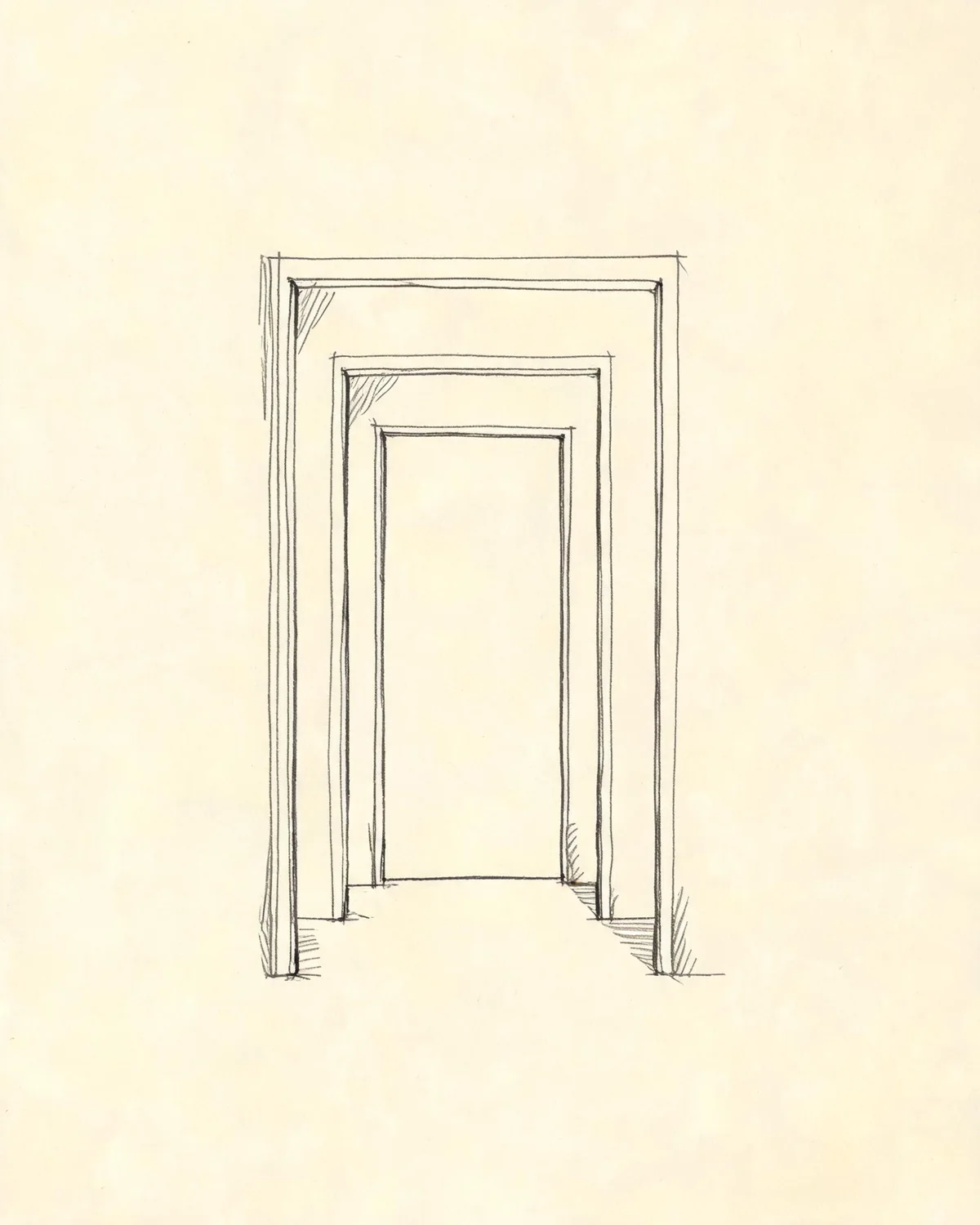
What It Means When You Dream of a Dream Within a Dream
Most nights the dream simply has you, and only afterward does any of it get called unreal. A dream inside a dream breaks that. One layer is marked as already a dream, and another offers itself as the waking that followed. You rinse your mouth in a room one detail off, and the error is not enough to stop you.
An old line of thought treats the inner dream as the part the mind wants stripped of weight. Framing a scene as mere sleep pushes its importance down, and the part that feels like morning carries what the wish would prefer. That reading is easy to overpress. Notice which scene was disowned, and which was crowned. What feels like morning is not therefore the case.
Another tradition worries the frames rather than the wish. If dreams sit inside dreams, the morning you trust may be one more room. Your doubled kitchen is a household version of that shiver. It does not make your life unreal. For a little while, the usual test for morning failed.
Why This Dream Shows Up Now
It often follows a stretch in which the day already has too many drafts. You tell one version at work and another at home. Sleep continues the editing. Answering an alarm inside the dream, or washing and then having to wash again, fits a mind practicing exits that do not hold.
It can also come when something you wish had not happened is pressing for room. The inner dream holds the unwanted scene, and the waking inside the dream offers a morning in which that scene was never solid. You get the relief before the actual morning, which then feels like a further letdown. Comfort and honesty have been lined up in an order that cannot last past breakfast.
Some people meet the loop while trying to notice they are asleep. The effort can tip into a morning that is only another set, an early yes to the question of whether you are out. If the loops leave you afraid of bed, or the days are fraying, describe them to a qualified professional. A page can name the frames. It cannot mend a night.
How the Meaning Changes
The trick depends on whether you get up, whether the dream confesses, and whether you know and remain.
You get out of bed and the bed continues
This is the false awakening in plain clothes. You perform the morning: lamp, floor, hallway, perhaps the kettle. A later surfacing cancels the performance. People remember that first morning as if the errands had happened, because the body had already started the day. It often sits beside a leaving you do not trust yet: a job, a talk, a decision that you are fine.
The dream calls itself a dream
Someone says it, or you do. Respect the mark without turning it into a verdict. Ask what was so urgent to quarantine: a quarrel, a desire, a memory you have been calling closed. The unmarked stretch is the version you may be preferring, which is not the same as what the day will confirm.
Waking stacked on waking
You come up, feel the relief, decide the scare was sleep, and then the relief is canceled too. Each room is more ordinary, and therefore more convincing. Hope gets spent. It fits seasons of almost-resolution: news you recheck, a bond that ends and resumes, a plan that holds only until the next message.
You know, and you stay
Recognition holds. You understand you are dreaming, and the room does not turn to cardboard. This is kin to the nested dream and not the same as the false exit. Knowing does not make the scene weightless. Ask what you did with the knowledge: looked at your hands, tried a door, or stayed. Staying curious is a different skill from climbing out.
How Cultures Have Read This Dream
One long argument treats the nested dream as a clue to desire. The inner scene is the one to be robbed of importance, and calling it a dream confesses that it mattered. A charged memory is not an event the day must repeat, and a wish is not a report. When a dream bothers to demote one of its scenes, it has indicated that scene on purpose.
Other stories, of people who wake into further lives and cannot find the last waking, care about the frame. The fear is that you trusted an ending one room too early. Your kitchen is that worry brought indoors.
A further strand cares about recognition while the images continue. Not knowing is the ordinary case: you are simply convinced this is morning. Lucidity, the nested dream, and the false morning interrupt that conviction in different ways, and they should not be folded into one.
Making Sense of It for Yourself
Before you interpret, put the layers in order: the inner scene, what you did when you seemed to get up, and what felt different about the waking that stayed. A few lines, written before the day edits them, keep the false morning apart from the scene it tried to cancel.
Then ask one question of the disowned scene. Was it a fear you want retired, a wish you will not own, or a memory that still has a pulse? You need not accept the filing. The preferred morning is the story you are trying to live. Mistaking it for confirmation is what the next surfacing interrupts.
If these nights are rare, curiosity is enough. If they are frequent or leaving you ragged by day, describe the pattern to a qualified professional.
FAQ
What does a dream within a dream mean?
One layer is framed as sleep and another offers itself as the morning after. Look at which scene was set aside and which was crowned. The crowning is a preference, not a report you must live.
What is a false awakening?
In a false awakening you believe the night is over and start the day. A further return to the pillow shows those first minutes were still sleep. Unlike ordinary recall, your body had already begun the morning. The plot is an exit that did not take.
Can you get stuck in a dream within a dream?
You can get stuck in a dream within a dream, and the loop can feel sealed because each exit fails. A morning does arrive that stays. What lingers is distrust of the first relief, not a room you live in for good. If the loops are eating your rest, tell a qualified professional. The nesting itself is not a locked trap.
How do I tell if I am really awake?
Ordinary detail is a weak test, since a dream can imitate a room. Change one small thing and see if it holds, or see whether another person answers in a way you did not invent. Until the day has gone on, treat the first surfacing as untrusted. That caution is practical, not a medical examination.
Should I worry about my sleep if this keeps happening?
An occasional loop is a strange kink in how mornings get simulated. If the nights scare you or the days are paying for broken rest, describe the pattern to a qualified professional.