Cat in Christian Dream Interpretation
A cat pads along the windowsill at midnight, eyes catching the lamplight, and you cannot tell whether it is guarding the house or casing it. Christian dream interpretation keeps that uncertainty in view: it reads the cat through the moral pictures the faith built around stealth, rest, vigilance and appetite, and asks which of those your dream is showing. What follows covers the main readings, the scenes that shift them, the black-cat question and the worry that cats are evil.
On this page
- Key takeaways
- What a Cat Means in Christian Dream Interpretation
- How Christian Dream Interpretation Reads Dreams
- Core Principles
- How the meaning changes
- Common Symbols Paired with Cat
- How This Tradition Differs from Others
- What Does a Black Cat Mean in a Dream Biblically
- Are Cats Evil in Christian Dream Interpretation
- Do Cats Appear Anywhere in Scripture
- What it is not
- FAQ
- How to Use These Readings Today
- Related symbols
Key Takeaways
- Domestic cats are nearly absent from biblical imagery, so Christian readings borrow from big-cat passages, night imagery and medieval symbolism.
- The cat usually acts out a moral quality: stealth, sloth or appetite on one side; vigilance, patience and freedom on the other.
- A cat moving in darkness draws on the old picture of the thief who works unseen, sometimes from inside a trusted circle.
- Medieval Europe linked cats with Satan and witches, but a Christian reading weighs a dream by discernment rather than fear.
- Your own memories of cats, including a beloved pet, carry real weight.
- The useful question is which quality the cat displayed and where that quality lives in you.
What a Cat Means in Christian Dream Interpretation
The strongest Christian reading comes from the way a cat moves. Biblical imagery pictures the thief as someone who works by stealth and prefers the dark, who shows one face by day and another at night, and who may even sit among the closest companions, trusted with the common purse. A cat slipping silently through your dream can borrow that picture and point to something taken quietly: time, trust, attention or money.
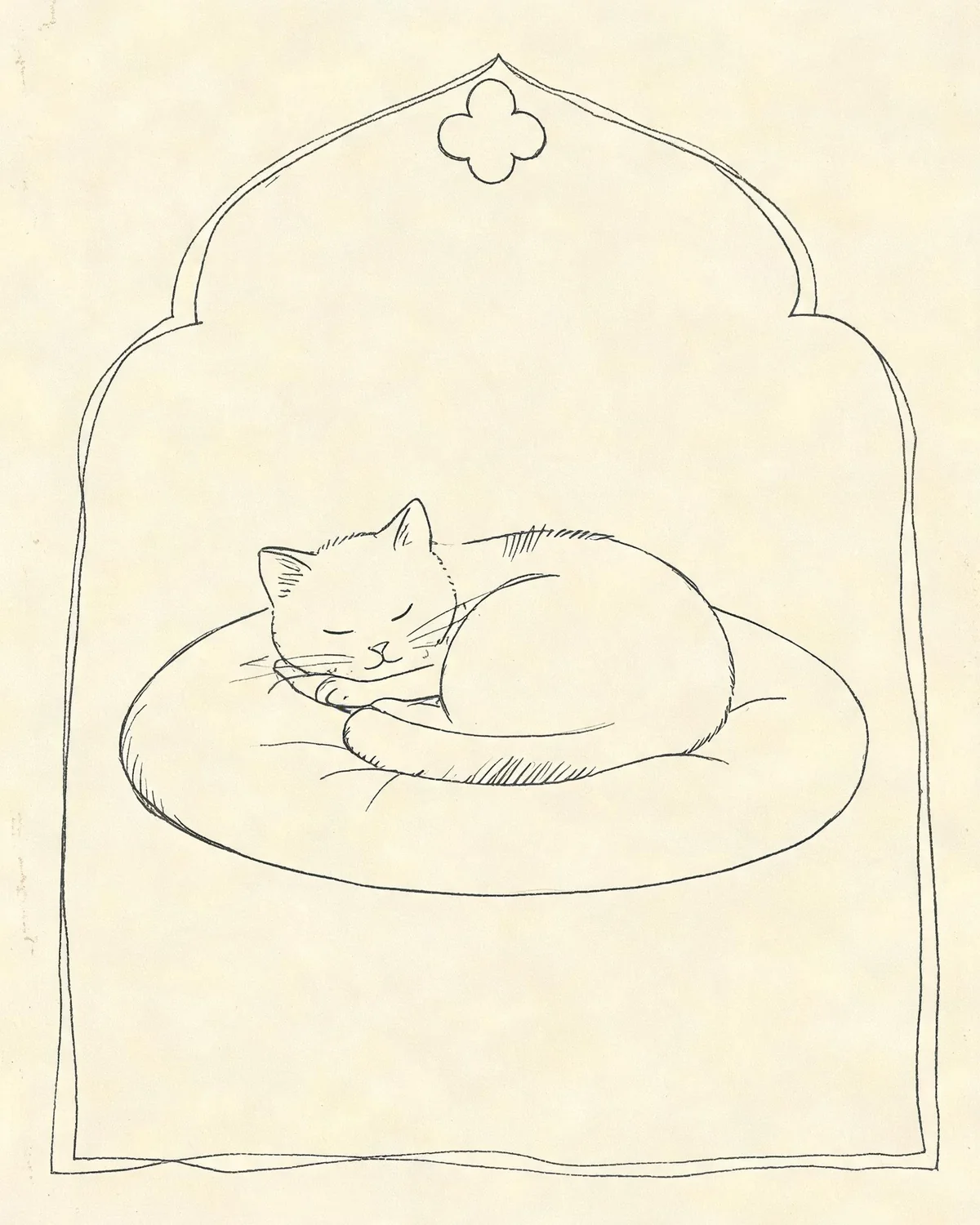
A second reading turns on appetite. Medieval Christian symbolism attached the cat to lust and laziness, partly because of its long hours of sleep and its loud nights. The biblical sluggard, who turns on his bed like a door on its hinges, sits close to a cat stretched across the covers at noon. A dream cat that sleeps through everything can raise a quiet question about work you are avoiding.
The tradition does not leave the cat entirely in shadow. European heraldry, shaped by Christian culture, prized the cat as an emblem of liberty because it is hard to catch or confine, and admired its tireless patience in pursuit as the virtue of a good soldier. A cat keeping watch by a door or waiting motionless for its moment can stand for alertness and steadiness rather than threat.
Finally, Christian readers often treat the cat as part of the self. Interpreters in this tradition hold that dream images carry no stereotyped meanings and that the psyche can use anything to mean anything. The cat may picture your own independence, your own hunger for comfort or your own talent for slipping away from a hard conversation.
How Christian Dream Interpretation Reads Dreams
Christian dream reading grew from stories in which God speaks at night, yet the same tradition notes that ordinary dreams and nightmares play little part in those stories. Most cat dreams are ordinary in that sense. A first, honest question is whether the cat is simply your own pet or the neighbor's tom replaying yesterday, because many dreams mainly rework recent events with one small twist worth noticing.
When a dream feels charged, the tradition's characteristic tool is discernment. Early Christian writers credited good dreams to God and angels and troubling ones to darker influences, and many believed sleep left people open to both. For a cat dream, discernment means asking where the image leads: toward fear, suspicion and accusation, or toward honesty, repentance and care. The direction of the dream matters more than the animal's reputation.
Christian interpreters also ask about the person: age, work, current struggles and the feelings attached to each figure. A cat means one thing to someone who grew up with a beloved tabby and another to someone frightened by strays as a child. Reading several dreams over a few weeks often clarifies what a single one cannot, and a cat that returns night after night deserves more attention than one that passes through once.
Core Principles
Name the quality before the meaning. A dream cat usually acts out one recognizable trait: stealth, idleness, appetite, patience, independence or alertness. Christian moral imagery has long sorted such traits into vices and virtues, so naming the trait first keeps the reading grounded in conduct rather than in omens.
Notice whether it moves in light or dark. In biblical imagery, darkness is where the thief hopes to avoid exposure, and daylight is where work is done in the open. A cat sunning itself on a step and a cat creeping through an unlit hallway are read very differently, even when the animal looks the same.
Reputation is not a verdict. The cat's sinister image owes much to medieval folklore, which linked it with the devil, darkness and witches. A Christian reading can acknowledge that history while refusing to let it decide the dream, since discernment weighs where an image leads rather than what superstition says about it.
Look inward before outward. Christian writers have long observed that the real wildness lies in the human heart rather than in animals. Before deciding the cat is someone else, ask whether it pictures a habit of your own. A cat that steals may be your own impatience; a cat that sleeps may be your own fatigue.
What the Cat's Behavior Changes
Christian readings lean on what the cat is doing and when it does it. These scenes cover the most common versions.
A cat watching you in the dark
Two lit eyes in a dark room are among the most unsettling cat images. Medieval symbolism called the cat's shifting eyes deceptive and took its night hunting as kinship with darkness. In a personal dream, the watcher can point to something unexamined that has been observing you, such as a resentment, a secret or a temptation you have not named. Turning on a light within the dream is worth remembering.
A cat asleep on your bed
A cat sprawled across your pillow in the middle of the day brings the sluggard to mind: the figure who cannot leave the bed and keeps finding excuses to stay. The reading here is gentle rather than scolding. It may point to rest you genuinely need, or to a task you keep postponing while telling yourself the timing is wrong.
A cat that scratches or attacks you
A sudden attack turns the cat's hidden claws into open hostility. Biblical predator imagery frames such moments as exposure: what was crouched and waiting is now in plain view. Ask what conflict in your life has moved from subtle to direct, and whether the scratch landed on the hands you work with or on the face you show to others.
A cat stalking a bird or a mouse
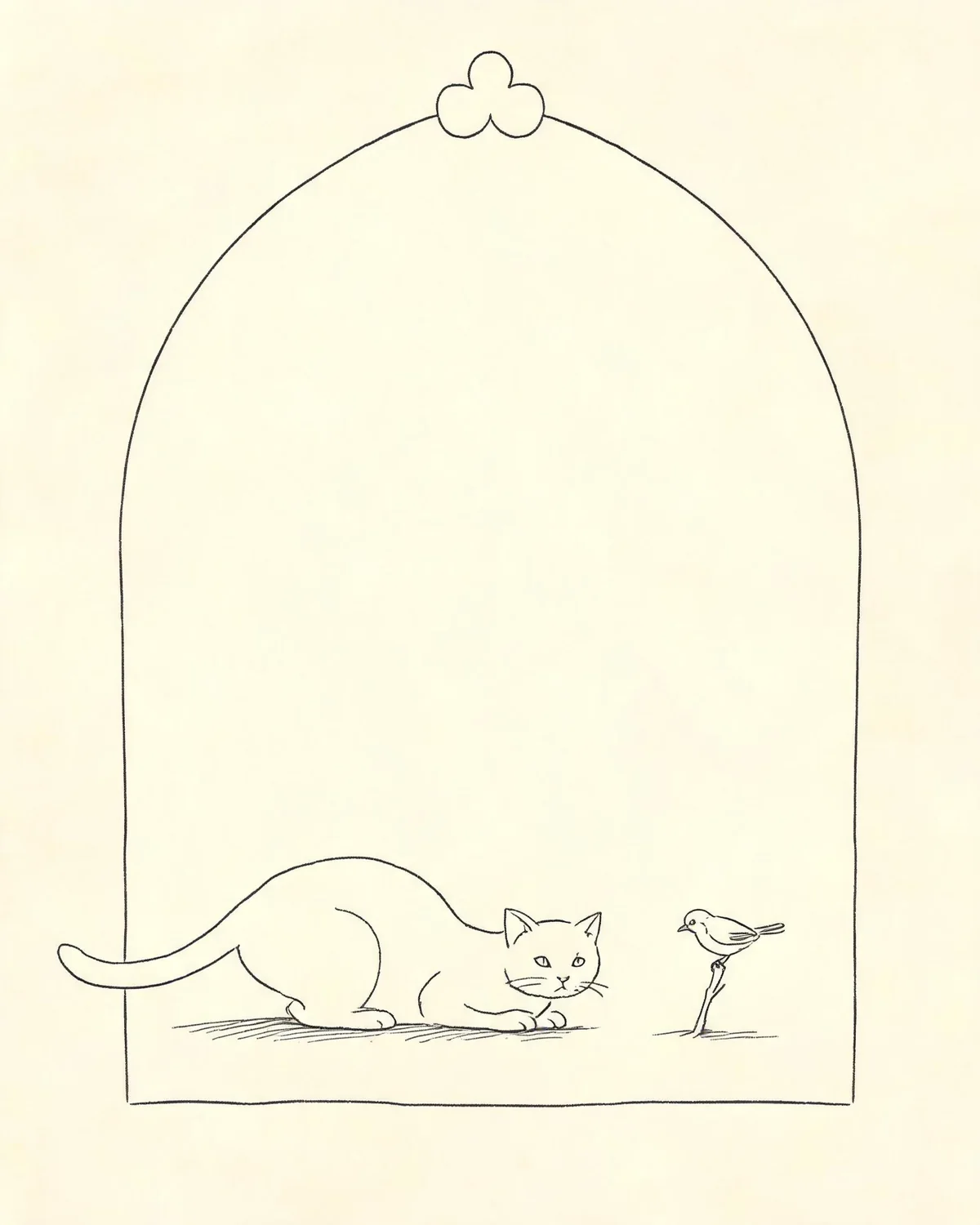
A cat crouched low before a bird or mouse shows patience serving appetite. Heraldry admired that tireless pursuit as a soldier's virtue, while moralists saw cunning in it. Your sympathy in the dream decides between them: if you identified with the cat, the image may concern a goal you are pursuing; if with the prey, a pressure closing in.
A cat stealing from the kitchen
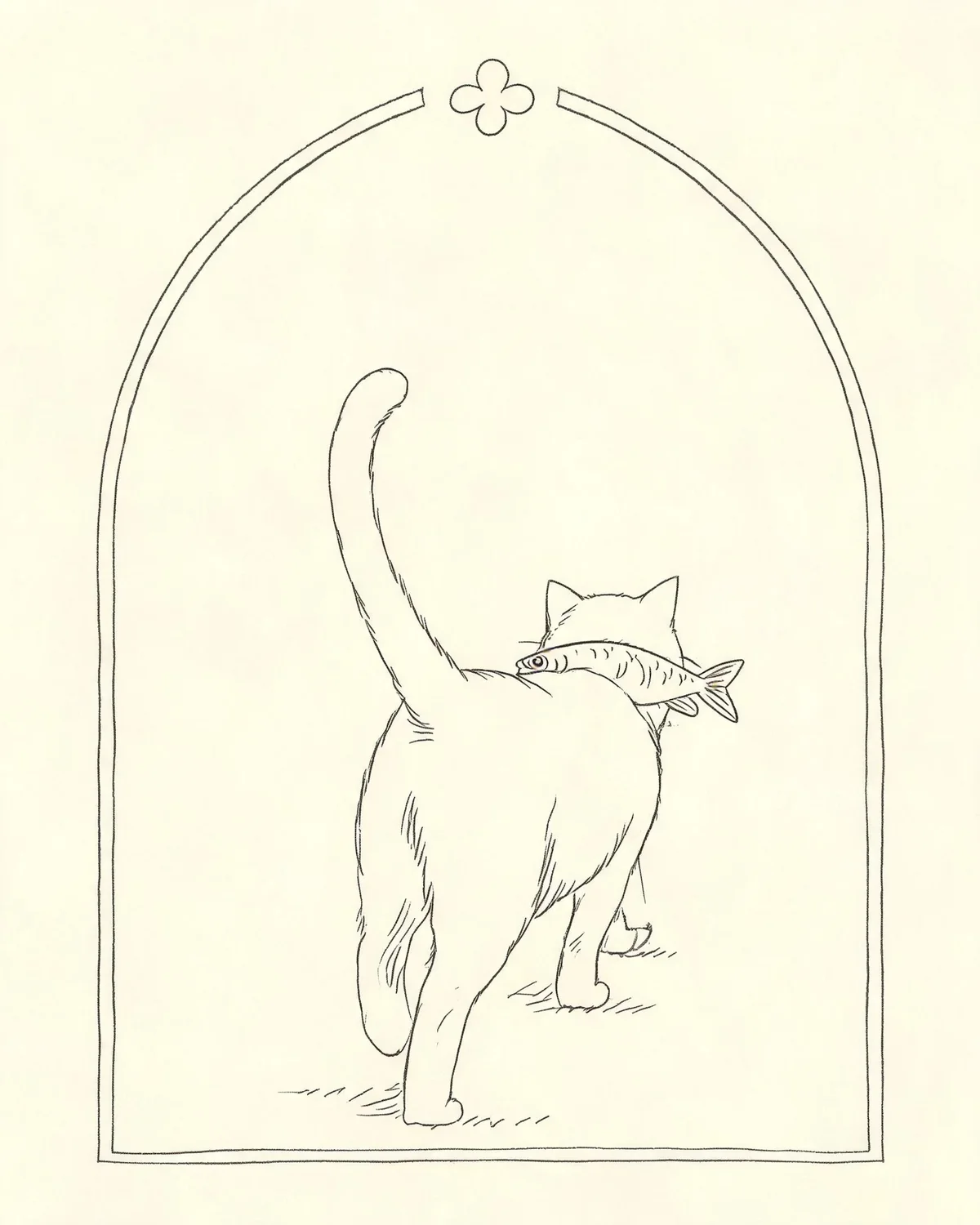
A cat carrying off meat or fish from the counter echoes the thief who helps himself from a shared store while appearing trustworthy. The dream can point to a small, repeated loss within a household, team or congregation, or to your own habit of taking a little extra when no one is watching. The object stolen narrows the meaning.
A stray cat you feed or rescue
Feeding a thin stray at the door draws on a gentler strand of Christian imagery: mercy toward the vulnerable, and the small creature valued as more than property. The cat may stand for a neglected person, or for a neglected part of yourself that needs patience before it trusts you. If the stray hissed at your kindness, the dream is honest about how hard care can be.
A cat inside a church
A cat padding down the aisle or curled near the altar places a creature long tied to vice beside the sacred. Older religious art sometimes set cats at the feet of Christ as emblems of sin. Some readers take the scene as a reminder that ordinary weakness comes along into prayer, and that it can be faced there rather than hidden.
Common Symbols Paired with Cat
Cat and mouse. The phrase cat-and-mouse fits several biblical stories of stealthy pursuit, such as a jealous king hunting a younger rival from one hiding place to the next. In a dream, the pair can picture a relationship in which one person keeps testing and the other keeps evading. Ask which role you are playing, and how long the chase has lasted.
Cat and lion. The lion dominates biblical animal imagery, standing for royal strength, for danger and even for the devil prowling after prey. Placed beside a house cat, it can contrast a manageable temptation with a large one, or a tame trouble with a wild one. The size of a dream cat often tracks how much power the issue holds over you.
Cat and snake. Some older religious symbolism paired the cat with the serpent as an emblem of sin and of misusing the good things of this world. Ancient Egyptian art did the opposite and showed a cat beheading a serpent of darkness. A dream with both can be read either way: two temptations working together, or one force confronting another.
Cat and night. Night in biblical imagery is both the time for rest and the time when thieves move. A cat active after dark draws the two meanings together: the rest you may be neglecting and the things that slip in when attention lapses. A cat that curls up to sleep at nightfall softens the image toward peace.
How This Tradition Differs from Others
Ancient Egypt treated the cat as sacred, honored it in the goddess Bastet and mummified cats in large numbers. Islamic interpreters read the cat largely as a member of the household, a person or a share whose conduct matters more than its mystery. Many modern psychological readings link the cat with intuition, femininity and the night side of the psyche, and some East Asian traditions cast it as a shape-shifter. Each frame records something real about how people have lived beside cats.
Christian dream interpretation stands apart in two ways. Because the domestic cat barely appears in its scriptures, its cat symbolism developed later, through medieval art and European folklore, which explains why the Christian cat can look unusually dark. The tradition also frames dream images morally: the cat is less a code for an event than a picture of a vice or a virtue in motion.
Christians today often stand between those strands, recognizing the folklore while preferring discernment. The cat is now above all a beloved household pet, which is one reason the medieval reading feels distant to many believers. Other traditions ask different questions of the same animal, and none of them needs to be wrong for the Christian reading to be useful.
What Does a Black Cat Mean in a Dream Biblically?
There is no black cat in biblical imagery, so the question really concerns what Christian Europe later made of the animal. Medieval belief credited black cats with magical powers and cast them as the mounts witches rode to their gatherings, and the superstition that a black cat brings bad luck grew from that soil. Older symbolic traditions had already tied the black cat to darkness and death.
Christian dream reading can take that history seriously without adopting it. Blackness in biblical imagery belongs mainly to night and darkness, the condition in which things stay hidden and the thief hopes to go unseen. A black cat in your dream may therefore point to something kept out of view, whether a fear, a secret or a habit you prefer not to examine.
The cat's manner refines the reading. A friendly black cat that rubs against your legs often reflects curiosity about something unknown rather than menace. A black cat that attacks or blocks your path puts the hidden matter squarely in front of you. Either way, what helps is light: naming the matter plainly, in prayer or in conversation.
Are Cats Evil in Christian Dream Interpretation?
The worry is understandable. Medieval Christian symbolism associated the cat with Satan, darkness, lust and laziness, and European folklore made it the familiar of witches. Some deliverance-minded teaching still treats a cat in a dream as a spiritual attack and offers prayers against it. Those readings exist, and they shape how many people feel when a cat appears at night.
The broader Christian tradition, however, does not treat animals as evil in themselves. Creatures belong to the created order, and the more searching biblical imagery places real wildness within the human heart. Some writers on symbolism have also suggested that the cat's bad name often travelled with suspicion toward women, which is a reason for caution before accepting the reputation at face value.
Discernment offers a steadier test than reputation. Ask whether the dream moves you toward fear and accusation of others, or toward honesty about yourself and care for the people around you. A cat dream that leaves you suspicious of a particular neighbor deserves extra caution; one that shows you a habit you can change is doing useful work.
Do Cats Appear Anywhere in Scripture?
Domestic cats are strikingly absent from the major images of the scriptures Christians read. Lists of clean and unclean animals, shepherding scenes and wilderness creatures fill many pages, but the house cat has no recognizable role. One likely reason is that keeping animals as pets is almost absent from ancient literature, where animals mattered as workers, food or dangers.
Big cats are another matter. The lion appears constantly, as a picture of royal strength, of danger and of the predator that waits in hiding. The leopard appears as a solitary watcher that surveys its territory from high places and lies in wait near towns. When Christians look for a biblical frame for a cat dream, they usually borrow from these wilder relatives.
That gap explains why Christian cat symbolism is a later layer. Medieval art and folk belief filled the space with stealth, vice and witchcraft, while heraldry added liberty and vigilance. Knowing that the house cat itself carries no scriptural verdict leaves you freer to read your dream through its actual scene.
What This Dream Is Not
A cat dream is not evidence that someone is practicing witchcraft against you, and it is not a reason to fear, avoid or give away a real cat. It is not a sign of condemnation either; even when a cat seems to picture a vice, Christian reading treats that recognition as an invitation to change. And it is not a message about a specific person's guilt: a stealthy cat can show where you feel uneasy, but it cannot tell you who took what.
If the dream stays with you, treat it as material for discernment and prayer. Let anything practical, such as a conversation or a clearer boundary, rest on what you can actually see while awake. If fear lingers, talking it through with a pastor or a trusted friend often helps more than searching for darker meanings.
FAQ
What does dreaming about cats mean biblically?
Because house cats barely feature in biblical imagery, Christian readers interpret them through related pictures: the thief in the night, the sluggard on his bed and the patient watcher. The cat's behavior shows which of these your dream is drawing on.
Is a cat dream good or bad for a Christian?
Neither by default. A cat keeping calm watch or accepting care leans toward vigilance and mercy, while a creeping or stealing cat leans toward something hidden. Discernment looks at where the dream leaves you: more fearful, or more honest.
What does a white cat mean biblically?
White in biblical imagery stands opposite darkness and is tied to purity and things brought into the open. A white cat can soften the usual stealth reading, suggesting gentleness or a matter becoming clear. Its behavior still matters more than its coat.
What do kittens mean in a dream biblically?
Kittens carry little of the medieval suspicion attached to grown cats. Some readers take them as small beginnings, fragile responsibilities or a playful side that needs protecting. How you treated the kittens in the dream usually says more than the kittens themselves.
What does a dead cat mean in a dream biblically?
There is no biblical reading for a dead cat, so the scene is read through what the cat meant to you. It may mark the end of a stealthy habit or a draining influence. After losing a pet, the dream may simply be grief.
What does an orange or grey cat mean in a Christian dream?
Christian symbolism assigns no fixed meaning to ginger, orange or grey cats. Read the scene instead: where the cat was, what it did and how you felt about it. A familiar color may simply recall a cat you once knew.
Can a cat in a dream represent a person?
Yes. Christian interpreters ask what you associate with each figure, and a cat often borrows the traits of someone you know: independent, aloof, charming or quietly opportunistic. It can just as easily stand for a side of yourself.
What does it mean to dream of many cats?
A house full of cats multiplies the cat's qualities: many small comforts, many small distractions or many quiet leaks of time and money. Notice whether the crowd felt cozy or overwhelming, because that feeling usually decides the reading.
Should I pray about a cat dream that scared me?
Many Christians bring unsettling dreams to prayer, asking for discernment rather than dwelling on fear. You can name what frightened you, ask for clarity and then leave the image alone. Peace afterwards is a better guide than the intensity of the dream.
How to Use These Readings Today
Start by naming the cat's quality in one word: stealthy, idle, hungry, watchful, aloof, patient or wounded. Write it at the top of a page with the dream's setting beside it. That pairing usually tells you which reading applies and keeps the image from sliding into superstition.
Next, turn the word inward, then outward. Ask where that quality shows up in your own habits this week, and only afterwards whether it describes someone around you. If the cat was stealthy, look for what has been slipping away unnoticed; if it was idle, look for the task you have been sleeping on.
Finally, choose one small act that answers the dream. Do the postponed job before noon, check an account you have not reviewed, or offer the patient attention a wary person needs. Bring the rest into prayer or a quiet journal entry, and let the dream go once it has done its work.