Falling in Christian Dream Interpretation
Your foot reaches for a step that is not there in the dark, the stomach drops, and you wake with your heart racing and your hands gripping the sheet. Christian reading meets that moment with one of its oldest pairings, falling and rising, and asks three things of the dream: what you were standing on, what gave way, and whether anything caught you on the way down.
On this page
- Key takeaways
- What Falling Means in Christian Dream Interpretation
- How Christian Dream Interpretation Reads Dreams
- Core Principles
- How the meaning changes
- Common Symbols Paired with Falling
- How This Tradition Differs from Others
- What Does a Falling Tree Mean in a Dream Biblically
- Why Do You Keep Having Falling Dreams
- Is a Falling Dream a Warning From God
- What it is not
- FAQ
- How to Use These Readings Today
- Related symbols

Key Takeaways
- Christian imagery uses falling for spiritual danger, moral failure and the collapse of what was badly built, and it sets rising again beside it.
- The foundation often matters more than the height: sand or rock, a slippery path or firm ground.
- In stories of kings and leaders, pride is the classic cause of a fall, so dream height invites a humility question.
- Some falls are not loss at all; falling to your knees is the posture of worship.
- Being caught, lifted from a pit or set back on your feet is the tradition's favorite picture of rescue.
- Early church teachers sorted dreams by source first, starting with a full or empty stomach.
What Falling Means in Christian Dream Interpretation
Scripture uses falling first as a picture of danger. Walls collapse, a tent is knocked flat in a soldier's dream, and the sense of a fall shades into ruin. When Christian readers meet a falling dream, the first association is that something in your life has become unsafe to stand on, whether a habit, a plan or a relationship you have been leaning on hard.
The second association is foundations. The best-known teaching image of a fall is a house built on sand that crashes in a storm, set beside a house on rock that stands. A related saying pictures two blind people, one leading the other, both tumbling into a pit. In both images the fall exposes what was already true: weak footing, or trust placed in the wrong guide.
Third comes pride. The long run of biblical leaders who fall, kings, prophets and powerful men, mostly illustrates the proverb that pride goes before destruction. A related psalm pictures the arrogant standing in slippery places. A dream fall from height therefore asks a humility question, though it asks rather than accuses.
Finally, the tradition refuses to stop at the bottom. A proverb pictures an upright person falling seven times and rising each time, and the whole biblical story has been described as U-shaped: innocence, a fall into tragedy, and a rise toward restoration. Read in that frame, your dream may simply be showing you the middle of a story.
How Christian Dream Interpretation Reads Dreams
Christian teachers have long been cautious and practical about where dreams come from. One early church teacher listed six ways a dream reaches the soul: a full stomach, an empty stomach, illusion, your own thoughts mixed with illusion, revelation, and your own thoughts mixed with revelation.
An older threefold version names God, the devil and the soul itself. Falling dreams, which so often follow a late meal, a tense week or simple exhaustion, usually belong in the first, plainer categories. The point was never to dismiss dreams, only to avoid mistaking a heavy supper for revelation.
When a fall seems to carry more than that, the method is discernment rather than decoding. Later Christian writers on dreams suggest asking which part of you are speaking: the body, a fear, a memory, conscience, or something that feels larger than you. A dream is weighed with reason, prayer and, often, a trusted listener, rather than obeyed on the spot.
The test is its fruit. A reading that leaves you more honest, humble and ready to repair something is worth keeping. One modern Christian guide is blunt that messages urging destruction, including self-destruction, do not come from God. For a falling dream, that rules out readings that leave you only ashamed.
Core Principles
Look at the ground before the drop. Because the central teaching image is a house falling for lack of foundation, the first question is what you were standing on. A rotten floor, a crumbling cliff edge or a ladder propped on nothing tells you more than the speed of the fall. Ask what in waking life feels built on sand.
Height raises the humility question, and humility ends in restoration. The biblical falls of proud leaders are real warnings, but the most detailed of them, a king brought low after a dream of his own downfall, ends with his sanity and standing returned once he acknowledges his limits. Humbling, in this tradition, is a road back, and humiliation is not its goal.
A fall is half a picture. Christian reading looks for the second half: hands that catch, arms underneath, a rope out of the pit, or simply you getting up. If the dream ends mid-air, the rise has not yet been shown, which is different from its being impossible.
Falling toward God differs from falling away. Kneeling, bowing and lying face down are acts of worship, and some falls in a dream carry that shape: a letting go, a surrender of control. Notice the posture of the fall as well as the drop.
What Changes the Reading of Falling
The details below shift the image's emphasis, so start with the one closest to the scene you remember.
Falling from a great height
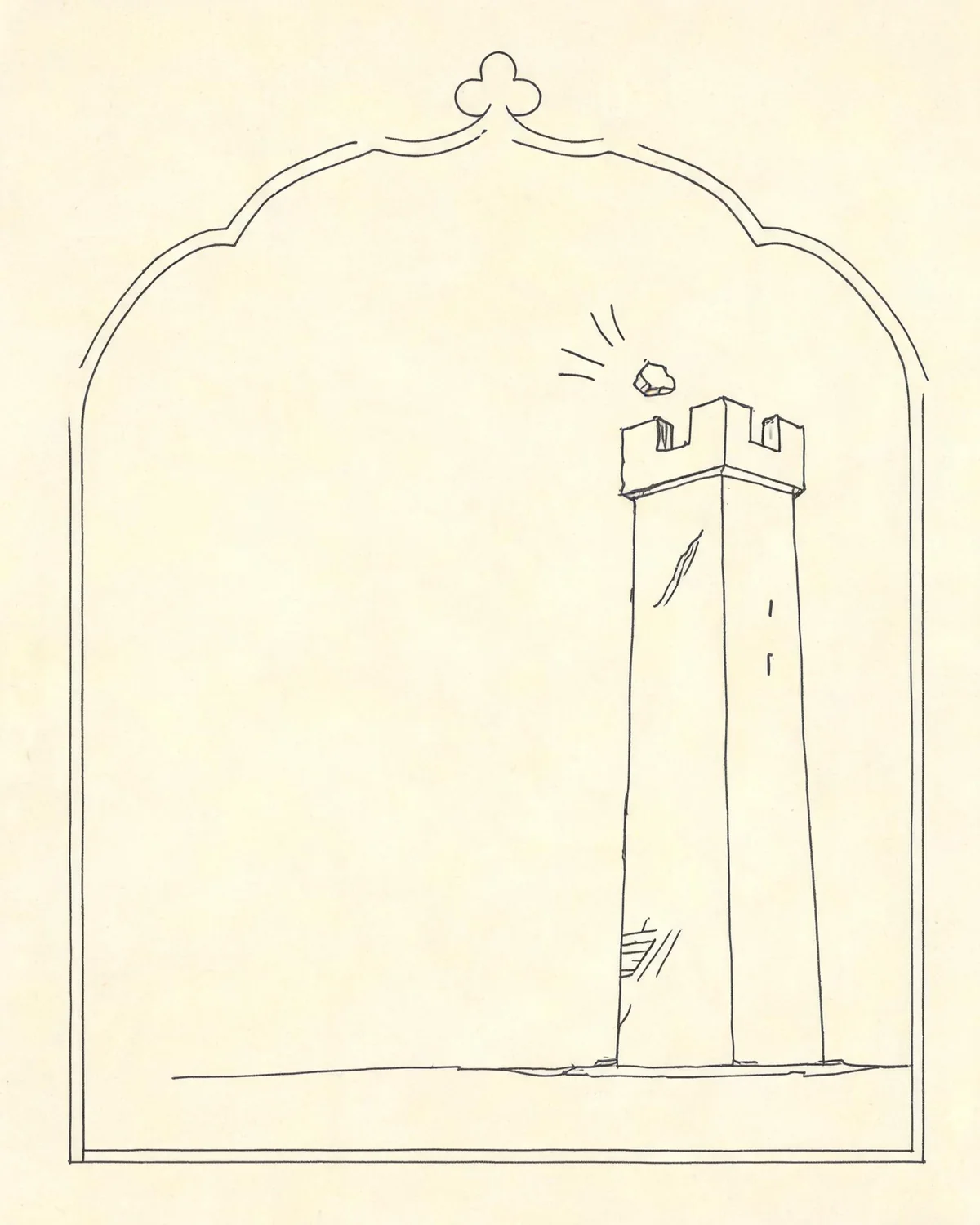
A plunge from a tower, rooftop or high ledge points toward position and pride. It often arrives after a promotion, public praise or a role that feels larger than your experience. The tradition's stories of fallen leaders make this a gentle humility check: what lifted you there, and are you carrying the height honestly, or pretending to a steadiness you do not feel?
The floor or building giving way
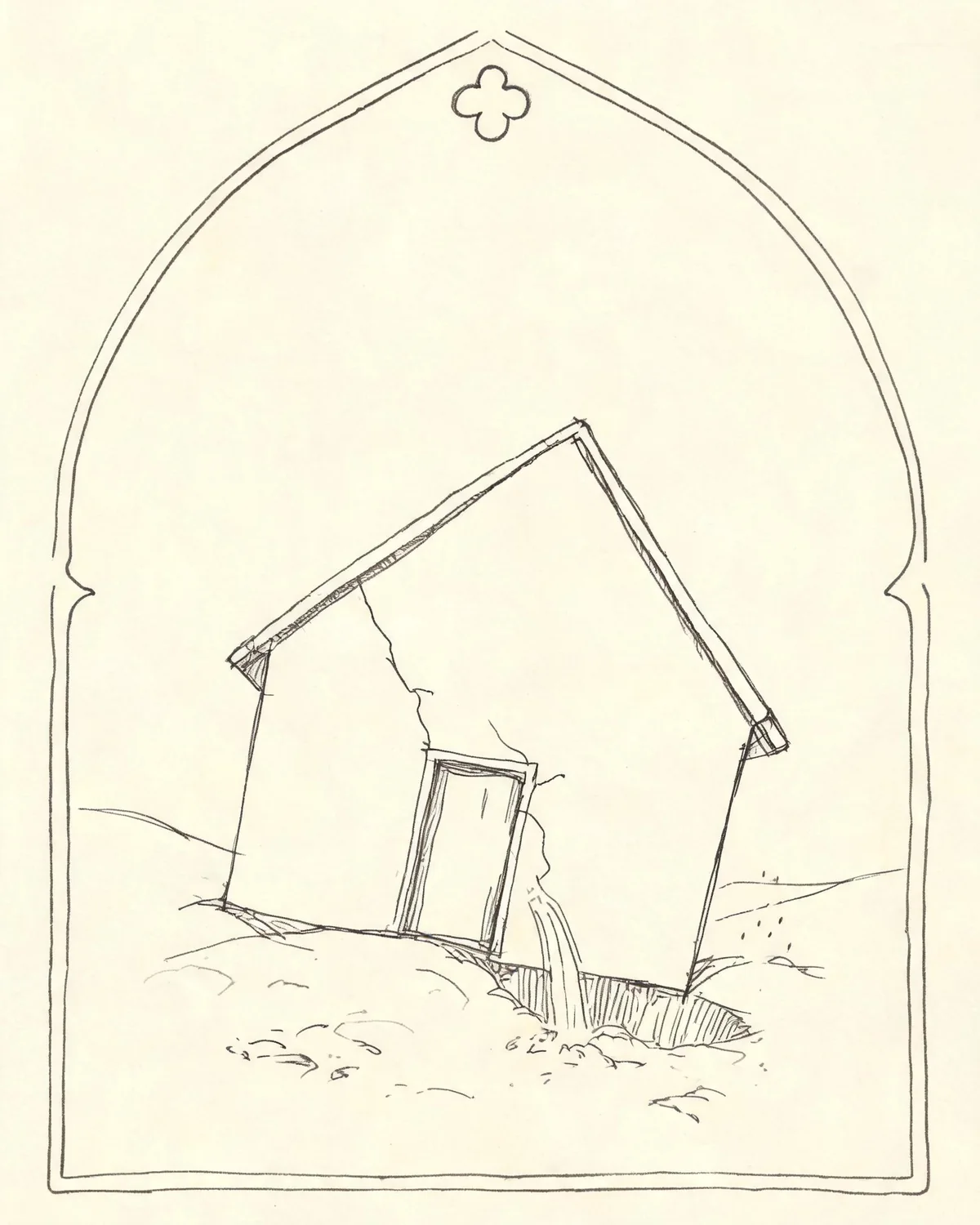
When the structure fails rather than your balance, the reading moves to foundations. This is the house on sand in dream form: a commitment, a finance plan or a belief that looked solid until weight came on it. Notice which room collapsed. A kitchen, a bedroom and an office point to provision, intimacy and work respectively.
Falling into a pit, ditch or mud
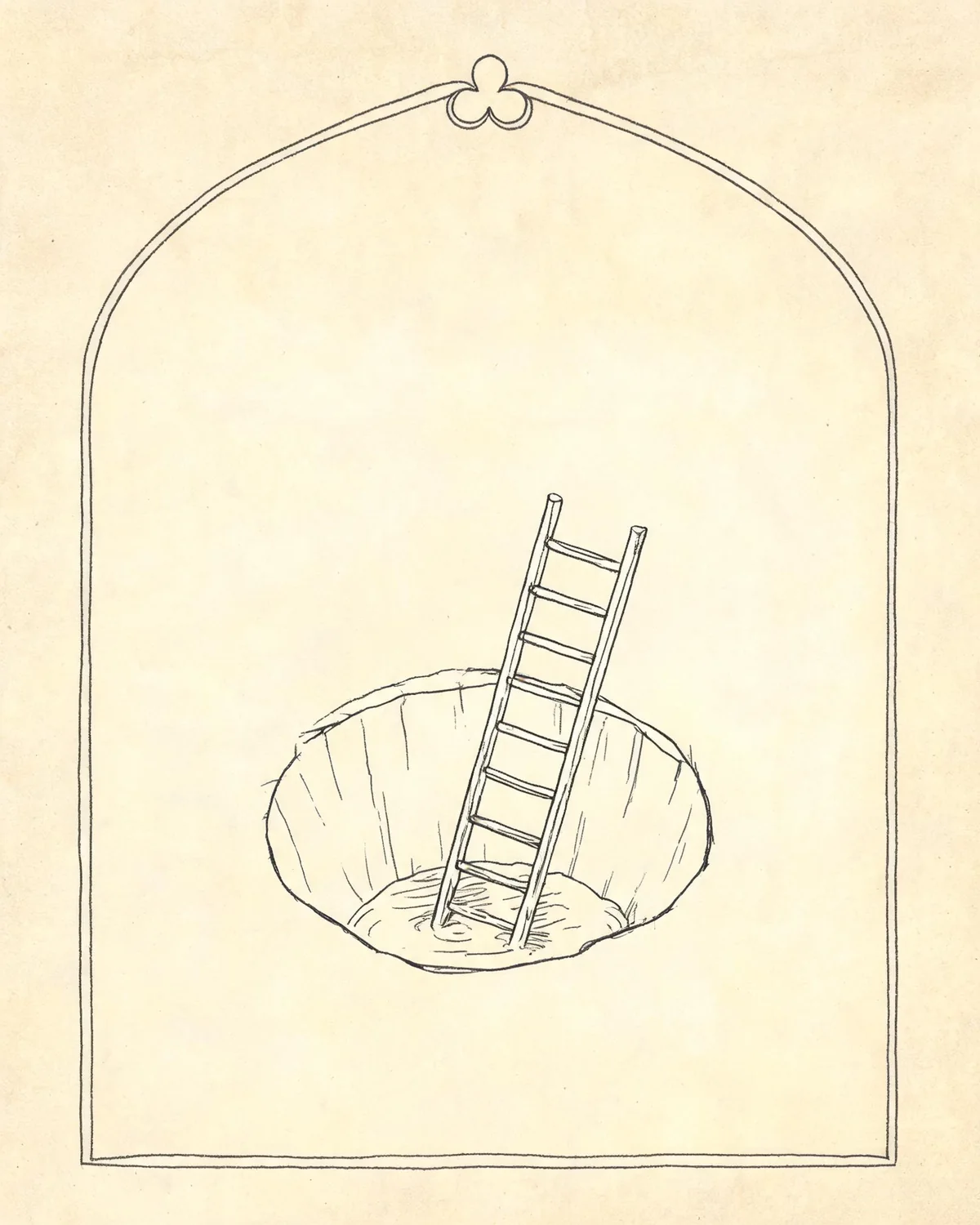
A pit carries double meaning in scripture. It is where the helpless cry out unheard, and it is also the place from which God pulls people out of the miry clay. Falling into one, especially into sludge or a gutter, can picture shame or being stuck. Look for a voice, a hand or a ladder, because rescue is the pit's other half.
Slipping on a smooth or icy path
Slipping is quieter than plunging. Psalms picture the proud set on slippery ground, and also a God who keeps your foot from slipping on a hard journey. A dream slip may point to a small compromise, a hurried decision or plain fatigue. It asks for slower steps more than for alarm, and for a look at where you have been rushing.
Stumbling over something in your path
A stumbling block was originally a tree stump on a rough road: something you did not see because your eyes were elsewhere. Tripping in a dream over a stone, a step or a root can point to an obstacle you keep overlooking, or to something you have placed in someone else's way. Ask which of the two feels true.
Falling to your knees
Some dream falls end on the knees or face down, and the feeling is less terror than release. In scripture, heavenly figures fall down before the throne in reverence. A fall like this can mark surrender, grief finally let out, or a prayer you have not yet put into words. It is one of the few falls that the tradition reads as movement toward something good.
Being caught before you land
An arm, a net or an unseen hold stops you just above the ground. An old blessing pictures everlasting arms underneath the people of God, and Christian readers often hear that note here. Present-day reading would add that the catcher's identity matters: a parent, a friend, a stranger or no visible one at all each say something about where you expect support.
Common Symbols Paired with Falling
Sand and Rock. The two foundations of the best-known teaching image. A dream where sand shifts under you and then you fall restates the parable almost exactly: the problem is the ground, not your effort. A dream where you fall onto rock, or climb back onto it, points toward the thing in your life that has proved trustworthy, and suggests building there.
Snake. The serpent belongs to the tradition's founding story of a fall from innocence, so the two together turn the dream toward temptation: something attractive that promises height and delivers a drop. A present-day reading would ask what offer, shortcut or relationship has been whispering that the usual limits do not apply to you.
Ladder. Scripture's most famous ladder appears in a dream, with angels going up and down it between earth and heaven. Falling from a ladder therefore reads against a background of two-way traffic: losing your grip on a climb you were not meant to make alone, or a reminder that descent is part of the same path.
Elevator. A modern image with no biblical counterpart, but an apt one. An elevator lifts you without effort, and a falling elevator can picture height you did not climb, a position or confidence borrowed from others. Some readers connect it with the tradition's warnings about pride, others simply with how little control you feel in a fast-moving situation.
How This Tradition Differs from Others
Islamic interpretation reads a fall mainly as a change of condition and catalogues the possibilities: work, marriage, rank, travel, a move abroad. Its interpreters give great weight to the surface you land on, pasture or pit, feast or den. Christian reading cares less about the landing site and more about the moral arc. It asks what the fall reveals, and it places the image inside a larger story that expects a rise.
Depth psychology, which a number of Christian writers on dreams adopted in the last century, reads many dreams as compensation: the psyche correcting a one-sided attitude. Christian authors in this line pointed to the king's dream of a great tree cut down as a classic case, a dream bringing down an inflated self. Applied to your own falling dream, the question becomes what attitude of yours has climbed too high.
Present-day dream research treats falling as one of the most common unpleasant dream themes and links it with anxiety and loss of support. Christian reading has no quarrel with that; the tradition's plainer dream categories already cover it. It adds the expectation that, even for a dream born of anxiety, prayer and honest reflection can turn the image into something usable.
What Does a Falling Tree Mean in a Dream Biblically?
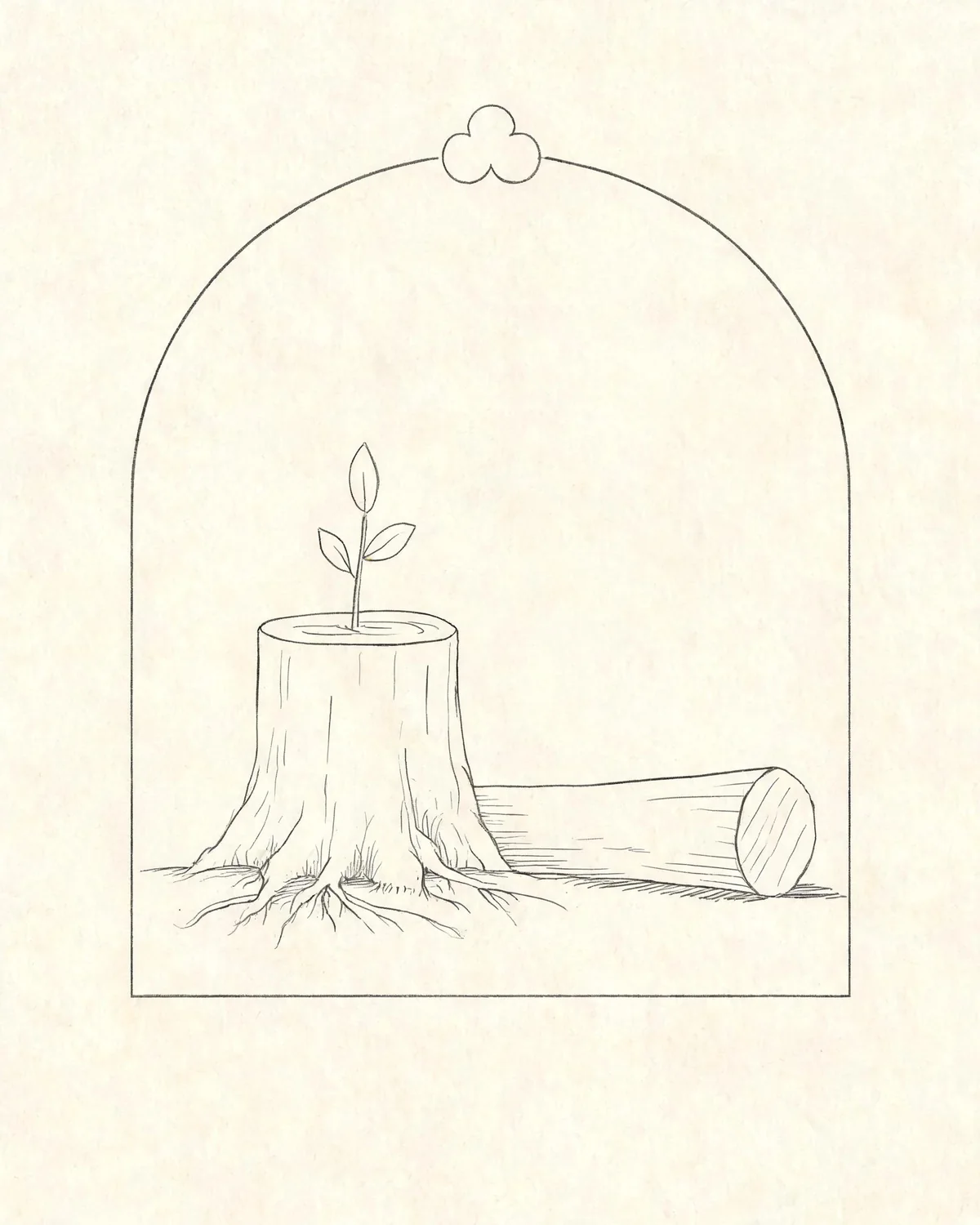
Trees in scripture often stand for people, families and kingdoms, so a falling tree points outward more than a fall of your own body does. The best-known example is a king's dream of a great tree, sheltering birds and beasts, ordered cut down. Its interpretation read the tree as the king himself, brought low for pride, with one detail that changes everything: the stump and roots were to be left in the ground.
That detail carries the tradition's reading of a felled tree. Prophetic images show proud trees whose branches fall, yet another passage insists there is hope for a tree that is cut down, because at the scent of water it can sprout again. Read a falling tree as loss with a living root, since a stump can still send up shoots.
Applied to your dream, ask whose tree it was. A tree in your garden may stand for your household or a parent; a great tree in a public square for an institution or a leader you have trusted. Then look for the stump. If something remains rooted after the crash, the dream may be about pruning and regrowth rather than an ending.
Why Do You Keep Having Falling Dreams?
Recurring falls usually track a recurring situation: a job that keeps feeling precarious, a relationship that wobbles every few weeks, or a stretch of poor sleep and constant pressure. Christian writers on dreams have tended to take repetition seriously, treating a dream that comes back as a message not yet heard, while still expecting the most ordinary causes to be ruled out first.
A practical way to listen is to keep a short record for each repeat: where you fell from, what gave way, and how it ended. Over a few weeks the pattern often shifts. The ledge drops lower, someone appears to catch you, or you begin to land on your feet. Those changes tend to follow real changes in waking life, and they let you see progress you might otherwise miss.
If the dreams stay frightening and frequent, bring them into prayer, and also into conversation with someone you trust, a pastor, a counselor or a friend who listens well. The tradition never asked anyone to carry a troubling dream alone.
Is a Falling Dream a Warning From God?
It can be read as a call to attention, and Christian teaching on dreams allows that some dreams correct us. One modern guide puts it simply: dreams are not good or bad in themselves; troubling dreams often show what needs to be avoided. A fall that keeps highlighting a shaky commitment or a proud habit may be doing exactly that.
The tradition adds two safeguards. First, discernment comes before conclusions: weigh the dream with prayer, reason and a trusted listener, and remember that a late meal or a hard week explains many falls. Second, the character of the message matters. A dream that moves you toward humility, repair or rest fits the tradition's picture of how God speaks. A dream that leaves you terrified, hopeless or convinced you are rejected does not.
So the honest answer is that a falling dream can serve as a warning in the sense of a nudge to look at your footing. It is not a sentence, and the tradition expects any real warning to come with a way back.
What This Dream Is Not
Three things a falling dream does not carry, however vivid it feels or however often it returns:
- It is not a forecast of an accident, an injury or a death. The tradition reads the fall as an image of footing and foundations, not as an event on its way to your body or anyone else's.
- It is not evidence that you have fallen from grace or lost your faith. A single dream cannot measure either; faith shows over months and years of living, and the tradition's own fall stories are told so that people get up again.
- It is not an instruction. No Christian teacher on dreams asked anyone to quit a job, end a relationship or make a vow on the strength of one night's image without discernment, counsel and time.
FAQ
What does falling in a dream mean biblically?
Biblical imagery links falling with danger, moral failure and collapsing foundations, and pairs it with rising again. A falling dream is usually read as a question about what you are standing on, and whether pride or weak footing has crept in.
What do falling stars mean in a dream biblically?
Falling stars belong to scripture's end-of-the-age imagery, where the heavens shake, and to the story of a proud morning star cast down. In a personal dream, they more often picture a hope, an idol or a public figure losing its shine.
What does it mean when a plane falls in a dream?
Scripture has no airplanes, so Christian readers treat a plane falling in a dream as a modern foundations image: you are carried by something you do not control, and it fails. Ask which plan, institution or person you are trusting to keep you aloft.
Is a falling dream a spiritual attack?
A falling dream is not usually read as a spiritual attack: older Christian teachers did allow that some dreams come from the devil's illusions, but they placed the body and the day's worries first. A fall that brings fear without any call to repair is best met with prayer and rest, not investigation.
Is a falling dream the same as teeth falling out?
They are different dreams. Losing teeth is its own common image, usually tied to appearance, speech and loss, and it has a dedicated teeth falling out reading. When your whole body drops, Christian readers look at footing and foundations.
Should I pray after a falling dream?
Many Christians do, and it fits the tradition well. A short prayer naming what felt unsteady, and asking for firm footing, turns the dream from a fright into an intention. It also helps you fall back asleep without replaying the drop.
What does it mean to dream of someone else falling?
The image usually moves toward that person or your relationship with them: concern that they are on shaky ground, frustration that they are heading for a fall, or guilt about a stumbling block you may have placed. Notice whether you reached for them.
Why do I wake up just before I hit the ground?
That jolt is extremely common and usually reflects the body's own startle at the edge of sleep. Christian readers would not build a meaning on the jerk itself, but on what came before it: the height, the cause and the feeling.
Does a falling dream mean I am backsliding?
Not on its own. Scripture does use falling away for drifting from faith, but drift shows up in waking life: in neglected prayer, broken promises or growing hardness. If none of that is present, the dream is more likely about stress or another part of life.
How to Use These Readings Today
Start with two details while the dream is fresh: what you were standing on, and the last thing you saw. Write them in a sentence each. The first tells you about foundations, the second about whether the tradition's rising half has appeared yet.
Then hold those two sentences up to your week. Is there a commitment that feels like sand, a role that feels too high, or a pace that has you slipping? Bring the answer into prayer or a short journal entry, and if it touches someone else, consider whether a conversation is owed.
Finally, choose one small act of repair on the ground you named: an early night, an honest email, a bill paid, an apology made. The tradition reads a fall as an invitation to build on rock, and that work is usually done in small, practical steps rather than in one dramatic change. Keep the note somewhere you will find it; the next dream may add a line.