Fighting in Christian Dream Interpretation
Someone grips your arm in the dark and will not let go, and you cannot tell whether to push them off or hold on. Fighting dreams can leave you shaken, yet Christian imagery is full of struggles that end in blessing as often as in loss. The readings here explore how scripture's pictures of conflict shape a Christian reading of fighting, from quarrels and family rivalries to wrestling and spiritual warfare, and how to bring such a dream into prayer.
On this page
- Key takeaways
- What Fighting Means in Christian Dream Interpretation
- How Christian Dream Interpretation Reads Dreams
- Core Principles
- How the meaning changes
- Common Symbols Paired with Fighting
- How This Tradition Differs from Others
- What Is the Biblical Meaning of Fighting and Winning in a Dream
- What Does Fighting Demons Mean in a Christian Dream
- What Is the Biblical Meaning of Fighting With Someone You Love
- What it is not
- FAQ
- How to Use These Readings Today
- Related symbols
Key Takeaways
- In Christian imagery a fight is first a picture of struggle: with another person, with yourself or with God.
- Scripture traces quarrels to pride, envy and anger, and counts the person who steps back from strife as honorable.
- The struggle that matters most is pictured as spiritual, met with truth, faith and peace rather than fists.
- Dream fights with family often point toward reconciliation rather than rupture.
- Victory is framed as God's work, and the cross reshapes what winning means.
- A dream that seems to urge harm against anyone is not received as a word from God.
What Fighting Means in Christian Dream Interpretation
Scripture's most common picture of fighting is strife: intense conflict between people, ranging from a mere difference of opinion to rivalry and, at its worst, open brawling. It usually begins with words, arguments over phrasing or over rules, and its roots are traced to pride, envy, selfish ambition, hatred and anger. Those who keep clear of strife are counted honorable. Read in this light, a dream fight asks what pride or resentment might be feeding a conflict you are carrying.
Wrestling, a weaponless contest of two bodies, became a natural image for struggle of every kind. One matriarch described her long rivalry with her sister as mighty wrestlings, and the Christian life itself is pictured as a wrestling match. The image stays close and personal: no weapons, no armies, just two people locked together and neither willing to give way.
Early Christian teaching also marks a shift from physical warfare to spiritual. The decisive conflict is no longer fought with swords against human enemies but within, and before God, against whatever draws people away from good. A dream full of blows may therefore be read as a picture of inner contest rather than outward danger.
Finally, Christian teaching transforms the response to an opponent. Hatred of the enemy gives way to love, prayer for those who cause harm and doing good to those who hate you. A Christian reading of a fight rarely stops at who won. It asks what love would require of you toward the person you were fighting.
How Christian Dream Interpretation Reads Dreams
Christian history has taken some battle dreams very seriously. An emperor's dream on the eve of a decisive battle, in which he was directed to place a heavenly sign on his soldiers' shields, became one of the best-remembered dreams of the early church. Yet the tradition's more careful pastoral voices warn against treating dreams as forecasts of who will prevail. Only a tiny share of dreams seem to concern the future, and no one can tell which ones until afterward.
Instead, a dream is approached as part of a relationship. God is pictured as more interested in relating to a person than in handing over information, so the work is to sit with a dream and ask honest questions. Is this fight about an old hurt or a present one? Has something pulled you off your path? What might you be asked to face, forgive or let go?
Discernment runs through all of this. The early church understood good dreams as coming from God and troubling ones as possibly coming from forces opposed to good, which is why the gift of discerning spirits mattered so much. In practice this means paying attention to where a dream leads. A fight that leaves you more honest, humble or ready to make peace is read very differently from one that leaves you vengeful.
Core Principles
Ask who the struggle is really with. Scripture's fights are rarely only about the opponent in front of you. Some are with a rival, some with a family member, some with your own pride and some, strikingly, with God. Before reading the details, it helps to ask which of these the dream most resembles.
Notice what you fought with. Fists, swords, words and prayer belong to very different kinds of conflict. Christian imagery moves deliberately from weapons of iron toward truth, faith and peace, so the means you used in the dream can say more than the outcome.
Reconciliation is the aim, not the defeat of the other. Peacemakers are named among the blessed, and the most moving scenes in scripture's family stories are embraces after long estrangement. A Christian reading of a fight leans toward repair. It treats the person you fought as someone to be reconciled with, not someone to be beaten.
A frightening dream is not a verdict on your faith. Scripture's most faithful figures were beset by enemies and cried out in fear, and old prayers of lament picture the righteous surrounded by roaring lions and snarling dogs. Feeling under siege in a dream says more about what you are carrying than about the strength of your faith.
What Changes the Reading of Fighting
Who you fought, how, and what happened next all change how a Christian reading would approach the dream.

Wrestling through the night
A struggle that lasts until dawn recalls Jacob, who wrestled through the night with an opponent never fully named but clearly more than human. His hip was wrenched, yet he refused to let go until he was blessed, and he left with a new name. A long, exhausting grapple in a dream may picture wrestling with God, a calling or a question that will not release you.
An adversary who keeps returning
Some people meet the same sinister opponent in dream after dream, often in a scene of war. Pastoral readings treat such a figure as a part of yourself you would rather not face, something feared or despised that keeps pursuing you. In one remembered case the man eventually made peace with his adversary. The old counsel to come to terms with an opponent on the way applies inwardly too.
Refusing to strike back
A dream in which you lower your fists, or simply will not return a blow, carries particular weight in this tradition. Christian teaching urges overcoming evil with good, even feeding a hungry enemy and giving a thirsty one water. Such a dream may express a wish to respond differently to someone who has hurt you, or a sense that winning on their terms would cost too much.
Stepping between two people
Putting yourself between two people who are fighting recalls the peaceable figure of Abraham, who tried to resolve quarrels among his household rather than escalate them. Peacemakers are counted among the blessed. A dream like this may reflect a role you already play in your family or workplace, and it is worth asking whether that role sustains you or quietly wears you down.
A quarrel among fellow believers
When the fight happens inside a church or among Christian friends, scripture offers a sobering reassurance: it has always happened. Two missionary companions parted ways after a sharp disagreement, and an early congregation split into rival factions. Such a dream does not mean faith has failed. It may point toward a tension in your community that needs patient, honest conversation rather than silence.
Being told to put the sword away
On the night of Jesus' arrest a disciple drew a sword to defend him and was told to put it back in its place. If someone in your dream stops you from fighting, or your own weapon is taken away, the scene may echo that moment: a fight you feel justified in, but one that is not meant to be won this way.
Protecting something in your care
Fighting off an attacker to protect a child, an animal or a home recalls David as a young shepherd, defending his father's flock from a lion and a bear, and later confessing that it was God who had rescued him. A protective fight in a dream usually speaks of responsibility and love, and sometimes of how heavy that responsibility has started to feel.
Common Symbols Paired with Fighting
Fighting and an angel. Scripture tells of a prophet's servant who woke to find his city surrounded by an army and despaired, until his eyes were opened to hills full of heavenly horses and chariots. When an angel appears in or near a dream fight, the image often speaks of help you had not noticed: the sense that you are less alone in a struggle than it seemed.
Fighting and a cross. The emperor's battle dream gave the cross a place on soldiers' shields, a story Christians have long debated because it binds faith to warfare. In a dream, a cross amid conflict can point the other way, toward a struggle reframed by self-giving rather than force. It may ask whether a fight you are in is one your faith truly calls you to.
Fighting and wolves. Disciples were sent out as sheep among wolves, told to be shrewd as serpents and innocent as doves. A fight with a wolf may concern someone who seems to prey on others, and the pairing counsels wisdom and alertness rather than aggression. The aim is to protect what is vulnerable without becoming wolfish yourself, and to notice whether the dream wolf wears a face you recognize.
How This Tradition Differs from Others
Christian readings of fighting place unusual weight on the inner and spiritual meaning of a conflict. Where many popular traditional dream interpreters read a fight simply as suppressed anger or a clash at work, a Christian reading also asks whether the struggle is with God, with temptation or with a refusal to forgive.
Islamic dream interpreters take a different path. They tend to read fights through concrete life circumstances such as debts, prices, quarrels and family duties, and they often invert the outcome, so that losing in a dream can be read favorably. Christian readings are less concerned with reversals and more with the spirit in which a struggle is fought.
Modern psychological approaches often treat a recurring dream opponent as a disowned part of the self. Christian pastoral readings have drawn on that insight but place it inside a larger story of repentance, transformation and grace, in which facing yourself is also a way of being met by God.
Some popular online Christian content treats nearly every fight dream as a sign of spiritual attack and responds with long lists of prayers against enemies. The more careful strand of the tradition is slower to name enemies and quicker to ask what a dream is inviting you to change, forgive or bring into prayer.
What Is the Biblical Meaning of Fighting and Winning in a Dream?
Scripture's ideal battles are often the ones where human strength is smallest, so that it becomes obvious the victory belongs to God. A shepherd boy facing a heavily armed champion insists that the battle is the Lord's, and other stories deliberately shrink an army before it wins. Winning, in this imagery, is less an achievement than a gift.
The Christian story then reshapes victory further: evil is pictured as defeated not through greater force but through the self-giving of the cross. A Christian reading of a dream victory therefore asks what kind of winning it was: did you overcome something that threatened good, or simply overpower a person?
How the win felt matters too. A dream in which you prevail and feel humbled or relieved is quite different from one in which you gloat. Neither should be taken as divine endorsement of a waking quarrel. It is often more useful to ask what the struggle was about and what winning would actually change.
What Does Fighting Demons Mean in a Christian Dream?
Christian imagery describes the believer's deepest struggle as a wrestling match, not against flesh and blood but against spiritual forces opposed to good. Dreams of fighting demons or dark figures often draw on this picture, and many Christians find them frightening precisely because the imagery is so vivid.
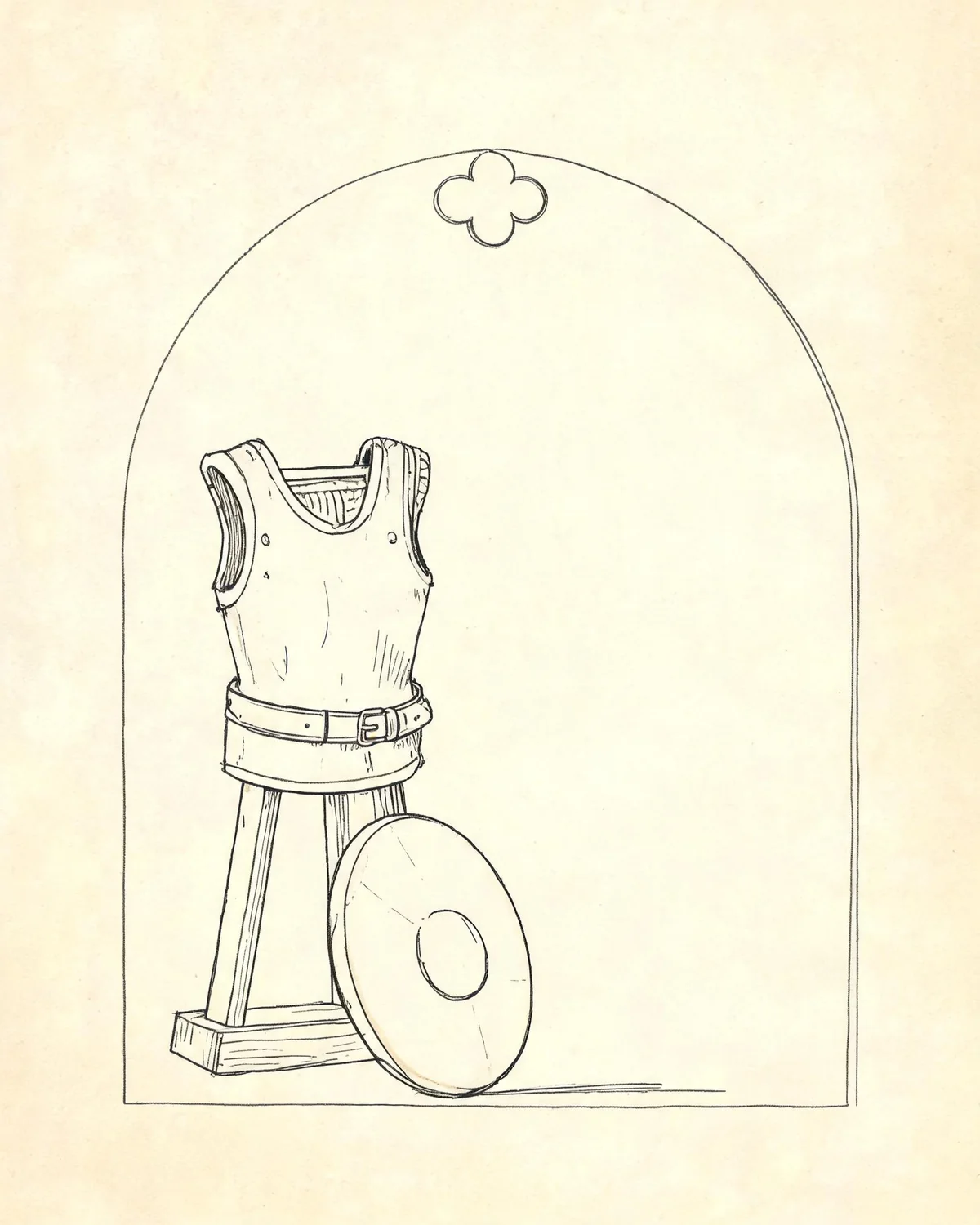
The same tradition answers that fear with the image of armor: a belt of truth, a breastplate of righteousness, readiness that comes from peace, a shield of faith, a helmet of salvation and the word of God as a sword. Almost all of it is defensive. The call is to stand firm, not to go looking for battles.
A dream like this need not mean that anything is attacking you. It may give shape to temptation, guilt, grief or fear that you have been carrying. Praying with the image, speaking with a pastor or trusted friend and attending to rest are all reasonable responses. If such dreams persist and frighten you, a counselor can help alongside prayer.
What Is the Biblical Meaning of Fighting With Someone You Love?
Scripture is honest about conflict close to home. The first brothers were rivals, twins struggled over a blessing, brothers sold one of their own, and two sisters in a later story disagreed over how to welcome a guest. It is a rare family in which siblings do not at some stage compete, and the stories do not pretend otherwise.
They also tell of remarkable reunions. Jacob, guilt-haunted and overprepared, met a brother who ran to embrace him after twenty years apart. Joseph revealed himself to the brothers who had wronged him and welcomed them. These scenes give a dream fight with a parent, spouse, sibling or friend a different horizon: the quarrel is not necessarily the end of the story.
A present-day reading asks what the dream argument was about and whether it echoes something unsaid. It is rarely a verdict on the relationship. More often, it marks the place where honesty, apology or forgiveness might begin.
What This Dream Is Not
A fighting dream is not a prediction that someone will harm you or that a conflict will break out. The careful strand of Christian dream interpretation treats such dreams as invitations to reflection and prayer, not as forecasts.
It is not proof of a spiritual attack. Dark or violent imagery can arise from stress, grief, conflict or tiredness, and the tradition's emphasis on discernment exists precisely so that a frightening dream is not taken at face value.
And it is not an instruction to fight anyone. A dream that seems to urge you to hurt another person, or yourself, is not received in this tradition as a message from God. If a dream leaves you wanting to act, let the action be prayer, honest conversation with someone you trust, or simply rest.
FAQ
Is a fighting dream bad in Christianity?
Not in itself. Scripture uses struggle for both painful and holy experiences, from quarrels to wrestling for a blessing. What matters is who you fought, how and what the dream stirred in you afterward: resentment, fear, courage or a desire for peace.
Does a fighting dream mean I am under spiritual attack?
Not necessarily. The tradition takes spiritual struggle seriously but also urges discernment, and most fight dreams reflect ordinary stress or conflict. Bring the dream into prayer, notice where it leads you, and speak with a pastor if it keeps troubling you.
What is the biblical meaning of fighting and losing in a dream?
Losing is not treated as disgrace in Christian imagery. The cross itself reframes apparent defeat, and scripture's heroes often prevail only after being brought low. A dream loss may point to surrender, humility or a struggle you were never meant to win alone.
What is the biblical meaning of arguing in a dream?
Scripture's counsel on arguing is that a gentle answer turns away wrath, and believers are urged to be slow to anger. A dream argument may highlight something you need to say, or a way of saying it that would heal rather than wound.
What does it mean to watch others fight in a dream?
An old proverb about watching others fight compares meddling in someone else's quarrel to grabbing a passing dog by the ears, and it blesses peacemakers. Watching a dream fight may reflect uncertainty about whether to step in to a conflict around you or wisely stay out of it.
Is it a sin to dream about hurting someone?
Many Christians would say a dream is not a deed. A violent image is better treated as material for honest prayer than as a cause for shame. Any sense that you are being urged to harm someone is not received as coming from God.
What does it mean when a friend becomes an enemy in a dream?
Scripture recognizes turnabout enemies: friends and family who become opponents, sometimes simply because hard truth was spoken. A dream like this may reflect fear of losing someone's goodwill, or a tension in a friendship that needs gentle, honest attention.
Why do I keep having fighting dreams?
Repeated fight dreams often accompany a stretch of stress or an unresolved conflict. Writing down what each dream shares, a person, a place or a feeling, and bringing that pattern into prayer usually reveals more than trying to decode each night separately.
Should I pray after a fighting dream?
Prayer is a natural response in this tradition. You might ask for peace, for wisdom about any waking conflict the dream recalls, and for the person you fought. Prayer for an opponent is one of the most distinctive Christian responses to conflict.
How to Use These Readings Today
Begin by writing the dream down, then add one line naming who you fought and one line naming what the fight felt like it was about. Ask whether this resembles a struggle with another person, with yourself or with God, and notice which answer feels most true.
Next, bring the dream into prayer. Rather than asking what it predicts, ask what it might be inviting: a conversation you have avoided, a resentment you could release, or a burden you are carrying alone. If the dream involved someone you know, pray for that person by name.
Then take one small step toward peace. Send a kind message to someone you have been at odds with, apologise for a sharp word, or simply decide to answer the next tense moment gently. If the dream frightened you, tell a trusted friend or pastor rather than holding it alone, and give yourself a gentler evening before you sleep again.