Lion in Christian Dream Interpretation
A lion stands at the edge of a field at dusk. You hear it before you see it. The roar rolls across the ground and seems to come from everywhere at once. In Christian imagery that sound belongs to two very different figures, the conquering king of Judah and the adversary on the prowl. Telling them apart is the whole work of reading the dream.
On this page
- Key takeaways
- What a Lion Means in Christian Dream Interpretation
- How Christian Dream Interpretation Reads Dreams
- Core Principles
- How the meaning changes
- Common Symbols Paired with Lion
- How This Tradition Differs from Others
- Is a Lion in a Dream Jesus or the Devil
- What Does a Mountain Lion Mean Biblically in a Dream
- What Does a Lion Attack Mean Biblically in a Dream
- What it is not
- FAQ
- How to Use These Readings Today
- Related symbols
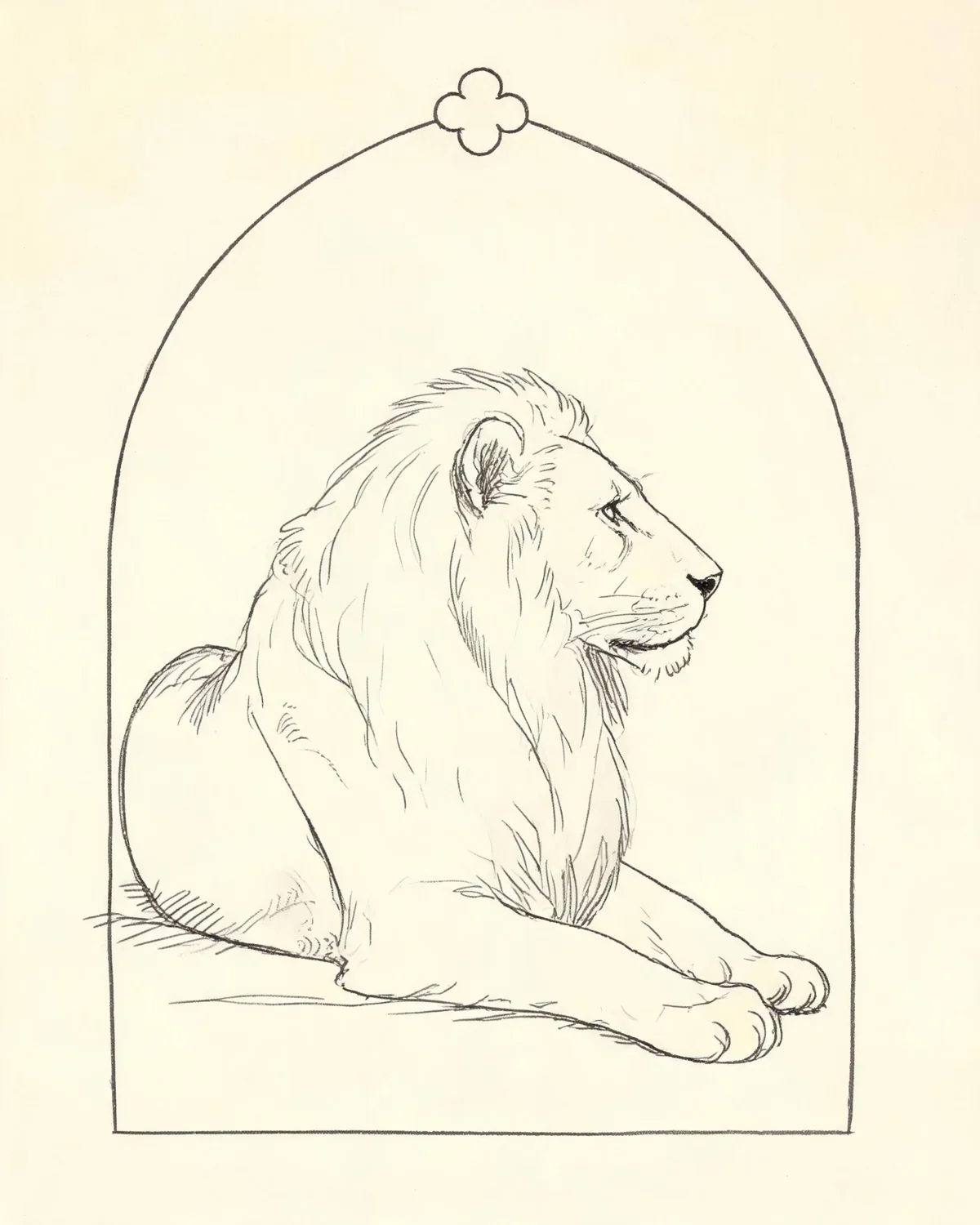
Key Takeaways
- Christian imagery gives the lion to Christ and to the devil alike, so behavior, not the animal, decides the reading.
- The roar carries as much meaning as the body; a lion you only hear still counts.
- Escape from the lion's mouth is the tradition's great picture of rescue.
- Lion-like courage is praised, and killing a lion marks the bravest of heroes.
- Old Christian lore made the lion a sign of watchfulness and of new life on the third day.
- A lion at peace beside a lamb points to restoration rather than danger.
What a Lion Means in Christian Dream Interpretation
Israel knew the lion first as shepherds know it: a ruthless, nearly unstoppable killer that took from the flock at will, usually from ambush. Even when it was not hunting, its roar carried for miles and spread fear across the hills. Far more people heard a lion than ever saw one, and that distance let the animal grow into something half real and half beyond the ordinary world.
In prophetic visions lion features appear on composite creatures, among them a lion with an eagle's wings. The animal sits in a twilight between the natural and the supernatural, which is partly why it suits dreams so well.
From that raw material Christian imagery built a symbol with two edges. On one side stands royal power. Carved lions flanked the throne of Israel's wisest king and decorated the temple, a king's anger was compared to a lion's growl, and the tribe of Judah was pictured as a young lion. Christians later saw that tribal lion fulfilled in Christ, the conquering Lion who is also the Lamb that was slain.
On the other side stands the predator. The wicked are described as lions that tear and drag away their victims, enemy kings prowl like lions over a ruined land, and one apostle pictured the devil as a roaring lion looking for someone to devour.
Between those poles, the lion can stand for a nation in its prime or in decline, for the righteous or the wicked, and even for divine judgment itself. A Christian reading of your lion begins by asking which of these it resembles most.
How Christian Dream Interpretation Reads Dreams
Christianity inherited a scripture full of dreams and visions. One prophetic book is so taken up with them that it reads almost like a romance of dreaming, and its hero both interpreted the dreams of a king and survived a night among lions. Christian readers took from that story the idea that a frightening image can sit inside a larger account of protection.
Pastoral writers on dreams insist that a lion cannot be looked up and settled. They warn that symbols resist any catalogue of stock meanings and that reading a dream without knowing the person, their circumstances and their own associations is risky.
One of those writers tells of a recurring dream in which a ferocious lion chased someone who woke with aching legs. A medical columnist had explained it away as leg pain or as fear of some particular person. The pastor's reply was a question: why did the dream choose a lion at all?
If it meant pain or a feared neighbor, it could have shown those directly. For Christian readers the image itself carries meaning and deserves attention before any explanation reduces it to something smaller. The lion is the message's chosen form, and its manner, setting and effect on you are where interpretation starts.
Core Principles
Read the lion's conduct before its identity. The same animal stands for the Lord and for the adversary, so there is no shortcut from species to meaning. A lion that stalks, ambushes or roars to frighten belongs with the predator; one that guards, rules justly or lies down beside the weak belongs with the king. When the signals are mixed, hold both readings open rather than forcing a verdict.
The voice matters as much as the body. A large share of biblical lion imagery concerns its roar, the sound that makes the hearer tremble. If your dream gave you only the roar, the reading is about pressure and dread that reach you from a distance, perhaps before any real threat arrives.
Courage is lion-shaped. The righteous are called bold as a lion, and the bravest men were remembered for facing one. A dream in which you stand your ground can be read as a call to that boldness, not only as a scene of threat.
Deliverance comes from the mouth, not around it. The tradition's lions are rarely removed from the story. People are rescued out of their jaws, and the rescue is the point. A dream that leaves the lion in place but changes your situation inside its reach still belongs to this pattern.
What the Lion's Behavior Changes
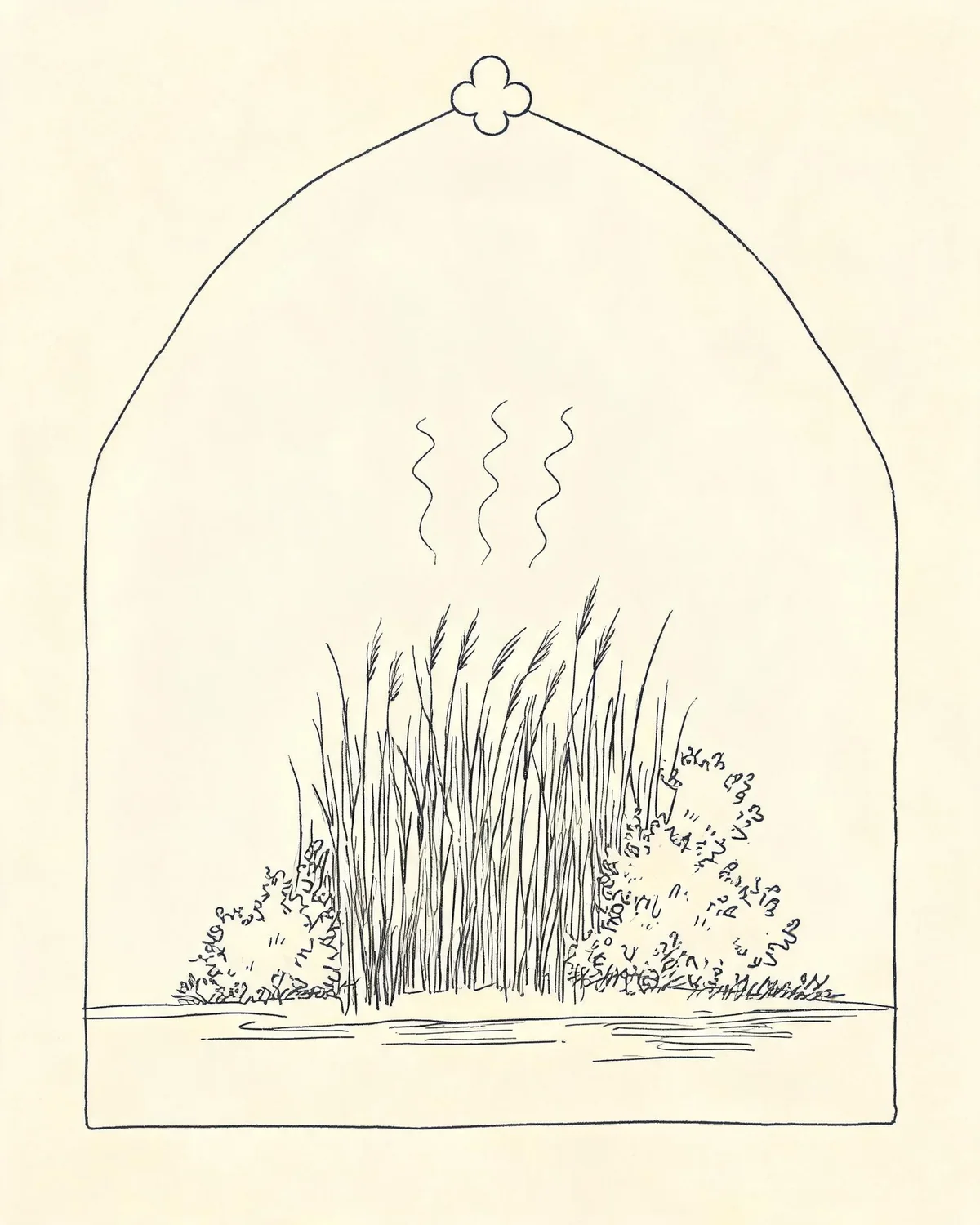
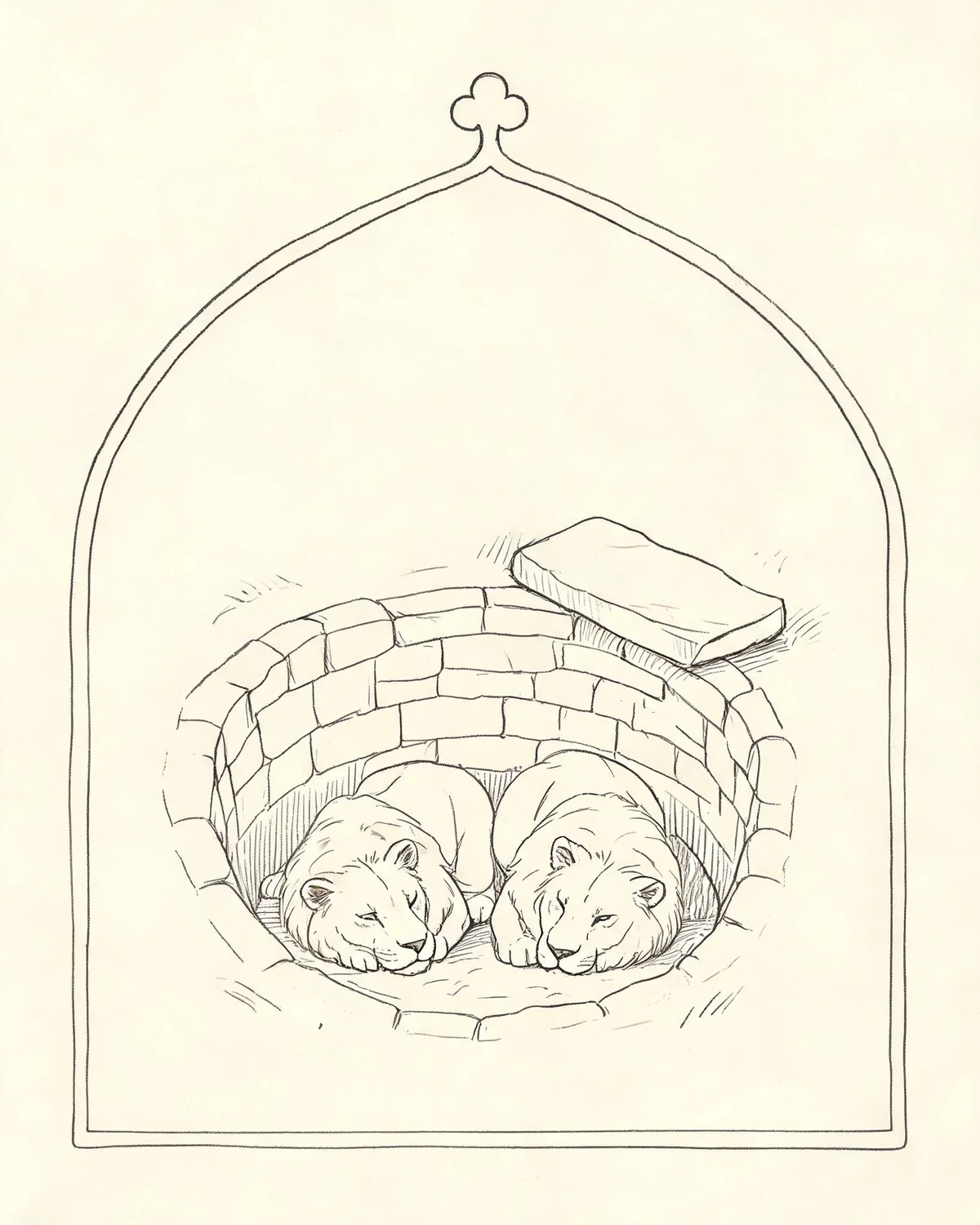
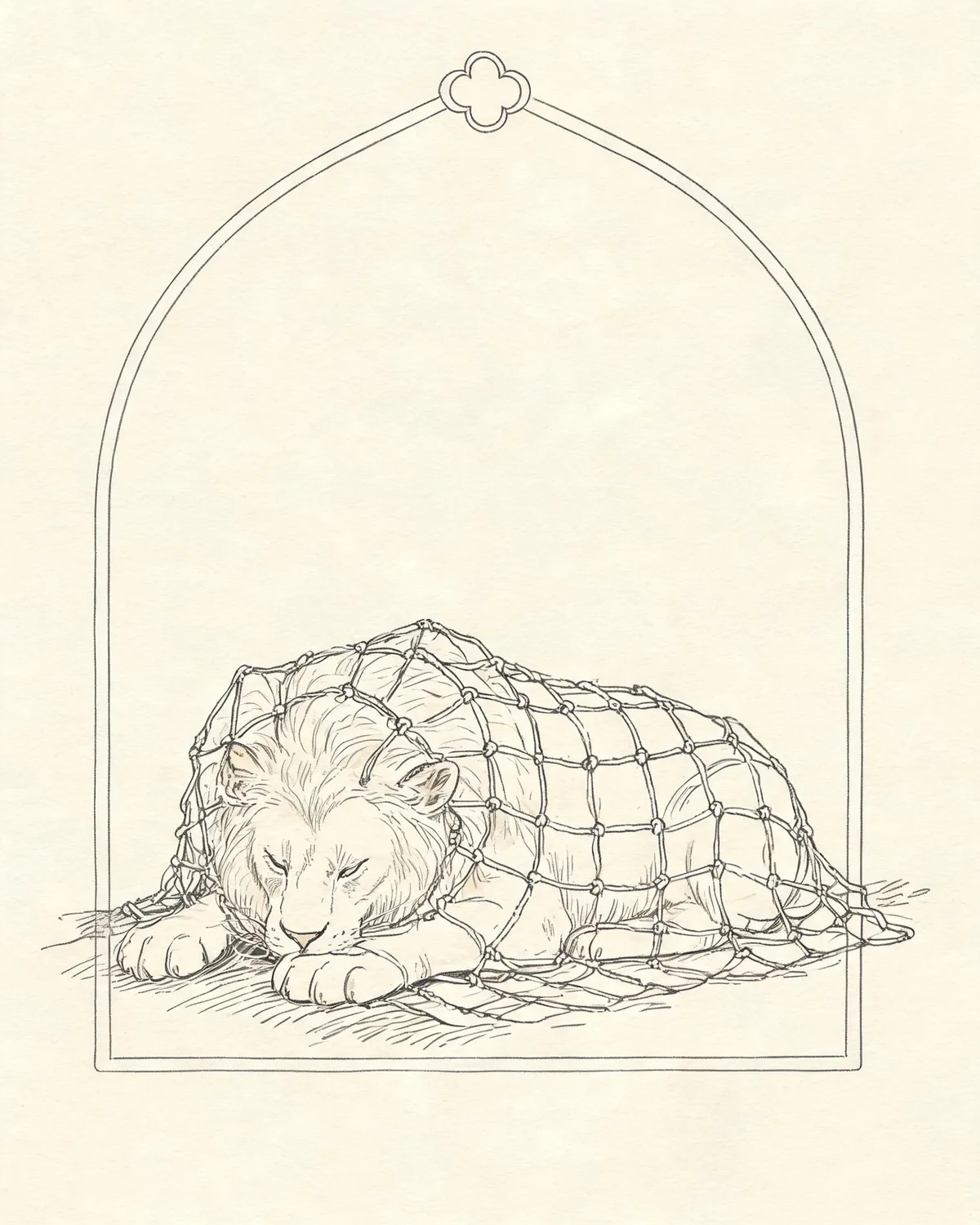
A lion roaring in the distance
You never see the animal, only hear it. Biblical writers treated that voice as a force in itself, announcing strength and shaking whoever heard it. A distant roar in a Christian reading suggests anxiety arriving ahead of any real event. It asks you to separate the noise of a threat from the threat itself, and to notice who in your life rules mostly by sounding fierce.
Standing in a lion's open mouth
Few images in Scripture are bleaker than the mouth of the lion, a predicament from which escape looks hopeless. Psalmists plead for rescue from it, and one apostle wrote that he had been pulled out of it. A dream that places you at those jaws describes being caught in something overwhelming. The tradition's emphasis falls on the rescue, so watch closely for any sign of help in the dream.
Sitting unharmed in a den of lions
Lions surround you, yet none attacks. This is the prophet's night in the den, which early Christians painted in the catacombs as a picture of God redeeming his people. Read through that story, the dream describes danger that is real but restrained: hostile people or crushing pressure that cannot reach you as far as it seems. It can also mark a time to hold your integrity under scrutiny.
Killing a lion with your bare hands
Ancient Israel treated killing a lion as the mark of supreme bravery. A young shepherd told a king he had struck down a lion to save a lamb, and the strongest hero of the judges tore one apart unarmed. Christian commentators saw that hero as a forerunner of Christ defeating evil. A dream like this can reflect courage you have found, or one you are being asked to find.
A lion sleeping with its eyes open
Early Christian animal lore claimed the lion slept in its cave with its eyes open, and readers took it as a figure of vigilance: the body of Christ at rest on the cross while his divinity kept watch. A lion resting yet alert in your dream points toward watchfulness. It asks what you need to keep an eye on even in a season that feels quiet.
A lion breathing life into its cubs
The same lore told that cubs were born lifeless, guarded by their mother, until on the third day the father breathed into their faces and woke them. Christians read the tale as a picture of resurrection. A dream of a lion reviving or warming its young belongs to this hopeful line, and it can speak to a part of you that seemed finished, now stirring again.
A lion caught in a net or cage
A prophet mourned the royal house of Judah as a young lion taken in a pit, led away in chains and shut up so that its voice would no longer be heard on the mountains. A caged or snared lion describes strength brought low: a leader humbled, a people in decline, or your own force held back. Ask whether the restraint is a loss or a lesson.
Common Symbols Paired with Lion
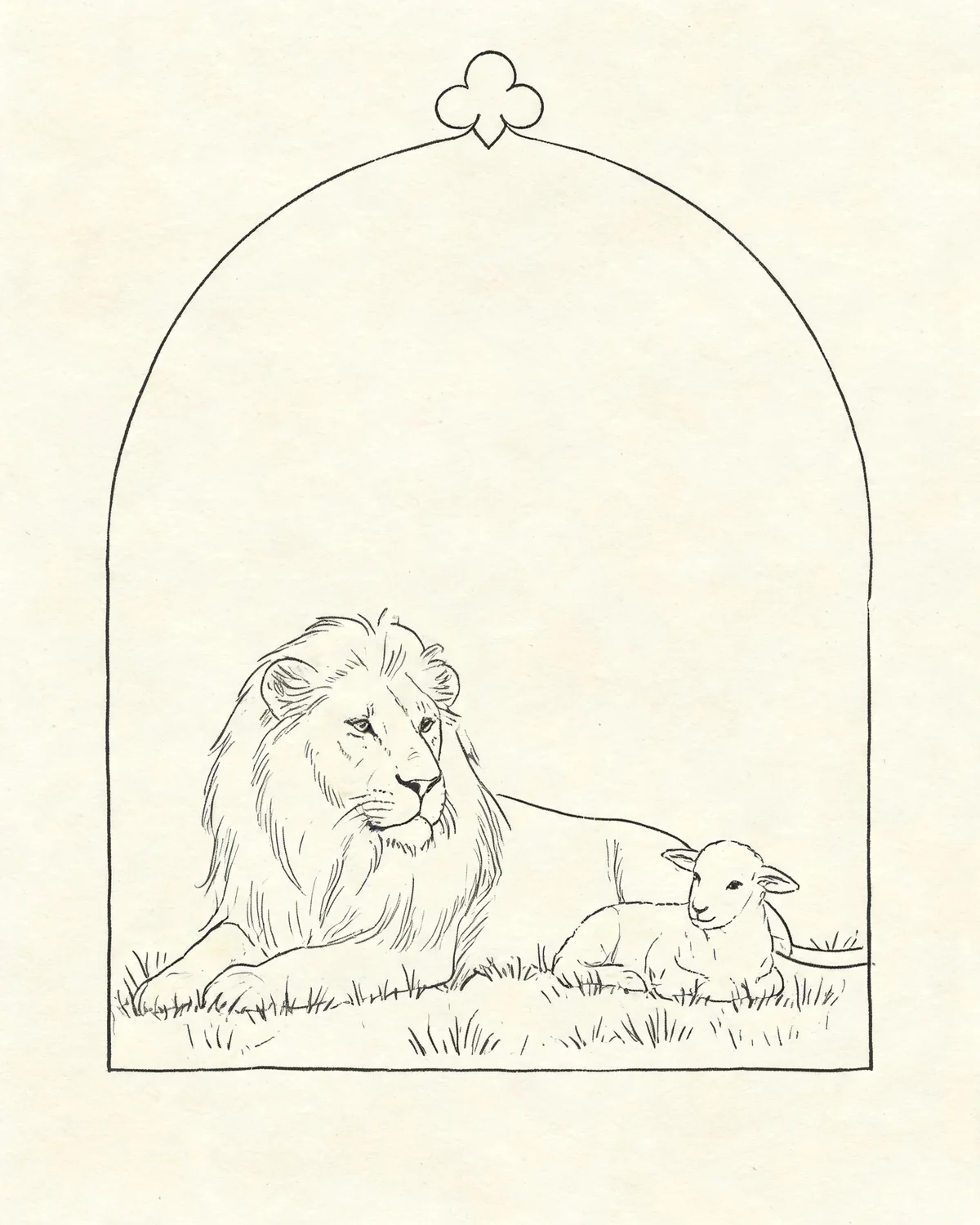
Lion and lamb. Christian imagery joins the two in its boldest paradox, the Lion of Judah who conquers as a slain Lamb, by obedience and sacrifice rather than destructive force. The prophets also foresaw a world where predators and flocks feed together in peace. A lion beside a lamb in your dream leans toward reconciliation, gentleness in power, or hope for an end to conflict.
Lion and honey. The hero of the judges came back to the lion he had killed and found bees and honey inside its carcass. The pairing speaks of sweetness drawn from a defeated threat: something that once frightened you becoming a source of strength or even of nourishment.
Lion and eagle. The two creatures of dominion often appear together, among the living creatures around the heavenly throne and as emblems of the evangelists, Mark's lion beside John's eagle. Together they suggest authority that is both earthly and lifted up, courage joined to vision.
Lion and door. Pairs of lions guarded doors, gates and treasure, and carved lions still keep watch at the entrances of old churches. A lion at a doorway leans toward guardianship: a boundary being protected, or a threshold you may not cross lightly.
How This Tradition Differs from Others
Islamic dream interpreters mostly read the lion as a man of authority: a ruler who may be harsh or unjust, a powerful opponent, or protection when the animal lies down beside you. Each detail of the scene shifts what that ruler means for your life. The Christian reading is less a catalogue of situations and more a contest of two figures, Christ and the adversary, both wearing the lion's form.
Buddhist imagery gives the lion's roar to the Buddha's fearless teaching and seats him on a lion throne. There the roar is wisdom spoken without fear, a reading almost opposite to the dread the biblical roar usually brings.
In Greek and Roman imagery, heroes wrestling lions stood for victory over death or the triumph of reason over animal nature. Christianity kept the hero but changed his meaning: the lion-slayer became a forerunner of Christ.
Ancient Egypt and Mesopotamia gave the lion to sun gods and to war, and their kings kept live lions as living emblems of rule. Israel shared that royal symbol with its neighbors, but its poets also turned the image against proud foreign kings who prowled like lions.
What the Christian tradition adds is redemption. The lion is not only overcome; it is finally imagined at peace, feeding beside the flock in a renewed creation.
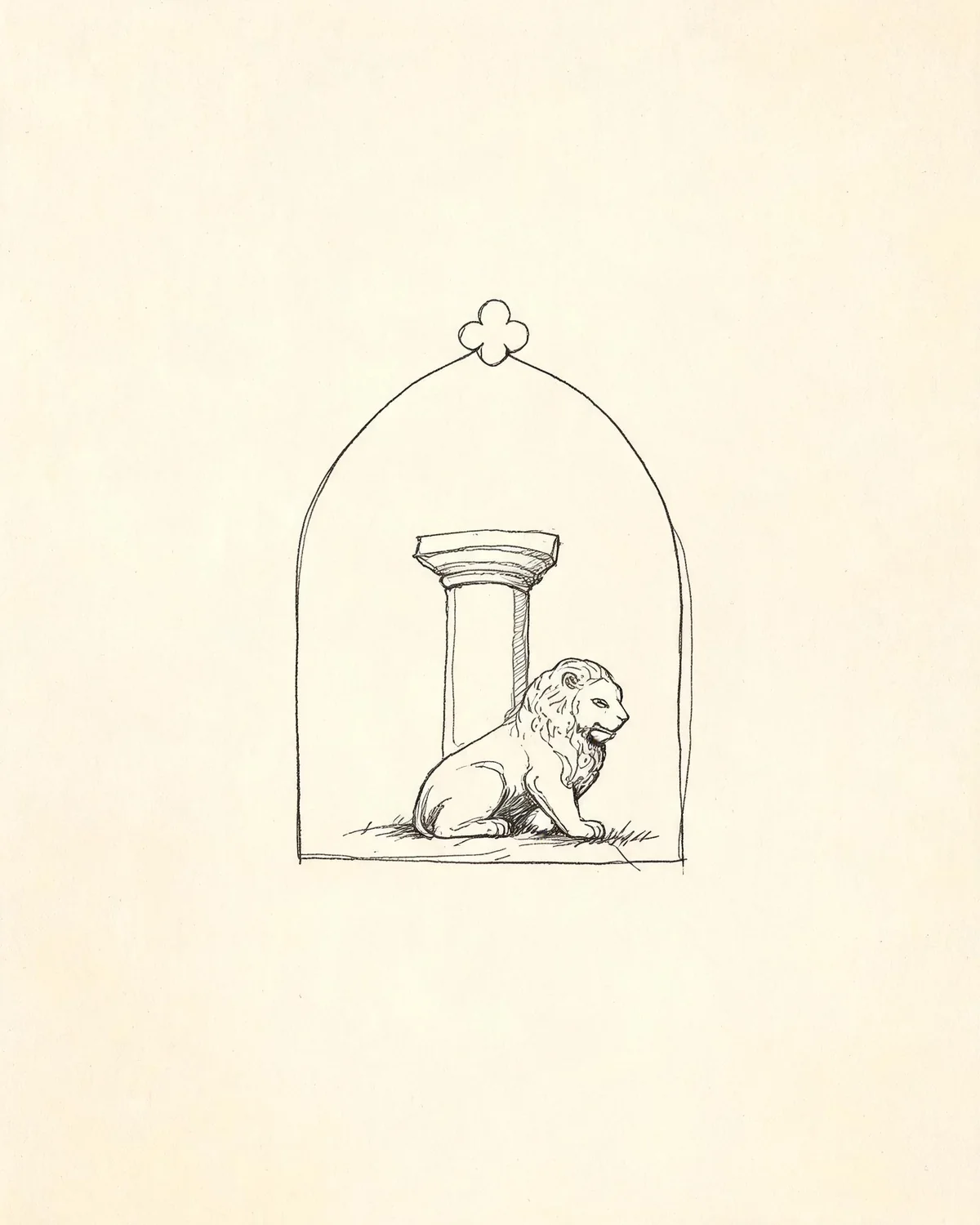
Is a Lion in a Dream Jesus or the Devil?
This is the question many Christians ask after waking from a lion dream, and the tradition holds both answers within the same body of imagery. The Lion of Judah is Christ in his royal power; the roaring lion is the adversary seeking prey. Neither reading can be assumed simply because a lion appeared.
Three questions help. First, what was the lion doing? Prowling, ambushing, circling and roaring to frighten belong to the adversary's picture. Guarding, ruling, protecting the weak or lying peacefully beside a lamb belong to the king.
Second, how did you feel once the first shock passed? Terror that grows and leaves you drained fits the predator. Awe, even a trembling kind, that settles into steadiness fits the Lion of Judah.
Third, where did the dream move? Pursuit that ends in rescue or courage has a different shape from pursuit that ends in despair. The early martyr Perpetua dreamed before facing wild beasts in the arena and woke understanding that her real contest was with the adversary, not with the animals. Many Christian readers treat their own fierce dreams the same way: as a spiritual struggle to meet with prayer rather than as a verdict on whose side they are on.
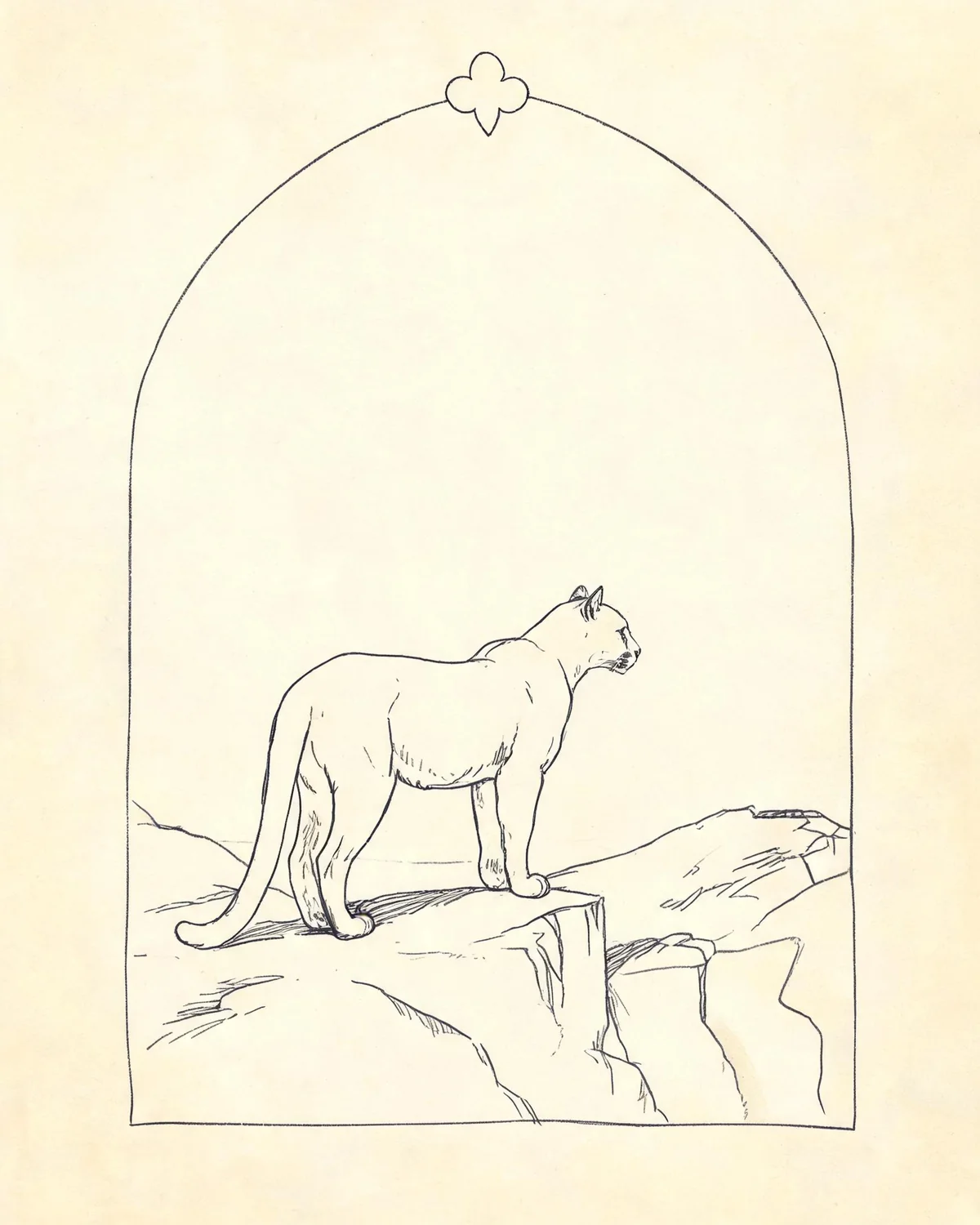
What Does a Mountain Lion Mean Biblically in a Dream?
Scripture never mentions the mountain lion, the cougar of the Americas. Its writers knew the Old World lion, and they used nearly a dozen words for lions of different ages and kinds. Still, the setting of your dream connects to biblical imagery that is close at hand.
Lions in Scripture come up from thickets and from the wild banks of the Jordan, and one love poem calls the beloved down from the lions' dens on the mountain heights. Mountains in that picture are places of beauty and danger at once, high ground where the wild animals rule. A mountain lion in your dream can therefore point to a challenge that lives at the heights you are trying to reach: a demanding calling, a spiritual climb, or a place where you feel exposed.
Christian lore also made the solitary lion an emblem of hermits and of solitude, and lions accompany several desert saints in Christian art. A lone mountain lion watching you, rather than hunting, may speak of withdrawal, quiet and the strength found in being alone with God. If it stalks you instead, read it with the predator's imagery, and ask what is following you on the climb.
What Does a Lion Attack Mean Biblically in a Dream?
An attack is the scene behind the tradition's darkest lion language: enemies who tear like lions and drag their prey away, and an adversary who walks about seeking someone to devour. A lion attack in a Christian reading usually describes pressure that feels hostile and personal, whether from people around you or from temptation within.
Christian pastoral writing also offers an inward reading. A lion that chases someone night after night can show a part of themselves they refuse to face, which turns fierce and devouring precisely because it is rejected. The repeated chase becomes an invitation to recognize the adversary inside, and to stop running from it.
What happens in the attack matters. If you fight back, the dream joins the tradition of the shepherd who struck down a lion to save a lamb. If you are rescued, it echoes the prophet's den. If the attack simply ends when you wake, the reading may concern fear itself more than any enemy. In every case, the tradition's counsel for a roaring threat is the same: stay alert, stand firm and do not face it alone.
What This Dream Is Not
A lion dream in this tradition is not a forecast that someone will turn on you, and it is not proof that you are under spiritual attack. Christian teaching does picture the adversary as a lion, but a single frightening night does not establish where the dream came from or what it requires of you.
Nor is a majestic lion a private commission or a sign that you have been specially chosen; the Lion of Judah belongs to the whole Christian story, not to one sleeper's status. And it is no verdict on your faith either way, whether the lion comforted you or chased you. If a lion dream raises questions about prayer, conscience or spiritual struggle, a pastor or trusted spiritual director is the right person to talk it through with.
FAQ
Is seeing a lion in a dream good or bad biblically?
It can be either. Scripture uses the lion for Christ's royal power, for the courage of the righteous and for the adversary. A guarding or peaceful lion leans toward protection; a stalking one leans toward a threat you need to face.
What does a white lion mean in a Christian dream?
Scripture describes no white lion. White in Christian imagery usually belongs to purity, victory and glory, so a white lion is often read as the lion's royal side made bright. Its behavior still matters more than its color.
What does a lioness mean biblically in a dream?
A prophet pictured the royal family of Judah as a lioness raising whelps among young lions, so she is a mother of rulers: fierce protection, nurture and ambition for her young. She may touch on how you raise those in your care.
What does a lion cub mean in a Christian dream?
The tribe of Judah was called a lion's whelp, a young power rising to rule, and Christians read that image as a promise fulfilled in Christ. A cub often stands for strength still forming, a beginning that needs protection first.
What does a friendly lion mean in a Christian dream?
A gentle lion recalls the hope that the fiercest creatures will one day live at peace with the weakest, and the lions shown beside hermit saints in Christian art. Such a dream often speaks of power tamed or reconciled.
What does a lion in your house mean in a Christian dream?
Carved lions decorated the royal palace and the temple, standing for majesty and guarded holiness. A calm lion at home leans toward protection and dignity in family life; a menacing one may mean a strong will or a fear has come too close.
Should I worry that a lion dream is spiritual warfare?
Christian teaching does picture the adversary as a roaring lion, and many believers answer such dreams with prayer. That is a sound habit, not a reason for panic. Fear in a dream is not evidence of attack, and steady counsel helps more than alarm.
Why does the lion's roar matter so much in Christian dream readings?
Much of the biblical lion imagery concerns the roar, since most people heard lions without meeting one. In a dream the roar can represent words, threats or authority that affect you without any physical contact.
How to Use These Readings Today
Write the dream down soon after waking, and note four things: whether you saw the lion or only heard it, how close it came, what it did, and what you did in response. Those details decide which side of the Christian lion is in view.
Then compare the dream with your waking life. Ask where you are facing a power that roars, prowls or demands, and where you are being asked for a lion's courage yourself. If the lion was peaceful, ask what reconciliation, protection or renewed strength might be waiting.
Many Christians bring such dreams into prayer, asking for discernment rather than demanding a meaning. Reading a lament psalm or the prophet's night among lions can give words to the fear the dream left behind. If the dream returns, keep the record going; changes in the lion's behavior over time often say more than any single night. A lion that roars less, or comes closer without harm, is worth noticing.