Sleeping in Christian Dream Interpretation
In the dream you are asleep: peacefully in your own bed, perhaps, or in a rocking boat, or in a pew while someone is still speaking. Christian reading sets that scene beside a long biblical line of sleepers, some resting in trust and some caught off guard, and asks which of them your dream resembles and what, if anything, woke you.
On this page
- Key takeaways
- What Sleeping Means in Christian Dream Interpretation
- How Christian Dream Interpretation Reads Dreams
- Core Principles
- How the meaning changes
- Common Symbols Paired with Sleeping
- How This Tradition Differs from Others
- What Is the Biblical Meaning of Seeing Someone Sleeping in a Dream
- What Does It Mean to Dream of Falling Asleep in Church
- What it is not
- FAQ
- How to Use These Readings Today
- Related symbols
Key Takeaways
- Biblical stories more often show sleep as a time of exposure than of safety, so a sleeping dream frequently raises the question of readiness.
- Sleep is also pictured as a gift to people who trust God, the rest of a clear conscience.
- Waking carries urgency in this imagery, as a summons out of passivity and into action.
- Many biblical dreams arrive in sleep, so being woken by a voice or a call has special weight.
- Early church teachers treated sleep as a state that needs discernment, because not everything arising in it can be trusted.
- Seeing God or a holy figure asleep in a dream usually voices a feeling of being unheard, not a statement about God.
What Sleeping Means in Christian Dream Interpretation
Biblical stories are frank about how much can go wrong while someone sleeps. A bridegroom arrives while the wedding party dozes, a commander is struck down in his tent, a young man nods off beside an open window. Against that background, sleeping in a Christian dream is often read first as vulnerability: a part of life where you are not paying attention, or where something could happen without your consent.
The proverbs add a warning about the sleep of the idle. Their sluggard keeps asking for a little more rest, and want overtakes him faster than he can rise. When the sleep in your dream feels heavy, comfortable and endless, Christian readers often hear that warning: a task or a calling has been left to wait while ease settles in.
Yet sleep is not distrusted in itself. The psalms picture rest as something God gives to those he loves, and the untroubled sleep of a clear conscience and a day of honest labor is one of the plainest blessings in the biblical imagination. A calm sleep in your dream can carry exactly that warmth: permission to stop, because the watching is not all yours to do.
Sleep is also the doorway through which many biblical dreams arrive, and it became a gentle image for death in early Christian hope, where those who die in faith are said to have fallen asleep before a waking still to come. A sleeping dream can lean on any of these threads, and its details show which one it is pulling.
How Christian Dream Interpretation Reads Dreams
Christian teachers have long treated sleep as a state that needs watching over. Several early church fathers believed people were especially open to harmful spiritual influence while asleep, which is why the gift of discerning spirits mattered so much to them. A dream about sleep is therefore read with two questions at once: what does the image say, and what kind of sleep produced it?
One fourth-century bishop described sleep as a time when the senses rest while reason smoulders like a fire banked with chaff, breaking out now and then in flashes of insight that arrive as riddles. Another bishop of the same circle warned a friend against sleeping too heavily, since deep sleep opened the mind to wild fancies, and insisted that not every dream carries a message.
Applied to a dream of sleeping, that heritage produces a careful reading. The interpreter looks at whether the sleep was restful or stupefied, whether anything spoke to you or woke you, and whether what you felt afterwards led toward peace and honest action or toward fear and self-absorption. The fruit of the dream counts for more than its vividness, and a reading is held loosely until later dreams and ordinary life bear it out.
Core Principles
Wakefulness is a virtue as well as a state. Biblical writing praises the attentive ear and the person who stays alert as the night grows late, so a dream that shows you asleep is often asking where your attention has dropped. The question is pointed and carries no rebuke: what are you no longer listening for?
Trust and sloth can look identical from outside. Someone asleep in a storm and someone asleep through the harvest are both lying down; one is resting inside a larger care, the other is letting the moment pass. Christian reading separates them by what the sleep leaves undone, not by how deep it is.
You are never unwatched. The psalms insist that the one who keeps watch over his people neither slumbers nor sleeps. Even a frightening sleep dream is read inside that conviction, so vulnerability in the dream is not the last word on your safety. The reading can name a danger without leaving you alone with it.
Waking is a summons. Calls to wake in biblical poetry come with urgency, often doubled, and they move a person from passivity into action. When your dream ends with you rising, the reading turns toward what you are now being asked to do.
What Changes the Reading of Sleep
The scene around you as you sleep carries most of the meaning, and these are the versions Christian readers meet most often.
Sleeping in Peace in Your Own Bed
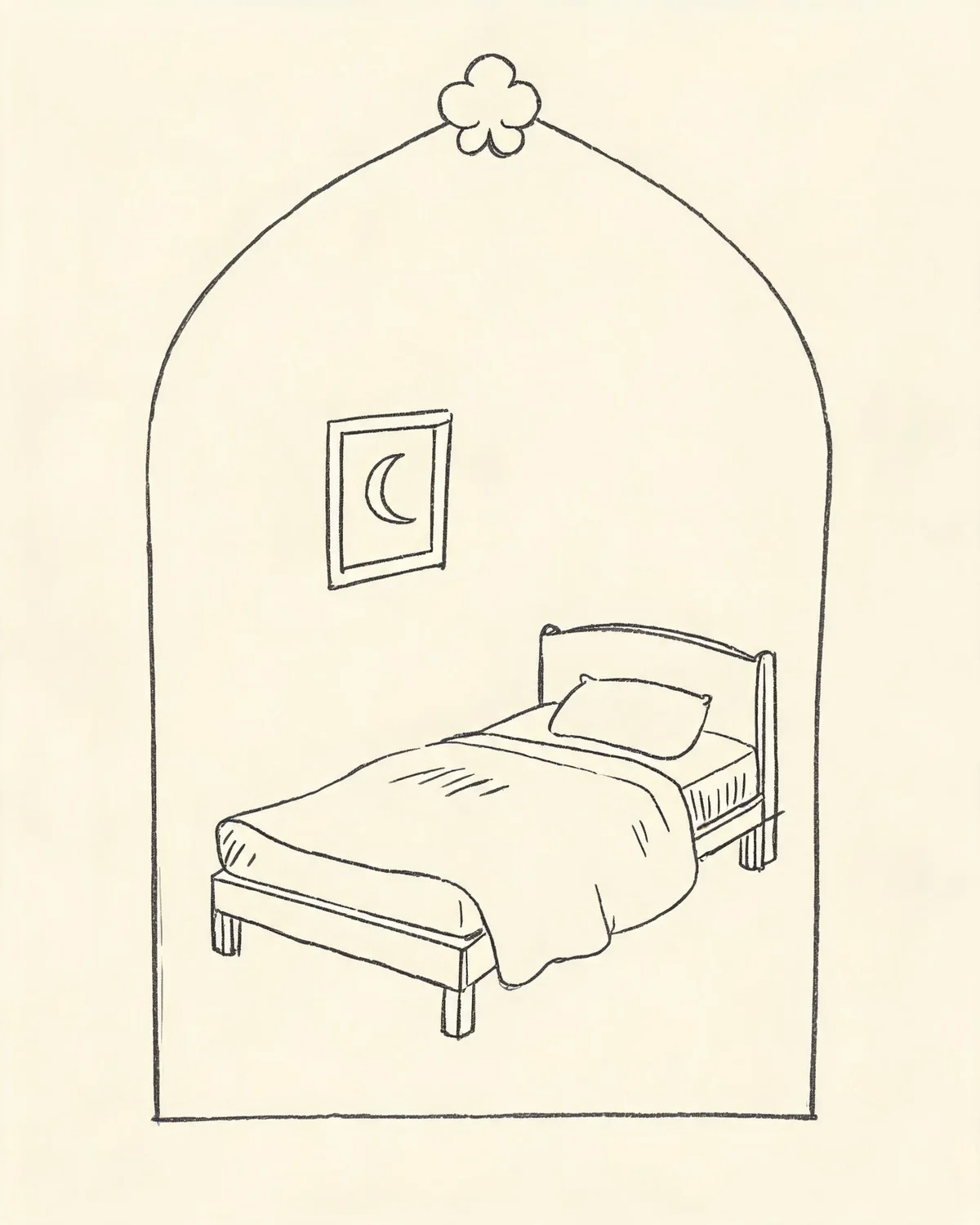
A deep, unbroken sleep in a familiar bed is the gentlest form of the dream. It echoes the psalmist who lies down in peace because safety comes from God. If you woke from it rested, the reading leans toward reassurance: you may be carrying less than you think you must, and rest is allowed.
Sleeping Through a Storm
Sleeping calmly while wind and water rage around you recalls Jesus asleep in the stern of a boat while his disciples panicked. The image is not carelessness but trust, rest held inside a larger care. It may reflect a steadiness you have that others around you lack, or invite you toward one in a season that feels stormy.
Falling Asleep While Keeping Watch
Nodding off when you have been asked to stay awake, beside someone in distress or on a night that matters, recalls the disciples who slept in a garden while their teacher prayed in anguish. The dream often points to a commitment you mean to keep but are too tired to hold, and it asks for honesty about your limits as much as for effort.
Refusing to Get Up
Lying in bed long after you should rise, rolling over and over, fits the idler of the proverbs, who swings back and forth in bed the way a door swings without ever going anywhere. The posture is about delay. Christian readers would ask which task you keep postponing, and what small step would get you on your feet.
Lying Awake While Others Sleep
Wakefulness in a sleeping house has two biblical faces. Troubled kings lie awake with uneasy consciences, while devout people rise in the night watches to pray and to remember God's promises. Your feeling in the dream tells you which you met: a restless mind that needs settling, or a quiet attention that welcomes the dark.
Being Woken by a Voice Calling Your Name
Being roused by someone calling you, perhaps more than once, recalls the boy Samuel, woken three times in the sanctuary before he understood who was speaking. The image gives sleep a listening quality. It may point to a call you have half heard and not yet answered, and the tradition would encourage readiness along with counsel from someone older.
Waking to Find Something Changed
Waking to discover that something was done while you slept, a door left open, a possession gone or your strength missing, recalls Samson rising from sleep without realizing what had been taken from him. The dream can reflect a fear of being exploited while your guard is down, or a recognition that something has slipped quietly away.
Falling Into a Sudden Deep Sleep
A heavy sleep that falls on you without warning has a mysterious biblical lineage: the first man is put into a deep sleep before a companion is formed from his side, and visions reach others in the same state. In a dream it can mark a change you do not control, where something new is being shaped while you can only rest.
Common Symbols Paired with Sleeping
A bed frames almost every sleeping dream, and biblical imagery gives it several moods: comfort and ease, the sloth of someone sulking under the covers, the restless bed of a sufferer whose sleep is broken by frightening dreams, and the private room where a person's most secret thoughts are kept. The state of the bed in your dream often tells you which mood the sleep belongs to.
Night sits behind sleep and colors it. In the biblical imagination night is the time when revelation is expected and when the faithful keep watch with songs and prayers, but also the time when fears grow. A sleeping dream set in thick darkness reads differently from one where the night is quiet and still.
Light, especially the first light of morning, is the counter-image. Believers are told that the dawn of deliverance is already breaking, and morning is pictured as a fitting hour to meet God. Waking into daylight in your dream pulls the reading toward renewal and fresh resolve.
Paired in a dream, death and sleep belong to the same hope: those who die in faith are pictured as resting until a waking still to come. The two images usually speak of rest and continuation.
How This Tradition Differs from Others
Christian reading has no list of sleeping postures with fixed meanings. Where some dream traditions assign one reading to sleeping on the back and another to sleeping face down, Christian interpreters work from stories: the one asleep in the storm, the dozing disciples, the boy called in the night. A sleeping dream is set beside the story it most resembles, and the comparison does the interpretive work.
It also carries a distinctive caution about sleep itself. Ancient Mediterranean religion encouraged people to sleep in temples in search of healing dreams, and early Christian communities adapted that practice within prayer and care for the sick. Yet church teachers paired that openness with a strong emphasis on discernment, because sleep was felt to be a vulnerable state. A sleep dream is welcomed as possibly meaningful and, in the same breath, held up for testing before anyone acts on it.
Modern psychological readings tend to treat a dream of sleeping as a message about fatigue or withdrawal. Christian reading accepts that the body may simply be tired, then widens the question toward attention, trust and calling. Each tradition brings its own questions to the image, and none of them needs to be ranked against the others.
What Is the Biblical Meaning of Seeing Someone Sleeping in a Dream?
When you watch someone else sleep in a dream, the first question is who they are to you. A loved one sleeping peacefully often reflects your sense that they are safe, or your wish that they were. Someone asleep when they ought to be helping can mirror disappointment that they are not awake to what you are carrying.
The most striking version is a dream in which God, Christ or a holy figure seems to be asleep. The psalms of lament do something very similar: in distress they cry out for God to wake up and act. That language is understood as the voice of human anguish, with no claim that God sleeps, and a dream like this is usually read the same way, as a picture of feeling unheard.
A person who has died, seen peacefully asleep, is usually read in the light of the early Christian picture of death as sleep before waking. Many people find comfort in that image, which speaks of rest for the one who has gone, and says nothing about what lies ahead for the living.
What Does It Mean to Dream of Falling Asleep in Church?
Dozing off in a pew is a common and slightly embarrassing dream, and it has an unexpected biblical precedent. During a long night of preaching, a young man sitting in a window sank into a deep sleep and fell from the third storey; the story ends with him restored and the gathering comforted. What matters is how long and heavy the demands on attention can become.
There is also a more hopeful reading. Christians from early times have slept in churches and shrines seeking healing and guidance, and some Orthodox communities still do. Falling asleep in church in a dream can therefore picture wanting to rest in a holy place, or a longing to be spoken to.
Your feeling in the dream decides between these. Embarrassment points toward a sense of falling short in a community, while peace points toward a need for rest inside faith that asks nothing more of you.
What This Dream Is Not
There are three things this dream does not do. It does not pass judgment on your spiritual life: even the sharpest biblical images of sleep arrive as a call to wake, never a sentence. It does not announce what is coming for you or anyone you love, including when it shows a person who has died at rest. And it does not tell you how healthy your actual sleep is, however tired the dream makes you feel.
That last point matters. If you have struggled to fall or stay asleep for weeks, wake unrefreshed most mornings, or find that fear at night is wearing you down, talk to a doctor or a sleep specialist. Care for the body belongs to Christian care for the whole person, and it can sit alongside prayer.
FAQ
Is sleeping in a dream good or bad in Christianity?
It can be either. Biblical images of sleep range from the trusting rest of someone who knows God keeps watch to the dangerous drowsiness of someone who misses the moment, so the feeling and setting of your dream decide which applies.
What is the spiritual meaning of sleeping in a dream?
A sleeping dream in Christian terms usually raises a question about attention: what you are resting from, and whether that rest is trust or avoidance. It can also simply reflect that your body and mind need more rest than you are giving them.
Does a sleeping dream mean I am spiritually asleep?
Not necessarily. The call to spiritual wakefulness is real in Christian teaching, but a single dream of sleep is too thin a basis for that judgment. Look instead for one specific area where you have stopped listening or responding.
Does God speak to people while they sleep?
Biblical stories describe God speaking through dreams at night, and many Christians believe this can still happen. The tradition also urges testing such experiences with prayer, scripture and wise counsel, rather than treating every vivid dream as a message.
What is the biblical meaning of sleep paralysis in dreams?
The biblical writers never describe sleep paralysis directly. Sleep paralysis is a recognized sleep experience in which you wake briefly unable to move; some Christians respond with prayer, and the sleep paralysis page explains it further.
What does it mean to dream of sleeping outside?
Sleeping under the open sky recalls the exhausted prophet who lay down under a desert shrub and was woken to food and water. Such a dream often pictures depletion met with provision, and it asks where you might let yourself accept help.
Should I pray after a dream about sleeping?
Many Christians do, often with a short prayer of trust in the spirit of the psalms about lying down in peace. Prayer here is less about decoding the dream than about handing over the worries it stirred, so you can rest and then act clearly.
What does it mean to dream you are asleep but still aware?
The love poetry of the Old Testament has a line for this state: asleep, yet with the heart awake. Such a dream often belongs to someone waiting for a person or an answer, resting on the surface while longing keeps listening underneath.
How to Use These Readings Today
Begin by placing your dream beside one biblical sleeper. Were you the one at rest in the storm, the disciple who could not keep watch, the person turning over in bed, or the child hearing a voice? You do not need certainty; choosing the closest match usually clarifies what the dream is circling.
Next, name what your sleep was keeping you from, or keeping you safe from, in a single written sentence. If it is a responsibility, decide on the smallest next action and when you will take it. If it is a fear, bring it into prayer or into a conversation with someone you trust.
Then test the reading over a week. Notice whether acting on it brings more peace and steadiness or more anxiety. Christian discernment pays attention to that fruit, and a reading that leaves you calmer, kinder and more honest is usually the one worth keeping.