Tiger in Christian Dream Interpretation
A striped shape moves between the trees, stops, and turns its amber eyes toward you. Few dream animals carry as much raw presence as a tiger, and for a Christian reader it raises a particular puzzle, because the animal never walks through the pages of scripture. What follows shows how Christian readers interpret a tiger anyway, through the lion, the leopard and the old contrast between beasts of prey and creatures at peace, and how its behavior in your dream shapes the reading.
On this page
- Key takeaways
- What a Tiger Means in Christian Dream Interpretation
- How This Tradition Reads Dreams
- Core Principles
- How the meaning changes
- Common Symbols Paired with a Tiger
- How This Tradition Differs from Others
- What Does a White Tiger Mean in a Christian Dream
- Is Seeing a Tiger in a Dream Good or Bad in Christianity
- What Does It Mean When a Tiger Chases You in a Dream
- What it is not
- FAQ
- How to Use These Readings Today
- Related symbols
Key Takeaways
- The tiger has no fixed emblem in Christian scripture, so Christian readers interpret it through the lion and the leopard.
- In older Christian imagery, beasts of prey stand at the threatening end of the animal world, set against lambs and doves.
- The same fierce imagery is sometimes used for God's own power, so a tiger is never simply evil here.
- A tiger at peace beside you echoes the hope that predators and prey will one day rest together.
- What the tiger does in your dream matters far more than its appearance.
- A threatening tiger often points to a strong force in your own life, such as anger or ambition, rather than an outside enemy.
What a Tiger Means in Christian Dream Interpretation
The first reading is power. Christian imagery groups the great cats with the animals whose mere mention stirs fear: they lurk in thickets, burst from hiding and strike before anyone can prepare. A tiger in your dream usually carries that sense of overwhelming strength. The question is whose strength it is, and whether it feels like a danger or a force you have not yet learned to handle.
The second reading is hidden threat. The leopard, the tiger's nearest scriptural cousin, was known for watching from high places and keeping silent, which made it seem more sinister than the roaring lion. If your tiger was stalking, half-seen or patient, the dream may concern something in your life that has not announced itself: a resentment, a pressure, a habit quietly gaining ground.
The third reading is ambivalence. Scripture uses fierce predators for enemies and even for evil, but it also uses them for the boldness of the righteous and, at times, for the overwhelming power of God. Christian readers therefore resist labelling a tiger as wholly dark. Its strength can terrify, protect, or call you to courage, depending on how it behaves.
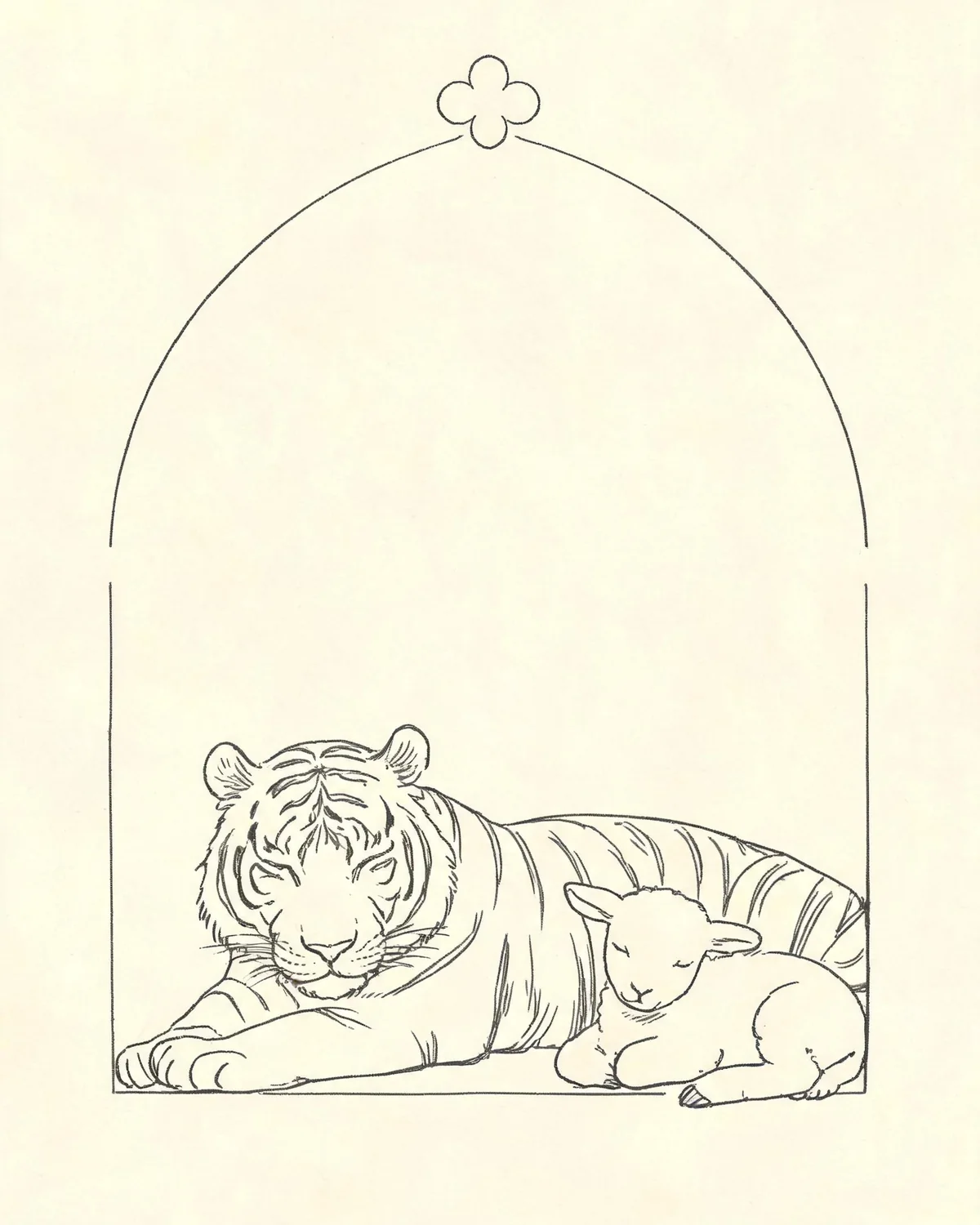
The fourth reading is peace. The prophets imagined a world where predators lie down beside the young and the vulnerable, and a child leads them. Medieval Christian bestiaries added a gentler note of their own, praising the tigress for fierce devotion to her cubs. A calm or protective tiger in your dream may lean toward that picture of power made safe.
How This Tradition Reads Dreams
A Christian reader begins by admitting the gap: there is no tiger in scripture to quote. The animal reached Western imagination later, through tales from India and the gifts of distant embassies to Rome. So the reading borrows carefully from the lion and leopard, and from the broader contrast between creatures that devour and creatures that shelter. That contrast, more than any single verse, frames what a tiger can mean.
Next comes the question of who the tiger is. Christian pastors who work with dreams have noticed that a menacing figure in a dream often stands for something within you that you would rather not face, such as anger, appetite, ambition or grief. Read that way, the aim is to understand the tiger, not only to get away from it, and to ask what it wants you to see.
Finally, the reading is weighed in prayer and over time. A single tiger dream rarely explains itself. Christian readers look at your circumstances, your personal associations with the animal, perhaps a zoo visit, a film or a childhood picture book, and any dreams that follow. They treat the first interpretation as a working guess rather than a pronouncement, and expect it to be revised.
Core Principles
The tiger borrows its meaning from its neighbors. Because scripture says nothing direct about tigers, a Christian reading draws on the lion's power and the leopard's stealth. If your tiger roared, think lion; if it watched silently, think leopard. That small step keeps the interpretation anchored in the tradition rather than in guesswork.
Predator and peace are the two poles. Every tiger dream sits somewhere between devouring and lying down in peace. Placing your dream on that line, from attack to wariness to calm companionship, tells you more than any single detail, and a later dream may show the tiger moving along it.
Strength is not the same as evil. Christian imagery admires courage as much as it fears violence; the faithful are pictured as bold as lions even while lions stand for danger. A tiger may stand for a power in you, such as decisiveness, passion or protectiveness, that needs direction rather than suppression.
Your response is part of the meaning. How you met the tiger matters: freezing, fleeing, fighting, calling or praying for help, or simply watching. In Christian dream work your own choices inside the dream often show how you are handling the real pressure the animal represents.
What the Tiger's Behavior Changes
The tiger's actions shift the reading more than its size, color or setting.
A Tiger Watching You from Cover
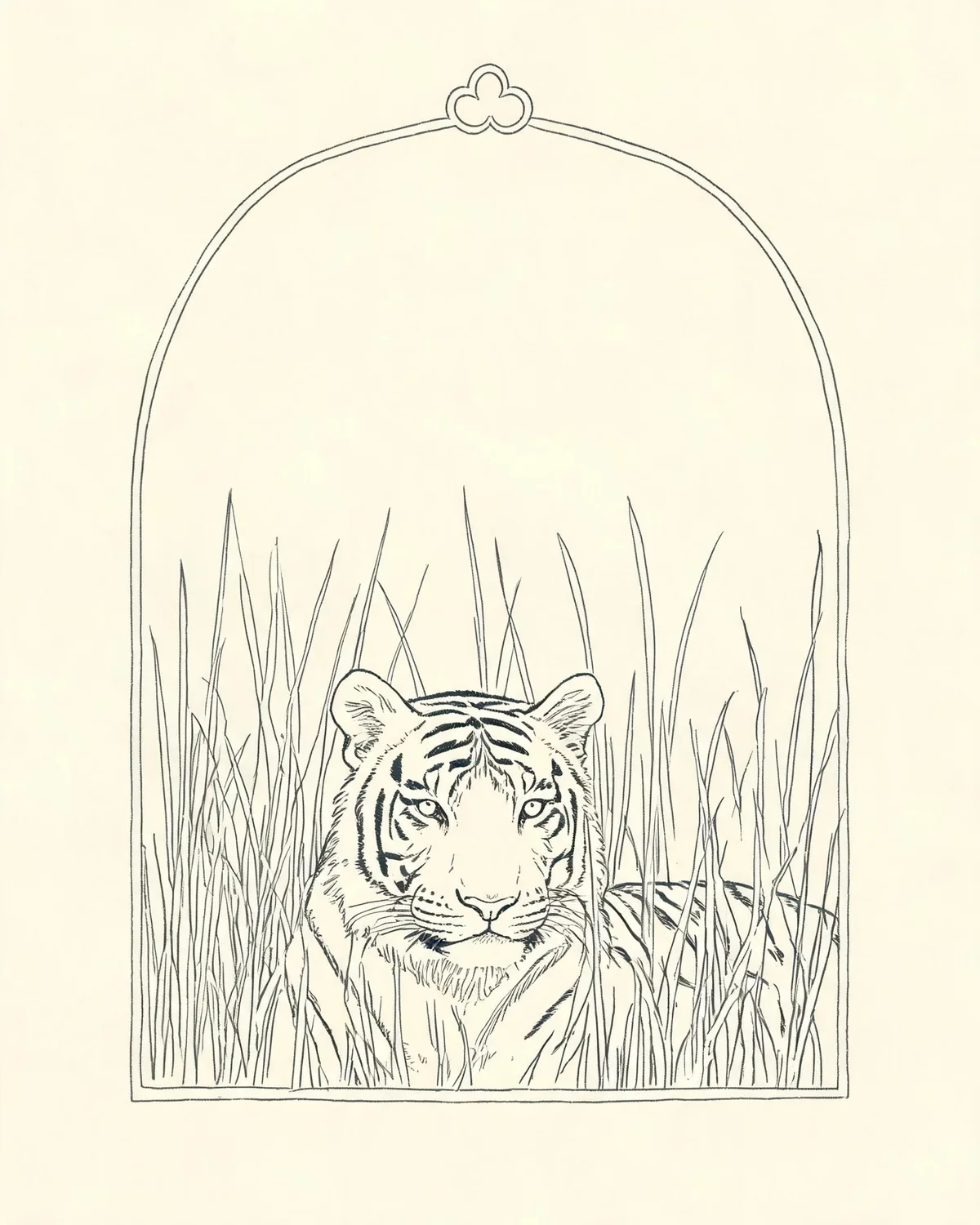
A tiger crouched in tall grass or behind trees, eyes fixed on you, recalls the predators that lie in wait near the edges of towns. In a dream this usually points to a concern you sense but cannot yet see clearly: tension at work, an unspoken conflict, or a temptation that has been circling. The fact that you noticed it is often the beginning of handling it.
A Tiger Pacing in a Cage
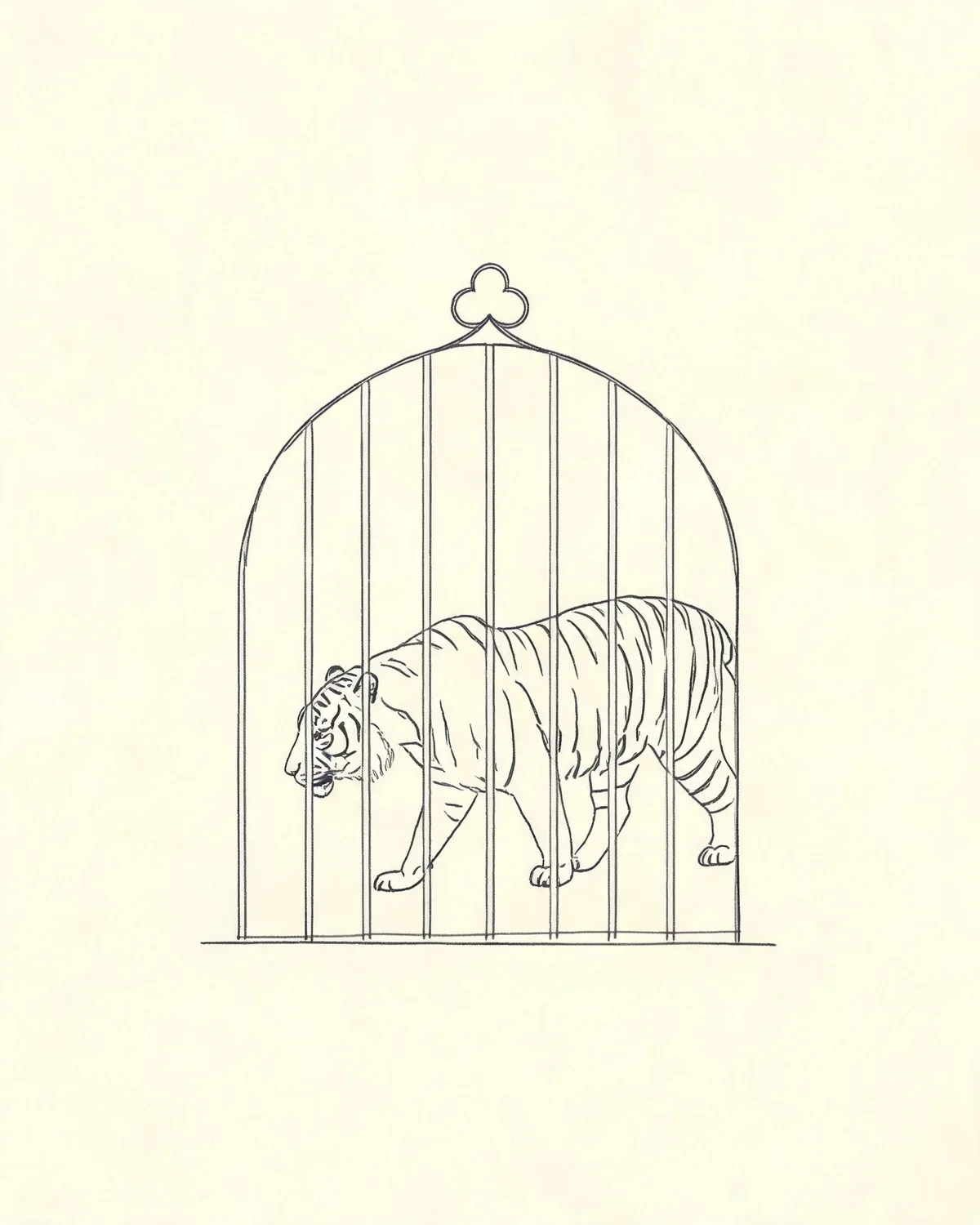
A caged tiger walking back and forth turns the image toward confined power. It may mirror energy, talent or frustration in you that has nowhere to go, or a strong person in your life who is being held back. Christian readers would ask whether the cage is protection or waste: is this strength being kept safely, or kept from its proper work?
A Tiger Attacking or Biting You
An attack is the most frightening version, and the one people most often bring to a Christian reading. Here the tiger stands at the predator pole: something feels as if it is tearing into your peace. Ask what in waking life feels that sudden and that consuming. Often it is a burst of anger, a crisis, or a demand that has overwhelmed your defenses.
A Tiger Inside Your House
A wild animal moving through your kitchen or bedroom brings untamed power into domestic space. The dream may concern a strong emotion entering family life, or a person whose intensity fills your home. It can also picture your own fierceness showing up where you usually keep it hidden. How the household reacted, with panic or calm, matters for the reading.
A Tiger Lying Peacefully Beside You
A tiger resting at your side, or letting you touch it, is the closest a tiger dream comes to the old hope of predators made gentle. It often marks reconciliation with a force you once feared, whether a person, a feeling or a part of yourself. Christian readers would see in it a picture of strength brought under love, and an invitation to trust that change.
Riding or Leading a Tiger
Riding a tiger or walking it on a lead is an old image of confronting elemental power and steering it. In a Christian reading it echoes stories of people kept safe among wild beasts. It may point to courage you are growing into, though the image also carries a caution: a ridden tiger is still a tiger, and power you are steering still needs respect.
Overcoming a Tiger in a Fight
Wrestling a tiger and winning recalls the young shepherd who fought off lions and bears long before he faced a giant. Such dreams often follow real victories over fear, addiction, intimidation or a long struggle. Notice how you won: by strength, by help from someone else, or by a calm that made the tiger back away. Each points to a different source of resilience.
Common Symbols Paired with a Tiger
A lion is the tiger's natural partner in dreams and the big cat Christian imagery knows best. It is both a picture of evil prowling for prey and a royal title of Christ. When both animals appear together, the dream may set two kinds of power side by side, one public and kingly, the other hidden and solitary, and ask which you trust.
A leopard brings in the spotted cat whose stealth made it seem more menacing than the lion. A leopard and tiger together often intensify the theme of concealed danger, though in the prophets' vision of peace the leopard is precisely the predator that lies down with a young goat.
A snake adds temptation to strength. In Christian imagery the serpent is the subtle tempter rather than the open attacker. A dream with both a tiger and a snake may contrast a danger you can see coming with one that works quietly, and ask which one deserves your attention first.
A forest or jungle sets the tiger in its own territory. Dense trees often picture the unexplored or confusing parts of life. Meeting a tiger there, rather than in a city or a house, suggests the power you are facing belongs to unfamiliar ground, perhaps a new situation in which your usual footing is gone.
How This Tradition Differs from Others
In Asian traditions the tiger is a central and often revered figure. Chinese imagery calls it the king of the land animals, places it on doorposts and graves to frighten away evil, and sets the white tiger over the west and autumn. In Hindu imagery a fierce goddess rides a tiger as a destroyer of evil. In some Buddhist teaching, by contrast, the tiger stands for anger, one of the restless passions the mind must calm.
Christian imagery is different mainly by absence. With no tiger in scripture, the tradition never developed a dedicated emblem, and medieval Christian artists and writers met the animal largely through travellers' tales and bestiaries. Those books turned it into a moral lesson, as they did with most creatures, rather than a sacred sign. A Christian reading therefore treats the tiger through broader patterns of predator and peace instead of a fixed code.
Popular dream guides tend to read tigers as personal power, courage or danger, sometimes with lucky numbers attached. Christian readers share much of the first part, but they add a moral and spiritual frame: where your strength comes from, what it serves, and whether it is moving toward peace or toward harm.
What Does a White Tiger Mean in a Christian Dream?
A white tiger stands out because its color seems to contradict its nature. In much Christian imagery, white belongs to purity, brightness and the garments of the faithful, while beasts of prey belong to danger. A white tiger in your dream joins the two, which often points to power that feels unusually clean, rare or set apart.
One way to read a white tiger, then, is as strength placed in service of something good. It may fit a season of spiritual seriousness in your life: a new commitment, a call to lead, or a decision that requires both courage and integrity. If the white tiger was calm or protective, that reading strengthens.
If it was threatening, the contrast matters. Something that looks pure or admirable may still be capable of harm: a righteous cause pursued harshly, a respected person who intimidates, or your own sense of being right turning fierce. Christian readers would gently ask whether this bright strength is being used with mercy, and whether its rarity has made it feel exempt from ordinary limits.
Is Seeing a Tiger in a Dream Good or Bad in Christianity?
Christian readers rarely sort dream animals into simply good or simply bad, and the tiger shows why. Scripture's fierce animals can stand for enemies, for the bold confidence of the faithful, and even for divine power. A tiger in your dream may therefore lean either way, and its behavior and your feelings decide which.
A tiger that is calm, protective or companionable tends to be read hopefully. It may stand for courage, healthy strength or a danger that has been brought under control. A tiger that stalks, attacks or fills you with dread is read as a warning sign in a practical sense, pointing to pressure or anger that needs attention rather than to some outside doom.
Many tiger dreams sit between the two. You feel awe as well as fear, or the animal is beautiful and alarming at once. That mixed reaction is itself meaningful: it often reflects a strength in your life that you admire and fear in equal measure, and that you are still learning to trust.
What Does It Mean When a Tiger Chases You in a Dream?
Being chased by a tiger is one of the most common versions of the dream, and Christian pastoral dream work has a distinctive way of reading it. A pursuer that never stops coming often represents something you have been avoiding: a feeling, a decision, a conversation, or a part of yourself you would rather keep at a distance. The harder you run, the larger it tends to grow.
The Gospel counsel to settle with an adversary while you are still on the road is often applied here. Rather than reading the tiger as an outside enemy, ask what you would discover if you stopped and turned around. Dreams of escaping a tiger can feel like relief, yet they may simply postpone the question.
If you did escape, notice how. Climbing out of reach, finding shelter or being helped by someone each suggest a different resource you are relying on. If the chase ended with the tiger slowing, sitting or turning away, the dream may be marking a fear that is starting to lose its grip.
What This Dream Is Not
A tiger dream is not a notice that an enemy is about to harm you, and it is not a sign of misfortune waiting around the corner. Christian readers treat such images as pictures of pressure, power and inner conflict, not as reports from outside.
It is not evidence of spiritual attack because the animal was frightening; Christian imagery uses fierce beasts for courage and divine strength too. And it is not a judgment that you are wild, sinful or dangerous because the tiger seemed to stand for your own anger. Strong feelings are an ordinary part of being human, and the tradition's interest is in directing them well.
If tiger dreams keep returning and leave you anxious, talking them over with a friend, pastor or counselor you trust can help.
FAQ
What is the biblical meaning of a tiger in a dream?
There is no direct scriptural meaning, because the tiger does not appear there. Christian readers draw on the lion and leopard, reading a tiger as strong, untamed power that can threaten, protect or be brought to peace, depending on how it behaves.
Does the tiger appear in scripture?
Not by name in most translations. Scripture mentions lions and leopards, and one well-known saying about a leopard's spots is sometimes rendered with stripes, which is why the tiger is linked with habits and character that are hard to change.
What does a tiger symbolize spiritually?
Spiritually, a tiger usually stands for intense power: courage, passion, instinct and the capacity for both protection and harm. Christian readers add the question of direction, asking whether that strength is serving love and justice or slipping out of control.
What does an orange tiger mean in a dream?
The ordinary orange-and-black tiger points to energy, alertness and vivid presence. Its brightness can suggest passion or anger that is hard to hide. Christian readers would focus less on the color and more on what the tiger did and how you responded.
What does a baby tiger mean in a dream?
A tiger cub often pictures strength in an early, manageable form: a talent, a new commitment or a feeling that is still small. It can be endearing, but it will grow, so the dream may be asking how you plan to nurture and guide it.
Does a tiger dream mean I have an enemy?
Not necessarily. Some readings link tigers with powerful opponents, but Christian dream work more often finds the tiger's force within your own life, as anger, pressure or ambition. Look first at your inner state before suspecting someone else.
Can a tiger in a dream represent God?
Scripture occasionally compares God's power to fierce big cats, so the idea is not foreign to the tradition. Still, Christian readers are cautious about naming any dream image as God. They ask whether the encounter left you humbled and steadied, or simply frightened.
What does a sleeping tiger mean in a dream?
A sleeping tiger suggests power at rest: a strength you have not yet used, or a risk that is quiet for now. It can invite patience and respect, a reminder to leave certain situations undisturbed until you are ready.
Why do I keep dreaming about tigers?
Recurring tiger dreams usually follow a lasting pressure or a strong emotion that has not been addressed. Keep a short record of each one. Changes in the tiger's behavior, from stalking to resting, often track changes in how you are handling that pressure.
How to Use These Readings Today
Begin by describing the tiger's behavior in one sentence: watching, chasing, attacking, resting, being ridden. Then add one sentence about how you felt, both during the dream and on waking. These two lines anchor everything else and keep you from getting lost in details.
Next, ask where in your life you are facing something with that kind of force. It might be your own temper, a demanding person, an ambition that has started to take over, or a fear you keep outrunning. If the tiger was calm, ask instead what strength in you have recently become steadier or more trustworthy.
Then choose one concrete step. That might be a frank conversation you have been avoiding, a deliberate pause before reacting in anger, or simply naming the pressure in prayer or in a journal. The aim is not to banish the tiger but to stand in the same clearing with it a little more calmly.