Cat in Islamic Dream Interpretation
A grey cat settles on the cushion by your door and watches you eat. Islamic dream interpretation reads that small scene less as a picture of a pet than as a picture of your household: who shares your food, who keeps your accounts and who might take more than their portion. Below you will find how classical readings sort the cat by what it does, what color adds, and how to sit with the dream afterwards.
On this page
- Key takeaways
- What a Cat Means in Islamic Dream Interpretation
- How Islamic Dream Interpretation Reads Dreams
- Core Principles
- How the meaning changes
- Common Symbols Paired with Cat
- How This Tradition Differs from Others
- What Does a Black Cat Mean in an Islamic Dream
- What Does a White Cat Mean in an Islamic Dream
- What Does It Mean to See a Dead Cat in a Dream in Islam
- What it is not
- FAQ
- How to Use These Readings Today
- Related symbols
Key Takeaways
- Classical Islamic manuals read a cat mainly as a person or a holding: a share of work, a ledger, an inheritance, a household member.
- What the cat does weighs more than how it looks; resting, stealing, scratching and slipping indoors each lead somewhere different.
- A calm cat settled inside your home is among the gentler images, tied to an easy and productive stretch.
- Scratches, bites and theft turn the reading toward trust inside the household rather than toward the animal.
- Color is a thin layer in the manuals; fear of black cats owes more to folk belief than to the dream literature.
- Islamic culture regards cats warmly, so a cat dream starts from affection and reads conduct from there.
What a Cat Means in Islamic Dream Interpretation
The first reading concerns what you hold. Classical manuals connect the cat with a book of records, a share in a trade, an inheritance or the work you live from. The link is practical: a cat lives where the stores are kept, eats from the same kitchen and counts among the things that belong to a house. Seeing one can turn your attention to accounts, a partnership or a portion you are owed.
The second reading makes the cat a person close to you. Older interpreters described agreeable, soft-spoken figures who want to be liked yet wait for a chance to unsettle the peace, and a self-satisfied figure who puts comfort first. The manuals' gendered language often cast that figure as a woman of the house; a present-day reading would set gender aside and ask which relationship feels pleasant on the surface and uneasy underneath.
The third reading is about quarrels and leaks inside a home: estrangement between spouses, children turning sharp, eavesdropping, backbiting, small thefts. A tomcat in the same material is a thief, or a servant who takes more than he gives an employer. Older readings bundle these together because they share one root, which is harm that comes from someone already inside the door.
Against those warnings sits a quieter reading. A cat sitting peacefully in your house is linked with a comfortable, calm and profitable year, and stroking a cat among other animals is read as a soft heart and gentle speech. The same animal can mean ease or friction, and the scene decides which.
How Islamic Dream Interpretation Reads Dreams
Interpreters in this tradition first ask what kind of dream they are holding. Islamic teaching distinguishes a true dream, a troubling dream that should be set aside, and an ordinary dream made from the day's leftovers. A cat that wanders through your sleep after you fed a neighbor's cat that evening may belong to the third kind and can be left there. Seeking refuge from disturbing dreams before sleep is part of the same outlook, so an alarming cat is not automatically treated as meaningful.
When a dream seems weightier, the method moves through three layers: the kind of creature, its particular type, and its nature and habits. For a cat, habits carry most of the meaning. Cats are quiet, close to people, fond of comfort, quick with a paw and good at slipping things away unseen. Each classical reading grows from one of those traits, which is why a scratch, a theft and a nap lead to such different places.
The tradition also weighs who is dreaming. The same image can be good news for one person and a caution for another, depending on their work, standing and conduct. A merchant who dreams of a cat beside the strongbox and a parent who dreams of a cat beside the cradle are asked different questions.
Core Principles
Inside before outside. Most cat readings concern people already within your circle: a helper, a partner, a relative, a guest. A cat that comes in from the street is treated differently from one that already lives with you, and that distinction usually matters more than its size or coat.
The paw shows the intent. Cats signal through small actions such as a slow blink, a raised claw or a turned back. Older readings followed the same logic, so the smallest gesture in the scene (a swipe, a theft from the table, a nap on your bedding) carries the reading. The moment just before you woke is often the one to keep.
Charm is read twice. The tradition admired the cat's gentleness and suspected its flattery at the same time. A purring, affectionate cat can mean warmth and kindness, or a pleasant manner that hides an agenda. Interpreters settled the question by the cat's next move and by how the scene felt to you, not by the purr alone.
What leaves the house matters. Whatever a cat carries off was linked to what a thief might take. The object narrows the reading: food points to provision, a coin to money, papers to records, a garment to reputation or privacy.
What the Cat's Behavior Changes
Most of the reading rests on one action. These are the scenes that come up most often, each read on its own terms.
A cat resting quietly in your home
A cat curled on a cushion or asleep by the stove is one of the mildest scenes in the cat material. Older readings tied a tomcat sitting peacefully in the house to a comfortable, calm and profitable year. In present-day terms, the picture can reflect a home that feels settled, or a wish for that kind of quiet after a crowded season.
A strange cat slipping in from outside
An unfamiliar cat pushing through a door or window was read as an intruder, and older readings named it a robber. Whatever it carried away pointed to what such a person might take. If the cat walked out empty-mouthed, the scene stays a question about who has access to your home and whether you are at ease with that.
A cat stealing food from your table
Theft by a cat was linked to a fine, a quarrel with relatives or children, or a loss through robbery. The food matters: a whole dish suggests a larger drain on what you provide, while a scrap suggests something small that keeps going missing. Ask who in your life eats from your plate without being invited.
A cat that scratches you
A scratch was read as betrayal by someone who serves you or works closely beside you, such as an assistant, a helper or a junior colleague. The wound is shallow but stings, which suits the kind of hurt involved: a confidence shared, a task neglected, a remark repeated behind your back. Where the scratch landed, hand or face, can sharpen the meaning.
A cat that bites or attacks
A bite was tied to a deceiver, someone who plays a role to win your trust. Older readings also attached a long, draining year to a bite, and counted a wildcat's bite as heavier still. A present-day reading would take that as an image of strain and ask what has been wearing you down, whether a person, a task or a promise you cannot keep.
Stroking or feeding a cat
Caressing a cat, alongside other gentle animals, was read as a soft heart and kind words. Feeding a hungry cat continues that line: care offered freely, often to someone who cannot repay it. If the cat took the food and then turned on you, the reading folds back toward the charming figure who waits for an opening.
A wildcat or an unusually large cat
A wildcat stood for hardship, hard labor and a cramped way of living, and a large wildcat for a troublesome year. Size and wildness roughen the domestic picture, so the comfort of a house cat becomes the strain of something you cannot tame. The image can mirror work, debts or duties that turned out bigger than you expected.
Selling or giving away a cat
Selling a cat was linked to spending your money, and selling a tomcat to spending it on charity. Giving away a cat you care for carries the same sense of letting a holding go by choice. The tone of the scene matters: relief points to a burden released, regret to a loss you have not finished counting.
Common Symbols Paired with Cat
Cat and mouse. The natural order has the cat hunting the mouse. When the two appear as friends, older readings saw hypocrisy, affectation and a slackening of standards, the same reading they gave to a wolf lying down with a lamb. The pairing asks whether an alliance in your life rests on honesty or on convenience.
Cat and lion. A folk tale told in Muslim lands has the first cats sneezed from a lion's nose aboard the Ark, sent to deal with rats troubling the passengers. The story explains the family likeness, so in a dream, a cat beside a lion can set a household-sized problem next to a larger authority and invite you to sort out which matter is truly yours to handle.
Cat and money. Coins, purses and ledgers bring the cat's commercial reading forward. Drawing fat from a cat was linked to receiving stolen money or a share of it, and selling a cat to spending. When a cat sits on money in your dream, the question is whether a gain is clean and whether someone else has a claim on it.
Cat and food. A story told of an early woman mystic has a cat spill the meal she had waited days to eat, and the episode became a lesson in accepting what is given. A cat at your food raises the same theme from another side: what you were counting on, who interrupted it and how you responded.
How This Tradition Differs from Others
Elsewhere the cat has carried heavier symbolic loads. Ancient Egypt honored a cat goddess as a guardian who fought the serpent of darkness. Medieval European folklore turned the black cat into a witch's familiar, and several East Asian traditions treated cats as shape-shifters of ill omen. Much modern popular writing leans on the cat as an emblem of independence, intuition or feminine mystery.
Islamic dream reading takes a more domestic route. The cat is first a member of the household, so the questions are social: who has access to your home, who keeps your accounts, who speaks gently and listens at doors. Its mystery is largely set aside in favor of its manners. Where folk charms elsewhere treated cats as bringers of luck or protection, the manuals rarely ask whether a cat brings fortune at all; they ask what it reveals about the people around you.
Islamic culture more broadly regards the cat with affection, and cats are commonly said to carry blessing. That warmth sits alongside the cautious dream readings without contradiction: the culture loves the animal while the manuals borrow its habits to picture human conduct. Other traditions are asking a different question of the same creature, and each answer makes sense inside its own frame.
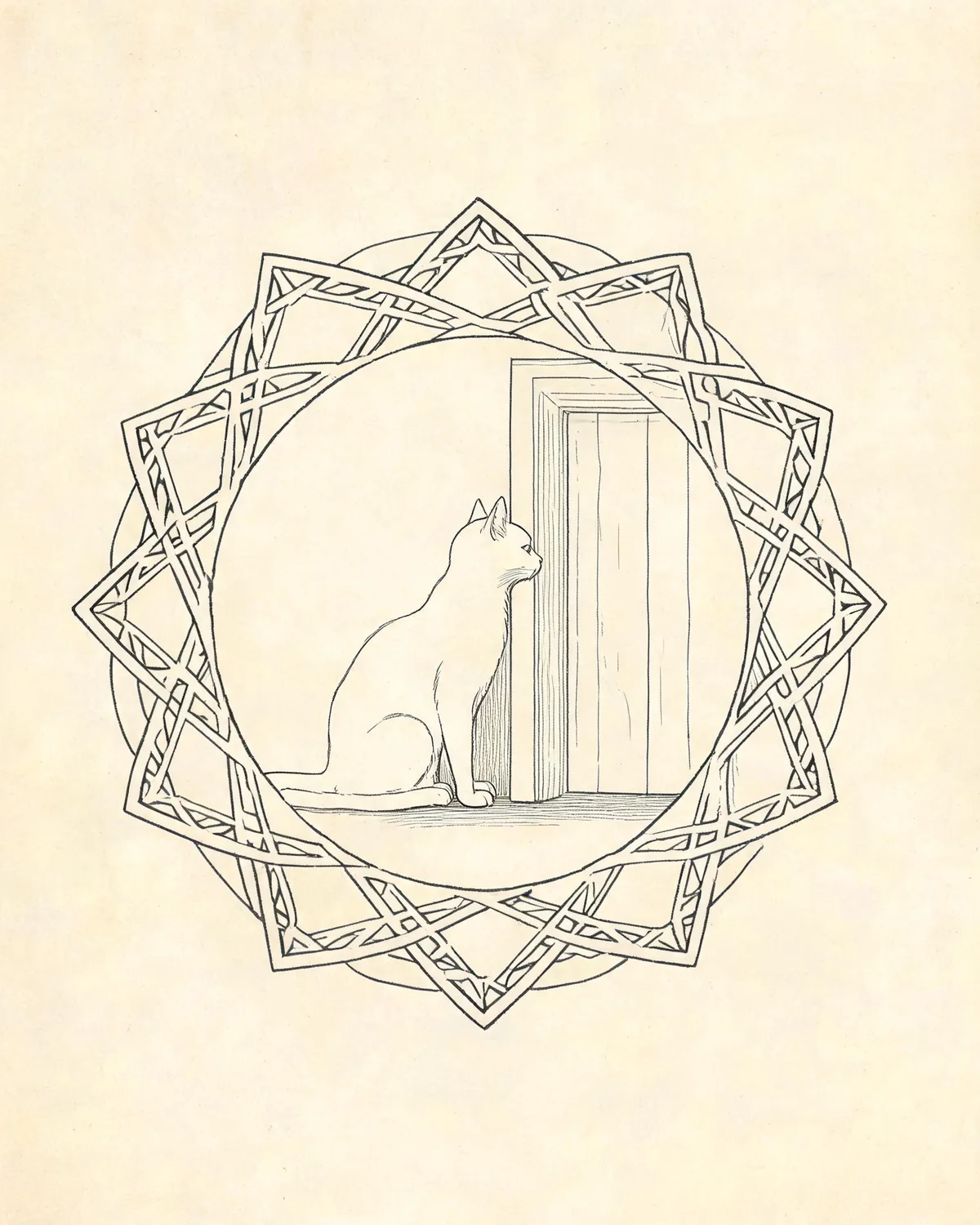
What Does a Black Cat Mean in an Islamic Dream?
Older Islamic readings do not give the black cat a meaning of its own. The cat material is organized around actions such as resting, stealing, scratching and biting, and the color of the coat barely appears.
The weight comes from folklore. In parts of the Muslim world a fully black cat was credited with unusual properties, and some communities linked black cats with jinn and advised greeting one politely if it came into a room at night. Those beliefs belong to custom and storytelling, and the dream literature does not build on them.
So a black cat in your dream is read like any other cat first: what was it doing, and where? A black cat asleep on your bed leans toward the settled-home reading; a black cat dragging something out of the kitchen leans toward loss. The color can still shape the mood: if the darkness of the animal felt threatening, notice what in your waking life feels unlit or unspoken, and treat that feeling as part of the dream.
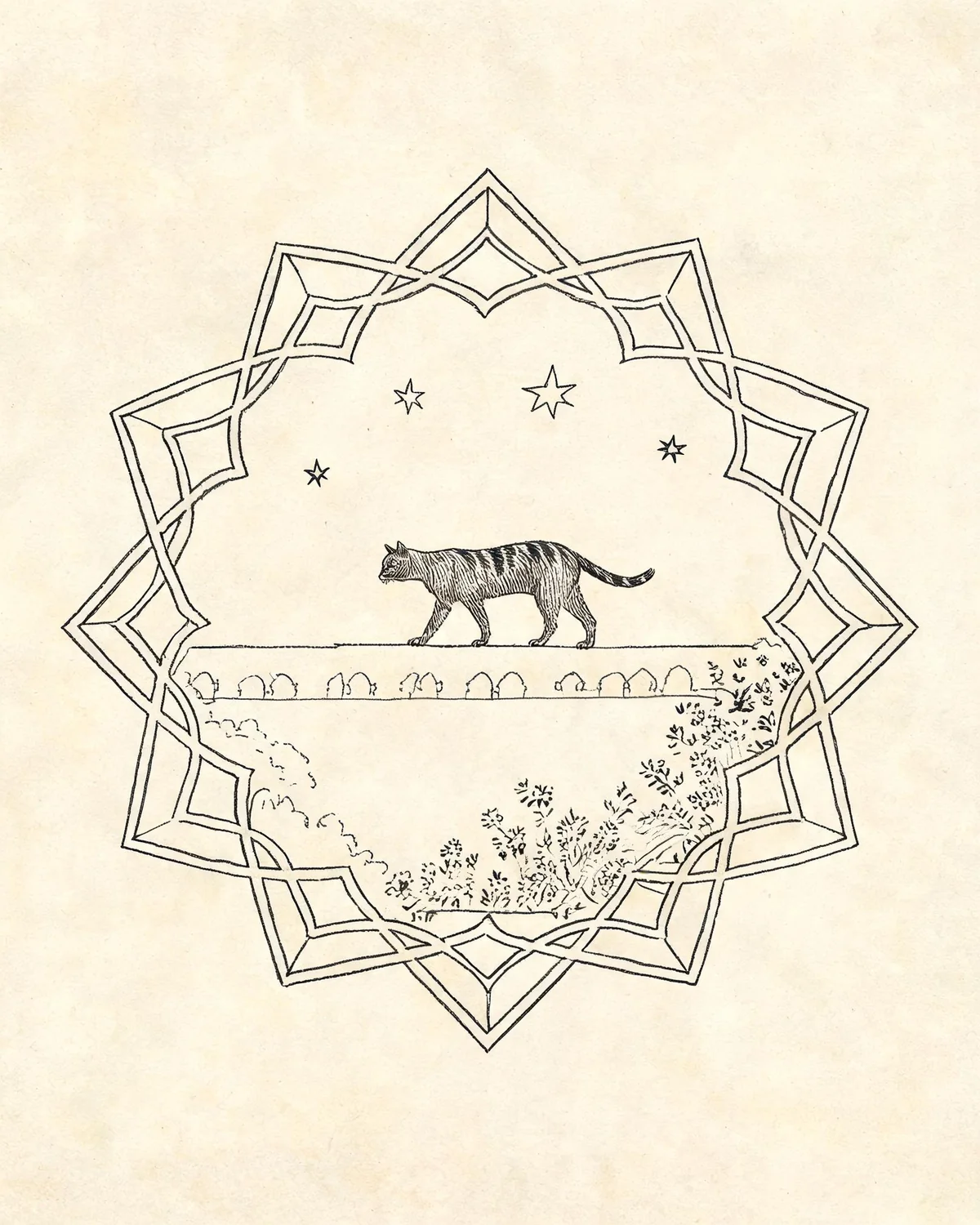
What Does a White Cat Mean in an Islamic Dream?
White carries a gentle charge across Islamic dream imagery, where white robes, snow and light are linked with goodness and purity. One early narrative about a heart being washed describes the tranquillity placed inside it as looking like the face of a white cat. The phrase pictures peace descending rather than ruling on cats, yet it shows how naturally a pale cat can stand for calm.
In a personal dream, a white cat that sits still, follows you softly or settles in your lap leans toward that calm: reassurance, gentleness, a relationship that feels clean. The classical structure still applies, though. A white cat that steals or scratches is read through the action, and its brightness can make the contrast sharper, like a pleasant face on behavior that does not match it.
If the white cat appeared during an anxious stretch, ask what in your life currently feels steady enough to rest on.
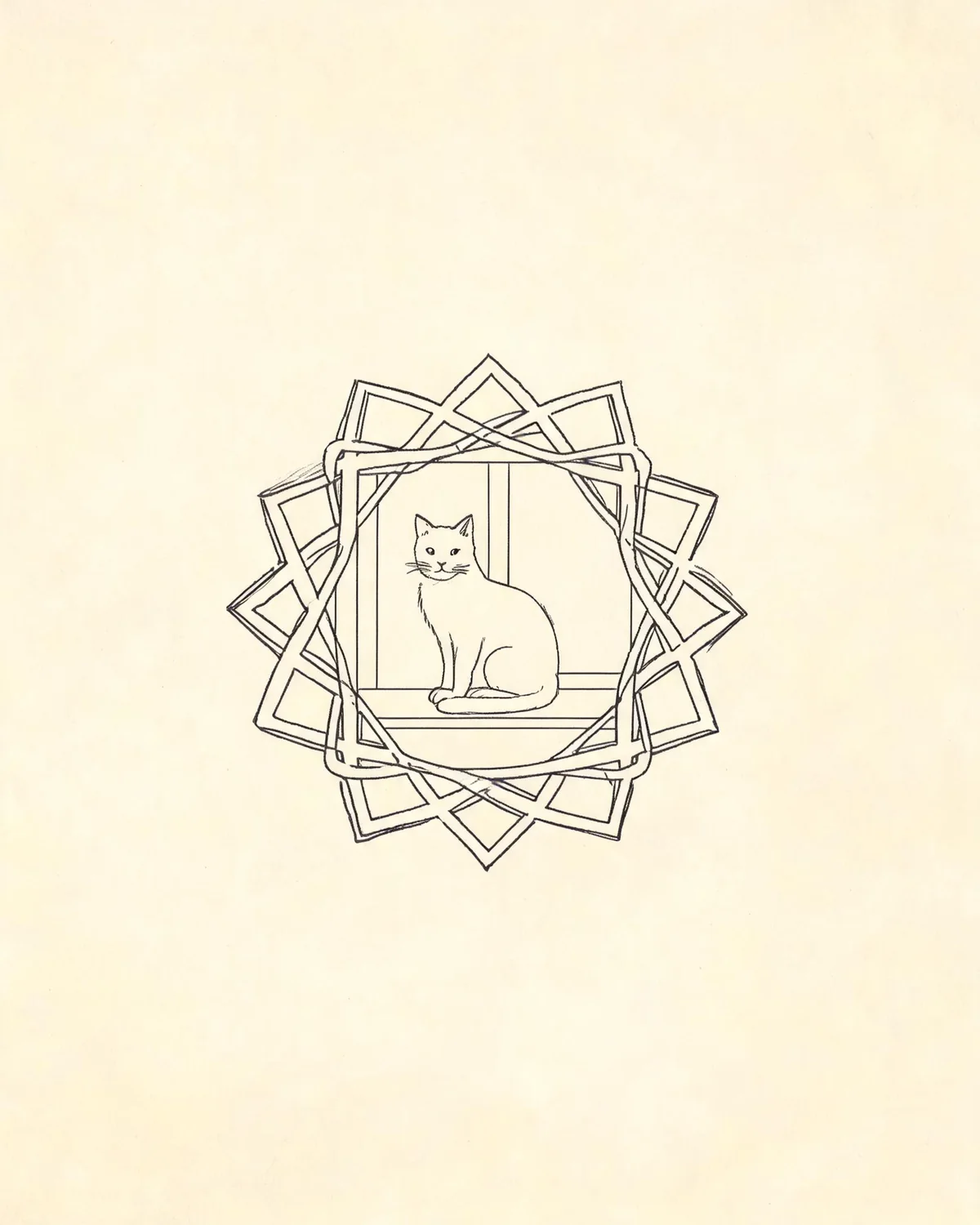
What Does It Mean to See a Dead Cat in a Dream in Islam?
The classical material does not list a dead cat as a scene of its own, so a reading has to be built from what the cat stands for. If the cat in your dream felt like a deceitful or intrusive presence, its stillness can be read as that influence losing its hold. If it felt like a share, a record or a source of work, a dead cat can point to an arrangement that has run its course.
Killing a cat is different, because there the action is yours. Older readings linked killing or beating a tomcat with catching a thief, exposing something that had been taken in secret. A present-day reading would ask what you are finally confronting, and would never treat the scene as permission to harm an animal.
Finding a family cat dead can also carry plain grief. A cat that shared your home for years is part of its texture, and dreaming of its loss, especially after a real pet has died, is often mourning in pictures rather than a coded message. Let that reading come first if it fits.
What This Dream Is Not
A cat dream, read in this tradition, is not a verdict on a particular person: it can show where trust feels thin, but it cannot tell you that a colleague, cousin or guest has taken anything. It is not a statement about your health, even where older readings attached a hard year to a bite or a fight. And it is not a religious ruling on you or on cats, since an unsettling dream may simply be the troubling kind the tradition advises setting aside.
What the image can do is direct your attention. If something in your household needs addressing, an honest conversation, a recounted ledger or a clearer agreement will serve you better than a dream treated as evidence. Nor does the dream ask you to fear or avoid cats in waking life.
FAQ
Are cats considered good animals in Islam?
Broadly, yes. Islamic culture tends to regard cats warmly, and they are commonly said to carry blessing. That affection shapes the starting point of a cat dream, even though the manuals borrow the cat's habits to picture both kind and difficult people.
Is it good to see a cat in your dream in Islam?
It can be. A calm cat at home leans toward ease and a profitable stretch, while theft, scratches and bites lean toward strained trust. Look at the cat's action and your own feeling in the scene before deciding which side it falls on.
What does a talking cat mean in an Islamic dream?
The manuals do not single out a talking cat, so the words carry the reading. Because the cat often stands for a smooth-spoken person, a speaking cat sharpens that link. Weigh what it said: flattery, a request or a warning.
What does a cat yowling or hissing mean in a dream?
Older readings tied a tomcat's yowling to uproar, backbiting and insinuation. A noisy cat at night can therefore point to talk circulating about you or within your household. Notice whether the sound came from inside the home or beyond it.
Can a cat in a dream be a jinn?
Popular belief in some Muslim communities links black cats with jinn. Interpreters in this tradition do not read cat dreams that way and treat the cat as a person or a holding. If the dream frightened you, seek refuge and set it aside.
What does it mean to dream of many cats in Islam?
A crowd of cats multiplies the household reading: several small claims on your time, money or attention at once. If one cat stood out, read that one first. A crowd that felt friendly suggests a busy, sociable home rather than a threat.
What does it mean to turn into a cat in a dream?
Older readings took this hard, linking a person changed into a tomcat with living by taking what is not theirs. A present-day reading would ask where you feel tempted to slip around a rule, or where you feel quietly overlooked.
Does a cat dream relate to money in Islam?
Often, yes. Classical readings connect the cat with a business share, an inheritance, a ledger and the work you live from. A cat near coins, papers or a shop counter brings that commercial thread to the front of the reading.
Should I tell anyone about a bad cat dream?
The tradition advises sharing a dream only with someone trustworthy and knowledgeable, and keeping troubling dreams to yourself. If a cat dream left you uneasy, note it privately and wait to see whether it still feels meaningful a few days later.
How to Use These Readings Today
Start with the verb. Write down what the cat did in a single word (slept, entered, stole, scratched, bit, purred) before you write anything else. That word decides which of the readings above applies, and it keeps a vivid scene from sprawling into every possible meaning.
Then place the cat in your life. Ask who in your household or work circle shares the cat's quality in that moment: the colleague who is charming but careless with confidences, the relative who drops by and leaves with something, the part of your own work that feels like a ledger nobody is checking. ; pick one candidate rather than five.
Finally, choose one small, fair action. Recount a shared account, return a call you have been avoiding, or put a loose arrangement in writing. If the dream was simply unpleasant, the tradition's own advice is modest: seek refuge, say a short prayer, and do not hand the dream to someone who will make it heavier.