Rain in Islamic Dream Interpretation
Rain sweeps across a dry courtyard, darkens the dust and runs toward a well that has stood empty for months. Classical Islamic dream reading leans that picture toward mercy and provision, and the sections below follow the details that can move it: whether anything is broken, where the water lands, what else falls from the sky, and what you do while it falls.
On this page
- Key takeaways
- What Rain Means in Islamic Dream Interpretation
- How Islamic Dream Interpretation Reads Dreams
- Core Principles
- How the meaning changes
- Common Symbols Paired with Rain
- How This Tradition Differs from Others
- Is Seeing Rain in a Dream a Good Sign in Islam
- What Does Heavy Rain or a Flood Mean in an Islamic Dream
- What Does Bathing in the Rain Mean in an Islamic Dream
- What it is not
- FAQ
- How to Use These Readings Today
- Related symbols
Key Takeaways
- Harmless rain is the default picture of mercy, provision and relief in Islamic dream interpretation.
- Damage is the hinge: a storm that wrecks homes turns the reading toward a whole community's conduct.
- The edge of the rain marks the edge of the meaning, whether one roof, one quarter or a whole town.
- What falls matters: honey or food from the sky reads as shared plenty, stones or dust as hardship or injustice.
- Walking through rain, sheltering from it, washing in it and drinking it each carry a different reading.
- Older interpreters weighed the land itself, so rain in a parched country and in a wet one were read apart.
What Rain Means in Islamic Dream Interpretation
The first reading is mercy. Rain that harms nothing is tied to blessings, profit and kindness that arrives from beyond your own effort, and it is also read as life itself and as a promise finally kept. The picture is of something given rather than earned: a field watered without anyone carrying a bucket.
The second reading is revival. Classical manuals connect good rain with wells that fill again, springs that run sweet, and an old matter that had gone stale coming back to life. Relief from distress and the settling of debts belong to the same cluster, and for someone who works the land the image points plainly toward a good harvest.
The third reading is knowledge. Rain is also read as wisdom, guidance and a helping hand, the kind of benefit that spreads once it is shared. A cloud held in your own hand and raining from it was read as the wise speech that comes out of you, and turning into a rain cloud was read as wealth that benefits other people. In these images you are no longer under the rain; you have become its source.
The fourth reading appears only when the rain does harm. Older readings tied a storm that wrecks homes and uproots trees to the moral failings of the place where it falls, and they addressed it to that community rather than to a single person. A present-day reading would ask what feels unsafe, unfair or neglected in the shared life around you, and what part of it is yours to mend.
How Islamic Dream Interpretation Reads Dreams
Interpreters in this tradition begin by asking what kind of dream they are hearing. Dreams are sorted into three kinds: the true dream, held to carry real meaning; the dream that rises from the self and its daily worries; and the disturbing dream that is best set aside. A rain dream that follows a day of checking the forecast or worrying about a leaking roof most likely belongs to the second kind, and older readers would not press it for more.
When a dream does seem to carry weight, the interpreter is expected to hear the whole account and its smallest details. For rain, that means the strength of the fall, its boundaries, the color and cleanliness of the water, and whatever comes down with it. The single word "rain" is never enough to read from.
The interpreter also weighs land and custom. Classical manuals note that snow or hail seen by someone in a hot country was read as rising prices or drought, while snow, rain and hail seen in a cold country leaned toward a good harvest. Rain over a desert town and rain in a region where it seldom stops are therefore heard differently.
Finally, the tradition prizes restraint. A founding figure of the craft is said to have answered only a small share of the dreams put to him, often admitting he did not know, and interpreters are told to avoid firm opinions. A rain reading is offered as a likely sense and held loosely.
Core Principles
Look for damage before abundance. The first question is not how much rain fell but whether it broke anything. A downpour that leaves roofs and trees standing keeps its generous reading however heavy it is; a light rain that ruins a harvest does not.
The edge of the rain is the edge of the meaning. Classical readings follow the water's boundary closely. Rain over one house speaks to that household, rain on one spot speaks to the people who live there, and rain over a whole town speaks to the town. Before reading anything, notice where the dry ground begins.
Rain answers a lack. The image gains its force against drought. Older manuals read a sky that has hardened into one solid sheet as drought, and a thirsty old woman as a dry season; when she turns into a young girl, she was read as rain. In this tradition rain is the reply to a long wait, and the length of the wait in your own life is part of the reading.
Notice how you meet the water. Watching from a doorway, walking through the downpour, hiding under a roof, washing in it or drinking it each place you in a different relation to what is being given. The scenes below follow these positions one by one.
What Changes the Reading of Rain
Each of the following scenes shifts where the meaning lands and how heavily.
A Soft Rain Settling the Dust
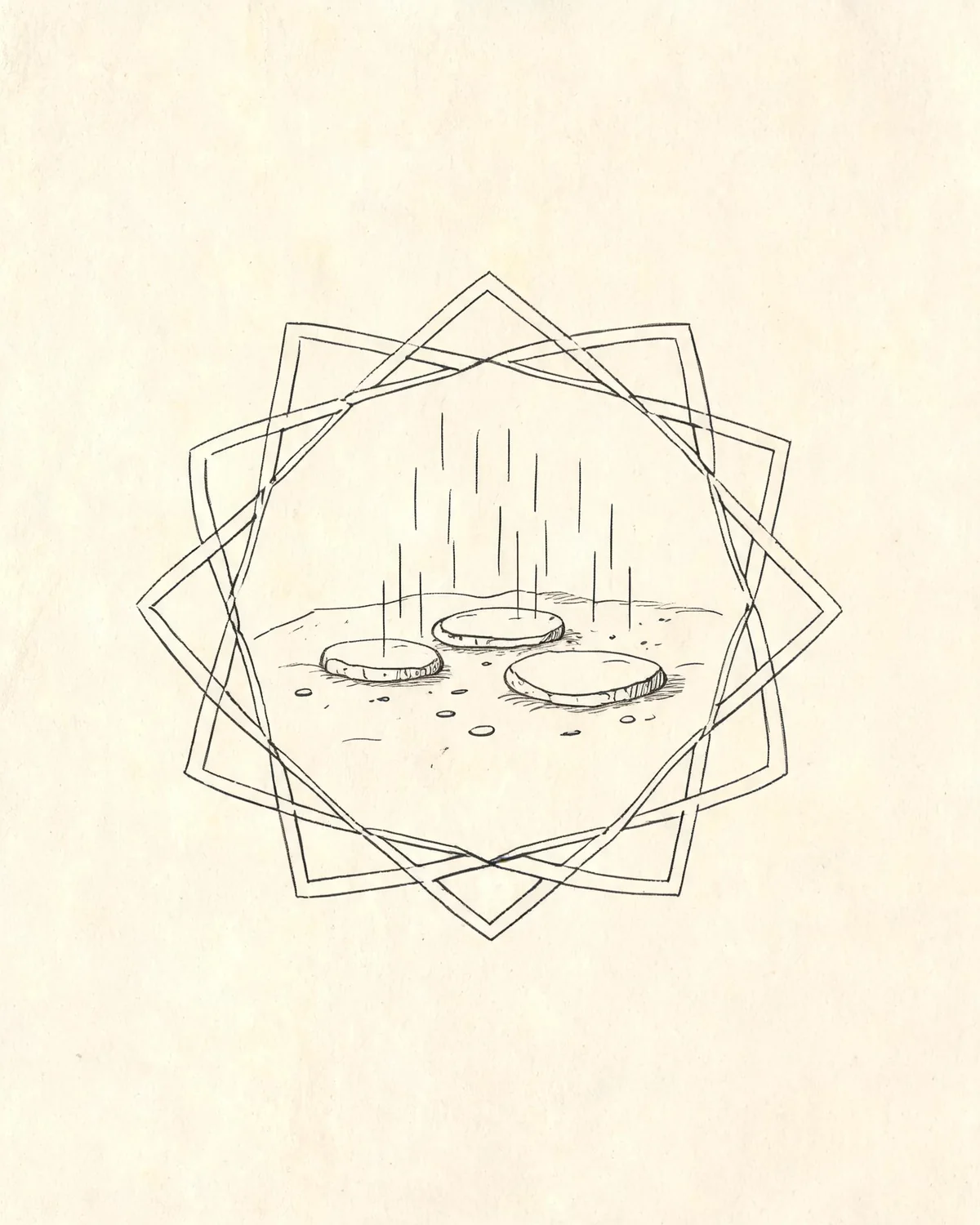
A light, steady rain that wets the ground without flooding anything is the gentlest form of the image. It sits closest to the readings of mercy and quiet provision, and some people take it as a sign that a long strain is easing. The softness matters: help in this picture arrives without noise or demand, and nothing needs repairing once it passes.
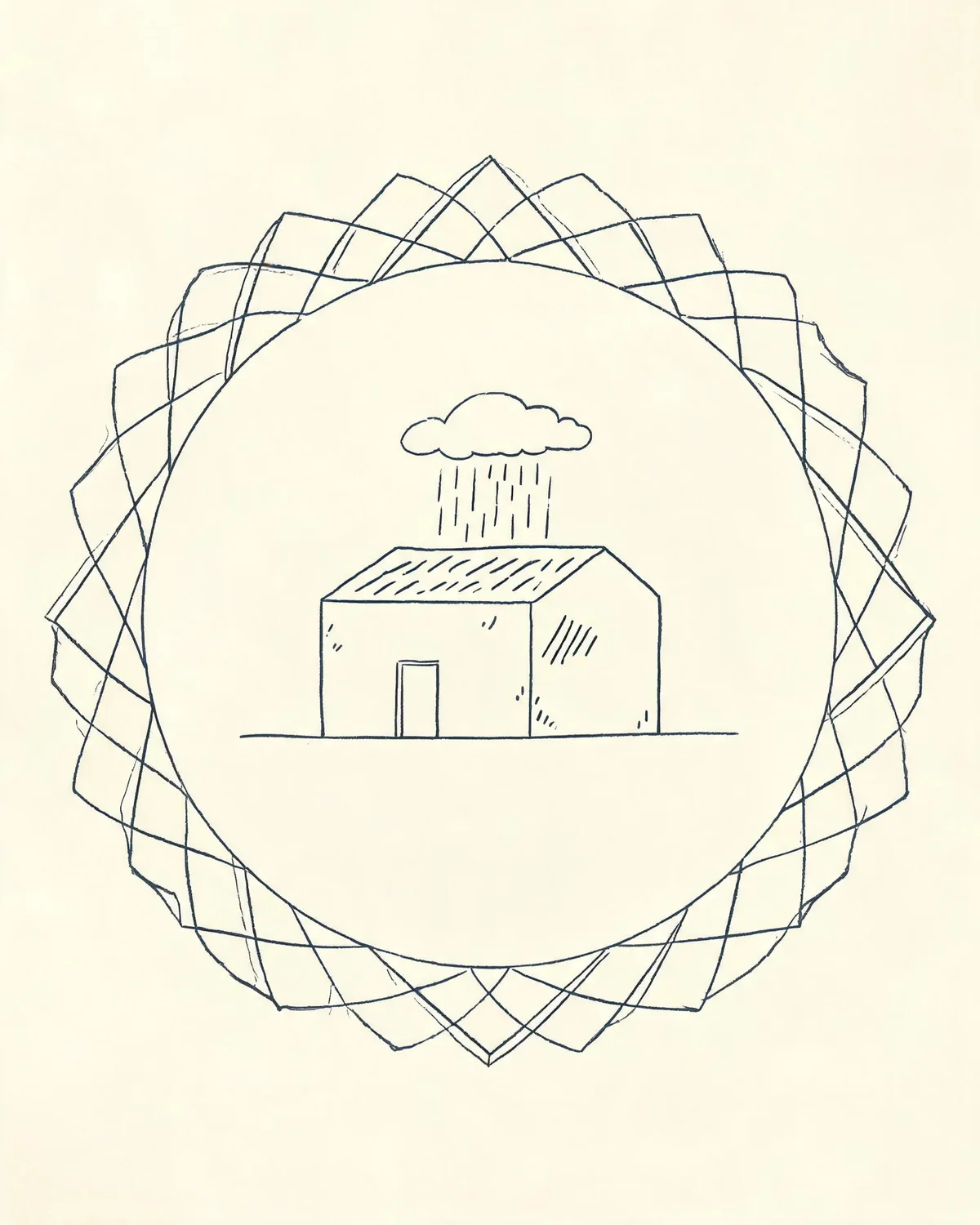
Rain Falling Only on Your House
When rain falls on your roof while the street stays dry, classical readings hear personal blessing aimed at one household. Older readings also paired this private rain with someone in the house falling sick or carrying a heavy pain. A present-day reading would ask who under that roof needs attention now, and whether a blessing and a burden are arriving at the same door.
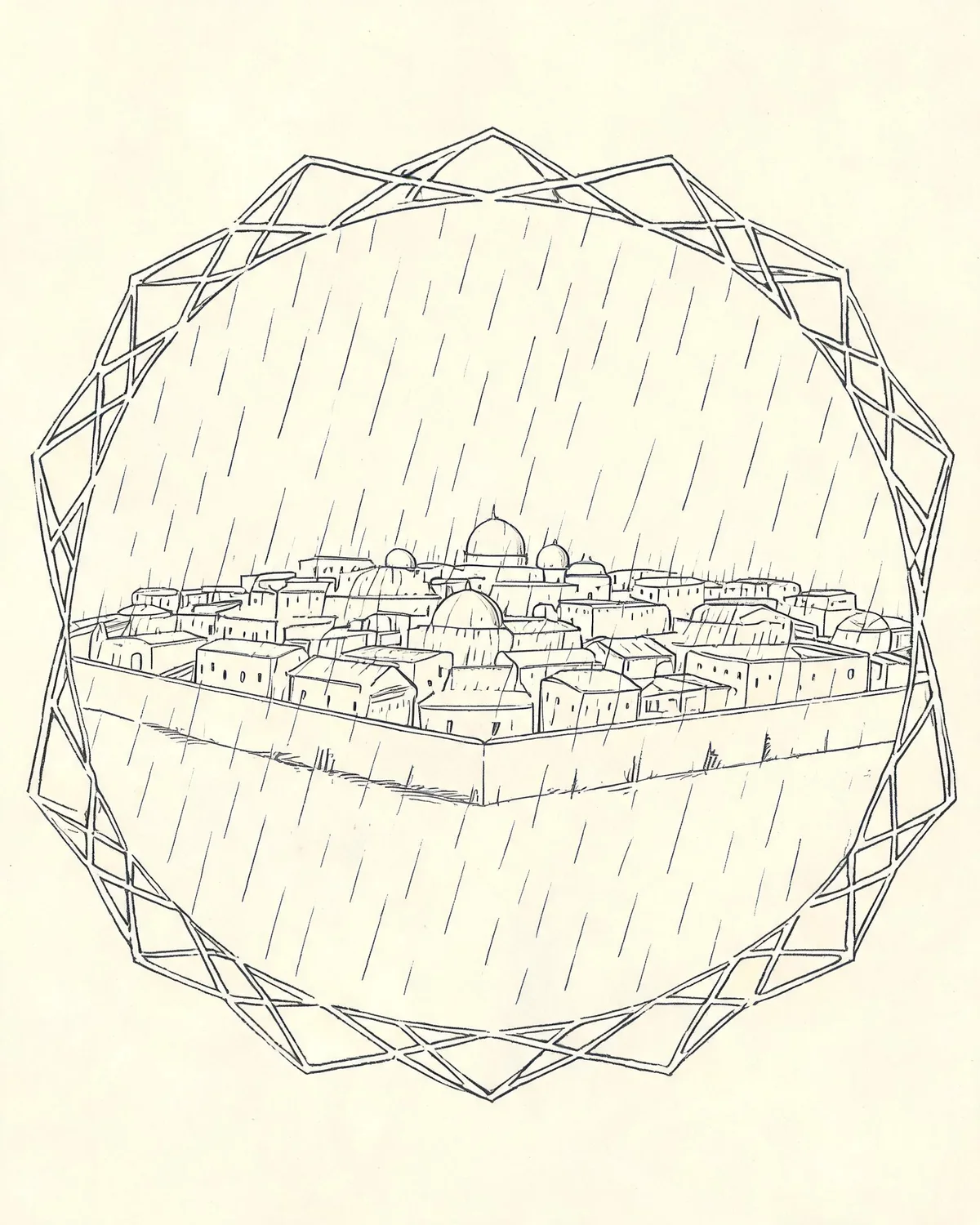
Rain Over the Whole Town
Rain that covers every street spreads the benefit across the community: shared provision, a good season, relief nobody has to compete for. The contrast case is rain falling on one spot while the rest of the town stays dry. Older readings heard that confined rain as sorrow for the people living there; today it is usually read as grief or worry gathered in one place.
Stones, Blood or Dust Falling Like Rain
These are the hardest variations. Older readings tied stones or blood from the sky to calamity and to a community's wrongdoing, and dust or sand to an unjust authority over that place. Earth falling without dust reverses the tone and was read as prosperity and harvest. Today the image is usually taken as a sense that something in your surroundings has turned harsh or unfair.
Honey, Oil or Food Raining Down
When the sky pours honey, butter, oil or food people love, classical readings treat it as blessing for the whole community rather than for one fortunate house. Notice who gathers what falls: a crowd sharing it keeps the reading generous, while a scramble or hoarding can point to tension around something good.
Walking Through Rain and Mud
Being out in the rain is not the comfortable image it might seem. Classical manuals group walking in the rain, or wading through rainwater and mire, with fear, distress and difficulty. The picture is of a hard stretch you have to cross on foot. Stepping out of the mud onto dry ground changes the ending, and older readings treated that exit as recovery.
Sheltering Under a Roof or Wall
Hiding from rain under a roof, a cover or behind a wall seems like the sensible choice, yet older readings attached it to suffering from someone's slander. The shelter keeps you dry from the mercy as well as the weather. A present-day reading might ask whether you are avoiding something good because of what others say, or bracing against talk you cannot see.
Drinking Rainwater, Clear or Muddy
Drinking rainwater brings the image inside the body. Clear, clean rainwater was read as receiving blessings and benefits, while older readings tied dirty or polluted rainwater to sickness. A present-day reading treats the muddy cup as something taken in that does not sit well, whether an influence, a habit or a piece of news, rather than as a statement about health.
Common Symbols Paired with Rain
Clouds and wind. Clouds are rain's nearest companion. Classical readings treat them as the course of life that brings water to drink and to grow crops, and clouds arriving in season as profit and plenty. A mass of black clouds that drops nothing leans toward cold or sadness, while clouds driven by heavy wind and carrying dust or ash were read as hardship for a whole locality.
Camels and dates. Some of the most unexpected pairings work in both directions. A caravan of camels was read as rain, and rain as a caravan, since both arrive from a distance laden with goods. Dates were also read as rain, and a farmer counting camels in a dream was read as rain followed by a good harvest.
Wells and valleys. Rain fills the places that hold water. A wadi, the dry riverbed of desert country, was read as rain and as a ravine brimming with rainwater. When a well or valley appears beside rain, the dream sets up a container and then fills it.
Snow and hail. Hail was described as icy rain and read far more harshly than water: hardship, hunger and loss of property. Snow sits between the two, and its reading depends heavily on whether the dream comes from a warm country or a cold one.
How This Tradition Differs from Others
Islamic dream interpreters tend to read rain as a public event. Their questions reach from one roof to the whole town, its markets and the people who govern it, so a single dream can speak to a household, a neighborhood and its leaders at once. They also build a web of stand-ins, in which camels, dates, a large banner or a windmill can each be read as rain.
Christian readings of rain usually lean on the language of providence and the farming year, treating rain as care given to good and bad alike, with flood and storm as the images of trial. Psychological approaches tend to read rain from the inside, as grief released, tension breaking or a mood that needs to pass. Folk weather lore in many places treats rain on a wedding day or at a departure as luck.
These approaches share an instinct that rain is given rather than made. They differ mostly on where they look for its meaning: in the life of a community, in the relationship between people and God, or in the feelings of one person. Each answers a different question about the same water, and none of them needs to cancel the others.
Is Seeing Rain in a Dream a Good Sign in Islam?
In most classical readings, yes, with conditions. Rain is one of the images this tradition leans toward kindly, with provision, mercy, revival and relief at its center. The generous reading holds only while the dream itself stays generous, though, and interpreters look for a few plain signals before settling on it.
Signals that keep the reading favorable: nothing is damaged; the rain covers a wide area rather than singling out one spot; the water is clear; people around you welcome it or put it to use; you stand in it, wash in it or drink it without fear.
Signals that make it harder: buildings fall or trees are torn up; something other than water comes down; the water runs muddy; you struggle through it on foot or hide from it. Thunder, strong wind and rising water add pressure without automatically reversing the meaning.
Most rain dreams contain a mixture. In that case older readings let the strongest detail lead, usually damage or its absence, and treat the rest as shading. A favorable rain dream is best received with gratitude and some shared good, which is how the tradition itself frames mercy.
What Does Heavy Rain or a Flood Mean in an Islamic Dream?
Heavy rain that damages nothing keeps the generous reading and simply adds weight: more provision and more relief, arriving faster than expected. Older readings even treated a flood pouring down from the sky, rather than rising from a river, as rain and blessing.
The reading shifts once the water starts to destroy. A rainstorm that tears down houses and pulls up trees was tied to dishonesty and cheating in trade, a community bending its measures, and to the consequences that follow for that place. A flood sweeping through a town was read as an enemy's attack, harm or a gruelling journey, yet if people still draw on its water for wells and fields, the same flood became a prosperous year.
Fighting to keep floodwater out of your house was read as defending family and property against an opponent. Thunder and lightning with the rain were heard as fear for someone travelling and as greed for someone trading, and a traveller caught in rain was read as meeting hindrances on the road.
A present-day reading would ask where pressure is building past what the usual channels can carry, and what part of that excess is already being put to good use.
What Does Bathing in the Rain Mean in an Islamic Dream?
Washing in rain is one of the most hopeful forms of the image in this tradition. Standing under it to wash, washing your face with it, rinsing away dirt, or using it for ablution before prayer were read as repentance, as receiving guidance, and as clearing false beliefs and innovations out of the heart.
The image is about letting what falls from above do what you could not do alone. Older readings extended it to need: for someone poor, bathing in rain was read as their needs being met, and for someone waiting on a request from a person in authority, as an answer that comes back favorably.
Details still matter. Washing in clear rain and coming out refreshed is the fullest form of the reading. Feeling cold, exposed or embarrassed in the downpour moves it closer to the hardship of being caught outdoors, and rain that runs muddy undercuts the cleansing. A present-day reading might ask what you are ready to put down, and what small act of making amends is within reach this week.
What This Dream Is Not
However vivid it feels, a rain dream is not three things:
- It is not a weather report, and it is not a forecast of money arriving or debts clearing on a set date; classical readings speak of provision in broad terms and leave timing open.
- It is not a verdict on your faith or on the moral state of your household. The older language of punishment around destructive storms was addressed to communities and their shared conduct, and present-day readers do not turn it into a judgment on one person.
- It is not a statement about anyone's health, even where older readings linked private rain or muddy water to sickness in a home. If you are genuinely worried about someone, bring that worry to people who can help rather than to a dream.
FAQ
What does watching rain from a window mean in an Islamic dream?
Watching from inside puts you at a distance from what is falling. Some readers take it as noticing provision or relief that has not reached you yet, and the useful question becomes what keeps you indoors: caution, comfort or reluctance to step out.
What does it mean to enjoy the rain in a dream in Islam?
Delight strengthens the merciful side of the image, since classical readings lean on whether the rain is welcome and harmless. Enjoying it can be read as gratitude for something already given, and as a readiness to receive more of it.
What does rain leaking through the ceiling mean in an Islamic dream?
Older readings tied rain dissolving a ceiling to losing money and falling out of favor. A present-day reading looks at what protection at home feels worn through, whether savings, reputation or a household arrangement that needs repair.
What does praying for rain mean in an Islamic dream?
Praying for rain divides the classical readings. Performing the prayer for rain was read as fear, a sluggish market and rising prices, but when people complete the prayer together from beginning to end, the reading turns to their hardship being lifted.
What does a rainbow after rain mean in an Islamic dream?
A rainbow was read as peace and tranquillity, and also as marriage. When green dominates its colors the reading leans toward safety and calm, and a rainbow on your right side was read as blessing, especially for someone short of money.
What does fire falling like rain mean in an Islamic dream?
Clouds carrying fire, ash or rocks were read as hardship striking a whole locality. A present-day reading takes the image as a sign of strain moving through your surroundings, and asks what is already burning rather than alarm.
Does rain in a dream mean money in Islam?
Rain is closely tied to provision, profit and the settling of debts, and for a farmer to a good harvest. Older readings treat provision broadly, though, so the same rain can stand for help, knowledge or relief just as easily as income.
What does it mean when the sky opens and rain pours in an Islamic dream?
A sky that tears open with its doors wide was read as rain or as an answer to people's prayers. It pairs naturally with a long wait in waking life and invites you to notice what has recently been given.
How to Use These Readings Today
Start by sketching the rain before you look for a meaning. Note three things on paper: whether anything was damaged, where the dry ground began, and what you were doing in relation to the water, whether watching, walking, sheltering, washing or drinking. They carry most of the classical reading and fade by midday.
Next, match the picture to one place in your life where you have been waiting. Rain in this tradition is the reply to a dry season, so ask what your dry season is: an unpaid debt, a stalled project, a rift with someone, a household that needs care.
Then do one small thing that answers the dream's mood. If the rain was gentle, give something away this week, the way rain is given. If it was harsh, start with a single repair, such as a phone call, an overdue conversation or a bill paid. Keep the reading modest and let the following weeks show whether it fits.