Blanket in Islamic Dream Interpretation
You pull a heavy blanket up to your chin while the room is still cold, and its weight settles you. Islamic dream interpreters read that covering as a close bond and as shelter from hard seasons, so the sections below follow what the blanket is made of, what color it is, who holds it, and what happens when it is lost, burned, mended or washed.
On this page
- Key takeaways
- What a Blanket Means in Islamic Dream Interpretation
- How Islamic Dream Interpretation Reads Dreams
- Core Principles
- How the meaning changes
- Common Symbols Paired with a Blanket
- How This Tradition Differs from Others
- What Does a White Blanket Mean in an Islamic Dream
- What Does Washing a Dirty Blanket Mean in Islam
- What it is not
- FAQ
- How to Use These Readings Today
- Related symbols
Key Takeaways
- Older Islamic manuals, written largely for married men, read the blanket as a wife or a marriage; a present-day reading widens that to whoever keeps you close.
- Wrapping yourself up was read as comfort, peace, calm and strength, not only as a bond.
- Cold in these manuals stands for want, so a warm covering in winter leans toward provision and relief.
- Material sets the value: pearls, wool, cotton and silk each shift the reading.
- A blanket stolen, burned or taken away was read as a bond broken, while washing one was read as cleansing.
- Season and circumstance matter as much as the cloth itself.
What a Blanket Means in Islamic Dream Interpretation
The first reading is the bond. Islamic dream interpreters open their blanket passage by tying it to a woman, and the readings that follow are about marriage: putting on a blanket over a wrapper, receiving a precious one, losing one. Those manuals were written from a married man's point of view. A present-day reading keeps the core idea, that a blanket is the closest covering a person has, and asks who or what plays that role in your life now.
The second reading is covering as mercy. Interpreters in this tradition spoke of forgiveness as a kind of veiling and of denial as a cover-up, so the same act of covering can lean either way. A blanket that shelters you from view can picture faults kindly hidden, or something being kept out of sight that should be faced.
The third reading is warmth against want. Cold in a dream was read as poverty, and a cloak or fur worn against a hard winter as protection and benefit. A thick blanket on a freezing night therefore leans toward provision arriving where it is needed, while a thin or missing one points to a season of strain.
The fourth reading is inner state. A garment was read as the thoughts a person carries inside that will eventually show in their conduct. A blanket sits even closer to the body than clothing, so its condition, clean or soiled, whole or torn, can mirror how you feel about what you are carrying.
How Islamic Dream Interpretation Reads Dreams
Interpreters in this tradition ask about the person before the picture. Whether you are married or single, a merchant or a tailor, rich or struggling, all change the reading. A white garment, for instance, was good news for most people but a sign of slack work for a cloth merchant, whose trade depends on color. A blanket dream is read against the life of the one who saw it.
Season carries unusual weight. Wool or fur worn in winter was read as profit and benefit, the same garment in high summer as strain and trouble. Shade was a comfort in summer and a hardship in winter. For a blanket, the question is simple and decisive: did you need the warmth?
The manuals also read by naming. Under one entry they gather the bed cover, the overlay, the overspread and the loincloth, treating them as one idea: whatever is spread over a person. That habit lets an interpreter move between bedding and clothing without losing the thread.
Finally, readings can turn around. Older manuals warn that some images mean their opposite, and they even say that buying something in a dream can mean selling it. That caution keeps a blanket dream from being read too literally in either direction.
Core Principles
Need decides value. A warm covering in the cold season leans toward relief and provision; the same weight in summer heat leans toward burden. Before asking what the blanket means, ask whether you needed it in the dream.
Material shows worth. Pearls were read as a devout spouse, wool as lawful income and plain living, cotton as money of a smaller kind, silk as worldly attachment. The blanket's fabric quietly tells you how much value the dream places on the bond or support it stands for.
Covering cuts both ways. Because forgiveness was described as veiling, covering can be mercy. Because denial was described as a cover-up, it can also be hiding. The feeling under the blanket, safe or stifled, usually settles which way it leans. Pulling it over your head to avoid someone reads differently from being tucked in by someone kind.
Losing the cover is losing a bond. When the blanket is taken, stolen or burned, older readings saw a tie broken rather than an object lost. A present-day reading would ask what support has recently thinned or ended, and whether it can be renewed. The way it goes matters too: a blanket handed back by choice is gentler than one snatched in the night.
What Changes the Reading of a Blanket
The same blanket can comfort, burden or disappear, and each of these scenes moves the reading somewhere different.
Wrapping yourself up tightly
You draw the blanket around your shoulders and tuck in the edges until only your face shows. This was read as marriage, comfort, peace, calm and strength: the covering holds you rather than merely lying on top of you. If the wrapping felt safe, the dream leans toward a season of rest. If it felt suffocating, notice what is holding you too close.
Wearing a blanket over your clothes
You walk about with a blanket draped over your everyday clothes like an extra layer. Older readings took this as a marriage, the private covering brought out where others can see it. A related reading for a cloak adds long life, protection and prosperity, though it can also carry the weight of duties. The question is whether the extra layer felt protective or heavy.
A blanket made of pearls
The cloth is strung or stitched with pearls and catches the light. Older readings took a pearl blanket as a sign that the man's wife was devout. In a present-day reading, the precious material points to a bond or support whose worth lies in its character more than its price. Notice whether you treasured it or worried about damaging it.
A heavy wool blanket on a cold night
Frost is on the window and a thick wool blanket keeps you warm. Since cold stood for want and wool worn in winter for profit and lawful income, this scene leans toward provision that arrives exactly when it is needed. It may reflect support from family or work that is carrying you through a lean stretch.
A blanket stolen from your bed
You reach for the blanket at night and find it gone, or watch someone carry it off. Older readings took a stolen or snatched blanket as a broken marriage. A present-day reading would treat it as fear of losing someone's closeness or support, and ask whether that fear is grounded in something happening now.
A blanket catching fire
A spark lands and the blanket smoulders or bursts into flame. Burning wool was read as loss of capital, and a burned blanket as a bond damaged beyond easy repair. The image may point to resources or trust being used up faster than expected. Whether you put out the fire or watched it burn changes the tone a great deal.
Mending a worn blanket
You sit with needle and thread, patching thin places in an old blanket. Darning old cloth was read as getting by on little, and sometimes as smoothing things over with flattery rather than real repair. The scene can picture careful thrift. It can also ask whether you are patching over a problem that needs something new.
Common Symbols Paired with a Blanket
A blanket on a bed. Older readings treated the covers of a bed as a spouse or a livelihood, and a bed left uncovered as a journey. A neatly spread blanket on your own bed leans toward a settled home and income. A bed stripped bare suggests movement, travel or a household in transition.
A blanket and a pillow. A pillow was read as money, a spouse, a confidant or close friends, and as someone who keeps another's secret. Together with a blanket it completes the picture of private rest: the people you lean on and the people who cover for you. The state of both, fresh or stained, tells you how those relationships feel.
A blanket over everyday clothes. A garment was read as the inner thoughts that eventually show in conduct, and a new garment as better than an old one. When a blanket is worn over clothing, the dream layers two kinds of covering: what you show the world and what you keep close.
A blanket in snow or bitter cold. Since cold was read as want, a blanket in a snowy scene sharpens the theme of provision. Huddling under one blanket in the snow leans toward resources stretched thin but still holding; sitting in winter sun beside it was read as hardship lifting.
How This Tradition Differs from Others
Christian imagery also reads covering as protection and as forgiveness that hides a fault from view, but it adds images Islamic manuals do not stress: the blanket too narrow to wrap around you as a picture of false security, and swaddling bands as a sign of tender care and total dependence.
Chinese custom offers a striking parallel to the marriage reading. The coverlet of a bridal bed was poetically called a plum-blossom blanket, tying the bed covering to youth, courtship and the start of married life.
Ancient Egyptian writing went further, using one sign for the bands that wrapped a newborn and the cloth that wrapped the dead, so that wrapping marked the beginning and the end of a life. Islamic manuals keep the blanket firmly among the living, in the home and the marriage bed.
Some present-day readers start from psychology and treat a blanket as comfort, safety or a wish to hide from something. The Islamic manuals share that concern for shelter but read it through relationships, income and season, asking who is covered, by whom, and at what time of year. They also care about your rank and trade in a way most modern readings do not.
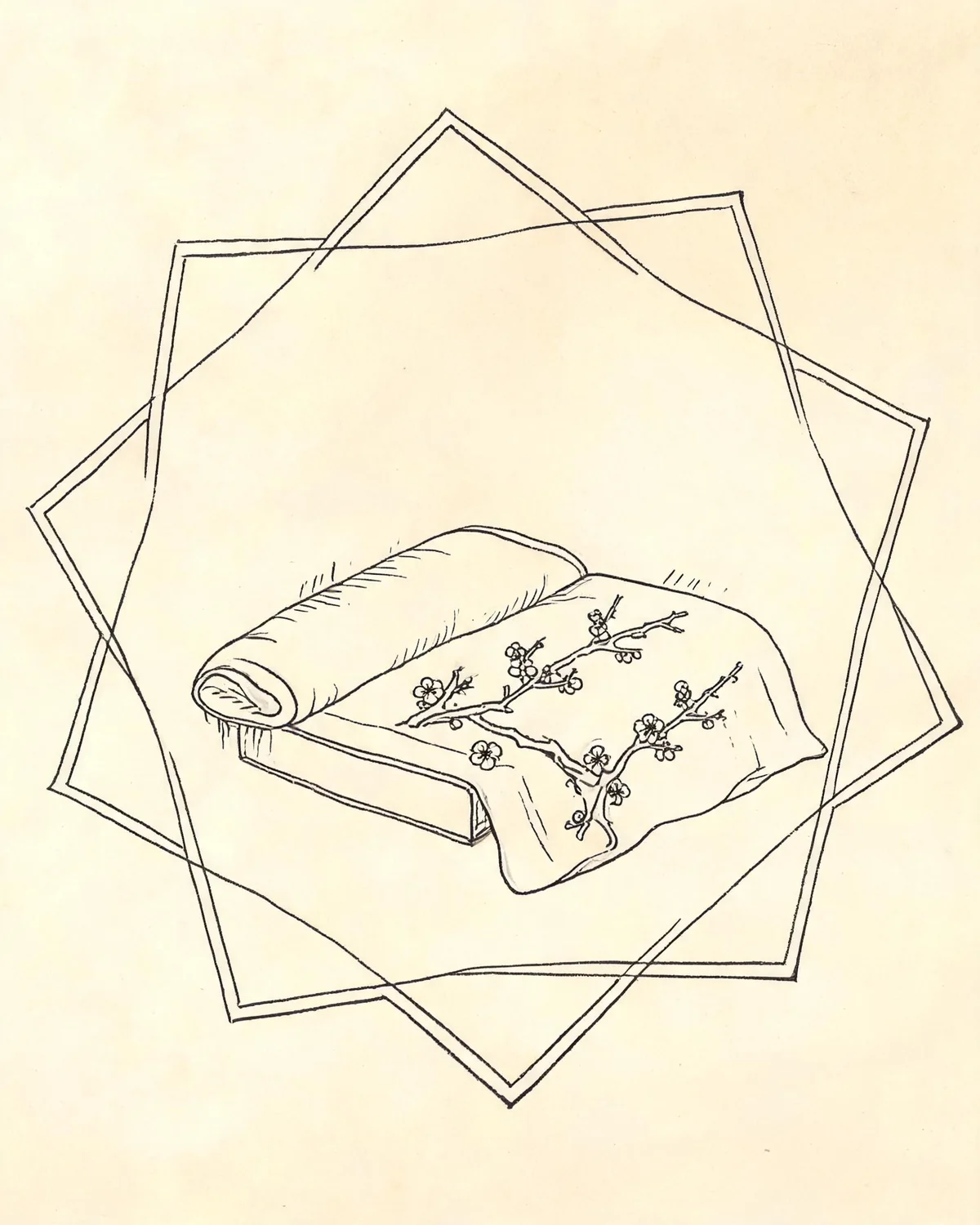
What Does a White Blanket Mean in an Islamic Dream?
A white blanket leans toward good news. White garments were read as glad tidings, and a white mattress as a devout spouse, so a clean white blanket on your bed tends to suggest a home or bond in good order. The exception shows the method at work: for a cloth merchant or tailor, white clothing was read as a lack of work, because their living depends on color and dye.
Red reads differently. Wrapping yourself in a red blanket was read as a quarrel over a woman, and red garments as earnings that still owe their share of charity. A present-day reading might take a red blanket as a sign of heat in a close relationship, or as a nudge to settle what you owe.
Black depends on habit. A black garment was read as a bad sign for most people, but as honor and standing for someone who usually wears black. A black blanket, then, asks whether dark colors are normal in your life or a jarring change. Green, by contrast, was read as devotion and benefit.
What Does Washing a Dirty Blanket Mean in Islam?
A soiled blanket and a washed one sit at opposite ends of the same reading. Dirty clothing was read as wrongdoing, and grime or a soiled garment as worry and distress. Grease or oily stains added attachment to worldly things. A stained blanket in a dream can therefore picture a weight you are carrying, whether guilt, anxiety or a habit you know is not good for you.
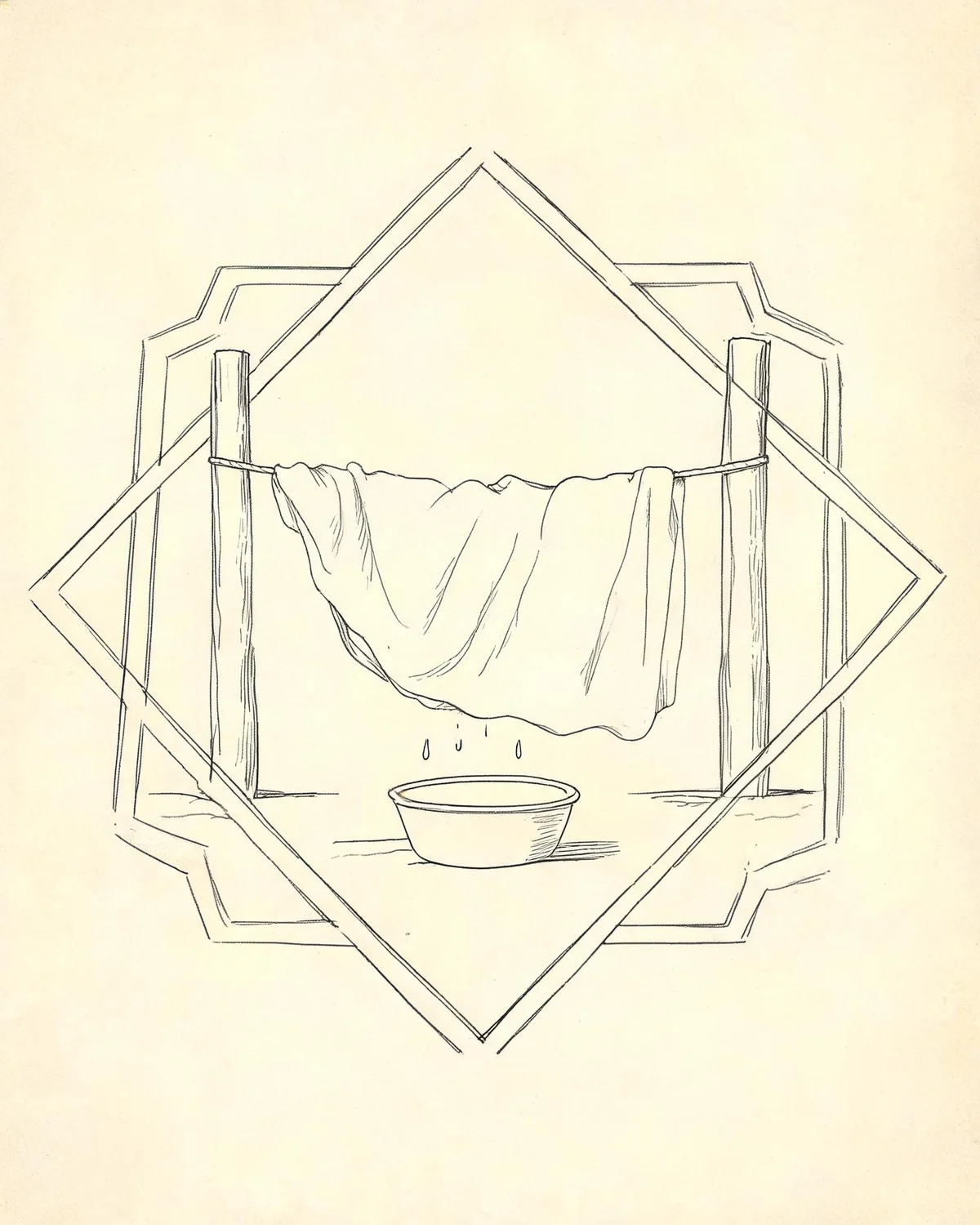
Washing turns the image toward repair. Washing your clothes in a dream was read as repenting and rinsing wrongdoing away. Scrubbing a heavy blanket, wringing it out and hanging it to dry is hard work, which fits: the dream may show a change that takes effort but leaves you lighter.
Details refine it. If the stains lift easily, the reading leans toward a fresh start within reach. If they stay no matter how hard you scrub, the dream may be pointing to something that needs more than private effort, such as an apology or a conversation. A blanket washed and folded away clean is one of the more hopeful versions of this image.
What This Dream Is Not
A blanket dream is not a forecast about your marriage. The older readings that tie blankets to wives and divorce were written for a particular audience and time, and a stolen blanket in a dream does not mean anyone is about to leave.
It is not a judgment on your faith either. Reading a soiled blanket as wrongdoing is an invitation to reflect, and questions about your standing are better taken to a scholar you trust than settled by an image.
Nor is it a statement about money. Cold as want and wool as income are symbolic links, and they cannot tell you what will happen to your finances or your job.
And it is not a reason to read the manuals' marriage language as a rule for how you should live. Those passages reflect the households their authors knew; a single person, a widow or a child can dream of a blanket and find in it simply the wish to feel safe.
FAQ
What does seeing a blanket in a dream mean in Islam?
Older Islamic readings tie the blanket to a spouse, a marriage and close protection, and wrapping yourself in one to comfort, calm and strength. Present-day readers widen that to any bond or support that keeps you warm.
Is a blanket dream good or bad in Islam?
Usually it leans toward comfort and provision, especially a clean, warm blanket in cold weather. It turns heavier when the blanket is stolen, burned, filthy or stifling. Season and your circumstances weigh as much as the blanket itself.
What does a new blanket mean in a dream?
A new garment was read as better than an old one, and a new, well-made mattress as a good marriage. A fresh blanket leans toward renewal: a new home, a new start in a relationship, or support you did not have before.
What does buying a blanket mean in a dream?
Older manuals warn that a dream purchase can point the other way, toward selling or loss, and used clothing was read as hard times. A new blanket bought gladly reads well; a worn one bought out of need suggests money is tight.
What does it mean when someone gives you a blanket in a dream?
Receiving a gift was read as happiness, love and friendship, even reconciliation between people at odds. A blanket handed to you by someone may picture care offered or a rift being mended. Notice who gave it and how you received it.
What does sharing a blanket with someone mean in a dream?
Two people under one blanket bring the image close to its marriage reading. In a present-day sense it can picture trust, intimacy or a partnership. Whether the sharing felt easy or cramped tells you how that closeness feels now.
What does sleeping under a blanket mean in a dream?
Sleeping in a dream was often read as heedlessness, except for someone frightened, for whom sleep calms fear. Resting peacefully under a blanket may picture relief after anxiety, or a reminder not to stay comfortable while duties wait.
What does feeling cold without a blanket mean in a dream?
Cold was read as want, and a cold wind as want getting worse. Shivering with nothing to cover you may reflect money worries or a lack of support. Finding sunlight in the same scene was read as hardship lifting.
Why do older Islamic readings link a blanket to a wife?
A blanket is the covering closest to the body and shared in private, and protection and a wife were sometimes listed together. The manuals were written mostly for men, so present-day readers translate this into any close bond.
How to Use These Readings Today
Start with three facts: the blanket's condition, the season in the dream, and who else was there. Write them down in a line each. Most of the reading in this tradition hangs on those three.
Next, match them to your life. A warm blanket in the cold might line up with someone who has been quietly supporting you; a stolen one with a fear of losing that support; a stained one with something you have been meaning to put right. Choose the match that feels honest rather than the one that sounds dramatic.
Then take one small step. If the blanket was warm, thank the person it reminds you of. If it was stained, deal with one thing you have been avoiding. If it was missing, ask for the support you need instead of waiting to be offered it. If the dream keeps returning, keep the notes together and look for the detail that changes each time.